
How to Plan Civil Wedding in UAE: Complete Guide for Expats


Planning a civil wedding in the UAE can seem daunting for expats, especially when rules differ from what you might know back home. With recent updates like Federal Decree Law No. 41 of 2022, non-Muslim residents now have the option to follow their home country’s marriage laws or choose UAE alternatives, making the process clearer than ever. This guide walks you through each detailed step, helping you gather the right documents, pick the proper venue, and understand what makes your union legally recognized in Abu Dhabi or Dubai.
Table of Contents
Quick Summary of How to Plan Civil Wedding in UAE
Key Point | Explanation |
1. Gather Required Documents | Valid passports and proof of single status are mandatory for civil marriage registration in the UAE. |
2. Choose a Licensed Venue | Civil marriages must occur at officially licensed venues recognized by the UAE government for legal validation. |
3. Submit Your Application Online | Complete your marriage application accurately via the respective court’s online portal to initiate the process. |
4. Attend Your Ceremony Prepared | Be punctual and bring original documents, as well as a reference number for your marriage ceremony. |
5. Verify Your Marriage Certificate | Check all details on your marriage certificate for accuracy to avoid future complications with legal processes. |
Step 1: Gather Required Documents for Civil Marriage
You need to collect the right documents before you can officially register your civil marriage in the UAE. The good news is that the UAE has streamlined this process considerably under Federal Decree Law No. 41 of 2022, which allows non-Muslim residents to follow their home country’s marriage laws or choose UAE alternative personal status laws. Think of this step as building your case file. Without the correct paperwork, you won’t move forward.
Start with the basics. Both you and your partner need valid passports that clearly show your identities and are current throughout the registration process. If you hold an Emirates ID, bring that as well. These documents verify who you are and confirm your legal status in the UAE. The Civil Family Court won’t proceed without clear proof of your identities, so check that both documents are in good condition and haven’t expired.
Next comes the critical part: proof of your single status. If either you or your partner has been married before, you must provide divorce or death certificates. The court uses this to confirm you’re legally able to marry. The UAE requires both parties to consent, be at least 18 years old, and not be married to another person. If you’ve been divorced, get an official certified copy of your divorce decree. If you’re widowed, obtain a death certificate. These documents must be properly attested, which means verified by your home country’s relevant authorities.
Here’s something many expats overlook: some emirates may require additional documentation depending on your nationality. The 7-step checklist for UAE marriage documents provides a complete breakdown by emirate requirements. Dubai and Abu Dhabi have slightly different processes, though the core documents remain the same. Before you gather everything, confirm which emirate you’re registering in and whether that location has any specific requirements beyond the standard documents.
One more thing to prepare: get certified English translations of any documents issued in your home country’s language. The court requires these translations to be notarized or certified. If your divorce certificate is in German, Spanish, or Tagalog, for example, have it translated and authenticated before you arrive at the court.
Tip Gather all your originals plus two photocopies of each document, even though the court didn’t specifically ask. This speeds up the process dramatically and ensures you have backups if anything gets misplaced during processing.
Here’s a summary of essential documents and their significance:
Document Type | Purpose | Special Notes |
Passport | Proof of identity | Must be valid and undamaged |
Emirates ID | Confirms legal UAE residency | Needed if you hold UAE residence |
Single Status Proof | Confirms both are not married | Divorce or death certificates if applicable |
Certified Translations | Enables legal review by court | Required for non-English documents |
Step 2: Choose a Licensed Venue for Your Ceremony
Your venue choice isn’t just about aesthetics. In the UAE, civil marriages must take place at officially licensed venues that are recognized by the government. This requirement ensures your marriage receives proper legal documentation and official recognition. The good news is that your options are clear and straightforward once you understand the system.
In Abu Dhabi, civil marriages are solemnized at the Civil Family Court, established under Abu Dhabi Law No. 14 of 2021. This court allows non-Muslim residents and tourists to hold their civil wedding ceremonies under secular rules. The process is designed to be accessible. You submit your application through the court’s online system, which also lets you schedule your ceremony timing. Both standard and express services are available, so you can choose how quickly you want to proceed.
Dubai operates similarly but through Dubai Courts. Civil marriages for non-Muslims are conducted at licensed venues regulated by UAE courts. These venues handle everything from validating your application to conducting the official ceremony itself. The venue’s role goes beyond just providing a space. They’re responsible for verifying all your documentation and ensuring the ceremony meets legal requirements. This is why you can’t simply rent a hotel ballroom and call it official.
When selecting your emirate, consider your residency or employment location. If you live in Dubai, you’ll register through Dubai Courts. If you’re based in Abu Dhabi, the Civil Family Court is your destination. Some expats travel to whichever emirate offers faster processing times. Check the online systems for both locations to compare wait times before deciding. The venue you choose determines your entire registration timeline.
Once you’ve selected your venue, you’ll submit your documents through their online portal. The court reviews everything and confirms your ceremony date. You don’t need to hunt for alternative venues or negotiate with private locations. The licensed court system removes guesswork from the equation.
Tip Book your ceremony slot as early as possible, especially if you’re planning a specific date. Express services cost more but guarantee scheduling within days rather than weeks, which many expats find worth the investment for peace of mind.
Compare key features of marriage registration in Abu Dhabi vs. Dubai:
Feature | Abu Dhabi Civil Family Court | Dubai Courts Civil Marriage |
Venue Type | Dedicated Civil Family Court | Licensed venues via court system |
Application Mode | Online portal | Online portal |
Processing Options | Standard and express available | Standard and expedited available |
Jurisdiction | Primarily Abu Dhabi residents | Primarily Dubai residents |
Step 3: Submit Your Application to the Authority
This is where your planning becomes official. Submitting your marriage application to the competent civil court is the formal step that puts your wedding in motion. You’re essentially notifying the government that you meet all requirements and are ready to proceed. The process is straightforward, but accuracy matters.
Start by accessing the online portal for your chosen court. If you’re marrying in Abu Dhabi, log into the Abu Dhabi Civil Family Court portal. Dubai applicants use the Dubai Courts system. Both platforms are user friendly and designed for expats who may not be familiar with UAE procedures. You’ll create an account, enter your personal information, and upload your documents directly. Make sure every file is clear and properly labeled before you hit submit.
The application requires you to confirm your eligibility. You’ll declare that you’re single or provide proof of previous marriage dissolution. You’ll also confirm that both you and your partner consent to the marriage and meet the age requirements. Non-Muslim parties must provide evidence of single status. The court uses this information to verify that you genuinely qualify for a civil marriage under UAE law.
After submitting online, you’ll select your preferred ceremony date and choose between regular or expedited processing. Regular processing takes longer but costs less. Expedited services cost more but guarantee scheduling within days rather than weeks. Most expats find expedited worth it for the certainty and speed. Once you select your option and pay the relevant fees, the court begins reviewing your documents.
What happens next is the court’s job. They verify your conditions, check your paperwork, and confirm everything aligns with legal requirements. You’ll receive notification once they’ve approved your submission. Then comes the interview and official ceremony, which we’ll cover in the next steps. For now, submit accurately and keep copies of your confirmation email.
Tip Double-check every field before submitting your online application, as errors can delay processing significantly. Take screenshots of your confirmation page immediately after submission for your records, since you’ll need this reference number for your court visit.
Step 4: Finalize Legal Paperwork and Attend Ceremony
You’ve submitted everything and received approval. Now comes the day that makes it official. Attending your civil marriage ceremony at the court is where all the paperwork transforms into a legally binding marriage. This is the moment your marriage becomes real in the eyes of the UAE government.
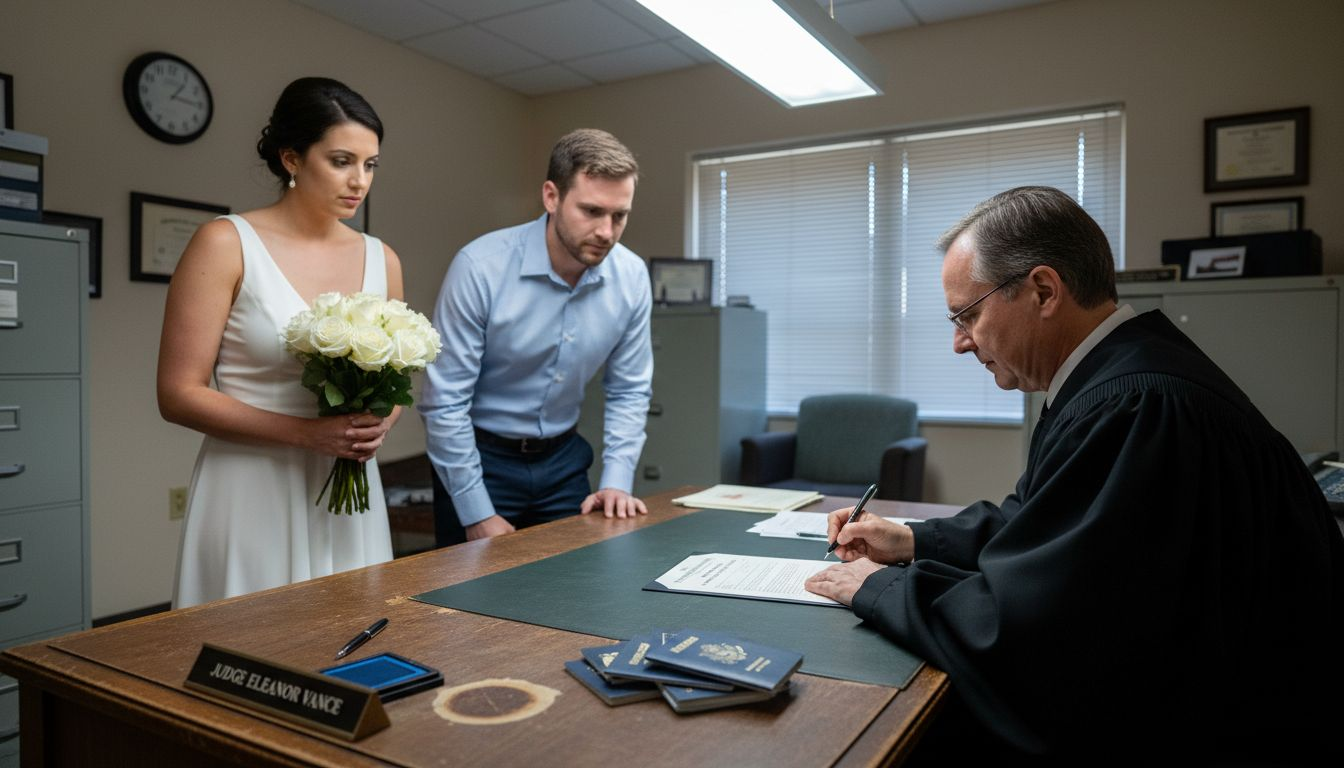
On your ceremony date, arrive at the court early. Bring your original documents and the reference number from your application submission. You’ll check in with court staff who verify you’re there and ready. The process moves quickly once you’re inside. Bring your partner, and consider having witnesses present if required by your chosen emirate. The court will confirm these details when you book your ceremony slot.
When the judge calls you forward, you’ll sign the marriage contract under judicial supervision. This isn’t just a formality. The officiating judge ensures everything complies with UAE civil law and that both parties genuinely consent to the marriage. The judge will review key details aloud before you sign. Listen carefully and speak up if anything seems wrong. Once signatures are complete, the ceremony is officially documented.
The entire court ceremony typically lasts between 15 to 30 minutes. It’s straightforward and professional. The judge asks standard questions confirming your identities, consent, and understanding of the marriage commitment. Answer clearly and directly. The atmosphere is formal but not intimidating. You’re simply answering verification questions that make your marriage legally valid.
Immediately after the ceremony concludes, the court issues your marriage certificate. You can collect it right there or pick it up as stipulated by the court. Keep this document safe. It’s your proof of marriage and you’ll need it for everything from visa applications to opening joint bank accounts. Some expats get it notarized by the Ministry of Foreign Affairs immediately for wider international acceptance.
Tip Bring extra passport photos and copies of your ID, as courts sometimes request these during the ceremony for certificate processing. Also, plan to spend the entire morning at the court to account for any delays or administrative needs that might arise.
Step 5: Verify Marriage Certificate and Start Next Steps
Your marriage certificate just arrived. Before you celebrate, take time to carefully verify every detail on it. This document will follow you through countless legal processes, from visa applications to property ownership. Getting it right now prevents major headaches later.
Sit down with your certificate and check every single entry. Your full name, your partner’s name, dates of birth, passport numbers, and the marriage date must all match your original documents exactly. Even a small spelling error or typo can cause problems when you need to use the certificate internationally. If you spot any mistakes, contact the court immediately. They can usually issue a corrected version quickly, but it’s easier to catch errors on day one.
Now consider your international needs. If you plan to use your marriage certificate abroad, attestation and translation become necessary. The UAE Ministry of Foreign Affairs and International Cooperation can verify your certificate for recognition in other countries. This attestation process adds official government stamps that foreign authorities recognize. Without it, some countries won’t accept your marriage certificate as valid.
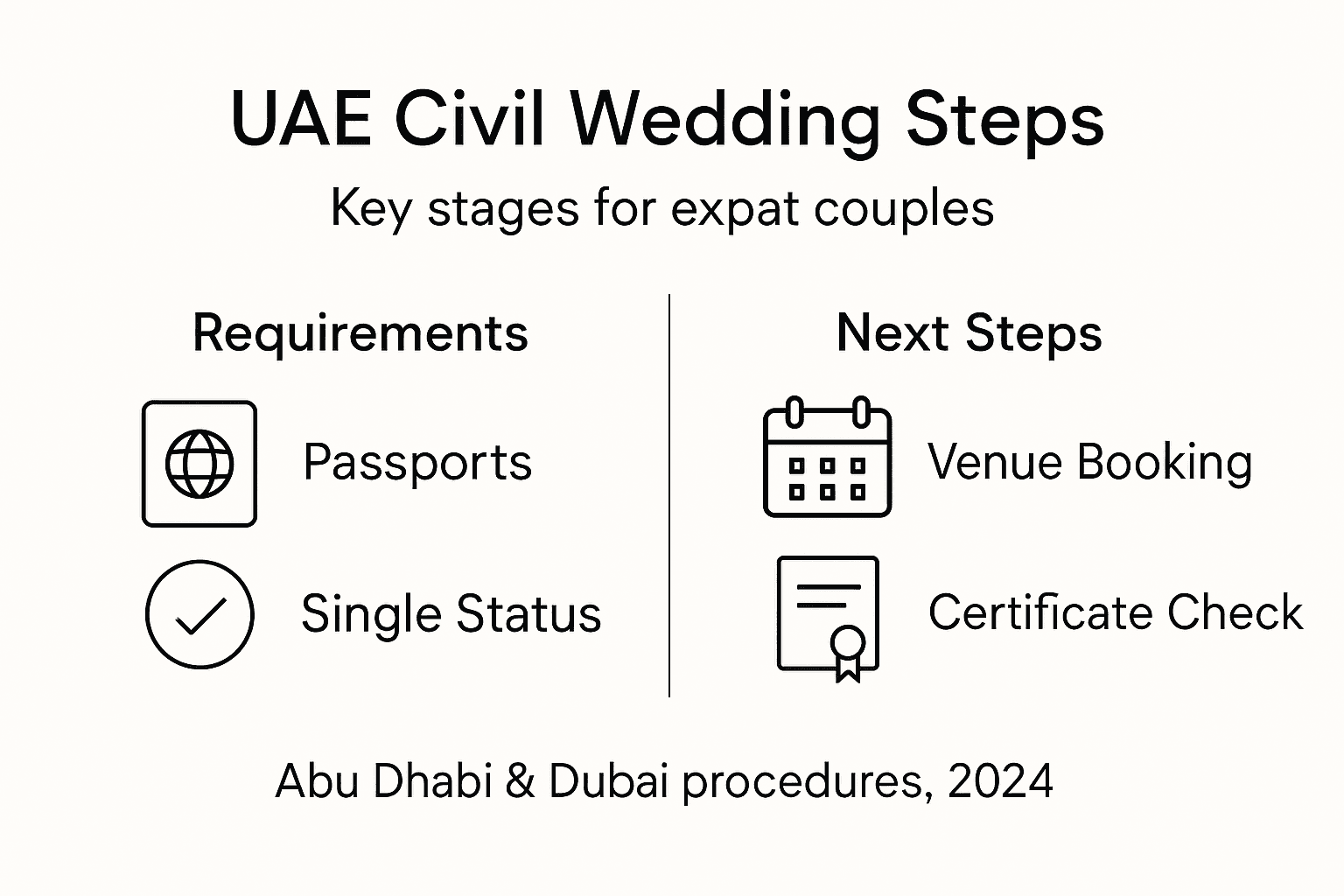
With a verified certificate in hand, you unlock multiple next steps. You can now sponsor your spouse for residency permits or family visas. You can change your name if desired. You can update your marital status on government records and with your employer. Some expats apply for residency adjustments immediately after marriage. Others start the visa sponsorship process for their partner. The choice depends on your personal situation.
Think about your immediate priorities. Do you need to add your spouse to your current visa? Are you planning to buy property together? Do you need to update your will or insurance beneficiaries? These decisions determine which government agencies and documents you’ll need next. Your marriage certificate is the foundation for all of them.
Tip Order multiple certified copies of your marriage certificate right away, even if you only need one currently. Having 5 to 10 copies on hand saves time and money later when various government departments and organizations request official copies.
Simplify Your Civil Wedding Journey in the UAE with Expert Support
Planning a civil wedding in the UAE can feel overwhelming with all the specific documentation, legal requirements, and venue selections involved. From gathering valid passports and certified translations to submitting your application through online portals and attending your official ceremony, every step requires precision and trust. If you want to avoid delays and ensure your marriage registration and certificate verification go smoothly, personalized assistance is the key. Harris & Charms understands the unique challenges expats face when navigating these processes alone.
Our team provides comprehensive help with legal paperwork, venue coordination, and document attestation so you can focus on the joy of your special day. We bring a personal touch backed by proven experience, making us the reliable partner to manage everything under one roof. Whether you need tailored support for your civil marriage application or assistance with attesting your marriage certificate for international use, we offer clear guidance and stress-free solutions.

Ready to turn complicated requirements into a seamless celebration? Visit Harris & Charms today to explore how our wedding and marriage services can make your civil wedding in the UAE effortless and memorable. Take advantage of our expertise to start your journey right now and enjoy peace of mind every step of the way. Learn more about our personalized support by checking out our wedding assistance services and get in touch to begin your hassle-free marriage planning.
Frequently Asked Questions
What documents do I need to prepare for a civil wedding in the UAE?
To register a civil wedding in the UAE, you need valid passports, proof of single status, and certified translations of any documents not in English. Gather all originals and two photocopies of each document to aid the registration process.
How do I choose a venue for my civil marriage ceremony?
Select a licensed venue recognized by the government for your civil marriage. In Abu Dhabi, you will use the Civil Family Court, while in Dubai, the licensed venues managed by Dubai Courts will conduct the ceremony.
What is the process for submitting my marriage application in the UAE?
Start by accessing the online portal for your chosen court and uploading your documents. Follow the prompts to confirm your eligibility, select a ceremony date, and pay any applicable fees to move forward with your application.
How long does the civil marriage ceremony typically last?
The civil marriage ceremony at the court usually takes about 15 to 30 minutes. Plan to arrive early on your ceremony date and allow additional time for any administrative tasks that may arise.
What should I do if I find an error on my marriage certificate?
Immediately verify every detail on your marriage certificate after the ceremony. If any discrepancies are found, contact the court as soon as possible to request a corrected version of the certificate.
What should I consider after receiving my marriage certificate?
After obtaining your marriage certificate, check if you need attestation for use in other countries, and start thinking about your immediate priorities like visa applications or updating legal documents. Order multiple certified copies now to save time when required later.
Recommended
Comments