
Process of Marriage Certificate UAE: Step-by-Step Guide


Sorting out marriage documents in the UAE can quickly feel overwhelming, especially for expatriate couples eager for a smooth ceremony and hassle-free certificate processing. With requirements varying between civil and Islamic marriage procedures, knowing exactly what is needed upfront saves time and avoids headaches at government offices. This guide brings clarity to each step, ensuring you collect the right paperwork and understand the process for registering your wedding legally in the UAE.
Table of Contents
Quick Summary
Key Message | Explanation |
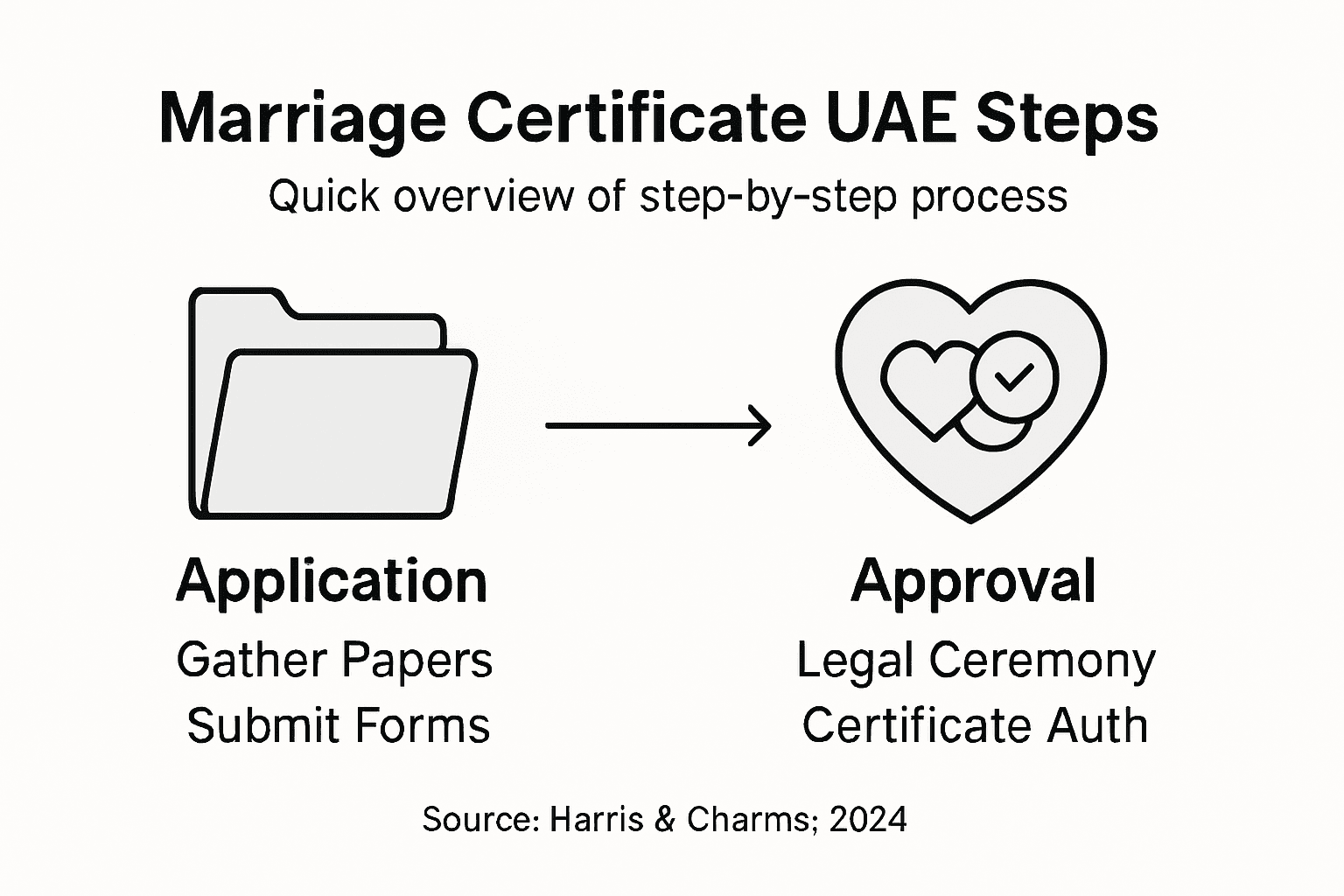
1. Gather Required Documents | Compile all necessary documents, like passports and marriage certificates, to avoid delays. |
2. Submit Marriage Application | Understand the submission process for Islamic or civil marriages to ensure proper application. |
3. Complete the Marriage Ceremony | Know what to expect during the ceremony, including required attendees and contract signing. |
4. Authenticate Your Marriage Certificate | Obtain attestation from authorities to ensure global recognition of your marriage certificate. |
5. Verify Certificate Validity | Confirm that your marriage certificate is properly registered to prevent future complications. |
Step 1: Gather Required Documents for Application
Before you can register your marriage in the UAE, you need to compile a specific set of documents. This step is where organization makes all the difference, because having everything prepared upfront prevents delays and frustration later. Think of it as building the foundation for your entire registration process, and getting it right means smoother sailing through the remaining steps.
Start by collecting your valid passports, which serve as primary identification for both partners. If you’re a UAE resident, you’ll also need your Emirates ID card. Next, gather proof of your current marital status. This is where things get specific depending on your situation. If either partner has been divorced, you’ll need an official divorce certificate. If a previous spouse has passed away, a death certificate is required. For those applying under non-Muslim ceremonies, contact your respective embassy to obtain a certificate of no impediment to marriage, which confirms there are no legal barriers to your union. You’ll also need to obtain a pre-marital medical fitness certificate, which confirms both partners are in good health. This certificate typically comes from an authorized healthcare provider in the UAE. Additionally, some documents may require attestation to comply with UAE regulations, particularly if you’re an expatriate or if any documents were issued outside the UAE. Understanding what 7 key examples of marriage documents UAE expats need involves can help you identify which of your documents might need this extra certification step.
As you gather these documents, make multiple copies of each one. Keep originals in a safe place and bring copies to your appointments. Check expiration dates on your passport and Emirates ID now, not when you’re ready to submit your application. If anything expires soon, renew it before you proceed. This small bit of planning prevents the heartbreak of discovering an expired document when you’re already in the queue at the registration office.
Pro tip: Create a checklist of all required documents and mark them off as you gather each one, keeping everything organized in a single folder so nothing gets misplaced during the registration process.
Step 2: Submit Marriage Application to Authorities
Now that you have all your documents organized and ready, it’s time to officially submit your marriage application. This step moves you from preparation into action, and the specific process depends on whether you’re having a civil or Islamic marriage. Understanding which route applies to you ensures you submit your application to the right authority and avoid unnecessary back-and-forth.
For Islamic marriages, you’ll apply directly at a Sharia court in your emirate. You’ll need to present all your documents along with written consent from both partners, and if you’re female, your wali (guardian) must be present. For civil marriages between non-Muslims, you’ll submit your application to the civil court in your area. The good news is that many emirates now offer online application options through the UAE Ministry of Justice portal, which means you can start the process from your home. If you choose the online route, you’ll register through UAE PASS, submit your completed application with scanned copies of your documents, and pay the applicable fees electronically. This digital option significantly reduces the time you spend waiting in government offices. Whether you’re applying online or in person, bring the originals of all your documents so officials can verify them against your copies. The fees vary depending on your emirate and the type of marriage, so check with your specific court beforehand. When you submit, you’ll also provide details about your marriage ceremony preferences. For Islamic marriages, officials will arrange for a notary and witnesses to conduct the ceremony. For civil marriages, a notary judge will preside. Knowing the complete step by step process for civil marriages in the UAE can help you understand exactly what to expect once your application is submitted and approved.
After submission, you’ll receive a confirmation number and documentation showing your application status. Keep these safe because you’ll need them for follow-up appointments and to collect your completed marriage certificate. Most applications are processed within a few days to a couple of weeks, depending on the court’s workload and whether your application is complete.
Professional tip: Arrive at your application appointment 15 minutes early with all documents in the exact order requested by the court, and bring a copy of your appointment confirmation on your phone in case the system needs verification.
Step 3: Complete Legal Marriage Ceremony Procedures
Your application has been approved, and now comes the moment you’ve been working toward, the actual marriage ceremony. This is where your legal marriage becomes official in the eyes of UAE law, and the process differs depending on whether you’re having an Islamic or civil marriage. Both routes are equally valid and recognized by the UAE, but understanding what to expect during your specific ceremony ensures you arrive prepared and confident.
For Muslim couples, your ceremony will take place at the Sharia court with a qualified Islamic official presiding. You’ll need to have your wali present, along with two adult male witnesses who must be Muslims. The official will read and explain the marriage contract to both of you, and you’ll sign it together. This contract outlines the terms of your marriage, including any agreed-upon financial arrangements. The entire process typically takes about 30 minutes to an hour. For non-Muslim couples, your ceremony will be conducted by a notarial judge in a civil court setting. The judge will verify your identities and confirm that all documentation is in order, then officially register your marriage contract. This ceremony is more streamlined than the Islamic process but equally legally binding. In both cases, the official venue and presence of qualified legal personnel are essential requirements that validate your marriage according to UAE law. The step by step guide to civil marriage requirements in the UAE provides detailed information about what to expect during this formal registration process.
After your ceremony concludes, you’ll receive your official marriage certificate on the spot or within a few business days. This certificate is the document you’ll use for all future legal matters, from updating your visa status to opening joint bank accounts. Make several certified copies of this certificate because you’ll need them for various government and private institutions. Before you leave the courthouse, confirm that your names are spelled correctly on the certificate and that all dates and details match your expectations. Any errors at this stage are much easier to correct than discovering mistakes later when you’re trying to use the certificate for official purposes.
Professional tip: Bring two extra copies of all your identification documents and have your phone fully charged to document the ceremony or take photos of your certificate if needed for records.
Here’s a comparison of the main steps for registering an Islamic vs. Civil marriage in the UAE:
Step | Islamic Marriage Process | Civil Marriage Process |
Application Location | Sharia court in your emirate | Civil court in your emirate |
Required Personnel | Both partners, female’s wali, 2 male Muslim witnesses | Both partners, notarial judge |
Ceremony Procedure | Read/sign marriage contract, identified by official | Judge verifies identities, registers contract |
Expected Timeline | 30-60 minutes in court | Usually 15-30 minutes |
Certificate Issuance | Usually same day or within days | Same day or within a few days |
Step 4: Obtain and Authenticate Marriage Certificate

To authenticate your marriage certificate, you’ll first need to obtain attestation from the UAE Ministry of Foreign Affairs. This process involves submitting your original marriage certificate along with a request form to their office. The attestation process typically takes between 3 to 5 working days, and the ministry will place an official stamp and signature on your certificate confirming its authenticity. Once you have the UAE Ministry attestation, the next step depends on your citizenship. If you need to use your certificate in your home country or for visa purposes, you’ll also need to obtain an attestation from your country’s embassy in the UAE. Each embassy has its own procedures and timelines, so contact yours directly to understand their specific requirements. Some couples require multiple certified copies at this stage, so consider ordering several copies during the attestation process rather than returning later. Keep in mind that marriage certificate attestation in Dubai and other emirates follows the same fundamental process through the Ministry of Foreign Affairs, though some emirates may have slightly different office locations or processing times.
After authentication, your certificate is ready for use with government authorities, immigration departments, and financial institutions. Store your original authenticated certificate in a secure location, such as a safe deposit box or home safe, and keep certified copies easily accessible for when you need them. This authenticated certificate is your proof of legal marriage and will be essential for countless future applications, from visa sponsorships to insurance claims to inheritance matters.
Professional tip: Request at least three certified copies during the attestation process and have them authenticated simultaneously, as this saves time and ensures you always have a backup copy available for urgent situations.
Step 5: Verify Certificate Validity for Future Use
Now that your marriage certificate is authenticated, you need to ensure it remains valid and recognized for all your future administrative and legal needs. Verification is the process of confirming that your certificate is properly registered in UAE government databases and will be accepted by all relevant institutions. This final check gives you peace of mind that your document will work smoothly when you need it for visa applications, insurance claims, property transactions, or any other official matter.
Start by verifying that your certificate appears in the UAE’s official marriage registry system. You can do this by visiting the General Directorate of Residency and Foreigners Affairs or accessing their online portal if you have the necessary credentials. Search for your name and your spouse’s name to confirm that your marriage has been officially recorded. This step is particularly important for expatriates because your marriage record must be in the system before you can sponsor family members for residence visas or add dependents to your health insurance. Next, contact your employer’s human resources department and notify them of your marriage so they can update your records and potentially adjust your benefits or allowances. When you use your certificate for bank accounts, property ownership, or other financial matters, the institution will verify it against government databases in real time. If your certificate doesn’t appear in these systems or if there are discrepancies, institutions will flag the document as invalid, which can derail important applications. To avoid this problem, verify your certificate validity with at least one government institution within a month of receiving it. Many couples discover issues at this verification stage rather than later when facing urgent deadlines. By proactively checking, you have time to address any problems with the court or relevant authorities.
Keep a record of where and when you’ve used your certificate successfully, as this documentation serves as proof of validity for future reference. If you ever encounter an institution that questions your certificate’s authenticity despite it being properly attested, you have evidence of previous successful usage to support your claim. Remember that your marriage certificate doesn’t expire, but the attestations from embassies may have time limitations depending on your country’s requirements, so check those deadlines periodically.
For easy reference, here is an overview of UAE marriage certificate attestation and verification steps for future use:
Phase | Where to Complete | Purpose |
UAE Attestation | MOFA (UAE Ministry) | Official recognition within the UAE |
Home Country Attestation | Relevant embassy in UAE | Validity for use abroad |
Digital Verification | UAE government portals | Ensures record appears in government system |
Personal Recordkeeping | Home or cloud storage | Track usage and prevent discrepancies |
Professional tip: Create a spreadsheet documenting every institution where you’ve used your certificate, including the date, purpose, and institution name, so you have a clear audit trail proving your document’s validity if any questions arise in the future.
Simplify Your UAE Marriage Certificate Process with Expert Support
Navigating the step-by-step process of marriage certificate registration in the UAE can be overwhelming. From gathering complex documents and attending court hearings to obtaining crucial attestations, every phase demands careful attention to detail. Common challenges couples face include ensuring all paperwork is complete, meeting specific legal requirements for Islamic or civil marriages, and avoiding delays in certificate authentication and verification.
At Harris & Charms, we understand the emotional weight and stress that comes with these procedures. Our tailored services cover everything from legal document processing to personalized wedding planning and venue management. We are here to help you avoid pitfalls such as missing attestation steps or confusion about certificate validity while allowing you to focus on your special day. Discover how our comprehensive civil and Islamic marriage support and trusted legal attestation services can turn a complex journey into a smooth experience.

Ready to take the next hassle-free step toward your official marriage registration? Contact Harris & Charms now and let our experienced team guide you through each stage with confidence and care.
Frequently Asked Questions
What documents do I need to register my marriage in the UAE?
To register your marriage in the UAE, you need valid passports, Emirates ID for residents, proof of current marital status, and a pre-marital medical fitness certificate. Collect these documents and check for any necessary attestation to ensure a smooth application process.
How do I submit my marriage application in the UAE?
You can submit your marriage application at a Sharia court for Islamic marriages or at a civil court for non-Muslim marriages. Prepare all required documents and choose to apply either in person or online through the UAE Ministry of Justice portal to expedite the process.
What happens during the marriage ceremony in the UAE?
During the marriage ceremony, a qualified official will preside over your marriage contract signing. For Islamic ceremonies, make sure to have your wali and two male Muslim witnesses present, while civil ceremonies are conducted by a notarial judge with a streamlined process.
How can I authenticate my marriage certificate in the UAE?
To authenticate your marriage certificate, first get attestation from the UAE Ministry of Foreign Affairs. Submit your original certificate along with a request form, and expect the process to take about 3 to 5 working days.
How do I verify the validity of my marriage certificate for future use?
Verify your marriage certificate’s validity by checking its presence in the UAE official marriage registry. You can do this through the General Directorate of Residency and Foreigners Affairs or by accessing their online portal within a month of receiving your certificate.
Is there a specific timeline for receiving my marriage certificate after the ceremony?
After your marriage ceremony, you can typically receive your marriage certificate on the same day or within a few business days. Ensure all details are correct before leaving to avoid future complications.
Recommended
Comments