
What Does Marriage Mean in Islam: A Complete Guide

Updated: Jul 27
In Islam, marriage (Nikah) is a formal, binding contract between a man and a woman built on mutual consent, shared rights, and defined responsibilities. The Quran (4:21) calls it a “strong covenant” (mithaq ghalith), which tells you immediately that this is far more than a social ceremony. The core elements of a valid Nikah include:
Offer and acceptance (Ijab and Qubul): a clear verbal exchange between both parties
Mahr: a mandatory bridal gift from groom to bride
Witnesses: typically two adult Muslims present at the contract
Wali: a guardian who represents the bride in most jurisprudence schools
Mutual consent: coercion invalidates the marriage entirely
Together, these elements formalize companionship, establish the legitimacy of children, and create a framework of mutual obligation that Islamic law takes seriously.
Table of Contents
Why marriage holds such deep religious and social weight in Islam
Marriage in Islam is an act of worship, ibadah, not just a legal arrangement. Quran 30:21 describes the marital relationship as one of mercy and tranquility, signs of God’s grace between spouses. Scholars across jurisprudence schools consistently frame marriage as a divine obligation for those who are capable, a barrier against moral corruption, and the foundation of a righteous household.
The social logic follows directly from the spiritual one. A stable marriage produces a stable family, and a stable family produces a stable society. Sexual relations are only permissible within marriage under Islamic law, which means the institution carries enormous weight in defining community norms. Mutual love, respect, and communication are not optional extras; they are Quranic foundations of the marital bond.
What you need to know about Mahr, the mandatory bridal gift
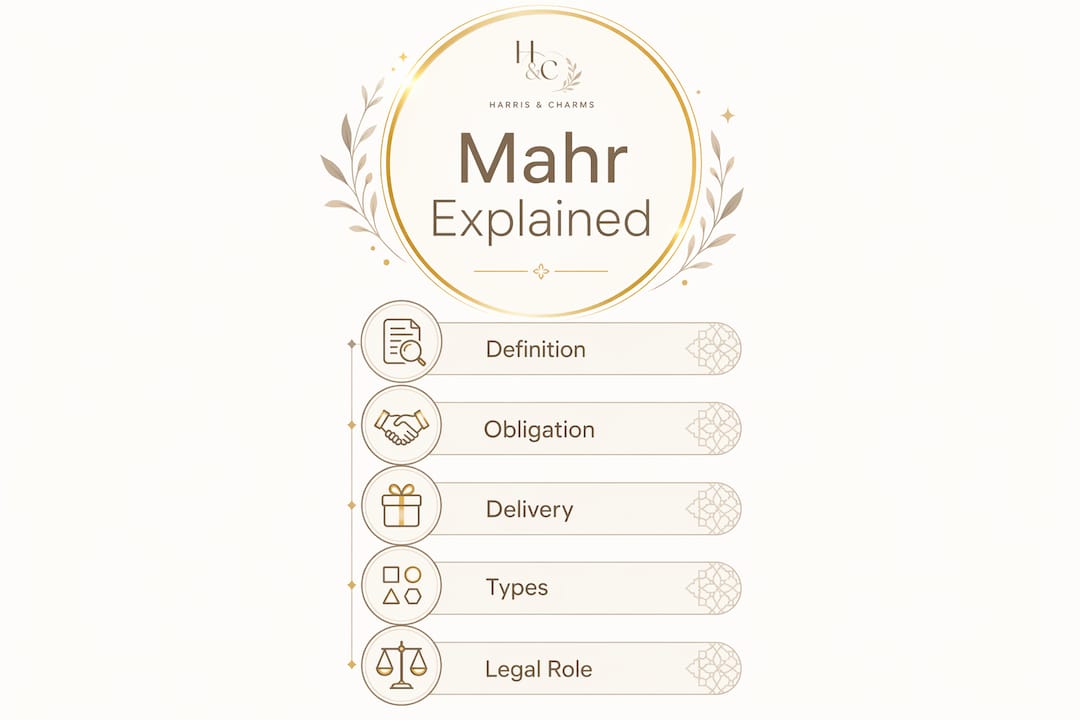
Mahr is one of the most misunderstood elements of Islamic marriage, often confused with a dowry or a cultural gift. It is neither. Mahr is a compulsory financial gift from the groom to the bride, and once given, it belongs exclusively to her. She can spend it, save it, or invest it as she chooses; her husband has no claim over it.
Key facts about Mahr:
It must be agreed upon by both parties before or at the time of the contract
A common minimum reference point is approximately 3 grams of silver or its monetary equivalent, though amounts vary widely by school and culture
If no Mahr is specified in the contract, courts can assign a judicially determined amount
It is part of the marriage contract itself, not a separate cultural gesture
Cultural wedding gifts and celebrations are distinct from Mahr and carry no religious obligation
Understanding this distinction matters practically. When registering an Islamic marriage in the UAE, the Mahr must be documented clearly in the contract.
What conditions actually make an Islamic marriage valid
Several conditions must be met for a Nikah to be legally and religiously valid:
Mutual consent: both parties must agree freely; a marriage contracted under pressure is void
Wali involvement: most schools require a guardian for the bride, though the degree of authority varies; the wali’s role is protective, not controlling
Offer and acceptance formula: the Ijab and Qubul must be clearly stated; a religious cleric’s presence is customary but not a legal requirement under Islamic law
Capability: the couple must be emotionally, physically, and financially ready; readiness is comprehensive, not just financial
Contractual stipulations: couples can add binding conditions to the marriage contract, covering residency, career, or lifestyle, as long as these don’t contradict Islamic principles
One point that surprises many couples: a cleric does not have to officiate the Nikah for it to be valid. The couple or their representatives can conduct the contract themselves with the correct formula and witnesses present.
Temporary marriage (Nikah Mut’ah) exists in some schools of thought but is not recognized or practiced in the UAE context. Couples planning to register their marriage in the UAE should focus on permanent Nikah requirements and local civil registration procedures.
Separating religious requirements from cultural customs also simplifies documentation. A wedding feast, specific attire, or elaborate ceremony may be meaningful traditions, but none of them determine whether the Nikah itself is valid.
How Harrisandcharms supports couples through Islamic marriage in the UAE

Harrisandcharms specializes in guiding couples through every stage of Islamic marriage in the UAE, from the first paperwork question to the celebration itself. The team handles contract guidance, witness coordination, wali involvement, and Mahr documentation, then connects that directly to the UAE’s civil registration requirements so nothing falls through the gaps.
Services include document attestation, court application support, venue management, and event planning aligned with Islamic traditions. For couples navigating the intersection of religious requirements and UAE legal procedures, that combination of expertise is what makes the process manageable.
Pro Tip: Clarify your Mahr amount and any contract stipulations before your appointment, not during it. Having these agreed in writing beforehand speeds up both the religious ceremony and the civil registration process significantly.
Explore Harrisandcharms’ full range of Islamic marriage services to find the package that fits your situation.
What rights and responsibilities do spouses have in Islamic marriage
Islamic marriage establishes clear, reciprocal rights and duties. The husband carries the primary financial obligation, providing housing, food, clothing, and general maintenance (nafaqah) for his wife and children. This financial responsibility is not conditional on the wife’s own income or assets.
The wife’s responsibilities center on managing the household and contributing to a stable home environment, though Islamic scholars note these are complementary roles, not a hierarchy of worth. Both spouses hold the right to mutual respect, physical intimacy within the marriage, and honest communication. Neither party may harm the other physically or emotionally. These financial roles within marriage are grounded in Islamic teaching and shape how couples structure their shared life.
How Islam approaches divorce and what it means for couples
Islam permits divorce but treats it as the most disliked of all lawful acts. The primary form is Talaq, where the husband pronounces divorce, ideally in stages across a waiting period (iddah) that allows for reconciliation. The wife retains the right to initiate divorce through Khul’, typically by returning the Mahr to the husband.
The iddah period serves multiple purposes: it confirms whether the wife is pregnant, creates space for the couple to reconsider, and protects the rights of any children involved. Financial obligations do not end at divorce; the husband must provide maintenance during the iddah, and Mahr that was deferred becomes immediately payable. Islamic divorce law prioritizes dignity and fairness for both parties, even when the marriage ends.
Key Takeaways
Islamic marriage (Nikah) is a formal contract with spiritual depth, defined rights, and clear legal conditions that every couple should understand before registration.
Point | Details |
Nikah is a binding contract | Offer, acceptance, Mahr, witnesses, and mutual consent are all required for validity. |
Mahr belongs to the bride | It is her exclusive property, agreed upon in the contract, not a cultural gesture. |
Consent is non-negotiable | Coercion from any party invalidates the marriage under Islamic law. |
Rights are reciprocal | Husbands carry financial obligations; both spouses hold rights to respect and honest communication. |
Divorce preserves dignity | The iddah period and financial obligations protect both parties when a marriage ends. |
Recommended
Comments