
Marriage Registration Tips: Your Practical US Guide

Updated: Jul 27
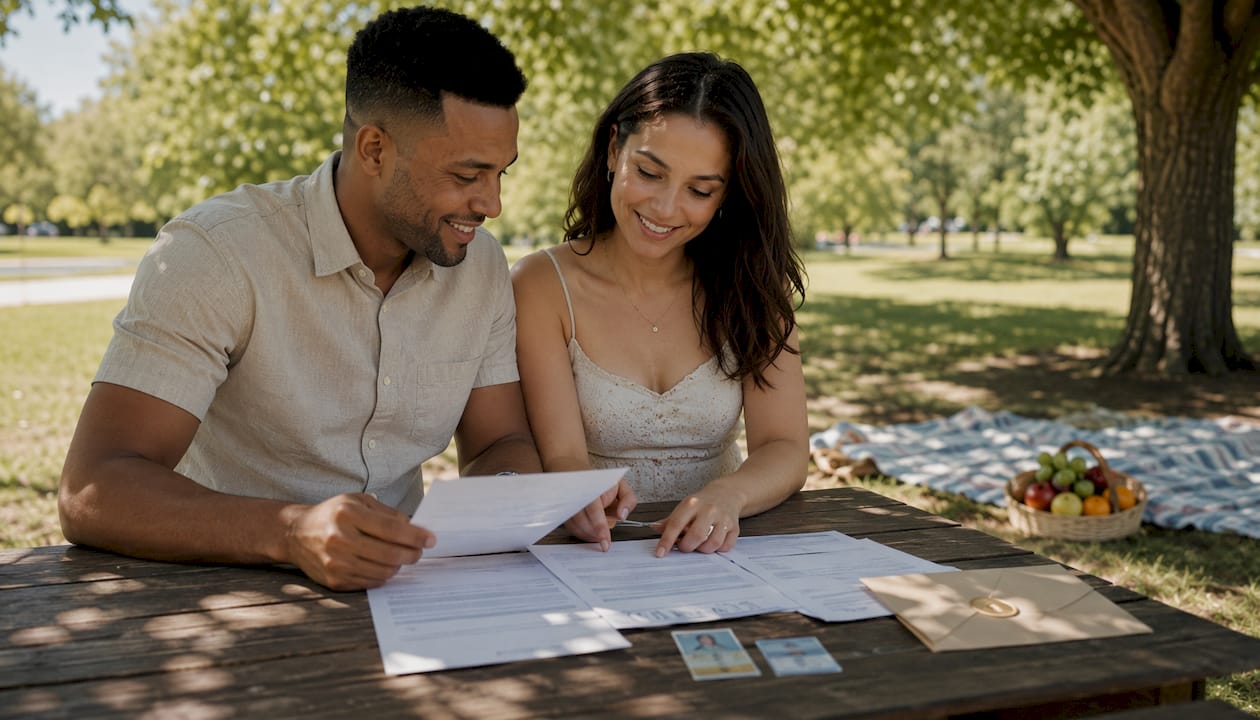
What you need to know about marriage registration
Getting your marriage legally recognized comes down to three things: the right documents, the right office, and the right sequence. Skip any one of them and you are looking at delays, rejections, or a certificate that takes weeks longer than it should.
Marriage registration is the official legal process that validates your union in the eyes of the government. It either involves registering a marriage that has already been solemnized, or completing the solemnization itself through a government officer. Either way, the outcome is a marriage certificate that carries real legal weight for name changes, insurance, immigration applications, and more.
Here is what every couple needs to have in order before they walk into any government office:
Proof of age for both parties (birth certificate, passport, or government-issued ID)
Proof of address for both parties (driver’s license, utility bill, or lease agreement)
Passport-size photographs of both applicants
Valid government-issued ID for at least two witnesses
Completed application forms for the relevant jurisdiction
Application fee payment (amounts vary by county and state)
The marriage license comes first. You apply for it before the ceremony. The certificate comes after, once the ceremony is complete and all signatures are collected. Mixing up the two is one of the most common planning mistakes couples make, and it costs time.
Fees across US counties typically vary depending on the state and county. Processing times vary by county, with some offering faster issuance and others requiring longer waiting periods. Accuracy on every form matters more than speed. One mismatched name or wrong date can send your application back to square one.
What documents do you need for marriage registration?
Document preparation is where most couples either get it right or lose weeks. The four core categories are universal across US jurisdictions, though specific accepted forms vary by state and county.
Proof of age is non-negotiable. A certified birth certificate is the gold standard, but a valid US passport or a state-issued driver’s license with your date of birth works in most counties. If you were born abroad, a passport or naturalization certificate typically satisfies this requirement.
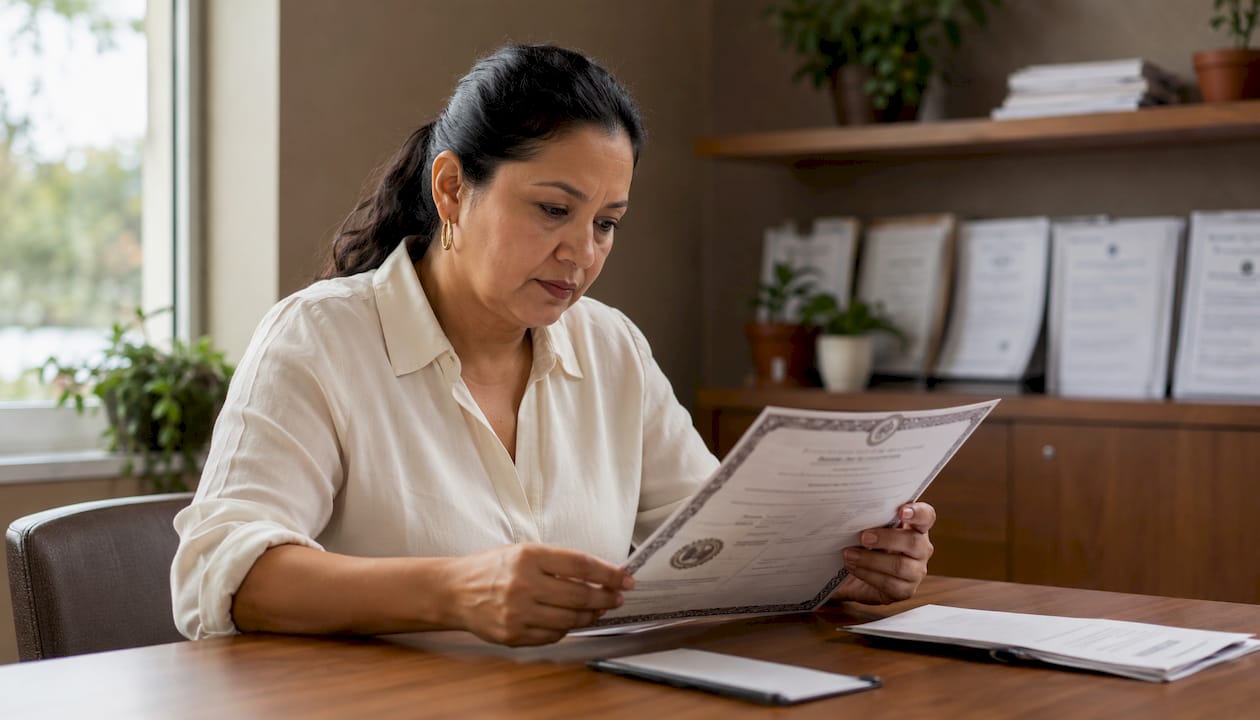
Proof of address confirms that you are applying in the correct jurisdiction. A current driver’s license, a recent utility bill, or a bank statement with your address printed on it are the most commonly accepted forms. Some counties accept a signed lease agreement. Whatever you bring, the address must match the jurisdiction where you are filing.
Photographs are required in some states and optional in others. Bring two recent passport-size photos of each applicant regardless, since some offices request them during in-person verification even when the application form does not list them explicitly.
Witness identification is where couples often get caught off guard. Your witnesses must bring valid, government-issued photo ID to the ceremony. No exceptions. The legal marriage certificate requires signatures from the couple, the officiant, and at least two witnesses, all verified on the day of the ceremony.
Additional documents that sometimes come into play include:
Divorce decree or death certificate if either party was previously married
Parental consent forms if either applicant is under 18
Affidavit of single status for foreign nationals in some states
Name change petition if you plan to change your name at the time of registration
Pro Tip: Lay every document side by side before your appointment and check that your name, date of birth, and address appear identically across all of them. A single initial discrepancy between your birth certificate and your driver’s license is enough to trigger a rejection.
Verification failures are most often caused by discrepancies in names and details across documents. Exact matches across every piece of paperwork are not optional. For a detailed breakdown of document requirements and their legal significance, Harrisandcharms covers the full scope of what is typically required.
What is the difference between a marriage license and a marriage certificate?
These two documents serve completely different purposes, and confusing them is a planning mistake that catches couples off guard more often than you would expect.
A marriage license is permission to marry. You apply for it before the ceremony, pay the fee, and receive a document that authorizes the upcoming marriage. Most US states issue the license immediately, though some impose a waiting period of 24–72 hours before it becomes valid. The license has an expiration date that varies by state, so timing your ceremony within the valid period matters.
A marriage certificate is legal proof that the marriage happened. It is issued after the ceremony is complete, once the officiant and witnesses have signed the license. The signed document is then returned to the county clerk’s office, which processes it and issues the official certificate. That certificate is what you will use for every legal purpose afterward: updating your Social Security record, changing your name on a passport, adding a spouse to health insurance, or applying for a spousal visa.
A few points that catch couples off guard:
The license and the certificate are two separate documents issued at different stages
Losing or failing to return the signed license to the clerk’s office means no certificate gets issued
Certified copies of the certificate (not photocopies) are what government agencies and financial institutions require
Some states allow the officiant to file the signed license electronically; others require the couple to return it in person
Legal professionals consistently flag this distinction as one of the most consequential for couples navigating name changes or visa applications. Getting the sequence wrong, specifically assuming the license is the final document, delays everything that follows.
How to register your marriage step by step
The process varies by state, but the core sequence holds across virtually every US jurisdiction.
Determine your jurisdiction. Marriage licenses are issued by the county clerk’s office in the county where you plan to marry, not necessarily where you live. Confirm which office has authority before you do anything else.
Gather all required documents. Use the document checklist from the previous section. Both applicants must appear in person at the clerk’s office; you cannot send a representative.
Complete the application form. Most counties offer the form online for pre-completion, but you will still need to sign it in person. Fill it out carefully. Errors on the form itself cause the same delays as document mismatches.
Pay the application fee. Fees are paid at the time of application. Accepted payment methods vary by county, so check in advance whether the office takes cash, card, or check.
Receive your marriage license. If your state has a waiting period, note the date the license becomes valid. Mark the expiration date on your calendar immediately.
Complete the ceremony with your officiant and witnesses. The officiant, both spouses, and at least two witnesses must sign the license at the ceremony. All signatories need valid photo ID present.
File the signed license with the county clerk. This step is often the officiant’s responsibility, but confirm it explicitly. The clerk’s office processes the signed license and issues the official marriage certificate.
Request certified copies. Order at least three certified copies when you file. You will need them for Social Security, passport, and financial accounts, and ordering them later costs more time and sometimes more money.
Online portals have made the application stage faster in many counties, but online submission does not mean full processing without in-person verification. Couples who assume their application is complete after uploading documents online often discover weeks later that an in-person appointment was still required. Track your application status actively after submission. For apostille or international authentication of your certificate, apostille registration services can guide you through the next steps.
Common mistakes and expert tips for a smooth registration
Most registration problems are preventable. The errors that cause the most delays tend to cluster around the same handful of issues.
Choosing the wrong office is the single most common mistake. Couples pick the nearest government office rather than the one with jurisdiction over their ceremony location. The result is a rejected application and a restart from scratch. Verify jurisdiction before you book any appointment.
Name and date inconsistencies across documents are the top reason for verification failure. Your name must appear identically on your birth certificate, your ID, and your application. If your birth certificate shows a middle name that your driver’s license omits, resolve that discrepancy before you apply, not at the counter.
Witness problems derail more ceremonies than couples anticipate. A witness who forgets their ID, arrives late, or turns out to be ineligible under state law (some states prohibit immediate family members) can invalidate the signing. Confirm witness eligibility and ID requirements with your county clerk in advance. For a deeper look at witness eligibility standards and what valid identification looks like in practice, Harrisandcharms covers the specifics in detail.
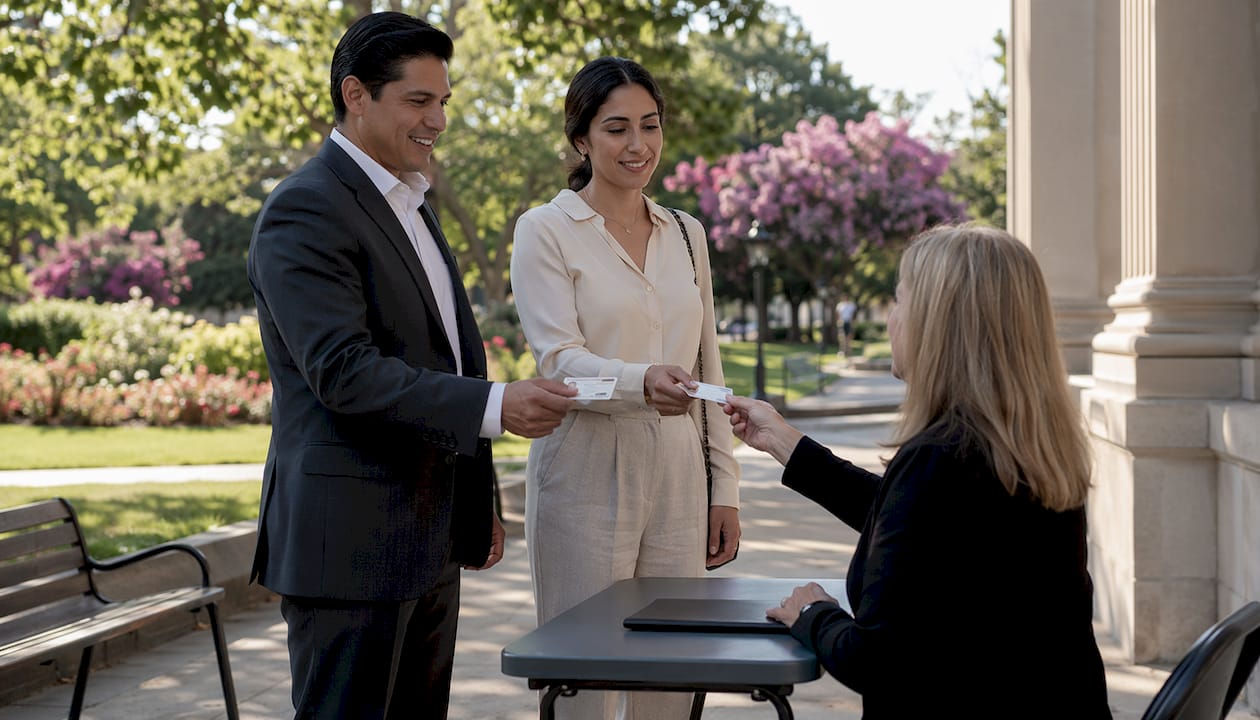
Assuming online means done is a growing problem as more counties move to digital portals. Online submission handles the paperwork stage. In-person verification and signatures remain mandatory in most jurisdictions. Monitor your application status after submission and respond promptly to any requests for additional documentation.
Ignoring public notice periods where they apply. Some states require a notice period before a marriage can be legally solemnized, particularly for certain marriage types. Factor this into your timeline well before you set a ceremony date.
Additional mistakes worth avoiding:
Waiting until the last minute to apply, leaving no buffer for corrections
Ordering only one certified copy of the certificate
Failing to confirm the officiant’s legal authorization to perform marriages in your state
Not checking whether your license has expired before the ceremony date
Pro Tip: Do a complete document review at least two weeks before your appointment. Lay out every piece of paperwork, check every name spelling, and confirm every date. Two weeks gives you time to correct errors without rushing.
For a full breakdown of common application errors and how to avoid them, the Harrisandcharms resource covers the most frequent pitfalls in detail.
Key Takeaways
Successful marriage registration requires accurate documents, the correct jurisdiction, and a clear understanding of the license-to-certificate sequence before you step into any government office.
Point | Details |
License before certificate | Apply for the marriage license first; the certificate is only issued after the ceremony is complete and signed. |
Jurisdiction determines your office | File at the county clerk’s office for the county where the ceremony takes place, not where you live. |
Document consistency is critical | Every name, date, and spelling must match exactly across all submitted documents to avoid rejection. |
Witnesses need valid ID | At least two witnesses must sign the license at the ceremony and present government-issued photo ID. |
Online submission is not the finish line | In-person verification remains mandatory in most US jurisdictions even after a digital application is submitted. |
Recommended
Comments