
What Is Contract Marriage in Islam: A 2026 Guide

TL;DR:
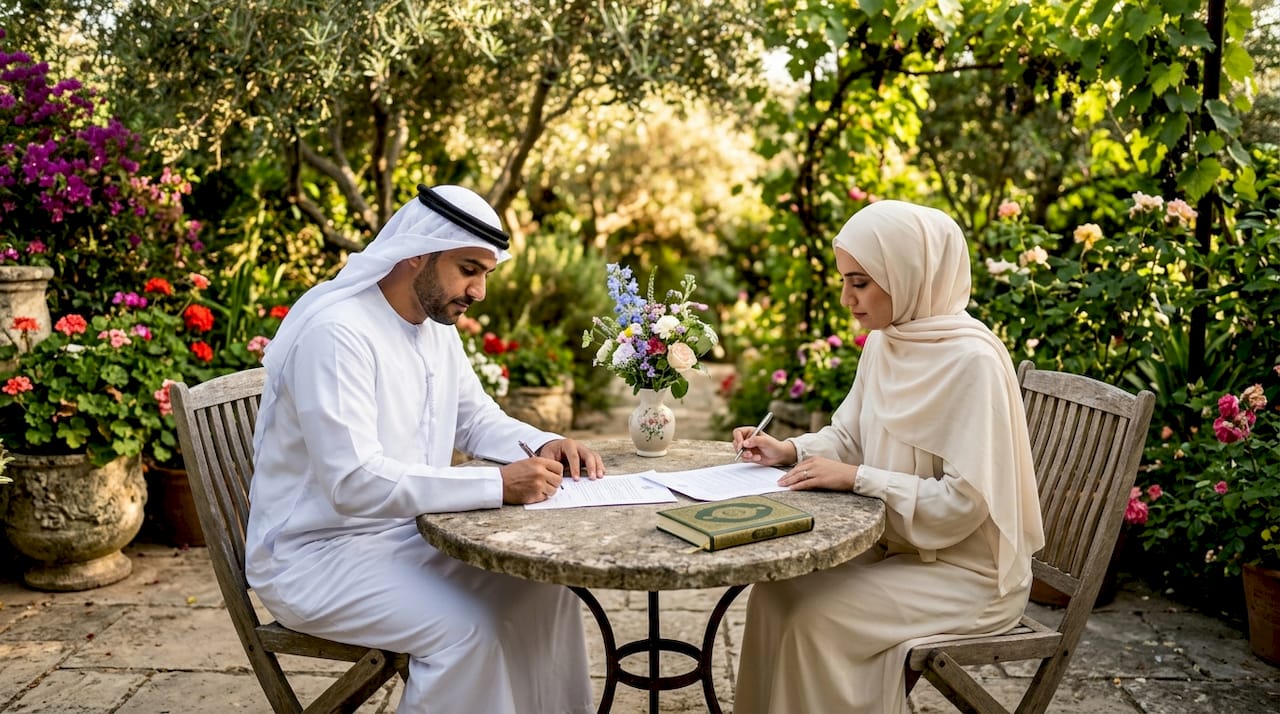
Contract marriage in Islam, called Nikah, is a religious agreement based on mutual consent, Mahr, witnesses, and often a guardian. It holds significant religious and legal weight but is rarely enforceable in Western courts without proper civil registration. Including clear conditions and registering the contract ensures both religious validity and civil legal protection.
Contract marriage in Islam is a formalized religious agreement called Nikah, defined as a binding civil and spiritual union that requires mutual consent, a mandatory financial gift (Mahr), two witnesses, and often a guardian (Wali). Understanding what is contract marriage in Islam matters for Muslims and non-Muslims alike, especially as couples navigate both religious obligations and civil legal systems across the UAE, the United States, and beyond. The Nikah contract is intentionally simple by design, yet its legal and spiritual weight is substantial.
What is contract marriage in Islam, and what makes a Nikah valid?
A Nikah is a civil contract with religious weight, requiring no priest or state official to be valid under Islamic law. The procedure centers on a public offer (ijab) and acceptance (qabul), witnessed by others, with simplicity built in to emphasize mutual consent above all else. This design is not an accident. Islam treats marriage as a serious covenant, and the contract structure reflects that priority.
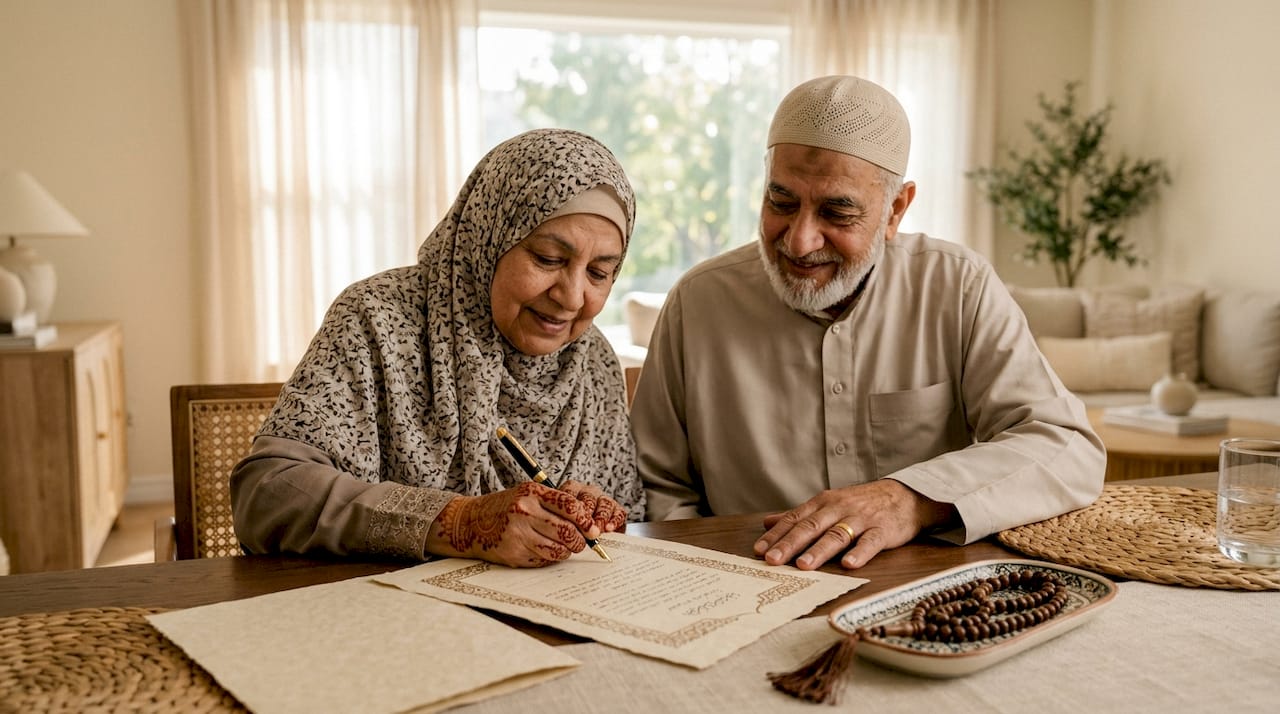
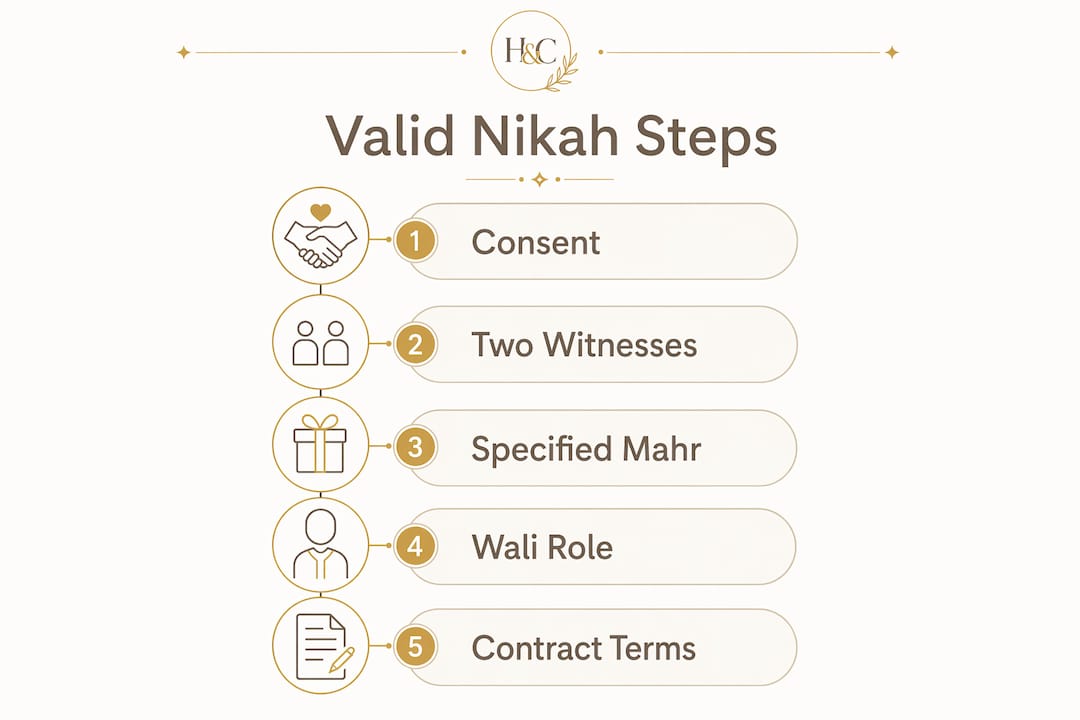
The four pillars of a valid Nikah are consent by both parties, two upright Muslim witnesses, specification or payment of Mahr, and typically the presence of a Wali. Absence of any one of these elements nullifies the marriage across major Sunni schools and the Ja’fari Shia school. Coercion by either party also invalidates the contract entirely.
The Mahr deserves special attention. It is a mandatory gift from husband to wife, and it can take the form of cash, property, gold, or even an intangible benefit such as teaching a skill. Failure to specify the Mahr renders the contract invalid. The Mahr belongs exclusively to the bride and differs fundamentally from a bride price or dowry as understood in other cultural traditions.
Pro Tip: Write the Mahr amount and its form clearly in the contract document. Vague language like “to be determined later” creates disputes and can weaken the contract’s standing in both religious and civil proceedings.
The role of the Wali across Islamic schools
The Wali’s role varies significantly depending on which school of Islamic jurisprudence applies. The Maliki, Shafi’i, and Hanbali schools require a Wali’s approval for a valid Nikah. The Hanafi and Ja’fari schools allow an adult woman to contract her own marriage without a guardian, though cultural expectation still favors the Wali’s presence. Knowing which school governs your community is not a minor detail. It directly affects whether your marriage is considered valid by your religious community and, in some jurisdictions, by civil courts.
Couples can also include lawful stipulations, called shurut, in the contract. These conditions are religiously binding as long as they do not contradict Islamic law. Common examples include the wife’s right to work, the right to initiate divorce, or a monogamy pledge from the husband.
How does contract marriage differ from temporary marriage (Nikah Mut’ah)?
Nikah Mut’ah, or Islamic temporary marriage, is a fixed-term union recognized primarily by Twelver Shia jurisprudence. It is not a permanent Nikah. The contract specifies a set duration, from a few hours to years, along with a defined Mahr. When the term expires, the marriage ends automatically unless both parties renew it.
Sunni schools generally consider Mut’ah invalid, citing prophetic traditions that prohibited the practice. Shia scholars uphold its validity based on a different reading of early Islamic history and the Quran. The core debate traces back to differing interpretations of Prophet Muhammad’s Sunnah and subsequent caliphal decrees, which shaped Sunni and Shia practices into distinct paths.
Feature | Permanent Nikah | Nikah Mut’ah (Temporary) |
Duration | Indefinite | Fixed term, agreed in advance |
Recognized by | Sunni and Shia schools | Primarily Twelver Shia |
Mahr requirement | Mandatory | Mandatory, specified upfront |
Divorce process | Required to end marriage | Contract expires automatically |
Iddah (waiting period) | Required after divorce | Required after contract ends |
Wali requirement | Varies by school | Generally not required in Shia practice |
After a Mut’ah contract ends, the wife must observe an iddah waiting period to establish clarity regarding paternity. This obligation applies even if the marriage lasted only a short time. The iddah is a critical legal safeguard within the Twelver Shia framework and is not optional.
A common misconception is that Mut’ah is simply a loophole for casual relationships. Shia jurisprudence treats it as a serious legal contract with defined rights and obligations for both parties. Critics from Sunni traditions reject it on doctrinal grounds, not because they misunderstand it, but because their scholarly tradition reads the prophetic record differently.
What are the legal challenges of Islamic contract marriage in modern courts?
An Islamic Nikah contract is rarely enforceable in U.S. civil courts without additional legal steps. Courts vary widely in how they treat Mahr, sometimes reading it as a prenuptial agreement and sometimes dismissing it entirely if it appears to involve religious duress. This creates a real gap between religious validity and civil legal protection.
The practical consequences are significant. A couple may be religiously married but have no civil legal standing. If the marriage ends, the wife may have no enforceable claim to her Mahr in a Western court without proper documentation. The Nikah contract and a civil marriage license are two separate instruments, and conflating them is a costly mistake.
Pro Tip: Couples living in Western countries should work with both an Islamic scholar and a family law attorney to draft an Islamic prenuptial agreement that integrates Nikah terms into a civil-court-enforceable document.
Practical steps to protect your rights under both systems include:
Register your Nikah with civil authorities in your country of residence.
Document the Mahr amount, form, and payment timeline in writing.
Specify all shurut (conditions) clearly in the written contract.
Have the contract reviewed by a qualified Islamic scholar and a licensed attorney.
Keep copies of the signed contract with both parties and a trusted third party.
For couples in the UAE, the process follows a structured framework under UAE Personal Status Law, which incorporates Islamic principles while providing civil registration. Harrisandcharms specializes in guiding couples through Islamic marriage registration to meet both religious and legal standards in the UAE context.
What rights and conditions can you include in an Islamic marriage contract?
The Islamic marriage contract is more flexible than most couples realize. Shurut, or lawful conditions, allow both parties to customize the agreement to reflect their specific needs and expectations. These conditions carry religious weight. Violating an agreed condition is not just a breach of contract; it is a breach of a religious obligation.
Common and legally recognized conditions include:
Wife’s right to work: The husband cannot later prohibit employment if this was agreed at the time of marriage.
Delegated right of divorce (Talaq al-Tafwid): The wife receives the right to initiate divorce under specified circumstances without needing a court process.
Monogamy pledge: The husband agrees not to take a second wife; breach of this condition can give the wife grounds for divorce.
Residence rights: Specifying where the couple will live protects against unilateral decisions to relocate.
Educational rights: The wife’s right to continue her education can be written into the contract.
The one firm limit is that no condition can contradict Islamic law itself. A condition that requires something prohibited under the Sharia is void, even if both parties agreed to it. For example, a condition waiving the wife’s right to Mahr entirely would be invalid.
Stipulations in the Nikah contract are increasingly used by modern Muslim couples to address issues that classical texts did not anticipate, including career rights, financial independence, and digital privacy. This flexibility is one of the most underappreciated features of Islamic contract marriage rules. For a deeper look at how these elements interact, the 7 key points on Islamic marriage rules from Harrisandcharms covers the full picture for couples preparing their contracts.
Key Takeaways
A valid Nikah requires mutual consent, a specified Mahr, two witnesses, and often a Wali, and without civil registration, it carries no legal protection in Western courts.
Point | Details |
Nikah is a civil and religious contract | It requires consent, Mahr, witnesses, and usually a Wali to be valid under Islamic law. |
Mahr is non-negotiable | It must be specified in the contract; vague or missing Mahr can invalidate the marriage. |
Mut’ah is a separate institution | Temporary marriage is recognized only in Twelver Shia jurisprudence and is rejected by Sunni schools. |
Civil registration is separate | A Nikah alone does not provide legal protection in Western or UAE civil courts without additional registration. |
Shurut expand your rights | Lawful conditions in the contract are religiously binding and can protect career, residence, and divorce rights. |
What I’ve learned about Nikah contracts after years in UAE marriage services
Most couples come to me thinking the Nikah is a formality. They focus on the ceremony, the venue, the dress. The contract gets five minutes at the end of a long planning conversation. That is exactly backwards.
The Nikah contract is the marriage. Everything else is celebration. I have seen couples face serious disputes because the Mahr was never written down clearly, or because conditions they verbally agreed on were never formalized. In a UAE court or a U.S. family court, verbal agreements about Islamic marriage terms carry almost no weight.
What surprises people most is the flexibility the contract actually offers. The shurut system is genuinely powerful. A wife who negotiates delegated divorce rights at the time of marriage has real legal and religious recourse if the marriage breaks down. A wife who does not negotiate those rights is in a much harder position. The contract is the moment to have that conversation, not after problems arise.
The Mut’ah debate is another area where I see a lot of confusion. People from Sunni backgrounds often assume Mut’ah is simply invalid everywhere. People from Shia backgrounds sometimes assume it is universally accepted. Neither is true. The theological divide is real, and it matters practically, especially for interfaith or cross-school couples. Respecting that divide, and getting proper guidance from a scholar who knows your specific tradition, is the only responsible path.
My strongest advice: treat the Nikah contract as seriously as you would treat any major legal agreement. Read it. Understand it. Add conditions that reflect your actual life. And then register it properly with civil authorities so that your religious commitment has civil protection too.
— Harris
Planning your Islamic marriage in the UAE? Harrisandcharms can help
Navigating Islamic and civil marriage requirements at the same time is genuinely complex, especially in the UAE where both systems operate in parallel.

Harrisandcharms offers tailored packages that cover Islamic marriage registration, documentation, and civil ceremony coordination across the UAE. The team handles Mahr documentation, contract preparation, and the civil registration steps that give your Nikah full legal standing. Whether you need a complete civil marriage package in Dubai or a full-service plan covering both religious and civil requirements, Harrisandcharms builds the process around your specific needs. Reach out directly to start a conversation about your marriage plans.
FAQ
What is the difference between a Nikah and a civil marriage?
A Nikah is a religious contract valid under Islamic law, while a civil marriage is a state-registered legal union. In most Western countries and the UAE, both are required for full legal protection.
Is the Mahr mandatory in an Islamic marriage contract?
Yes. The Mahr is mandatory and must be specified in the contract. It belongs exclusively to the wife and cannot be waived at the time of marriage.
What is muta marriage, and is it accepted across Islam?
Nikah Mut’ah is a fixed-term temporary marriage recognized in Twelver Shia Islam. Sunni schools reject it as invalid based on prophetic traditions prohibiting the practice.
Can a woman add conditions to her Islamic marriage contract?
Yes. Lawful conditions called shurut are religiously binding when included in the Nikah. Common examples include the right to work, delegated divorce rights, and monogamy pledges.
Is a Nikah contract enforceable in U.S. courts?
A Nikah alone is rarely enforceable in U.S. civil courts without additional steps. Couples need a civil marriage license and ideally an Islamic prenuptial agreement to protect contract terms legally.
Recommended
Comments