
Why Legalize Marriage UAE – Key Benefits for Expats


Most American and international couples in the United Arab Emirates discover quickly that marriage legalization involves far more than just a ceremony. The surge in civil marriage registrations reflects a growing need for clarity among expatriates on laws, documentation, and embassy requirements. UAE reforms have improved legal pathways, yet details often remain confusing for those balancing cultural, legal, and personal priorities. This guide breaks down exactly what you need to know before starting your marriage journey here.
Table of Contents
Key Takeaways
Point | Details |
Legalization Options | Expatriates in the UAE can choose between Islamic and Civil Marriage, providing flexible pathways tailored to their cultural backgrounds. |
Essential Documentation | Key requirements for marriage include valid passports, medical certificates, and no objection letters from embassies, with specific nuances based on the chosen marriage type. |
Benefits of Registration | Legal marriage registration grants expatriates rights to residency, inheritance protection, and legal standing in property matters, enhancing personal and financial security. |
Risks of Informal Unions | Unregistered marriages can lead to severe legal consequences, such as loss of residency and financial insecurity, highlighting the importance of formal legal processes. |
Legalizing Marriage in the UAE: Core Concepts
Navigating marriage legalization in the United Arab Emirates represents a complex but increasingly streamlined process for expatriates. The UAE has transformed its marriage regulations through comprehensive legal reforms, particularly Federal Decree Law No. 41 of 2022, which significantly expanded legal pathways for civil marriages. These changes provide non-Muslim residents unprecedented flexibility in choosing marriage frameworks that align with their personal and cultural backgrounds.
Under current UAE regulations, expatriates have two primary marriage legalization routes: Islamic Marriage and Civil Marriage. Civil marriage now offers non-Muslim couples the opportunity to register their union through secular legal mechanisms, with options to either follow their home country’s legal standards or adopt UAE civil provisions. This flexibility represents a substantial shift from previous restrictive marriage registration protocols. Legal implications of marriage in the UAE continue to evolve, creating more inclusive frameworks for international residents.
Key requirements for marriage legalization in the UAE include:
Valid passport and visa documentation
Proof of marital status (for previously married individuals)
Medical fitness certificates
No objection certificates from respective embassies
Age verification (minimum marriage age is 21)
Translated and authenticated documentation
Pro Tip: Embassy Authentication Strategy: Always initiate your document authentication process at least 3-4 weeks before your planned marriage registration to account for potential bureaucratic processing times and unexpected administrative requirements.
The UAE’s progressive marriage laws now recognize the diverse backgrounds of its international population, providing clear pathways for legal union that respect individual cultural and religious preferences. Expatriate couples can confidently pursue marriage registration knowing they have multiple legal options tailored to their specific circumstances.
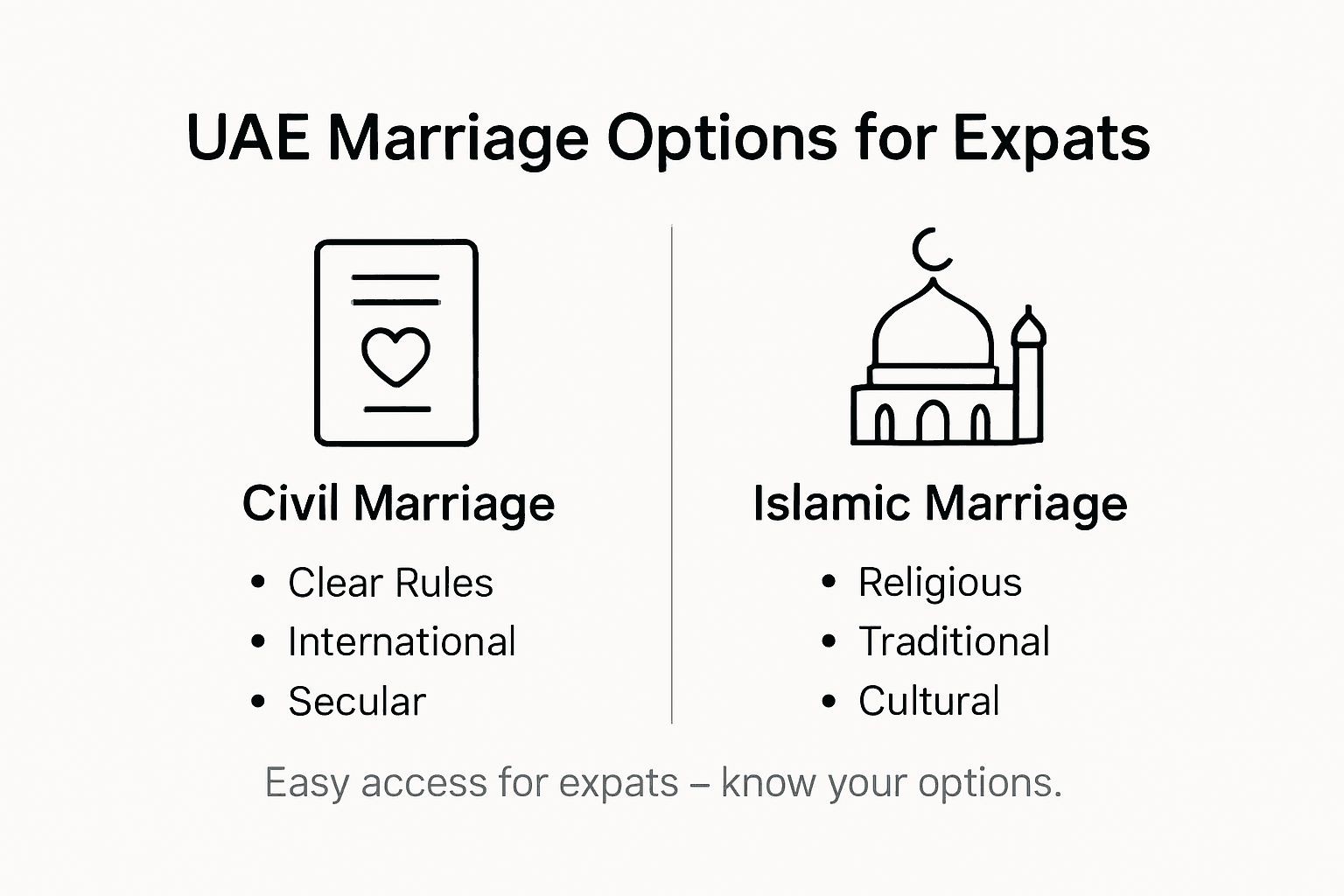
Civil vs. Islamic Marriages: Key Differences
The United Arab Emirates offers two distinct marriage frameworks that cater to the diverse needs of its international population: Islamic and civil marriages. These pathways represent fundamentally different approaches to legal union, each with unique procedural requirements and philosophical foundations. Civil marriage in Dubai provides expatriates with unprecedented flexibility in navigating marital legalities.
In Islamic marriages, religious traditions play a central role, with ceremonies strictly adhering to Sharia principles. Key characteristics include:
Mandatory religious ceremony
Requirement of guardian consent for women
Marriages conducted by authorized religious officials
Compliance with Islamic marital law principles
Emphasis on religious compatibility between partners
Conversely, civil marriages represent a secular alternative designed for non-Muslims and international residents. These unions focus on legal contracts rather than religious rites, offering significant advantages:
Interfaith marriage permissions
Secular legal framework
Greater individual autonomy
International legal recognition
Simplified documentation processes
Flexibility in marriage registration
The fundamental distinction lies in the philosophical approach: Islamic marriages are deeply rooted in religious tradition, while civil marriages prioritize legal frameworks and individual choice. Expatriate couples can select the pathway that best matches their cultural background, personal beliefs, and legal requirements.
Here’s a concise comparison of Islamic and Civil Marriage frameworks in the UAE:
Aspect | Islamic Marriage | Civil Marriage |
Governing Law | Sharia principles | Secular UAE law |
Ceremony Type | Religious ritual | Legal registration only |
Eligibility Focus | Religious compatibility | Personal/cultural background |
International Validity | May need extra validation | Globally recognized process |
Pro Tip: Documentation Strategy: Always consult your respective embassy and a local legal expert to understand the specific documentation requirements for your chosen marriage type, as nuanced differences can significantly impact your registration process.
Legal Requirements and Documentation Needed
Marriage legalization in the United Arab Emirates requires meticulous attention to documentation and strict adherence to legal protocols. Marriage requirements in UAE involve a comprehensive set of legal standards designed to ensure the validity and recognition of marital unions across different cultural and religious backgrounds.
Key documentation requirements for marriage in the UAE include:
Valid passports for both partners
Emirates ID (for UAE residents)
Birth certificates
Proof of single status or divorce certificate
Passport-sized photographs
Medical fitness certificates
No objection certificates from respective embassies
Specific legal prerequisites vary depending on the type of marriage:
For Muslim Marriages:
Premarital medical screening
Guardian consent for female participants
Islamic marriage contract
Two male Muslim witnesses
For Civil Marriages:
Translated and attested documents
Proof of legal residency
Signed legal marriage contract
Notarized documentation from home country
The UAE mandates strict age requirements, with both parties needing to be at least 18 years old. Additionally, couples must demonstrate free consent and absence of close familial relationships that would prohibit marriage. Non-Muslim expatriates have the flexibility to choose between following their home country’s legal standards or adopting UAE civil marriage provisions.
Pro Tip: Documentation Authentication: Always initiate the document translation and attestation process at least 4-6 weeks before your planned marriage date, as bureaucratic procedures can be time-consuming and unexpected delays are common.
Benefits of Legalizing Marriage for Expats
Legalizing marriage in the United Arab Emirates offers expatriates a comprehensive set of legal protections and social advantages that extend far beyond a simple ceremonial union. Why get married in UAE as a foreigner reveals the transformative potential of formal marriage registration for international residents seeking stability and recognition.
The primary legal benefits for expats include:
Spousal residency and visa sponsorship rights
Legal inheritance protections
Child custody and guardianship clarity
Property ownership and joint asset management
Healthcare decision-making authority
Social security and insurance benefits
Enhanced legal standing in UAE courts
Residence and Immigration Advantages: Legally married expatriates gain significant immigration benefits, including the ability to sponsor family members, secure long-term residency permits, and establish a more stable legal framework for their personal and professional lives. The marriage certificate becomes a critical document for navigating UAE’s complex administrative systems, providing a foundation for future legal and personal opportunities.

Beyond legal protections, marriage registration offers emotional and social legitimacy for couples navigating the complex multicultural landscape of the United Arab Emirates. International couples receive formal recognition that transcends cultural boundaries, ensuring their relationship is respected and protected under UAE law.
Summary of key advantages for expatriates who complete legal marriage registration in the UAE:
Benefit Type | Description | Long-Term Impact |
Residency | Spousal sponsorship enabled | Stable visa and residency options |
Asset Protection | Joint property management | Secured financial future |
Legal Recognition | Court protections and rights | Stronger claim in legal disputes |
Family Security | Clear custody and inheritance | Safeguarded child rights |
Pro Tip: Strategic Documentation: Always maintain multiple certified copies of your marriage certificate and have them translated, as these documents are crucial for various administrative processes, from visa applications to property transactions.
Risks of Unregistered or Informal Marriages
Unregistered marriages in the United Arab Emirates expose expatriates to significant legal and personal vulnerabilities that can have profound long-term consequences. Marriage under UAE law reveals the complex legal landscape that makes informal unions particularly risky for international residents.
The most critical legal risks of unregistered marriages include:
Immediate loss of residency status
No legal recognition of marital relationship
Inability to sponsor spouse for residency
Restricted inheritance rights
No legal standing in property disputes
Potential deportation
Criminal penalties for non-compliance
Financial and Social Consequences: Beyond legal ramifications, unregistered marriages create substantial financial insecurity. Couples lack protection in critical areas such as healthcare decision-making, joint asset management, and social security benefits. Informal unions essentially leave partners vulnerable, with no legal mechanism to enforce rights or seek recourse in case of disputes.
The UAE government takes marriage registration extremely seriously, implementing stringent regulations to protect both local and expatriate populations. Couples engaging in unregistered marriages risk not just administrative penalties, but potentially complete invalidation of their relationship, which can impact everything from visa status to child custody arrangements.
Pro Tip: Legal Shield Strategy: Always consult with a legal professional specializing in UAE marriage laws before entering any marital arrangement, ensuring complete compliance and protecting your long-term legal and personal interests.
Simplify Your Marriage Legalization Journey in the UAE Today
Legalizing your marriage in the UAE can be overwhelming with strict documentation requirements and complex legal choices between Islamic and civil marriages. Many expatriates face challenges such as embassy authentication, residency sponsorship, and ensuring their union is recognized internationally. To successfully secure your rights and benefits, you need trusted support that understands these critical steps and cultural sensitivities.
Harris & Charms offers personalized assistance to navigate every detail from legal document processing and medical certificate guidance to seamless event planning that celebrates your unique story. Their expert team helps you avoid common pitfalls by managing authentication timelines and meeting regulations to protect your marriage’s legal standing. Discover how their experience can transform your plans into a stress-free reality with proven solutions for expats.

Start your journey with confidence by choosing comprehensive wedding and marriage services designed specifically for the UAE expatriate community. Visit Harris & Charms now and explore how easy your marriage registration process can be. Learn more about their expert support on Civil Marriage in Dubai Explained and why Getting Married in UAE as a Foreigner makes all the difference. Take action today to secure your legal rights and embrace the benefits of a properly registered marriage.
Frequently Asked Questions
What are the benefits of legalizing marriage for expatriates?
Legalizing marriage provides expatriates with legal protections such as spousal residency rights, inheritance rights, and clarity in child custody matters, which enhances their legal standing within the jurisdiction.
How can legalizing marriage impact residency and immigration status for expats?
Legally married expatriates can sponsor their spouses for residency, secure long-term residency permits, and create a more stable legal framework for personal and professional lives in the region.
What legal requirements are necessary for marriage registration for expats?
Key requirements include valid passports, medical fitness certificates, proof of marital status, and no objection certificates from embassies. Additionally, couples must meet specific age and documentation standards based on their chosen marriage type.
What are the risks associated with unregistered marriages for expatriates?
Unregistered marriages pose significant risks such as loss of residency status, lack of legal recognition, inability to sponsor a spouse, and restricted inheritance rights, leaving partners vulnerable to legal and financial consequences.
Recommended
Comments