
UAE pre-marital screening: 6-month certificate rules 2026


Many couples believe pre-marital screening in the UAE is optional for expatriates. It’s not. The law requires all couples, nationals and expatriates alike, to complete mandatory testing before registering any marriage in the UAE. Delays, confusion, and registration roadblocks often stem from misunderstanding these requirements. This guide clarifies which tests you must take, how long certificates remain valid, and what you need to know to marry legally and smoothly in the UAE.
Table of Contents
Key takeaways
Point | Details |
Mandatory for everyone | Pre-marital screening is legally required for all couples marrying in the UAE, including expatriates. |
Tests cover infections and genetics | Screening includes HIV, Hepatitis B & C, syphilis, thalassemia, sickle cell, and genetic panels for Emiratis. |
Certificates expire in 6 months | Your screening certificate must be valid at marriage registration or you’ll face delays. |
Costs and timelines vary | UAE nationals pay AED 100 and expatriates pay AED 250, with results in 5 to 17 working days. |
Counseling supports informed decisions | Post-test counseling helps couples understand genetic risks and plan for healthy families. |
Overview of pre-marital screening in the UAE
The UAE mandates pre-marital screening for all couples marrying within its borders. This legal requirement serves public health goals by preventing infectious disease transmission and reducing hereditary genetic disorders. Whether you plan a civil ceremony in Dubai or an Islamic marriage in Abu Dhabi, you cannot skip this step.
The law applies equally to UAE nationals and expatriates. Federal Law No. 51 of 2006 established the requirement to promote healthy family formation and protect future generations. Screening helps identify potential health risks early, giving couples time to make informed decisions about marriage and family planning.
Here’s what you need to know about who must comply:
All couples registering marriages in the UAE, regardless of nationality or religion
Both partners in civil and Islamic marriages across all seven emirates
Emirati citizens marrying other Emiratis or expatriates
Expatriates marrying within the UAE, whether to another expatriate or a national
Couples must complete screening before any marriage contract can be legally registered
The program supports UAE public health initiatives by reducing the prevalence of preventable diseases and genetic conditions in future generations.
Mandatory medical tests and coverage
You’ll undergo blood tests screening for core infectious diseases and hereditary conditions. The screening panel includes tests for HIV, Hepatitis B & C, syphilis, Beta-thalassemia, and sickle cell anemia. Medical centers also check blood group compatibility and assess Rubella immunity to protect pregnancy outcomes.
Emirati nationals face more extensive requirements. Recent regulations mandate genetic testing covering 570 genes linked to over 840 hereditary disorders for all Emirati citizens. This expanded screening identifies rare genetic conditions that could affect children, allowing couples to understand risks before marriage.
Expatriates generally complete the core infectious disease and hereditary blood disorder panel without the comprehensive genetic testing. Requirements can vary slightly depending on which emirate you’re marrying in and whether you choose a civil or Islamic marriage registration. Some emirates may request additional tests based on local health priorities.
Here’s the standard testing coverage for all couples:
HIV and AIDS screening to prevent transmission
Hepatitis B and Hepatitis C to identify liver disease risks
Syphilis testing to detect sexually transmitted infections
Beta-thalassemia and sickle cell anemia screening to assess hereditary blood disorder risks
Blood group compatibility checks to prevent pregnancy complications
Rubella immunity assessment to protect against congenital rubella syndrome
For detailed information about mandatory pre-marital medical tests UAE, understanding the full panel helps you prepare mentally and schedule appointments appropriately.
Legal framework and compliance
Federal Law No. 51 of 2006 establishes the legal foundation requiring pre-marital screening before marriage registration. This law applies nationwide, making screening non-negotiable for any couple seeking to formalize their union in the UAE. Regulations require screening certificates valid for 6 months to be presented to marriage authorities.
Certificate validity is critical. If your certificate expires before you register your marriage, you’ll need to repeat the entire screening process. This causes delays and additional expenses, so timing matters significantly when planning your wedding and legal registration.
Failure to submit valid screening certificates prevents marriage registration. Authorities will not process your marriage contract without proof of completed screening. This applies equally to Islamic marriages conducted through Sharia courts and civil marriages registered through government departments.
The legal requirements include:
Completion of all mandatory medical tests at an authorized UAE health facility
Receipt of an official screening certificate issued by the testing center
Submission of the certificate to marriage registration authorities within 6 months of issuance
Renewal of expired certificates by repeating the full screening process
Compliance with both federal law and any additional emirate-specific requirements
Couples should plan their screening timeline carefully. Schedule tests at least two weeks before your planned registration date to allow for processing time and potential follow-up appointments if needed.
Screening procedure, costs, and timeline
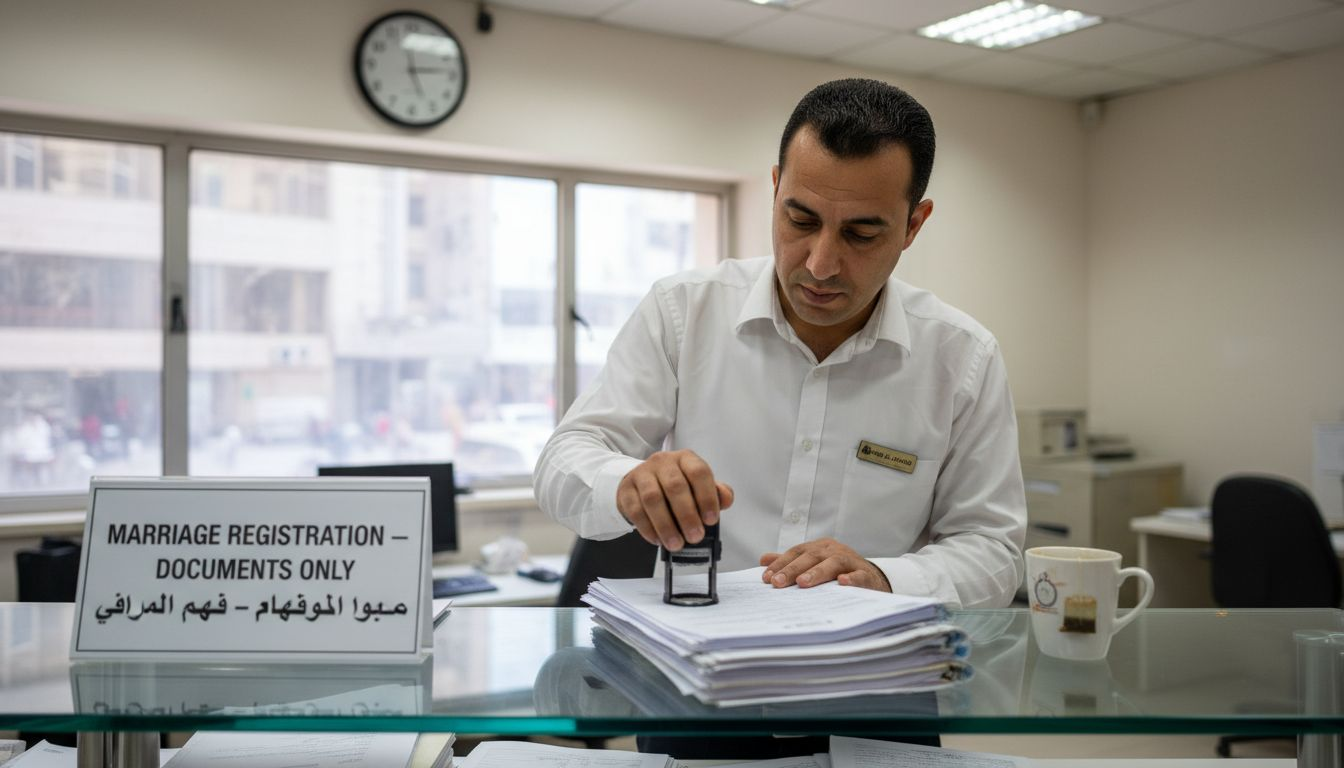
Completing your screening requires booking an appointment with an authorized UAE health center. You can schedule through official health portals online or visit approved medical facilities directly. Both partners must attend separately for blood sample collection and testing.
Here’s the step-by-step process:
Book your appointment through an official UAE health portal or authorized medical center
Attend your scheduled appointment with valid Emirates ID or passport
Provide blood samples for the required panel of tests
Complete additional genetic testing if you’re an Emirati national
Wait for test processing and results review by medical professionals
Attend a counseling session to discuss results and receive your certificate
Collect your official screening certificate if all tests are clear
Timelines vary based on nationality and test complexity. Results typically take 5 to 17 working days, with genetic testing for Emiratis requiring longer processing periods. Standard infectious disease screening for expatriates usually completes faster.
Costs are standardized but differ by nationality. UAE nationals pay AED 100 while expatriates pay AED 250 for the screening package. These fees cover all required tests, counseling, and certificate issuance.
Pro Tip: Schedule your screening at least three weeks before your planned marriage registration date to account for appointment availability, processing time, and any potential follow-up requirements.
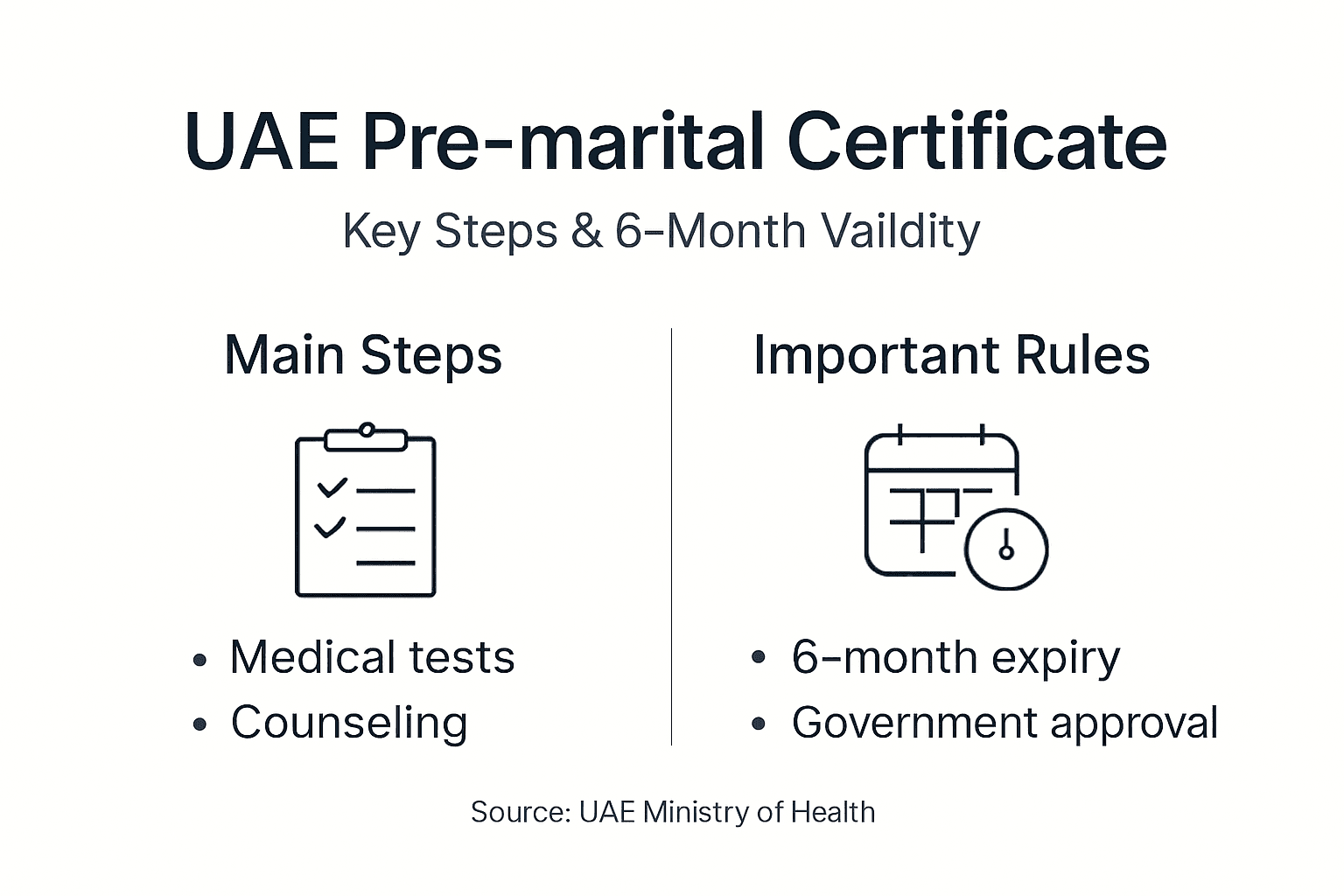
Your official certificate arrives once all tests clear and counseling completes. This certificate remains valid for exactly 6 months from the issue date. For guidance on the broader step-by-step screening process UAE, understanding each phase helps you stay organized and compliant.
Premarital counseling and post-test guidance
Counseling sessions form an integral part of the screening program. After your tests complete, you’ll meet with a healthcare professional who explains your results and their implications. This service helps you understand any health risks detected and supports informed decision-making about marriage and family planning.
The counseling educates couples on genetic risks and provides family planning advice. If tests reveal hereditary incompatibilities or positive results for infectious diseases, counselors explain what these findings mean for your future children and relationship.
Key counseling components include:
Detailed explanation of all test results in understandable language
Discussion of hereditary risks if genetic incompatibilities appear
Family planning options to reduce risk of congenital diseases
Referral to medical specialists for couples with positive or concerning results
Emotional support during what can be a stressful process
Information about treatment options and risk management strategies
Couples with positive test results or genetic incompatibilities receive specialized guidance. Counselors connect you with relevant medical specialists who can provide treatment or management plans. Early intervention improves health outcomes and helps you make confident choices.
Pro Tip: Attend your counseling session together as a couple rather than separately. This ensures you both hear the same information and can ask questions together, strengthening communication and shared understanding.
The counseling process supports your emotional well-being during screening. Learning about potential health risks can feel overwhelming, but professional guidance helps you process information and move forward with clarity.
Common misconceptions and variability in requirements
Many couples misunderstand screening requirements, leading to compliance mistakes and registration delays. Let’s address the most common myths and clarify how requirements actually differ.
Myth number one: Pre-marital screening is optional for expatriates. This is completely false. The law mandates screening for all couples marrying in the UAE, regardless of nationality or immigration status.
Myth number two: All couples undergo identical genetic testing. In reality, genetic testing is mandatory only for Emirati nationals. Expatriates typically complete the core infectious disease and hereditary blood disorder panel without the comprehensive 570-gene screening.
Another widespread misunderstanding involves certificate validity. Your screening certificate expires exactly 6 months after issuance. If you miss this window, you must repeat the entire screening process and pay again. Many couples incorrectly assume certificates remain valid indefinitely.
Requirements also differ subtly between Islamic and civil marriages and between UAE nationals and expatriates. The table below clarifies these distinctions:
Aspect | UAE Nationals | Expatriates | Islamic Marriage | Civil Marriage |
Genetic testing | 570 genes mandatory | Usually not required | Varies by emirate | Varies by emirate |
Core infectious disease tests | Required | Required | Required | Required |
Cost | AED 100 | AED 250 | Same as nationality | Same as nationality |
Certificate validity | 6 months | 6 months | 6 months | 6 months |
Processing time | 10-17 working days | 5-10 working days | Same as nationality | Same as nationality |
Key differences to remember:
Genetic testing requirements vary significantly by nationality
Costs differ between nationals and expatriates but not between marriage types
Certificates must be renewed every 6 months regardless of nationality or marriage type
Processing timelines depend more on test complexity than marriage type
Some emirates may have additional local requirements beyond federal law
Understanding these nuances prevents costly mistakes and ensures smooth registration.
Practical tips for compliance and smooth registration
Smart planning makes screening and registration painless. Following these expert recommendations helps you avoid common pitfalls and complete everything correctly the first time.
Start your screening early. Book appointments at least three to four weeks before your planned marriage registration date. This buffer accounts for appointment availability, processing delays, and any unexpected follow-up requirements.
Always use authorized and government-approved medical centers. Only certificates from approved facilities will be accepted by marriage registration authorities. Verify the center’s authorization status before booking to avoid wasting time and money on invalid tests.
Track your certificate dates carefully. Note both the issue date and expiration date prominently in your wedding planning timeline. Set reminders for one month and two weeks before expiration to ensure you register your marriage while the certificate remains valid.
Actionable compliance steps:
Schedule screening appointments immediately after deciding on a marriage date
Confirm the medical center is government-authorized before your appointment
Keep digital and physical copies of all screening documents and certificates
Check your specific emirate’s requirements if you’re an expatriate, as procedures may vary
Attend all counseling sessions seriously to understand health and hereditary risks fully
Prepare a complete document folder with screening certificates before approaching registration authorities
If your certificate approaches expiration, reschedule registration or plan for re-screening
Pro Tip: Create a shared digital folder with your partner containing all screening documents, appointment confirmations, and certificate scans. This keeps everything organized and accessible when you need to submit paperwork to registration authorities.
For comprehensive guidance on navigating the full process, explore UAE marriage registration tips that cover screening, documentation, and legal requirements in detail.
Simplify your UAE wedding with Harris & Charms
Navigating pre-marital screening requirements, documentation, and legal registration can feel overwhelming when you’re planning a wedding. Harris & Charms specializes in making this process seamless for couples marrying in the UAE.

Our comprehensive civil marriage packages UAE handle every detail from screening compliance to final marriage contract registration. We guide you through medical testing timelines, manage certificate validity tracking, and ensure all documentation meets legal requirements. Whether you’re planning a civil ceremony or Islamic marriage, our expert team removes the stress from legal compliance.
Our marriage services Dubai connect you with authorized medical centers, coordinate appointment scheduling, and provide personalized support throughout screening and registration. We’ve helped hundreds of couples navigate UAE marriage requirements successfully. Visit Harris & Charms wedding services to explore how we can transform your wedding planning experience from confusing to confident.
Frequently asked questions about pre-marital screening UAE
Who must undergo pre-marital screening in the UAE?
Every couple planning to register a marriage in the UAE must complete pre-marital screening. This includes UAE nationals marrying other nationals or expatriates, and expatriates marrying within the UAE regardless of their partner’s nationality. The law applies to both civil and Islamic marriages across all seven emirates without exception.
What tests are done in the pre-marital screening?
All couples undergo blood tests for HIV, Hepatitis B and C, syphilis, Beta-thalassemia, and sickle cell anemia. Blood group compatibility and Rubella immunity are also assessed. Emirati nationals must complete additional genetic testing covering 570 genes linked to over 840 hereditary disorders, while expatriates typically do not undergo this expanded genetic panel.
How long is the pre-marital screening certificate valid?
Your screening certificate remains valid for exactly 6 months from the issue date. You must submit this certificate to marriage registration authorities while it’s still valid. If the certificate expires before you register your marriage, you’ll need to repeat the entire screening process and pay the fees again.
Are there different requirements for Islamic vs civil marriages?
The core screening requirements remain the same for Islamic and civil marriages. All couples must complete the mandatory medical tests regardless of marriage type. However, some emirates may have slight procedural variations in how you submit screening certificates, so verify specific requirements with your local marriage registration authority.
What happens if screening reveals a genetic incompatibility?
Counseling sessions help you understand the implications of any genetic incompatibility or positive test results. Healthcare professionals explain hereditary risks for potential children and discuss family planning options. You’ll receive referrals to medical specialists who can provide treatment plans or risk management strategies. The screening program aims to inform your decisions, not prevent your marriage.
Can I use a screening certificate from my home country?
No. UAE authorities only accept screening certificates issued by authorized UAE medical facilities. Tests completed in your home country or another jurisdiction will not be recognized for marriage registration purposes. You must complete the full screening process at an approved UAE health center regardless of any prior testing.
Recommended
Comments