
Pre-Marital Medical Test UAE: What Couples Must Know


Preparing for marriage as an expat or foreign national in the UAE means facing a unique set of steps, and one of the most important is the mandatory pre-marital medical test. This legal requirement applies to everyone planning to marry in the UAE—citizens, residents, and visitors alike. Early detection of genetic or infectious diseases is the cornerstone of building healthy families and ensuring safe marriages. Discover exactly what the screening involves, how to navigate the process, and how your health certificate fits into marriage documentation.
Table of Contents
Key Takeaways
Point | Details |
Mandatory Testing for All Couples | All couples intending to marry in the UAE must undergo a pre-marital medical test, regardless of nationality or residency status. |
Comprehensive Health Screening | The test includes screenings for infectious diseases and hereditary conditions critical for family planning. |
Certificate Required for Marriage Registration | A valid health certificate is necessary to register your marriage with any UAE authority, ensuring compliance with legal requirements. |
Early Detection Benefits | Identifying health issues early allows couples to make informed decisions regarding family planning and potential medical interventions. |
Pre-Marital Medical Test in the UAE Explained
The pre-marital medical test is a mandatory health screening required for all couples planning to marry in the UAE. This isn’t optional—it’s a legal requirement that applies whether you’re a UAE citizen, resident, or expat.
The primary goal is straightforward: create healthy families by identifying infectious diseases and hereditary conditions early. When you know your health status before marriage, you can make informed decisions about your family’s future.
Here’s what the screening covers:
Infectious diseases including HIV, Hepatitis B and C, and syphilis
Hereditary blood disorders like Beta-thalassemia and sickle cell anemia
Blood group and compatibility testing
German measles immunity status
General genetic screening for inherited conditions
Early detection of genetic or infectious diseases allows couples to plan their families responsibly and reduce the risk of congenital disabilities.
The process is managed through authorized health centers across the UAE. You’ll need to book an appointment, provide identification, undergo blood tests, and receive your health certificate within a set timeframe. Most couples complete the entire process in 2-3 weeks.
One important note: understanding your health status now supports informed family planning. Whether you’re discovering compatible blood types or learning about genetic risks, this screening gives you the information you need. The medical counseling that accompanies testing helps explain results and what they mean for your specific situation.
You’ll also want to verify marriage eligibility requirements in the UAE alongside these medical tests, as they work together as part of your overall marriage preparation.
The certificate you receive after passing the test becomes part of your required marriage documentation. Without it, you cannot proceed with registration at any UAE marriage authority, whether for civil or Islamic ceremonies.
Pro tip: Book your pre-marital medical tests at least 6-8 weeks before your intended marriage date to account for testing, results processing, and any follow-up consultations—this prevents last-minute stress and ensures you have time to discuss any findings with medical professionals.
Who Must Undergo Testing and Why It’s Required
Testing is mandatory for all couples planning to marry in the UAE, regardless of nationality or residency status. Whether you’re a UAE citizen, resident expat, or visiting from abroad, you cannot legally marry without completing this screening.
The requirement applies to anyone aged 18 and above. If either partner is under 18, a legal guardian must accompany them to appointments and provide consent for testing.
Here’s who specifically needs to complete testing:
Both partners in the couple (both must be tested)
UAE citizens of marriageable age
Resident expatriates planning to marry in the UAE
Foreign nationals getting married through UAE authorities
Anyone under 18 with documented parental or guardian consent
The UAE requires testing for all couples to create disease-free families and reduce the transmission of hereditary and infectious diseases across generations.
Why is this requirement so strict? The UAE government has a clear public health goal: identify and manage hereditary and infectious diseases before they affect family planning. Early detection lets couples make informed decisions about their health and their future children.
Without a valid pre-marital health certificate, you cannot register your marriage at any UAE authority. It’s not something you can skip or complete after marriage—it must be done before registration.
The testing requirement protects both individuals and public health. When couples know their genetic and infectious disease status upfront, they can seek medical counseling, understand risks, and take preventive steps. This approach has significantly reduced the prevalence of genetic disorders in UAE families.
Expats often ask if they can get tested in their home country instead. The answer is no—your tests must be conducted through UAE-authorized health centers to be recognized for marriage registration. Tests from international clinics won’t satisfy the legal requirement, even if they’re from reputable hospitals.
Your health status becomes part of your official marriage documentation. Think of it as a health clearance certificate that travels with your marriage file through every registration step.
Pro tip: Bring both partners’ valid identification documents, original passports, and proof of UAE residency (if applicable) to your first appointment—having these ready prevents scheduling delays and ensures your results are properly recorded in the UAE health system.
What the Pre-Marital Test Covers for Couples
The pre-marital test is comprehensive, covering both infectious diseases and hereditary conditions. Understanding what gets screened helps you know what to expect and why each test matters for your future family.
Infectious disease testing is straightforward. Blood tests check for HIV, Hepatitis B and C, and syphilis. These screenings protect both partners and any future children from preventable infections.
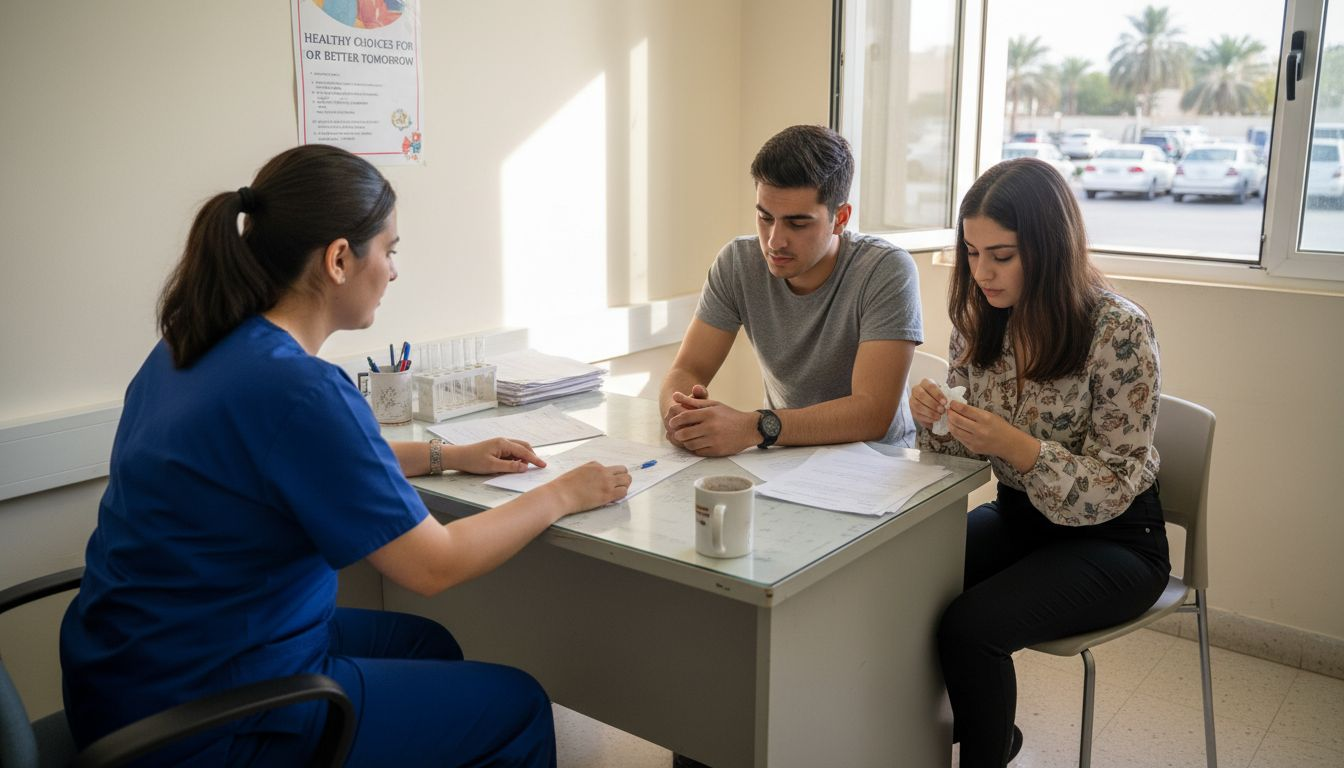
Hereditary blood disorders receive special attention in the UAE. The testing includes screening for sickle cell anemia and thalassemia, two genetic conditions that can severely impact quality of life. Detection early allows families to plan accordingly.
Here’s the complete breakdown of what gets tested:
Blood tests for HIV, Hepatitis B and C, and syphilis
Genetic screening for sickle cell anemia and thalassemia
Blood group and Rhesus (Rh) factor compatibility
Rubella (German measles) immunity status
Additional genetic testing for UAE nationals screening multiple inherited disorders
Blood group and Rh factor compatibility help identify potential complications during pregnancy, allowing medical teams to prepare appropriate care from day one.
Blood group compatibility matters more than most couples realize. Incompatibility between partners can cause complications during pregnancy, but knowing your blood types in advance lets healthcare providers monitor and manage any risks.
Rubella immunity testing is equally important. If you’re not immune to German measles, the test results guide whether you need vaccination before pregnancy. This simple preventive step protects unborn children from serious birth defects.
The complete test package as part of your marriage preparation in the UAE ensures you and your partner understand your health status thoroughly.
Medical counseling comes with your results. A healthcare provider explains what each test means, discusses any positive findings, and outlines next steps if necessary. This isn’t just testing—it’s personalized health guidance for your specific situation.
Vaccines may be offered if your immunity tests show gaps. For example, if you’re not protected against rubella, the clinic can administer the vaccine during your visit, taking one more step toward healthy family planning.
Pro tip: Request printed copies of all your test results and keep them in a secure folder alongside your health certificate—you may need specific details when registering your marriage or planning pregnancies, and having documentation prevents delays later.
Testing Process, Costs, and Validity Period
Getting tested is straightforward. You book an appointment through an authorized health center, complete your blood tests, and receive results within days. The entire process is designed to be quick and convenient for busy couples.
Booking happens online or by phone through the Emirates Health Services (EHS) platform. You’ll select a testing center, choose your preferred date and time, and receive confirmation. Both partners must schedule appointments, though you can book them on the same day or separately.
Here’s what the testing timeline looks like:
Standard test results: 5 working days for most residents
Genetic testing results: up to 17 days for comprehensive genetic screening
Certificate issuance: immediately upon completion of all tests
Results access: through the EHS mobile app and printed certificate
Certificate validity lasts three to six months from issue date, so plan your marriage registration within this window to avoid retesting.
Costs are straightforward and affordable. UAE citizens pay AED 100, while non-citizens and residents pay AED 250. These are standardized government fees with no hidden charges. Most couples find this investment minimal compared to overall wedding expenses.
The certificate you receive is valid for three to six months. This timeframe gives you flexibility to complete marriage registration, plan your wedding, and adjust schedules as needed. However, don’t wait until the last month—unexpected delays happen with documentation.
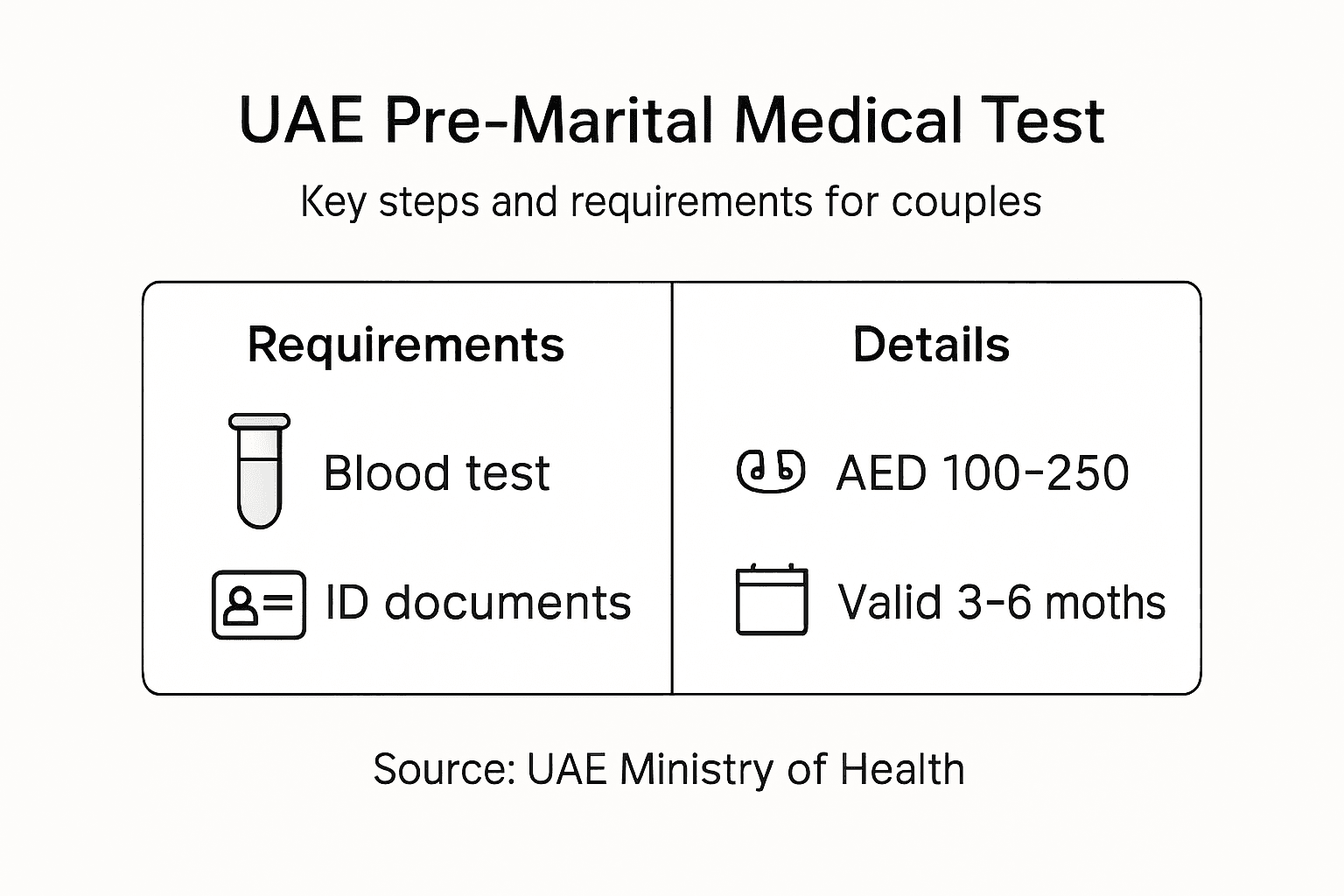
Testing centers are located throughout the UAE. You can visit any authorized facility near your home or workplace. Results are stored securely in the EHS system and accessible through their mobile app for convenience.
Genetic testing takes longer because laboratories perform more detailed analysis. If you’re concerned about timing, ask your health center upfront whether standard tests will suffice or if comprehensive genetic screening is necessary for your situation.
After results arrive, you’ll receive counseling from a healthcare provider who explains findings and answers questions. This consultation is included in your test cost and provides peace of mind before marriage registration.
Here is a quick overview of the main steps and timing involved in the UAE pre-marital medical test process:
Step | Description | Usual Timeframe |
Appointment Booking | Schedule via EHS online platform or phone | Instantly to a few days |
Blood & Sample Collection | Attend center for required lab tests | Same day as appointment |
Results Processing | Labs analyze samples for diseases and genetics | 5–17 working days |
Counseling Session | Medical professional explains your results | Within 1–2 days of results |
Certificate Issuance | Receive printed health certificate | Immediately after counseling |
Pro tip: Schedule your pre-marital tests at least 8-10 weeks before your intended marriage registration date—this ensures you receive results, complete any necessary follow-up consultations, and have your certificate ready without time pressure or the risk of expiration.
Understanding Test Results and Common Challenges
Test results fall into two categories: clear results or findings requiring counseling. A clear result means you’re free of infectious diseases and don’t carry problematic genetic traits. This is the outcome most couples hope for.
Finding abnormalities doesn’t mean you can’t marry. The screening report is advisory, not prohibitive. Couples with positive findings receive counseling to understand implications and explore options for family planning.
Genetic compatibility matters most when both partners carry the same disease-causing mutation. If you both carry the trait for a hereditary condition, your children face higher risk. Medical counseling explains this clearly and helps you make informed decisions.
Common results scenarios include:
Compare typical outcomes and their next steps for couples receiving pre-marital screening results in the UAE:
Result Scenario | What It Means | Recommended Next Steps |
Clear Status | No infections or high-risk genetics detected | Proceed with marriage registration |
Single Carrier Identified | One partner carries a recessive gene | Counseling; informed family planning |
Double Carrier/Incompatibility | Both carry same genetic trait | Genetic counseling; specialist advice |
Infectious Disease Found | Active transmissible infection diagnosed | Medical treatment prior to marriage |
Clear status: no infectious diseases or genetic carriers
Carrier status: you carry one copy of a recessive gene without symptoms
Incompatibility: both partners carry mutations for the same condition
Infectious disease detection: requiring medical treatment before pregnancy
Genetic counseling is not a judgment—it’s guidance to help you understand your health and make family planning decisions that feel right for you.
Emotional stress is real. Learning you or your partner carries a genetic trait can feel overwhelming. This is completely normal, and counselors are trained to support couples through these discussions.
Many couples worry about what abnormal results mean for their marriage. The truth: finding issues early gives you power. You can pursue treatment, plan pregnancies carefully, or consult specialists before conception.
Some couples struggle with decision-making after learning results. Should you proceed with marriage? Have biological children? Consider adoption or other options? These are deeply personal questions, and counselors help you explore them without pressure.
Interpreting complex genetic results requires expertise. Don’t rely on online research alone—ask your healthcare provider for detailed explanations. If results are unclear, request referral to a genetic specialist for additional consultation.
Communication with your partner is crucial. Discuss results together, process emotions, and decide next steps as a team. Transparency now prevents misunderstandings later.
Pro tip: If you receive abnormal results, schedule a follow-up consultation with a genetic counselor before making major decisions—many couples find a second discussion clarifies implications and reveals options they didn’t initially consider.
Simplify Your Pre-Marital Medical Test and Marriage Process in the UAE
Navigating the mandatory pre-marital medical test in the UAE can feel overwhelming with its detailed screenings, strict timelines, and legal requirements. The importance of early detection for hereditary disorders and infectious diseases like HIV and Thalassemia cannot be overstated. Many couples face challenges such as coordinating appointments, understanding complex genetic counseling, and ensuring all documentation aligns with UAE regulations for marriage registration.
At Harris & Charms, we understand these concerns and provide comprehensive support to ease this crucial step of your marriage journey. From helping you prepare for the pre-marital health screening to managing all required paperwork and legal attestations, our personalized approach reduces stress and ensures your process complies with UAE law. Explore how our trusted wedding assistance and document handling services can help you focus on what truly matters—building your future together with confidence.

Ready for a smoother path to your UAE marriage? Discover how we streamline your marriage preparation and offer tailored solutions that cover pre-marital test guidance, event planning, and legal document processing. Contact us today at Harris & Charms and take the first step toward a worry-free wedding experience.
Frequently Asked Questions
What is a pre-marital medical test?
The pre-marital medical test is a mandatory health screening for couples planning to marry. It checks for infectious diseases and hereditary conditions to help couples make informed family planning decisions.
Who is required to undergo the pre-marital medical test?
All couples planning to marry must complete this test, regardless of nationality or residency status. It is mandatory for those aged 18 and above, including underage individuals with parental consent.
What does the pre-marital medical test cover?
The test includes screenings for infectious diseases such as HIV, Hepatitis B and C, and syphilis, as well as hereditary blood disorders like sickle cell anemia and thalassemia, blood group compatibility, and rubella immunity status.
How long does it take to get results from the pre-marital medical test?
Typically, standard test results are available within 5 working days, while genetic testing can take up to 17 days. Couples receive their health certificate immediately after all tests are completed.
Recommended
Comments