
Remote marriage registration in UAE: Wed legally online
- haris haneef
- 3 hours ago
- 8 min read


TL;DR:
Abu Dhabi offers fully remote, legally recognized marriage registration for both civil and Islamic marriages.
Eligibility includes Emiratis, expats, and foreigners worldwide, with documentation and attestation necessary.
The process involves online document submission, virtual ceremony, and receiving an internationally accepted digital marriage contract.
Most couples assume getting legally married requires showing up in person, signing papers at a government office, and navigating a maze of appointments. In the UAE, that assumption is outdated. Remote marriage registration refers to a fully digital marriage contract service launched by the Abu Dhabi Judicial Department (ADJD), allowing couples to complete every step online. Whether you are an Emirati, an expat living in Dubai, or a foreign national based overseas, this process was built with you in mind. This guide breaks down exactly how it works, who qualifies, and what you need to do to make it happen.
Table of Contents
Key Takeaways
Point | Details |
Fully digital process | You can complete legal marriage registration online in Abu Dhabi, including virtual ceremonies and digital contracts. |
Wide eligibility | Emiratis, expats, foreigners, and non-residents can use the remote system, sometimes needing a lawyer or representative. |
Quick timeline | The whole process—from documents to contract—often takes between 24 hours and two working days. |
Civil vs Islamic options | Civil marriages suit non-Muslims and foreigners, while Islamic remote marriages require Sharia compliance and medical tests. |
Document preparation is key | Ensure all documents are ready and properly attested to avoid delays in your remote registration. |
What is remote marriage registration in the UAE?
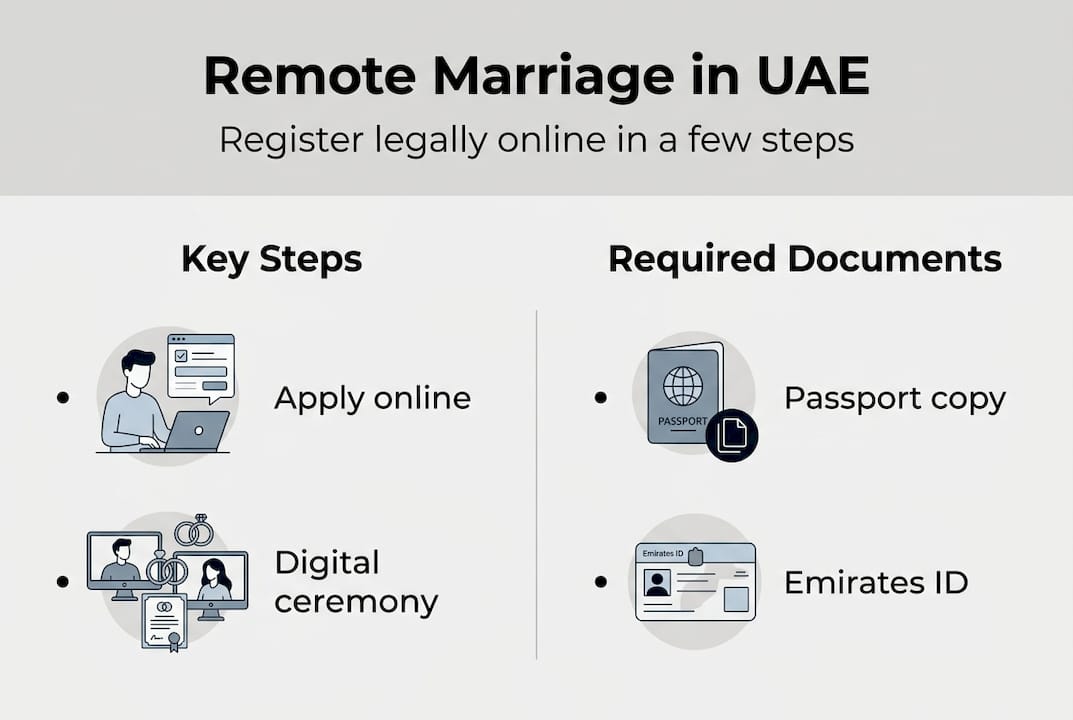
Remote marriage registration is not a workaround or a loophole. It is an officially sanctioned, legally binding process that allows couples to complete the entire process online, including virtual ceremonies, without ever setting foot in a government building. Abu Dhabi leads the way in the UAE on this front, and the difference between emirates matters more than most people realize.
The Abu Dhabi Judicial Department runs the process through TAMM, the emirate’s integrated digital services platform. Through TAMM, couples can upload documents, pay fees, attend a virtual ceremony, and receive a digitally attested marriage contract. The contract is accepted internationally once properly attested, making it a genuine legal document recognized abroad.
Dubai, by contrast, has a more limited digital approach. While some administrative steps can be done online in Dubai, the emirate does not yet offer the same fully remote ceremony and contract service that Abu Dhabi provides. If you are planning a remote registration, Abu Dhabi is currently your best option.
Both civil and Islamic marriages are supported under the remote system. This is a significant detail. Non-Muslim foreigners can register a civil marriage, while Muslim couples can complete an Islamic marriage contract remotely under Sharia guidelines. You can explore your legal marriage options to understand which path fits your situation, or read the dedicated civil marriage guide for a deeper look.
Feature | Abu Dhabi remote system | Dubai digital services |
Fully remote ceremony | Yes | No |
Civil marriage supported | Yes | Limited |
Islamic marriage supported | Yes | Partial |
Internationally attested contract | Yes | Case-by-case |
Non-resident access | Yes | Restricted |
Key takeaway: Abu Dhabi’s remote marriage system is the most advanced in the Gulf region, offering both civil and Islamic options with full legal validity and international recognition.
Who can use remote marriage registration?
Eligibility is broader than most people expect. The service is available to Emiratis, expats, foreign nationals, and non-residents worldwide, though the requirements shift depending on your specific situation. Non-residents need a representative or lawyer based in the UAE to act on their behalf during the process.
Here is a breakdown of who qualifies and under what conditions:
Emiratis: Full access to both civil and Islamic remote registration with standard documentation.
Expats residing in the UAE: Eligible for both civil and Islamic processes; Emirates ID required.
Foreign nationals living abroad: Can register remotely but must appoint a UAE-based legal representative.
Tourists with a valid UAE visa: May access the civil marriage process during their stay.
Non-Muslims: Primarily directed toward the civil marriage route, which is secular and flexible for non-Muslims.
Muslim couples: Must follow Islamic marriage rules, including a mandatory premarital medical screening.
Interfaith couples and those with complex nationality situations often need additional guidance. For example, if one partner is Muslim and the other is not, the Islamic marriage route applies under UAE law, and Sharia compliance becomes a requirement. This is one of the most common points of confusion we see.
For expats specifically, the steps for expats differ slightly from the standard process, and understanding those differences early saves a lot of back-and-forth. There are also real advantages for expats to registering in the UAE, including the international legal recognition that comes with an attested contract.
Stat callout: The UAE is the only Gulf country that offers civil marriage to non-Muslim foreigners, making it a uniquely accessible destination for international couples seeking legal recognition.
Step-by-step: How remote marriage registration works
Once you confirm eligibility, the actual process is more straightforward than you might expect. The digital application process involves uploading documents, paying fees, attending a virtual appearance, and receiving your attested contract within 24 hours to 2 days. Here is how it breaks down step by step:
Create or log in to your TAMM account on the Abu Dhabi government portal.
Select the marriage registration service and choose civil or Islamic.
Upload required documents including passports, Emirates ID (if applicable), premarital medical screening certificate, and proof of marital status such as a divorce certificate or death certificate if previously married.
Pay the government fee online through the platform.
Schedule your virtual appointment with the marriage officer.
Attend the virtual ceremony via video call; both parties must be present or represented.
Receive your digitally attested marriage contract within 24 to 48 hours.
Document | Who needs it | Notes |
Valid passport | Both parties | Must be current |
Emirates ID | UAE residents | Not required for non-residents |
Premarital screening certificate | Both parties (Islamic) | Must be recent |
Proof of marital status | Both parties | Divorce or death cert if applicable |
Power of attorney | Non-residents | Authorizes UAE representative |
For a full walkthrough, the step-by-step marriage guide covers each stage in detail. If you need clarity on the medical requirement, the pre-marital screening rules explain what is tested and how long the certificate remains valid.
Pro Tip: Foreign documents such as birth certificates or divorce decrees must be attested before submission. This attestation process can take several weeks depending on your home country, so start it well before you plan to register.
Nuances and differences: Civil vs Islamic remote marriages
Choosing the right type of marriage for your situation is not just a formality. It shapes your legal rights, the documents you need, and the timeline you are working with.
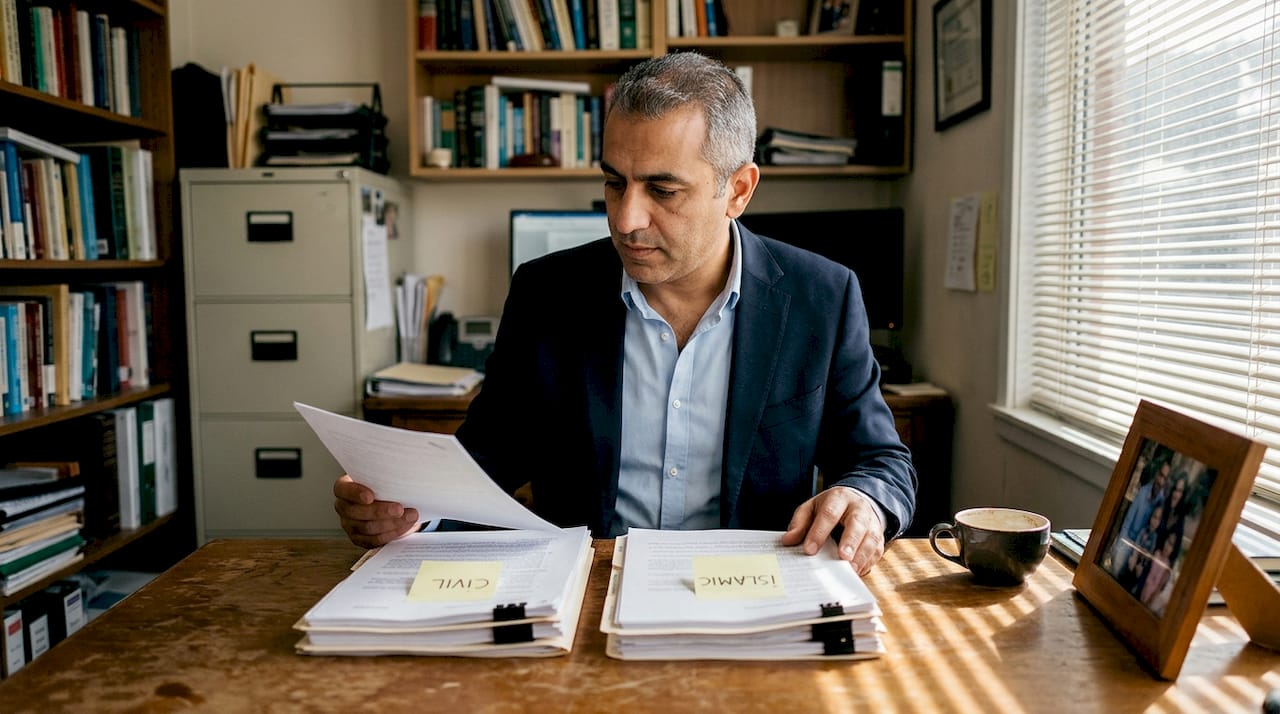
Civil marriage is the more flexible option. The UAE is the only Gulf nation offering this option to non-Muslim foreigners, and it operates on a secular legal framework. There is no religious requirement, no guardian needed in most cases, and the process is designed to be accessible for international couples. Civil marriages are recognized in most countries, especially when properly attested.
Islamic marriage follows Sharia law and comes with additional requirements. A valid premarital medical test is mandatory, and the process must comply with Islamic marriage rules. You can find a detailed breakdown in the Islamic marriage registration guide. The pre-marital medical test has a validity window, so timing matters.
Common pitfalls couples run into:
Choosing the wrong process: A non-Muslim couple attempting an Islamic registration, or a Muslim couple assuming civil rules apply to them.
Expired medical certificates: The premarital screening result is only valid for a limited period. If registration is delayed, you may need to retest.
Missing document attestation: Foreign documents that are not properly legalized will be rejected.
Overlooking the guardian requirement: Some Islamic marriages require a male guardian (wali) for the bride. This can affect non-resident applicants significantly.
For non-Muslim foreigners, the non-Muslim marriage info from the UAE government is a reliable reference for understanding your rights and requirements.
Pro Tip: If you are unsure whether your marriage falls under civil or Islamic rules in the UAE, your nationality and religion both play a role. A quick consultation with a UAE marriage specialist can save you from restarting the process from scratch.
The truth most guides miss about remote marriage in the UAE
Here is what most checklists and official guides do not tell you: the speed and convenience of remote marriage registration are real, but they only apply after your documents are ready. Most couples overlook document attestation and the timelines involved, which is where nearly all delays actually happen.
The virtual ceremony itself can take less than an hour. The digital contract arrives within two days. But if your foreign documents are not attested, or your medical certificate has expired, you are looking at weeks of additional waiting. The process is fast for people who are prepared. It is frustrating for people who are not.
Another thing most guides miss: digital contracts are legally valid abroad, but only after proper UAE attestation and, in many cases, apostille certification from the UAE Ministry of Foreign Affairs. Skipping this step means your marriage may not be recognized in your home country, even if it is perfectly valid in the UAE.
Many couples also underestimate the difference between Abu Dhabi and Dubai’s systems. Assuming Dubai offers the same remote service leads to wasted time and misdirected applications. If you are planning a cross-border legal union, our marriage abroad guide covers the post-registration steps you need to take to ensure recognition in your home country. Proactive document management and early medical screening are not just helpful tips. They are the difference between a smooth registration and a stressful one.
Take the next step: Support for your remote marriage registration
Now that you have a clear picture of how remote marriage registration works in the UAE, the next challenge is putting it all together without missing a step.
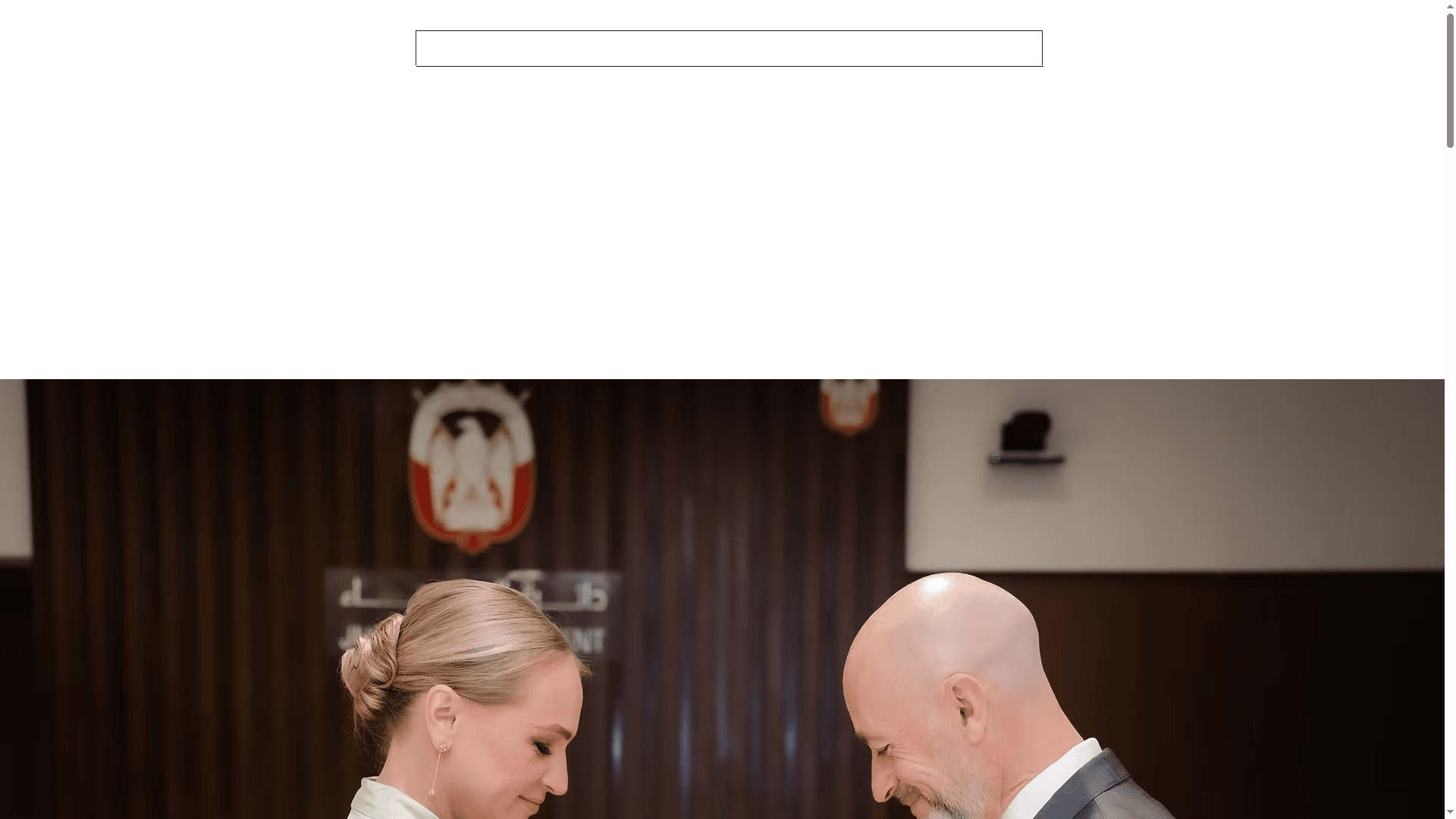
At Harris & Charms, we specialize in exactly this. Whether you need help with document attestation, legal paperwork, virtual ceremony logistics, or choosing between civil and Islamic registration, our team handles the details so you do not have to. We offer custom packages for expats, foreign nationals, and non-residents, with easy consultation to get you started. Explore our marriage services UAE or reach out directly to contact experts who understand every layer of the process.
Frequently asked questions
Is a remote marriage contract legally valid internationally?
Yes, digital marriage contracts from Abu Dhabi are legally valid abroad once attested by UAE authorities and, where required, apostilled by the Ministry of Foreign Affairs.
What documents are needed for remote marriage registration?
You need valid passports, Emirates ID if you are a UAE resident, a premarital screening certificate, and proof of marital status such as a divorce or death certificate if either party was previously married.
How long does the remote registration process take?
Once documents are approved, the process can be completed in as little as 24 hours or up to two working days, though document preparation beforehand may take longer.
Can non-residents or tourists use remote marriage registration?
Yes, but non-residents need a lawyer or legal representative based in the UAE, and tourists must hold a valid UAE visa to access the civil marriage process.
What is the difference between civil and Islamic remote marriages?
Civil marriage is secular and designed for non-Muslims and foreigners, while Islamic marriages require Sharia compliance, a valid premarital medical test, and in some cases a male guardian for the bride.
Recommended
Comments