
UAE court marriage: pros, cons, and smarter choices

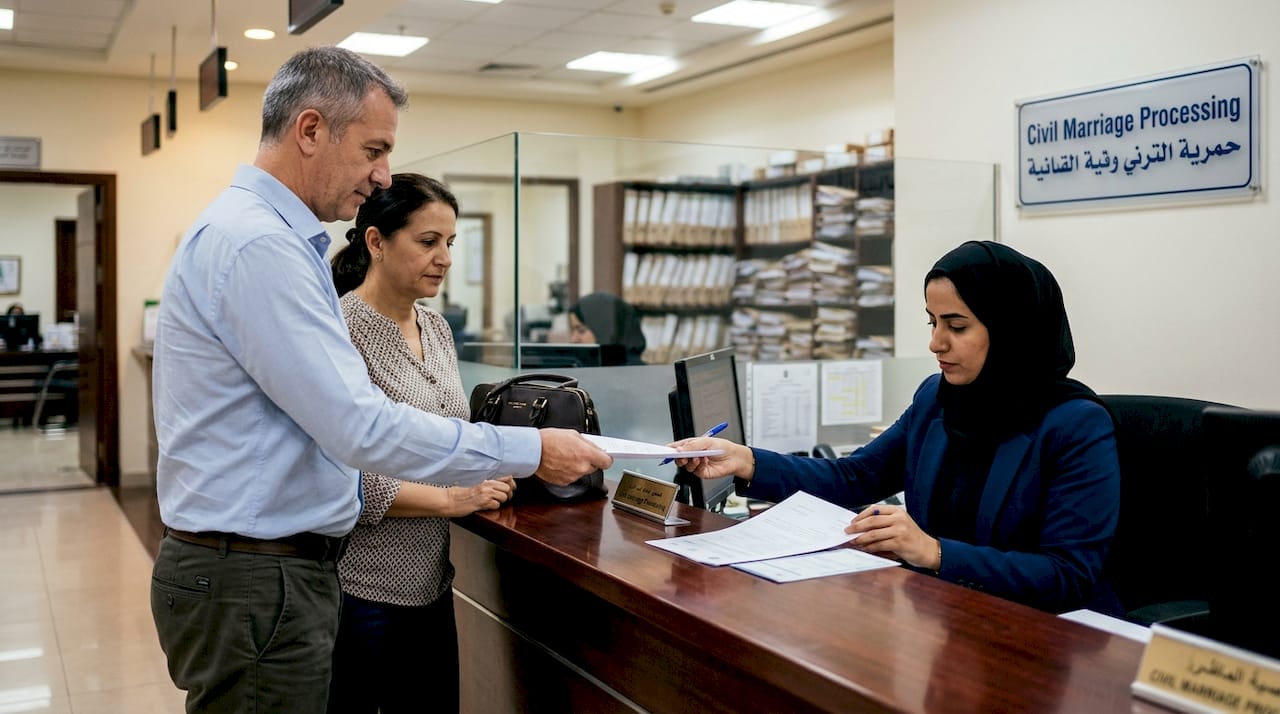
Pros and Cons of UAE Court Marriage: Choosing how to legally marry in the UAE is rarely as simple as picking a date and showing up. You’re weighing paperwork requirements, costs, family expectations, cultural traditions, and long-term legal outcomes all at once. Court marriage appeals to many couples for its speed and legal clarity, but the process can feel overwhelming without a clear roadmap. This article breaks down the real advantages and drawbacks of UAE court marriage, compares it to your other options, and gives you a practical framework to make the choice that fits your life—not just your schedule.
Table of Contents
Key Takeaways of Pros and Cons of UAE Court Marriage
Point | Details |
Quick and cost-effective | UAE court marriage is often faster and more affordable than traditional options. |
Legal clarity | Court marriages provide clear legal status and are generally recognized internationally. |
Document pitfalls | Incomplete paperwork is the biggest reason for delays or rejection. |
Cultural considerations | Court marriages may lack the personal or religious meaning desired by some families. |
Expert guidance | Getting legal advice early makes the process smoother and prevents costly mistakes. |
Understanding UAE court marriage: What it is and how it works
Court marriage in the UAE refers to a legally recognized marriage conducted through the official judicial or civil registration system rather than through a traditional religious ceremony. Depending on your nationality and religion, you can pursue either a civil marriage (available at dedicated civil marriage courts, primarily in Abu Dhabi) or an Islamic marriage registered through Sharia courts. Both routes produce a legally binding marriage certificate recognized by UAE authorities.
Understanding the court marriage process before you start saves you significant time and frustration. Here’s a general step-by-step overview of what to expect:
Confirm eligibility. Both partners must meet age requirements and provide proof of legal status in the UAE. Non-Muslim expatriates typically use the civil marriage route, while Muslim couples register through Sharia courts.
Gather required documents. This includes valid passports, residency visas, birth certificates, and any divorce or death certificates from previous marriages.
Submit your application. File documents at the appropriate court or registration office. Some courts require pre-approval or appointment booking.
Attend the court appointment. Both partners appear in person. Witnesses are usually required, and a judge or registrar officiates the brief legal proceeding.
Receive your marriage certificate. Once approved, you get an official certificate that can be used for visa applications, residency, and other legal purposes.
The appeal is obvious. No venue bookings, no elaborate ceremony planning, and no months of preparation. Many couples complete the entire process within a few weeks. But the simplicity is deceptive. Reviewing the civil marriage requirements in detail before you start matters more than most couples realize.
“The biggest mistake couples make is assuming court marriage is just showing up with a passport. Every missing document adds weeks to the process.”
Incomplete documentation causes 30% of delays and rejections in court marriage cases. That statistic should make you pause before rushing in.
Pro Tip: Before submitting any documents, have an experienced marriage consultant or legal advisor review your full file. One missing apostille or incorrect translation can push your timeline back by weeks.
Key advantages of UAE court marriage
Now that you know what to expect, here’s why many couples see court marriage as a sensible choice.
Court marriage offers real, tangible benefits that go beyond just saving money on flowers and catering. Here’s what makes it genuinely attractive:
Speed. Court marriages in the UAE can be finalized in a matter of weeks. Traditional religious weddings, especially those involving family coordination across countries, can take six months or more to organize.
Lower costs. Court fees and legal processing costs are a fraction of what a full wedding ceremony demands. For couples prioritizing financial stability early in their marriage, this matters.
Legal clarity from day one. Your marriage certificate is issued by a government authority, which means it carries immediate legal weight for residency applications, spousal visa processing, and official records.
Works well for mixed-nationality couples. If you and your partner hold different nationalities or follow different religions, civil court marriage often provides a cleaner legal pathway than religious options.
Easier downstream documentation. Once married through court, processing documents for children’s birth registration, joint property, and inheritance becomes more straightforward because your legal status is unambiguous.
Civil marriage is faster and often more cost-effective than some religious options, and it offers stronger international recognition for interfaith and mixed-nationality couples. That’s a significant advantage if you plan to live or travel internationally.
Understanding the full range of civil vs Islamic marriage differences helps you pick the right track from the start. And if you’re still weighing all possibilities, reviewing your legal marriage options gives you a broader picture before committing.
Statistic callout: Couples who complete court marriage with professional document support report significantly fewer delays and a smoother overall experience compared to those who navigate the process alone.
Drawbacks and challenges couples commonly face
But every shortcut has potential obstacles. Let’s cover what couples often regret or misjudge about court marriage.
The efficiency of court marriage comes with trade-offs that aren’t always obvious upfront. Here are the most common challenges:
Limited cultural or religious significance. For many families, a court marriage feels incomplete without a ceremony. This can create tension, especially when one partner’s family places high value on traditional rituals.
Paperwork errors cause real delays. 30% of applicants face delays tied directly to incomplete or incorrectly prepared documents. This is the single most avoidable problem.
Legal outcomes differ by court type. Understanding the role of courts in marriage matters because civil and Sharia courts follow different rules for divorce, inheritance, and child custody.
International document recognition isn’t automatic. Some countries require additional legalization, apostille stamps, or translation before they recognize a UAE marriage certificate.
Emotional expectations can clash with legal reality. Court marriage is efficient, but it’s also brief and procedural. Couples who expect any sense of ceremony are sometimes caught off guard.
“Couples often underestimate the implications for divorce and inheritance under civil versus Sharia law until they actually need to navigate those systems.”
The legal implications of marriage go far beyond the wedding day. If you’re Muslim or marrying a Muslim partner, understanding Islamic marriage rules is essential before choosing between court types.

Pro Tip: Hire an experienced marriage consultant who knows the UAE system. The fee you pay upfront is almost always less than the time and stress cost of fixing avoidable mistakes later.
UAE court marriage vs. other options: At-a-glance comparison
Knowing both sides of court marriage, it helps to step back and see how it stacks up against your alternative choices.
Factor | Court marriage (civil) | Islamic marriage (Sharia) | Marrying abroad |
Cost | Low to moderate | Often lower for eligible couples | Variable, often higher |
Speed | Weeks | Can be faster for Muslims | Months, plus attestation |
Cultural fit | Minimal ceremony | Religiously meaningful | Depends on destination |
International recognition | Strong | Varies by country | Depends on location |
Documentation complexity | Moderate | Moderate | High (attestation required) |
Best for | Interfaith, mixed-nationality | Muslim couples | Couples with ties abroad |
Civil marriage is faster for some couples, but Islamic marriage can be 30% less expensive and quicker for eligible Muslim couples. Civil marriage remains the stronger choice for international recognition and interfaith situations.
So when does each option make the most sense?
Choose court marriage (civil) if you’re an interfaith couple, hold different nationalities, or need strong international recognition for residency or travel.
Choose Islamic marriage if both partners are Muslim, you want a religiously meaningful process, and your primary legal context is within the UAE or Muslim-majority countries.
Consider marrying abroad if your home country’s laws create complications with UAE registration, or if family circumstances make an overseas ceremony more practical. Check the marriage abroad guide for a full breakdown of that route.
The right choice depends on your budget, your nationalities, your family’s expectations, and where you plan to build your life. There’s no universal answer, but there is a right answer for your specific situation.
A smarter approach: How to make the right marriage choice for you
Here’s what experience and hindsight reveal that most quick guides miss.
Conventional wisdom says go with the fastest and cheapest route. That advice works for booking flights. It doesn’t always work for marriage. We’ve seen couples rush into court marriage because it seemed efficient, only to realize months later that their families felt excluded, or that the legal framework they chose created complications for inheritance or custody that they hadn’t anticipated.
Our honest take: spend at least an hour mapping out your priorities before you decide anything. What legal outcome do you actually need? Residency rights? International recognition? A framework that protects both partners equally in case of divorce? Start with the end result and work backward. The legal implications guide is a good starting point for that exercise.
Those who skip this step often pay more in time, money, and emotional stress later. Getting advice from someone who knows UAE marriage law isn’t an extra cost. It’s the smartest investment you can make before signing anything.
Pro Tip: Start with the legal end result you want, whether that’s inheritance protection, residency, or international recognition, and work backward to identify which marriage route actually delivers it.
Ready for next steps? Get expert help with your UAE court marriage
Navigating UAE court marriage paperwork alone is genuinely difficult, and small mistakes cost real time and money. That’s exactly why Harris & Charms exists.

Our team specializes in guiding couples through every step of the court marriage process, from document preparation and legal review to court appointments and certificate processing. We’ve helped hundreds of couples avoid the 30% rejection rate tied to paperwork errors, and we bring the same personal care to every case. Explore our marriage services in UAE to see how we can support your specific situation, or reach out directly through our contact us page to get personalized advice from our team. Your smooth, legally secure marriage starts with one conversation.
Frequently asked questions
What documents are required for UAE court marriage?
You’ll need valid passports, residency visas, birth certificates, and divorce or death certificates if either partner was previously married. Incomplete documentation is the leading cause of rejections, so double-check every requirement before submitting.
Is UAE court marriage recognized internationally?
Civil marriages are better for international recognition, but some countries require additional legalization or apostille steps before accepting a UAE certificate.
How long does UAE court marriage take?
Most court marriages are completed within a few weeks, which is significantly faster than organizing a traditional religious wedding that involves family coordination across multiple countries.
What are common mistakes to avoid in UAE court marriage?
Missing paperwork and skipping legal advice are the top reasons for delays. 30% of cases face delays due to incomplete or incorrectly prepared documents, which a qualified consultant can help you avoid entirely.
Recommended
Comments