
Types of Marriage Certificates in UAE 2026: A Guide by Harris & Charms


Choosing the right marriage certificate in the UAE can feel overwhelming when you’re navigating legal requirements, religious obligations, and documentation processes. Whether you’re planning a civil or Islamic marriage, understanding the distinctions between certificate types ensures your union receives proper legal recognition both locally and internationally. This guide walks you through the key criteria, application processes, and post-certificate requirements to help you make an informed decision that aligns with your religious background, nationality, and residency status.
Table of Contents
Key takeaways
Point | Details |
Certificate types differ fundamentally | Civil certificates suit non-Muslim couples while Islamic certificates are mandatory for Muslim couples under Sharia law. |
Issuing authorities vary | Dubai Courts handle civil marriages whereas Sharia Courts exclusively process Islamic marriages. |
Documentation requirements differ | Each certificate type demands unique supporting documents, processing timelines, and fees. |
Attestation is essential | Both certificate types require Ministry of Justice attestation for international recognition and visa applications. |
Selection depends on personal factors | Your religious background, nationality, residency status, and future plans determine the appropriate certificate. |
How to choose the right marriage certificate: key criteria
Selecting between civil and Islamic marriage certificates requires careful consideration of several factors that directly impact your legal status in the UAE and abroad. Understanding these criteria upfront saves time and prevents complications during the application process.
First, evaluate legal recognition needs. Civil certificates provide broader acceptance across all emirates for non-Muslim couples, while Islamic certificates govern Muslim marriages under personal status laws. Your religious background plays a decisive role here, as Muslim couples must obtain Islamic certificates through Sharia Courts regardless of nationality.
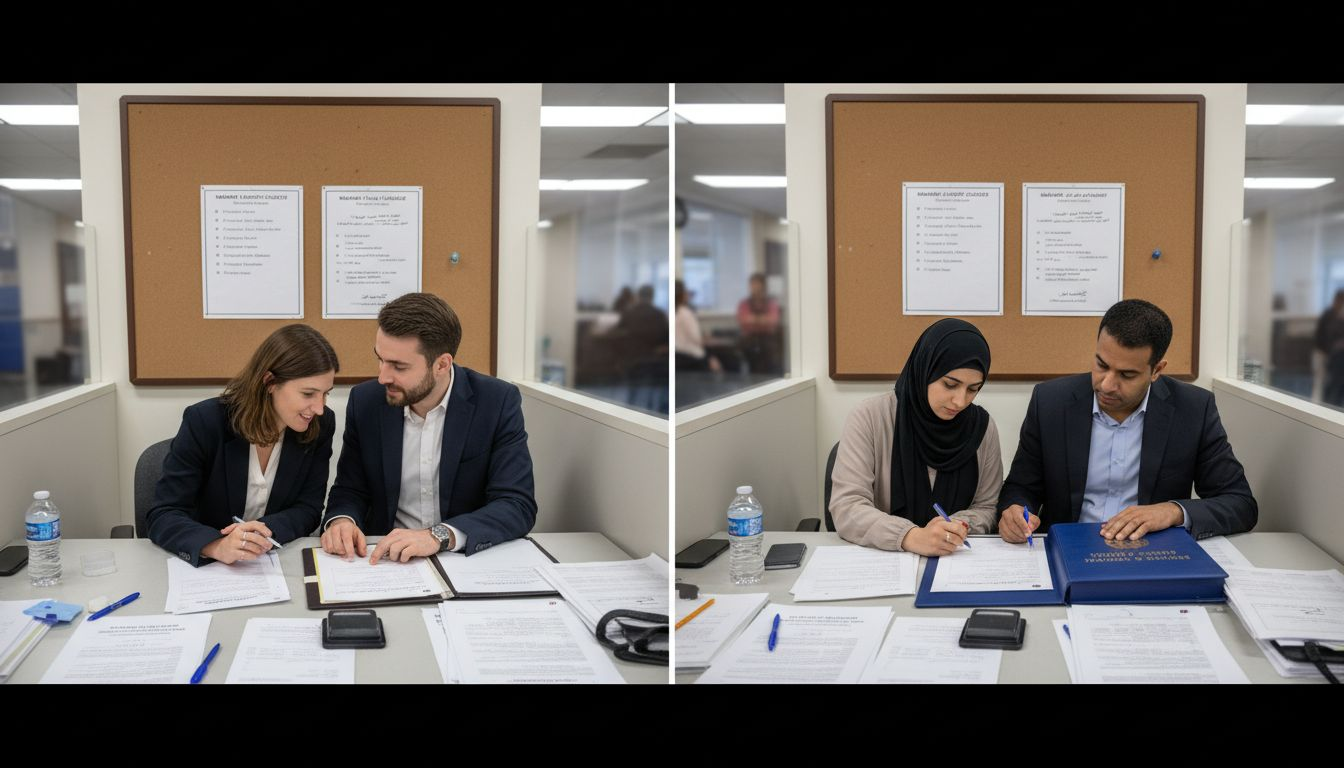
Residency and nationality eligibility significantly influence your options. Expatriates living in the UAE face different requirements than tourists or residents, with visa status affecting document preparation and processing locations. Some nationalities require additional embassy clearances or pre-marriage certificates from their home countries.
Consider documentation complexity and processing timelines. Civil marriages typically involve medical fitness certificates, passport copies, and residency permits. Islamic marriages require religious contract documents, witness statements, and sometimes conversion certificates. Processing times range from one to three weeks depending on document completeness and court schedules.
Cost differences between certificate types matter for budget planning. Civil marriage fees vary by emirate but generally include court charges, medical tests, and attestation costs. Islamic certificates involve Sharia Court fees, Nikah contract registration, and similar attestation expenses. Factor in potential translation and legalization fees for international use.
Attestation requirements deserve early attention because both certificate types need Ministry of Justice validation for visa applications, residency permits, and embassy recognition abroad. Planning for this step prevents delays when you need certified documents for immigration or family sponsorship.
Pro Tip: Before starting your application, consult the specific court handling your case to confirm current documentation requirements, as procedures occasionally update based on new regulations or inter-emirate agreements.
For detailed guidance on the various types of marriage certificates in UAE, review the complete breakdown of options available to different couple profiles.
Civil marriage certificates: overview, process, and benefits
Civil marriage certificates are issued by Dubai Courts or equivalent and require medical screening for non-Muslim couples. This option provides the primary legal framework for marriages between partners who do not follow Islamic law, offering recognized documentation that satisfies both UAE legal standards and international requirements.
The issuance authority for civil marriages varies slightly by emirate, with Dubai Courts handling most applications in the Dubai area and equivalent judicial bodies processing them in other emirates. Non-Muslim expatriates, tourists with valid visas, and residents from diverse nationalities can apply, provided both partners meet age requirements and present no legal impediments to marriage.
Eligibility requirements include valid residency permits or tourist visas, current passports, and medical fitness certificates from approved health centers. The medical screening tests for infectious diseases and confirms both partners’ health status, a mandatory step before court approval. Single status certificates or divorce decrees may be required depending on nationality, with some embassies providing these documents directly.
The application process follows these steps:
Book a medical fitness test at an authorized center and obtain certificates for both partners.
Gather required documents including passports, residency permits, photos, and embassy clearances if applicable.
Submit the complete application package to the designated court with applicable fees.
Attend the court appointment where officials verify documents and conduct a brief interview.
Receive the marriage certificate typically within 7 to 21 working days after approval.
Complete Ministry of Justice attestation for international recognition.
Processing timeframes generally span two to three weeks from initial application to certificate receipt, though this varies based on document verification speed and court scheduling. Rush services may be available in some emirates for urgent cases with additional fees.
Civil marriage certificates offer significant advantages for expatriate couples. They provide broad legal recognition across all UAE emirates and serve as primary documentation for family visa applications, residency permit processing, and bank account management. International acceptance is strong when properly attested, making these certificates valuable for couples planning to relocate or requiring documentation in multiple countries.
Pro Tip: Complete your medical fitness tests early in the process, as results typically remain valid for three months and getting this step done first prevents timeline delays if other documents take longer to obtain.
For comprehensive guidance on each stage, explore the detailed civil marriage application steps and review the complete civil marriage application process to ensure smooth processing.
Islamic marriage certificates: religious significance and legal process
Islamic marriage certificates must be obtained through Sharia courts, ensuring compliance with Muslim personal status laws. This certificate type carries both religious validity under Islamic principles and legal recognition under UAE federal law, making it the mandatory option for Muslim couples regardless of nationality or residency status.
Sharia Courts hold exclusive jurisdiction over Islamic marriages in the UAE, with specialized judges reviewing applications to ensure compliance with Islamic marriage requirements. The Nikah contract registration forms the foundation of this process, documenting the religious ceremony, witnesses, mahr agreement, and consent of both parties according to Islamic tradition.
Mandatory documentation for Islamic marriage certificates includes valid passports, residency permits or entry visas, conversion certificates for non-Muslim partners who have embraced Islam, and witness statements from two Muslim males or equivalent female witnesses as required by the court. Some couples may need parental consent letters or guardianship documentation depending on the bride’s circumstances and nationality.
The religious contract itself must specify the mahr amount, conditions agreed upon by both parties, and witness signatures confirming the ceremony took place according to Islamic law. Courts verify that all religious requirements were met, including the presence of a wali for the bride if required by her school of Islamic jurisprudence.
Processing timelines for Islamic certificates depend on Nikah registration completion and Sharia Court procedures, generally requiring similar timeframes to civil certificates once all religious documentation is verified. However, additional time may be needed if conversion certificates require Islamic authority approval or if witnesses need to appear before the court for verification.
Key features distinguishing Islamic marriage certificates include:
Strict compliance with UAE Personal Status Law governing Muslim family matters
Religious validation ensuring the marriage meets Islamic requirements
Legal standing in all personal status matters including inheritance, custody, and divorce
Recognition throughout GCC countries and Muslim-majority nations
Integration with UAE family law systems for spousal and child rights
The legal scope of Islamic certificates extends beyond simple marriage documentation, affecting inheritance rights, child custody arrangements, and divorce proceedings under Sharia principles as codified in UAE law. This makes proper registration critical for protecting both partners’ legal interests throughout the marriage.
For couples seeking Islamic marriage documentation, understanding Islamic marriage certificates requirements and reviewing the official UAE Personal Status Law helps ensure compliance with both religious and legal obligations.
Comparison of civil and Islamic marriage certificates
Civil certificates offer broader legal recognition for non-Muslim couples across all emirates; Islamic certificates govern Muslim marriages under Sharia. Understanding these distinctions helps couples select the certificate type that matches their religious obligations and legal needs in 2026.
Feature | Civil Marriage Certificate | Islamic Marriage Certificate |
Issuing authority | Dubai Courts and emirate judicial bodies | Sharia Courts exclusively |
Applicable couples | Non-Muslim expatriates and residents | Muslim couples mandatory |
Processing time | 7 to 21 working days typically | Similar timeframe with Nikah verification |
Primary documentation | Medical certificates, passports, residency permits | Nikah contract, witness statements, conversion certificates if needed |
Court fees | Varies by emirate, typically AED 500 to 1000 | Similar range with Sharia Court charges |
Legal jurisdiction | UAE civil law and family regulations | UAE Personal Status Law and Sharia principles |
International recognition | Strong with proper attestation | Recognized in Muslim countries, requires attestation elsewhere |
Legal recognition differences significantly impact your rights and obligations. Civil certificates operate under UAE civil law frameworks, providing standardized legal standing for family visas, property rights, and banking matters across all emirates. Islamic certificates function under Personal Status Law, governing marriage, divorce, inheritance, and custody according to Sharia principles as interpreted by UAE courts.
Processing steps differ in key areas:
Civil marriages require medical fitness screening at approved centers before application submission
Islamic marriages mandate Nikah contract registration with witnesses before Sharia Court approval
Civil certificates involve court interviews verifying document authenticity and marriage intent
Islamic certificates require religious compliance verification including mahr agreement and wali consent where applicable
Both types need final attestation from the Ministry of Justice for international validity
Documentation contrasts reflect the religious versus civil nature of each certificate. Civil applications emphasize health screening, legal capacity to marry, and embassy clearances for some nationalities. Islamic applications focus on religious requirements, witness testimony, and Islamic law compliance regarding consent and guardianship.
Fee structures remain relatively comparable between both certificate types, with most couples paying between AED 500 and AED 1500 for basic processing excluding attestation costs. Additional expenses arise from medical tests for civil marriages or conversion documentation for Islamic marriages where one partner has embraced Islam.
Applicability to different couple profiles creates clear distinctions. Non-Muslim couples must pursue civil certificates as Sharia Courts lack jurisdiction over non-Muslim marriages. Muslim couples cannot choose civil certificates, as Islamic law governs their marital status regardless of personal preference. Mixed-religion couples face unique challenges requiring careful legal navigation and potentially conversion if pursuing Islamic marriage.
Attestation and international use considerations affect both certificate types similarly, as Ministry of Justice attestation remains mandatory for visa applications, embassy recognition, and use in foreign countries. However, Islamic certificates may receive easier recognition in Muslim-majority nations while civil certificates often process more smoothly in Western countries.
For visual examples and detailed comparisons, review UAE marriage certificate comparisons and explore official comparison of marriage certificates UAE resources to see actual document formats.
Post-certificate legalization, attestation, and international recognition
Attestation transforms your UAE marriage certificate from a local document into internationally recognized proof of marriage. Both civil and Islamic certificates require Ministry of Justice attestation before they gain legal standing outside the UAE, making this step essential for visa applications, residency permits, and embassy requirements abroad.
The attestation process follows these mandatory steps:
Obtain your original marriage certificate from the issuing court with official seals and signatures.
Submit the certificate to the Ministry of Justice attestation department with applicable fees and identification documents.
Pay attestation fees typically ranging from AED 150 to AED 300 depending on service speed and document type.
Collect the attested certificate bearing Ministry of Justice stamps confirming authenticity.
Complete additional embassy attestation if required by your destination country for further legalization.
Arrange certified translations if presenting the certificate in countries requiring documents in their official language.
Document legalization extends beyond basic attestation when using your certificate internationally. Some countries require embassy or consulate stamps from their UAE missions, adding another layer of authentication. Others demand apostille certification under Hague Convention rules, though the UAE applies attestation procedures instead for most purposes.
Visa and residency procedures abroad universally demand attested marriage certificates when sponsoring spouses or applying for family-based immigration benefits. Immigration authorities verify the attestation stamps to confirm your marriage occurred legally under UAE jurisdiction. Without proper attestation, your certificate may face rejection during visa processing, causing significant delays and complications.
Additional embassy requirements vary by nationality and destination country. European nations often require translation into the local language by certified translators, while North American countries typically accept English certificates with proper attestation. GCC countries may accept Arabic certificates with Ministry of Justice stamps without additional embassy processing.
Notarization needs arise when using your certificate for property purchases, inheritance claims, or legal proceedings in foreign jurisdictions. Some countries require notarized translations alongside attested originals, while others accept direct attestation as sufficient legal proof.
Pro Tip: Request multiple attested copies of your marriage certificate during the initial attestation process, as many couples need separate copies for simultaneous visa applications, bank accounts, and residency permits without waiting for sequential processing.
Benefits of proper attestation include seamless cross-border legal acceptance, faster visa processing times, simplified family sponsorship applications, and recognized legal standing in inheritance and custody matters. Properly attested certificates prevent bureaucratic challenges when relocating internationally or managing legal affairs across multiple countries.
For comprehensive guidance on the attestation workflow, explore detailed steps for attesting marriage certificates in UAE and review requirements for marriage certificate translation for international use to ensure your documents meet all destination country standards.
Situational recommendations: matching marriage certificates to couple profiles
Your personal circumstances determine which marriage certificate type suits your situation best. These practical recommendations help you navigate the selection process based on common couple profiles in the UAE.
Non-Muslim expatriates living in the UAE should pursue civil marriage certificates through Dubai Courts or equivalent judicial bodies in their emirate. This option provides the appropriate legal framework for marriages between Christians, Hindus, Buddhists, and partners of other faiths or no religious affiliation. Civil certificates offer straightforward processing and broad international recognition with proper attestation.
Muslim couples must obtain Islamic marriage certificates through Sharia Courts regardless of nationality or personal preference, as UAE Personal Status Law mandates this requirement. Both partners being Muslim triggers automatic Sharia Court jurisdiction, making civil marriage certificates legally unavailable even if preferred for convenience.
Foreign nationals planning to marry in the UAE need to prepare comprehensive documentation well before their wedding date. Embassy clearances, single status certificates, or divorce decrees from home countries often require weeks or months to obtain. Start gathering these documents early to prevent timeline delays, and confirm specific requirements with your embassy and the court handling your application.
Mixed-religion marriages present unique challenges requiring careful legal evaluation. If one partner is Muslim and the other is not, Islamic law principles generally require the non-Muslim partner to embrace Islam before marriage registration through Sharia Courts. Some couples pursue civil marriages in their home countries before UAE residency, though this may create complications with family visa sponsorship.
Residency status significantly impacts certificate eligibility and processing locations:
UAE residents with valid residency permits can apply directly to courts in their emirate of residence with standard documentation
Tourists holding visit visas face additional requirements and may need to complete applications within their visa validity period
Non-residents planning destination weddings in the UAE should verify court acceptance of tourist applications before travel
GCC nationals may benefit from simplified documentation requirements under regional cooperation agreements
Couples planning international relocation after marriage should prioritize attestation planning during certificate selection. Research destination country requirements early to ensure your chosen certificate type and attestation level will satisfy immigration authorities. Some countries process UAE civil certificates more readily while others prefer religious marriage documentation.
For expat-specific guidance covering documentation preparation and court procedures, review comprehensive advice on choosing marriage certificates for expats tailored to various nationality and residency scenarios.
Discover hassle-free UAE marriage documentation solutions
Navigating marriage certificate applications, court procedures, and attestation requirements can feel overwhelming when you’re planning your wedding. Harris & Charms specializes in guiding couples through every step of the UAE marriage documentation process, whether you’re pursuing civil or Islamic certificates.

Our personalized approach helps you understand which certificate type suits your situation, prepare complete documentation packages, and avoid common application mistakes that cause delays. We coordinate medical fitness tests, court appointments, and Ministry of Justice attestation to ensure smooth processing from start to finish. Couples working with our team save valuable time and reduce stress during what should be an exciting milestone.
Whether you need support with document preparation, translation services, or post-certificate attestation for international use, our experienced team provides reliable assistance tailored to your timeline and requirements. Explore our full range of marriage services in UAE, review our detailed UAE marriage documentation guide, and discover helpful wedding planning tips to make your celebration memorable and legally sound.
Frequently asked questions
What is the difference between civil and Islamic marriage certificates in the UAE?
Civil certificates are issued by Dubai Courts and emirate judicial bodies for non-Muslim couples under UAE civil law. Islamic certificates come exclusively from Sharia Courts for Muslim couples under Personal Status Law. The key differences involve legal jurisdiction, religious compliance requirements, and applicable personal status regulations.
How long does it take to obtain each type of marriage certificate?
Civil certificates typically require 7 to 21 working days from application submission to final issuance, depending on document verification and court scheduling. Islamic certificates follow similar timeframes once Nikah registration is complete and Sharia Court procedures verify religious compliance. Additional time may be needed for embassy clearances or conversion documentation.
Can foreigners apply for Islamic marriage certificates in the UAE?
Foreign nationals can apply for Islamic marriage certificates if both partners are Muslim and meet Sharia Court requirements including proper documentation and residency status. Non-Muslims must use the civil marriage certificate process through Dubai Courts or equivalent judicial bodies, as Sharia Courts lack jurisdiction over non-Muslim marriages.
Why is attestation important for UAE marriage certificates?
Attestation by the Ministry of Justice validates your certificate for international legal recognition, visa applications, and residency permit processing abroad. Without proper attestation, foreign immigration authorities and embassies may reject your certificate, causing significant delays in family sponsorship, property transactions, and other legal matters requiring proof of marriage.
Recommended
Comments