
7 Types of Wedding Ceremonies UAE Couples Should Know

Updated: Dec 15, 2025
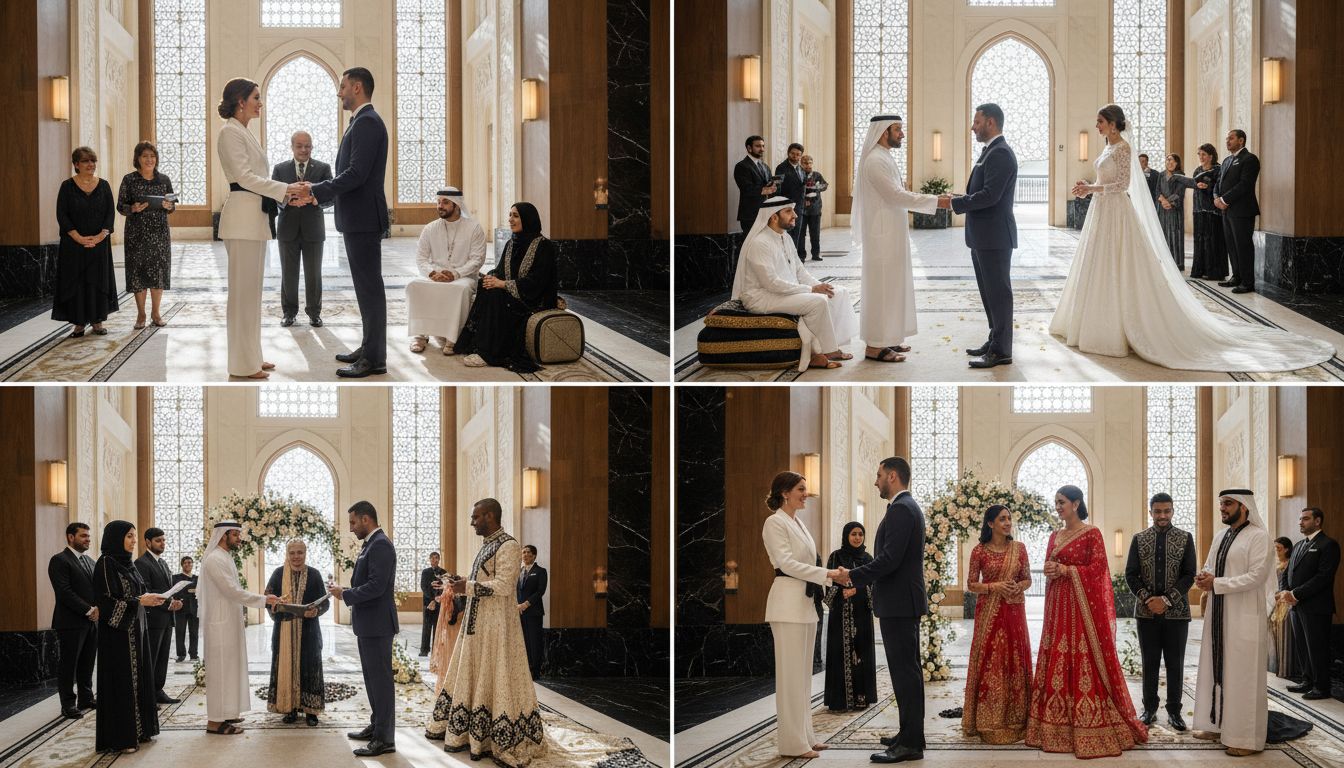
Over 90 percent of American couples living abroad say that understanding wedding rules in a new country can be confusing and stressful. With the UAE’s exceptional mix of cultural traditions and innovative services, finding the right ceremony type matters more than ever for those planning a legal and memorable marriage. Whether you want a streamlined civil service, a meaningful religious ritual, or a unique destination wedding, this guide demystifies the process so you can focus on celebrating your love.
Table of Contents
Quick Summary on Types of wedding ceremonies UAE
Takeaway | Explanation |
1. Civil weddings offer quick legalization | Civil wedding ceremonies in the UAE provide efficient legal recognition, often completed in as little as 24 hours. |
2. Documentation is crucial for all ceremonies | Each wedding type requires specific documents; ensure submissions are accurate to avoid delays in marriage registration. |
3. Multicultural options available for ceremonies | The UAE supports diverse wedding methods, accommodating civil, Islamic, Christian, and Hindu traditions, allowing couples to choose their preferred approach. |
4. Online ceremonies enhance convenience | Digital marriage services allow couples to complete legal requirements remotely, making it easier to navigate geographical or time constraints. |
5. Destination weddings offer unique experiences | The UAE features stunning locations for destination weddings, from desert resorts to beachfront ceremonies, enhancing the overall wedding experience. |
1. Civil Wedding Ceremonies: Process and Benefits
Civil wedding ceremonies in the UAE offer couples a modern, legally recognized pathway to marriage that combines simplicity with official validation. These ceremonies provide a straightforward alternative to traditional religious wedding processes, ensuring legal recognition while maintaining flexibility for diverse couples.
The civil marriage process in the UAE is designed to be remarkably efficient, with the Abu Dhabi Judicial Department offering comprehensive services that streamline the entire experience. Couples can choose between standard and express marriage services, with some locations like Abu Dhabi providing an incredible 24-hour marriage option.
Key Benefits of Civil Wedding Ceremonies:
Legal recognition across UAE jurisdictions
Minimal bureaucratic complexity
Faster processing compared to traditional marriage routes
Accommodates multicultural and international couples
The process typically involves submitting required documentation, including passports, residency permits, and proof of marital status. According to Gulf News, couples can even complete portions of their marriage registration through virtual video conferencing, adding unprecedented convenience to the matrimonial process.
For those seeking a streamlined marriage experience, civil ceremonies represent an ideal solution that balances legal requirements with personal preferences. The approach prioritizes efficiency without compromising the emotional significance of your commitment.
Want a deeper understanding of the process? Check out our complete guide to civil marriage in the UAE for comprehensive insights into making your wedding journey smooth and stress-free.
2. Islamic Wedding Ceremonies: Key Traditions
Islamic wedding ceremonies represent a profound blend of spiritual commitment and cultural celebration, offering couples a meaningful approach to marriage rooted in religious tradition. These ceremonies are rich with symbolic rituals that honor both personal love and community connection.
At the heart of Islamic wedding traditions are two primary ceremonies: the Nikah and the Walima. According to Wikipedia, these practices emphasize mutual consent, legal agreements, and community involvement in the marriage process.
Key Components of Islamic Wedding Ceremonies:
Nikah (official marriage contract)
Mahr (mandatory financial commitment from groom to bride)
Walima (community wedding feast)
Consent and mutual agreement between partners
The Walima holds special significance in Islamic wedding traditions. As documented, it serves as a public declaration of marriage and a joyous community celebration. Typically hosted by the groom’s family, the Walima is considered a Sunnah practice that symbolizes gratitude and community support for the newlywed couple.
Modern Islamic weddings in the UAE often blend traditional elements with contemporary preferences, allowing couples to honor their religious heritage while personalizing their celebration. The ceremonies prioritize respect, mutual understanding, and family involvement.
For couples navigating the nuances of Islamic marriage in the UAE, our complete guide to the Islamic marriage process offers comprehensive insights into making your wedding journey both meaningful and smooth.
3. Christian Weddings in the UAE: What to Expect
Christian weddings in the United Arab Emirates offer a unique blend of international diversity and legal inclusivity, providing couples with multiple options for celebrating their marriage. Understanding the legal and cultural landscape is crucial for non Muslim couples planning their special day in this multicultural environment.
The Abu Dhabi Civil Family Court provides comprehensive services for non Muslim couples, ensuring legal recognition and support for diverse marriage ceremonies. This approach demonstrates the UAE’s commitment to accommodating international residents and visitors.
Key Considerations for Christian Weddings in the UAE:
Legal registration through civil marriage services
Recognition of international marriage certificates
Potential requirement for additional documentation
Possibility of ceremony in church or civil venue
Christian couples have several options for their wedding ceremony. While traditional church weddings are possible in designated areas, civil marriages offer an alternative path for those seeking legal validation. Documentation is critical. Couples typically need to provide passports, valid residency permits, certificate of no impediment, and proof of marital status.
The civil marriage process allows for flexibility in ceremony design while ensuring legal compliance. Some couples choose to have a religious ceremony followed by civil registration, while others opt for a purely civil service.
For those navigating the complex legal requirements, our comprehensive guide on marriage laws for tourists provides detailed insights into making your wedding journey smooth and stress free.
4. Hindu Wedding Ceremonies: Essential Steps
Hindu wedding ceremonies represent a profound cultural tapestry of spiritual significance, blending ancient traditions with deeply meaningful rituals that celebrate love, commitment, and family union. These ceremonies are far more than simple legal agreements they are transformative experiences connecting couples to centuries of cultural heritage.
According to Wikipedia, Hindu weddings feature several essential ceremonial steps that symbolize the spiritual and physical connection between partners. Britannica emphasizes that these rituals vary regionally but share core elements of honoring deities, ancestors, and familial bonds.
Key Ceremonial Steps in Hindu Weddings:
Kanyadaan (ceremonial giving of the bride)
Saptapadi (seven sacred steps around the fire)
Mangal Pheras (ritualistic circling)
Exchange of garlands
Blessing from elders
Symbolic Rituals and Their Meanings
The Saptapadi represents the couple’s commitment to seven fundamental marital promises. Each step around the sacred fire symbolizes a different life principle such as mutual respect, shared responsibility, and spiritual growth. The ritual transforms a legal marriage into a holistic life partnership.
Modern Hindu weddings in the UAE often blend traditional elements with contemporary preferences, allowing couples to honor their cultural roots while personalizing their celebration. This flexibility ensures that the ceremony remains meaningful and relevant.
For couples navigating the intricate details of marriage requirements, our guide to marriage steps in the UAE offers comprehensive insights into making your wedding journey smooth and culturally resonant.
5. Destination Weddings: Unique UAE Options
The United Arab Emirates offers an extraordinary canvas for couples seeking destination weddings that blend luxury, cultural diversity, and breathtaking landscapes. From desert landscapes to coastal paradises, the UAE provides unparalleled wedding experiences that transform your special day into an unforgettable adventure.
Exceptional UAE Wedding Destinations:
Dubai desert safari weddings
Abu Dhabi beachfront ceremonies
Luxury resort wedding venues
Private island celebrations
Mountain backdrop weddings in Ras Al Khaimah
Top Destination Wedding Locations
Dubai emerges as a premier wedding destination with its world renowned venues. Imagine exchanging vows against the backdrop of the iconic Burj Khalifa or hosting an intimate ceremony in a luxurious desert resort. Abu Dhabi offers equally spectacular options with pristine beaches and opulent hotels that cater to every wedding style.
Unique wedding venues in the UAE go beyond traditional settings. Couples can select from ultramodern city locations, serene desert landscapes, or exclusive private islands. Each location offers a distinctive atmosphere that transforms your wedding from a simple ceremony to a once in a lifetime experience.
For couples considering the perfect UAE wedding location, our guide to marriage in Dubai provides comprehensive insights into creating your dream celebration in this remarkable destination.
6. Online Weddings: New Digital Ceremony Trends
Digital wedding ceremonies represent a groundbreaking shift in how couples connect, celebrate, and legally formalize their relationships in an increasingly connected world. The United Arab Emirates has emerged as a pioneer in embracing technological solutions for marriage processes, offering innovative online wedding options that transcend traditional boundaries.
According to Gulf News, the Abu Dhabi Judicial Department now provides virtual civil marriage ceremonies through video conferencing, enabling couples to complete their marriage process remotely with unprecedented convenience.
Key Features of Online Wedding Ceremonies:
Video conferencing marriage registrations
Legal documentation processed digitally
Immediate marriage certificate generation
Accessibility for international couples
Reduced physical documentation requirements
These digital ceremonies dramatically simplify the marriage process for couples who might face geographical challenges. International residents, long distance partners, and busy professionals can now seamlessly navigate their marriage requirements without extensive travel or complex bureaucratic processes.
Modern online wedding services combine legal validity with technological convenience. Couples can complete entire marriage procedures through secure digital platforms, ensuring both emotional connection and legal compliance.
For expats exploring digital marriage options, our guide to online marriage for Filipino couples in the GCC provides comprehensive insights into navigating these innovative matrimonial services.
7. Legal Documentation for Each Ceremony Type
Legal documentation is the critical foundation that transforms a wedding ceremony from a personal celebration into a legally recognized union in the United Arab Emirates. Understanding the specific documentation requirements for different ceremony types ensures a smooth, legally compliant marriage process.
Abu Dhabi Judicial Department provides comprehensive guidance on the legal documentation necessary for various marriage types. Each ceremony requires unique paperwork, reflecting the diverse cultural landscape of the UAE.
Essential Documentation by Ceremony Type:
Civil ceremonies: Passport copies, application forms
Islamic marriages: Proof of religious affiliation
Christian weddings: Certificate of no impediment
Destination weddings: Additional residency documentation
Online weddings: Digital identification verification
Key Documentation Considerations
For civil marriages, couples must provide valid passports, completed application forms, and when applicable, divorce or death certificates. International couples might need additional documents like translated and authenticated marriage certificates or residency permits.
The legal landscape demands precision. Even minor documentation errors can significantly delay or potentially invalidate your marriage registration. Careful preparation and thorough verification of all required documents are essential.
To navigate the complex world of marriage documentation with confidence, our comprehensive guide to marriage certificates offers detailed insights into ensuring your legal paperwork is perfectly prepared.
This table summarizes the diverse wedding ceremonies and options available in the UAE, highlighting their unique features and requirements.
Ceremony Type | Description | Key Benefits/Considerations |
Civil Wedding | Legally recognized, straightforward process, minimal bureaucracy. | Legal across UAE, fast processing, ideal for multicultural couples. |
Islamic Wedding | Rich with spiritual and community traditions like Nikah and Walima. | Emphasis on mutual consent and community involvement. |
Christian Wedding | Blend of church or civil ceremonies, legal registration required. | Requires documentation, recognition of international certificates. |
Hindu Wedding | Involves traditional rituals such as Kanyadaan and Saptapadi. | Spiritual and cultural connection with personalized elements. |
Destination Weddings | Luxurious settings such as Dubai’s deserts and Abu Dhabi’s beaches. | Unique venue options, memorable cultural experiences. |
Online Weddings | Digital ceremonies through video conferencing, legal documentation online. | Convenient for international couples, immediate certificate generation. |
Legal Documentation | Essential for all ceremonies, varies by type, includes passports and permits. | Critical for legal compliance and avoiding delays. |
Simplify Your Wedding Journey with Expert Support from Harris & Charms
Planning a wedding in the UAE involves navigating diverse ceremonies such as civil, Islamic, Hindu, Christian, destination, and even online weddings. Each ceremony comes with unique requirements and legal documentation challenges that can feel overwhelming. Whether you are aiming for a fast civil marriage registration or designing a culturally rich traditional celebration, the goal is clear: to have a seamless, stress-free wedding experience that honors your vision and legal obligations.
Harris & Charms understands these challenges intimately. We specialize in guiding couples through every step of their wedding and marriage process in the UAE, from legal document processing to event planning tailored to your ceremony type. With our personalized approach and trusted support, inspired by our founders’ own love story, you can confidently turn your wedding dreams into reality without the usual hassle.
Need trustworthy help preparing your paperwork or managing your special day? Discover how our comprehensive wedding and marriage assistance services can make all the difference.
Ready to take the first step toward your perfect wedding ceremony?
Start your seamless marriage journey now with Harris & Charms.

Explore our expert solutions and contact us today at Harris & Charms. Let us help you celebrate love the way you envision it, while we handle the complexities behind the scenes.
Learn more about civil and Islamic marriage support and ensure your union is legally and beautifully honored.
Frequently Asked Questions
What are the steps for completing a civil wedding ceremony in the UAE?
To complete a civil wedding ceremony in the UAE, you will need to gather required documents such as passports and residency permits, and submit them according to the process outlined by local authorities. Choose between standard or express services, and consider utilizing virtual options for added convenience. Start the process at least a few weeks in advance to ensure a smooth experience.
What legal documents do I need for an Islamic wedding ceremony?
For an Islamic wedding ceremony, you typically need proof of religious affiliation and identification documents for both partners. Contact your mosque or community center for any specific additional requirements, and ensure your documents are prepared ahead of time. Begin collecting these papers as early as possible to avoid last-minute issues.
How can I plan a Christian wedding ceremony in the UAE?
To plan a Christian wedding ceremony in the UAE, you will need to choose between a church wedding or a civil ceremony. Gather necessary documents, including a certificate of no impediment and proof of residency, and consult with your chosen venue about any specific requirements. Schedule meetings with your preferred officiants several months ahead to refine your ceremony details.
What essential steps are involved in a Hindu wedding ceremony?
A Hindu wedding ceremony involves several essential steps, such as the Kanyadaan (giving away the bride) and Saptapadi (seven sacred steps). Familiarize yourself with these rituals and ensure that you have the necessary items, like flowers and sacred fire, for the ceremony. Start organizing with your family and religious leader several months in advance to honor these traditions properly.
What are the unique features of destination weddings in the UAE?
Destination weddings in the UAE often include breathtaking venues such as private islands or luxury resorts, allowing couples to create memorable experiences. Explore various venue options early on and determine which aspects of the destination reflect your relationship. Start your planning process at least six months ahead to secure your preferred date and location.
How do online wedding ceremonies work in the UAE?
Online wedding ceremonies in the UAE use video conferencing technology to facilitate the marriage process remotely. Couples must verify their identities digitally and ensure that they meet all legal documentation requirements. Begin your planning by checking the specific guidelines for your online ceremony at least a month in advance to ensure a timely and successful registration.
Recommended
Comments