
What is a marriage contract in UAE: essential guide 2026

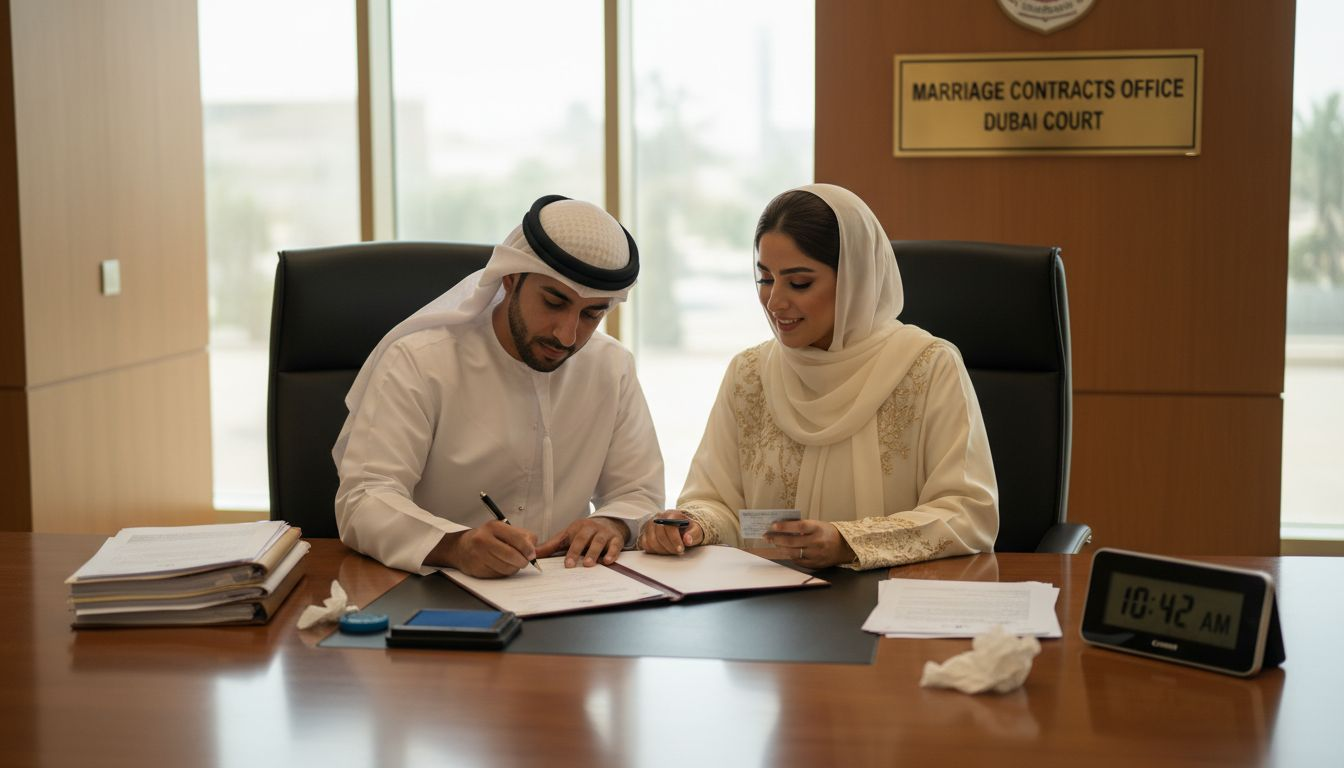
Many couples planning to marry in the UAE face confusion about what a marriage contract actually means for their union. Is it just a formality, or does it carry significant legal weight? The reality is that a marriage contract serves as the foundation of your legal relationship, defining rights, obligations, and protections that affect everything from daily life to divorce and inheritance. Whether you’re considering a civil or Islamic marriage, understanding the contract’s role is essential for making informed decisions. This guide breaks down exactly what a marriage contract entails in the UAE, the legal requirements you must meet, and how to ensure your contract protects both partners in 2026.
Table of Contents
Understanding Marriage Contracts In The UAE: Definitions And Types
Legal Requirements And Formalities For Marriage Contracts In UAE
Rights, Obligations, And Legal Implications Of Marriage Contracts In The UAE
Ensuring Validity And Enforceability Of Your Marriage Contract: Practical Tips
Explore Professional Marriage Services To Simplify Your UAE Wedding
Key takeaways
Point | Details |
Legal recognition | Marriage contracts formalize and legally recognize marriage agreements in the UAE through official registration |
Specific terms | Contracts include rights, obligations, and sometimes financial arrangements tailored to civil or Islamic requirements |
Different processes | Civil and Islamic marriage contracts follow distinct procedures with unique documentation and religious considerations |
Enforceability matters | Understanding legal criteria ensures your contract protects both partners and remains enforceable in court |
Broad impact | Marriage contracts affect divorce settlements, inheritance rights, and legal responsibilities throughout your marriage |
Understanding marriage contracts in the UAE: definitions and types
A marriage contract is a legally binding agreement between spouses that must be registered with UAE authorities to gain official recognition. This document establishes the formal relationship between partners and outlines the terms under which the marriage operates. Marriage contracts formalize the rights and obligations between spouses under UAE law, creating a framework that courts can reference when disputes arise or when clarifying responsibilities.
The UAE recognizes two primary types of marriage contracts, each serving different communities and following distinct legal pathways. Civil marriage contracts apply primarily to non-Muslims or couples choosing secular ceremonies, emphasizing statutory rights and legal registration through government channels. Islamic marriage contracts, known as Nikah, incorporate religious principles and must comply with Sharia law requirements while also meeting UAE civil registration standards.
These contract types differ significantly in their structure and implications. Civil contracts focus on equality under UAE civil law, with both spouses typically having similar rights regarding property, custody, and financial matters. Islamic contracts incorporate religious elements like mahr, the mandatory gift from groom to bride, and require specific witness testimony according to Islamic jurisprudence. Understanding the legal implications of marriage UAE helps you choose the right contract type for your circumstances.
Key distinctions between civil and Islamic marriage contracts include:
Civil contracts require government registration through UAE civil authorities without religious ceremony requirements
Islamic contracts must be registered with Sharia courts and include religious elements like mahr and witness testimony
Civil contracts typically emphasize equal rights and statutory protections under UAE civil code
Islamic contracts may include specific religious obligations and rights that differ between spouses based on Sharia principles
Civil contracts often provide more flexibility for prenuptial agreements and customized financial arrangements
Islamic contracts must comply with both religious requirements and UAE registration procedures
The type of contract you choose affects not only the marriage ceremony itself but also how your relationship is legally interpreted throughout your union. Courts apply different legal frameworks when resolving disputes depending on whether your marriage falls under civil or Islamic jurisdiction. This distinction becomes particularly important if you ever face separation, inheritance issues, or custody disputes.
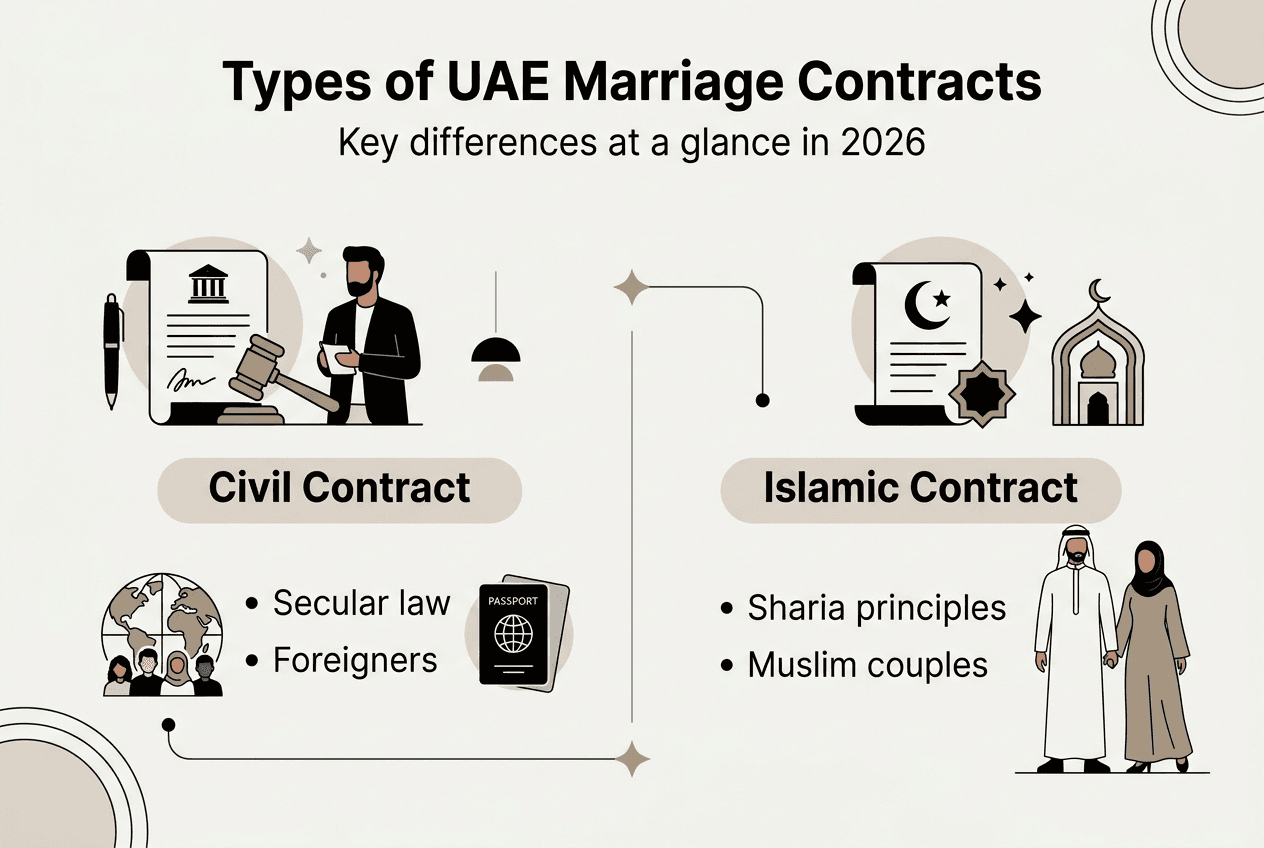
For expatriates, the choice between civil and Islamic contracts may also depend on your home country’s recognition requirements. Some nations more readily accept one type over the other, making it essential to consider international implications when selecting your contract format.
Legal requirements and formalities for marriage contracts in UAE
Establishing a valid marriage contract in the UAE requires careful attention to documentation, procedural steps, and legal formalities that vary between civil and Islamic marriages. Specific documentation and legal procedures vary between civil and Islamic marriage contracts in the UAE, making it crucial to understand which requirements apply to your situation.
For civil marriage contracts, you must complete the following steps to ensure legal validity:
Verify eligibility by confirming both partners meet age requirements and have legal capacity to marry
Gather essential documentation including valid passports, birth certificates, and proof of single status
Complete mandatory health screenings as required by UAE authorities for disease prevention
Obtain any necessary divorce decrees or death certificates if either partner was previously married
Submit documents for official translation and attestation if originals are in languages other than Arabic or English
Register the marriage with the relevant UAE civil authority in your emirate
Receive the official marriage certificate that serves as legal proof of your union
Islamic marriage contracts follow a different process rooted in Sharia law requirements. The essential steps include:
Obtain consent from both bride and groom, with the bride’s guardian (wali) providing approval in many cases
Agree on mahr amount and payment terms, which must be clearly documented in the contract
Arrange for at least two male witnesses or equivalent female witnesses as required by Islamic law
Conduct the marriage ceremony with an authorized Islamic official who can solemnize the union
Complete registration with the Sharia court in your emirate to gain legal recognition
Ensure all documentation meets both religious and civil registration requirements
Obtain the official marriage certificate from the Sharia court
Pro Tip: Start gathering your documentation at least three months before your planned wedding date to avoid delays caused by missing papers, translation requirements, or attestation processing times.
Following all legal formalities ensures the marriage contract’s enforceability and protects both partners’ rights under UAE law. Incomplete documentation or improper procedures can render your contract invalid or unenforceable, creating serious complications if disputes arise later.
Expatriates face additional requirements that UAE nationals may not encounter. You may need to provide documents from your home country proving eligibility to marry, which often require attestation from your embassy and UAE Ministry of Foreign Affairs. Some nationalities must also obtain a certificate of no impediment confirming no legal barriers exist to the marriage.

Health screening requirements typically include tests for communicable diseases, with results valid for specific timeframes. Make sure to complete these tests within the required window before your registration appointment. The civil marriage requirements UAE specify exact testing protocols and validity periods that change periodically, so verify current 2026 requirements with authorities.
Translation and attestation represent critical steps that many couples underestimate. All foreign documents must be translated into Arabic by approved translators, then attested by your home country’s authorities and UAE officials. This process can take weeks or months depending on your country of origin, making early preparation essential. Understanding the Islamic marriage contract process helps you navigate these requirements smoothly.
Rights, obligations, and legal implications of marriage contracts in the UAE
Your marriage contract creates enforceable rights and obligations that shape your legal relationship throughout your marriage and beyond. Understanding these implications helps you make informed decisions and protects your interests if circumstances change.
Marriage contracts define the legal rights and duties of spouses including financial support and inheritance. The specific rights you gain through marriage include:
Financial support and maintenance rights, with husbands typically obligated to provide for wives in Islamic contracts
Joint or separate property rights depending on contract terms and applicable law
Custody and guardianship rights over children born during the marriage
Inheritance rights that determine how assets pass upon death
Healthcare decision-making authority for an incapacitated spouse
Immigration and residency sponsorship rights in the UAE
Marriage also creates specific obligations that both spouses must fulfill. These duties include fidelity and loyalty to your partner, mutual respect and support, financial responsibility for household expenses, and care for any children. Islamic marriage contracts may specify additional religious obligations like the wife’s right to mahr and the husband’s duty to provide housing and maintenance.
The differences between civil and Islamic contracts become particularly apparent when examining rights and obligations:
Aspect | Civil Marriage Contract | Islamic Marriage Contract |
Financial support | Typically equal responsibility or as agreed | Husband obligated to provide maintenance |
Property rights | Usually equal or as specified in prenup | May differ based on Sharia principles |
Custody default | Equal consideration for both parents | Mother typically has custody of young children |
Inheritance | UAE civil code or home country law applies | Sharia inheritance rules apply |
Divorce process | Civil court procedures | Sharia court with specific religious grounds |
Your marriage contract plays a crucial role if your relationship ends in divorce. Courts examine contract terms to determine financial settlements, custody arrangements, and division of assets. Clauses you included about property ownership, financial contributions, and custody preferences carry significant weight in judicial decisions. Courts play a key role in enforcing or contesting marriage contracts in legal disputes, making it essential to draft clear, comprehensive terms from the start.
Inheritance represents another area where marriage contracts have profound impact. Under Islamic law, spouses have specific inheritance shares that generally cannot be altered by contract alone. However, civil marriage contracts may allow more flexibility in estate planning, particularly for non-Muslims. The UAE applies different inheritance rules depending on your religion and contract type, with Islamic marriages typically following Sharia succession rules and civil marriages potentially subject to your home country’s laws.
Dispute resolution processes differ significantly between contract types. Islamic marriage disputes go before Sharia courts that apply religious principles and may attempt reconciliation before granting divorce. Civil marriage disputes proceed through civil courts using statutory law and may involve mediation or arbitration if specified in the contract. Understanding the legal benefits of marriage UAE includes knowing which court system will handle your case.
The role of courts in UAE marriage extends beyond divorce to enforcement of contract terms during the marriage itself. If one spouse fails to meet obligations like financial support or denies rights like custody access, courts can intervene to enforce the contract. This enforcement power makes the contract’s precise language critically important, as ambiguous terms may be interpreted in ways you didn’t intend.
Ensuring validity and enforceability of your marriage contract: practical tips
Creating a valid marriage contract is just the first step. You must also take practical measures to ensure your contract remains enforceable and recognized both in the UAE and internationally if needed.
Key steps to secure your marriage contract’s validity include:
Verify that all signatures, witnesses, and official stamps appear correctly on the original document
Register your marriage with the appropriate UAE authority immediately after the ceremony
Obtain multiple certified copies of your marriage certificate for various administrative needs
Store original documents in a secure location with fireproof and waterproof protection
Create digital scans or copies stored in encrypted cloud storage as backup
Keep a record of all supporting documents like health certificates and eligibility proofs
Pro Tip: Schedule a consultation with a legal professional who specializes in UAE family law to review your contract terms before signing, especially if you want customized clauses addressing specific financial arrangements or custody preferences.
Staying current with UAE legal updates matters significantly in 2026. Marriage and family law evolves as the country modernizes its legal framework, and changes in registration procedures, documentation requirements, or court processes could affect your contract’s status. Subscribe to official UAE government channels or work with legal advisors who monitor these developments to ensure ongoing compliance.
For expatriates planning to use your marriage contract outside the UAE, attestation becomes essential. Attesting your marriage contract can ensure its legal validity abroad and strengthen enforceability in your home country or other jurisdictions. The attestation process involves several steps including UAE Ministry of Foreign Affairs authentication and potentially your home country embassy’s certification.
International recognition requires understanding both UAE and foreign legal systems. Some countries automatically recognize UAE marriage certificates while others require additional documentation or registration. Research your home country’s requirements early, particularly if you plan to relocate or need the marriage recognized for immigration purposes. The marriage attestation UAE process can take several weeks, so build this timeline into your planning.
Maintaining proper documentation throughout your marriage protects you if questions arise years later. Keep certified copies accessible for situations like visa applications, property purchases, or school enrollments for children. Some couples create a dedicated folder with all marriage related documents including the contract, attestations, and supporting papers organized chronologically.
Consider periodic reviews of your marriage contract, especially after major life changes like having children, purchasing property, or significant income changes. While you cannot unilaterally modify a registered marriage contract, you can create supplementary agreements or understand how new circumstances interact with existing terms. Legal consultation during these reviews helps you adapt to changing needs while respecting the contract’s binding nature.
Digital security for your marriage documents deserves attention in 2026. Store encrypted copies in multiple secure locations, use strong passwords for any digital storage, and consider sharing access information with a trusted family member in case of emergency. Physical copies should be kept in a safe deposit box or home safe, with additional copies stored separately in case of loss or damage.
Explore professional marriage services to simplify your UAE wedding
Navigating marriage contracts and UAE wedding requirements can feel overwhelming, especially when juggling documentation, legal formalities, and ceremony planning simultaneously. Harris N Charms specializes in simplifying this process for couples through comprehensive marriage services UAE that handle everything from legal paperwork to ceremony coordination.

Our team brings extensive experience with both civil and Islamic marriage contracts, ensuring your documentation meets all 2026 legal requirements while protecting your rights as a couple. We guide you through each step, from gathering initial documents to final registration, eliminating confusion and preventing costly mistakes. Whether you need assistance with marriage contract preparation, attestation services, or full wedding planning, our personalized approach addresses your unique circumstances and preferences. Contact Harris N Charms today to discuss how we can make your UAE marriage journey smooth, legally sound, and memorable.
Frequently asked questions about marriage contracts in UAE
What details does a marriage contract usually include?
A marriage contract typically includes the full names and identification details of both spouses, the date and location of marriage, witness information, and any specific terms agreed upon regarding financial arrangements, property rights, or custody provisions. Islamic contracts also include mahr amount and payment terms, while civil contracts may incorporate prenuptial agreement clauses.
Can marriage contracts be modified after signing?
Marriage contracts generally cannot be unilaterally modified after registration without court involvement or mutual agreement of both spouses. However, couples can create supplementary agreements addressing new circumstances, though these must also meet legal requirements and may need court approval depending on the nature of changes. Significant modifications like altering mahr or custody terms typically require formal legal procedures.
Is a marriage contract required by UAE law for all marriages?
Yes, a registered marriage contract is legally required for all marriages to be recognized in the UAE, whether civil or Islamic. Without proper registration and an official marriage certificate, your union has no legal standing, meaning you cannot access spousal rights, sponsorship benefits, or legal protections. Unregistered marriages leave both partners vulnerable with no enforceable rights or obligations.
How does a marriage contract affect divorce proceedings?
Your marriage contract serves as the primary legal document courts examine during divorce proceedings to determine asset division, custody arrangements, and financial obligations. Terms you specified about property ownership, financial contributions, and custody preferences directly influence judicial decisions. Courts enforce contract clauses that comply with UAE law, making the contract’s precise language critically important for protecting your interests during separation.
Are foreign marriage contracts recognized in the UAE?
Foreign marriage contracts may be recognized in the UAE if they meet specific requirements including proper attestation from your home country and UAE authorities. However, recognition depends on the marriage type, your nationality, and whether the foreign contract complies with UAE public policy. Many expatriates must register their foreign marriages with UAE authorities or obtain local recognition to access full legal rights and benefits in the Emirates.
Recommended
Comments