
How to get civil marriage in Abu Dhabi: 2026 guide

Updated: Mar 23
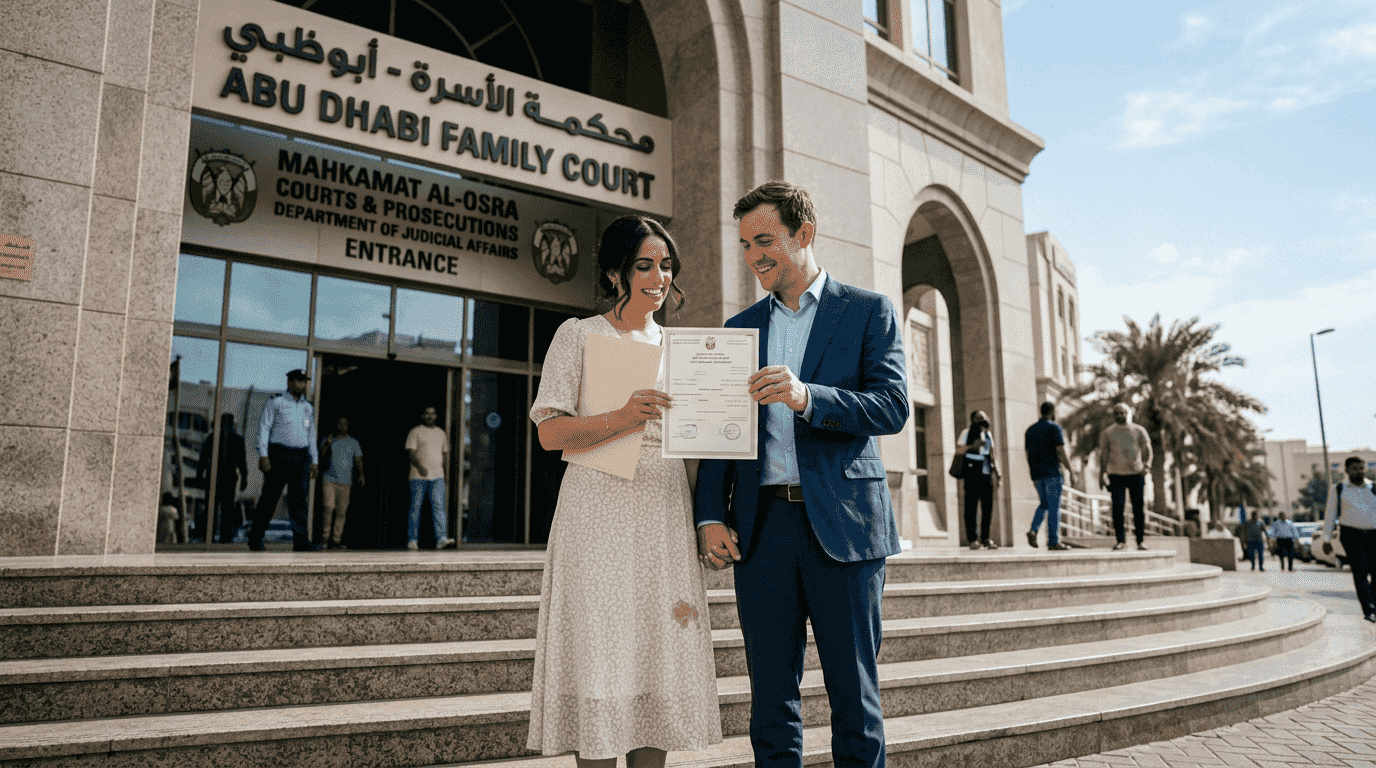
Navigating civil marriage procedures in Abu Dhabi can feel overwhelming, especially for expats and foreign nationals unfamiliar with UAE legal requirements. Many couples encounter confusion about required documents, eligibility criteria, and application timelines. This comprehensive guide walks you through every step of obtaining a civil marriage license in Abu Dhabi for 2026, from initial documentation to final registration. Whether you’re a UAE national or an international couple, understanding these procedures ensures a smooth, stress-free marriage process.
Table of Contents
Understanding The Legal Requirements For Civil Marriage In Abu Dhabi
Step-By-Step Application Process For A Civil Marriage License In Abu Dhabi
Common Challenges And Tips For A Smooth Civil Marriage Application
What To Expect After Obtaining Your Civil Marriage License In Abu Dhabi
Explore Expert Legal Support For Your Civil Marriage In Abu Dhabi
Key takeaways
Point | Details |
Legal prerequisites | Civil marriage in Abu Dhabi requires specific documentation including passports, birth certificates, and proof of single status. |
Application timeline | The process typically takes two to eight weeks depending on document readiness and court schedules. |
Expat requirements | Foreign nationals must provide attested documents with certified translations to meet legal standards. |
Express services | Abu Dhabi offers expedited processing for qualified couples willing to pay additional fees. |
Post-license steps | After approval, couples must complete official registration and choose ceremony options. |
Understanding the legal requirements for civil marriage in Abu Dhabi
Civil marriage serves as a legally recognized alternative to religious ceremonies in Abu Dhabi, offering couples flexibility in how they formalize their union. Unlike traditional Islamic marriages, civil marriages in Abu Dhabi require specific legal prerequisites and documents that vary based on nationality and residency status. Understanding these requirements before starting your application prevents costly delays and frustration.
Eligibility criteria focus on three core areas: age, marital status, and residency. Both parties must be at least 18 years old, legally single or divorced with proper documentation, and hold valid residence permits in the UAE. Expats face additional scrutiny regarding their home country’s marriage laws, requiring proof that their intended marriage won’t violate regulations in their nation of origin.
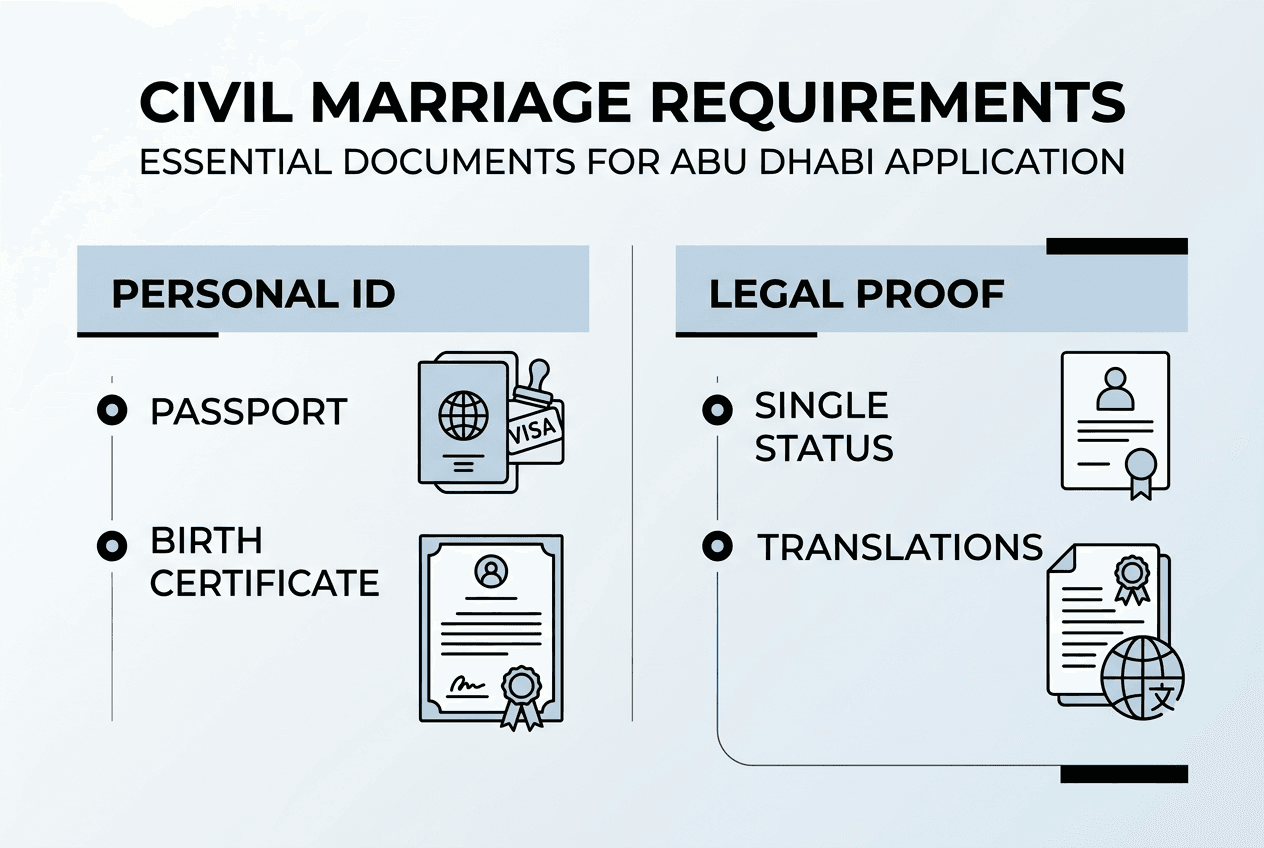
Required original documents form the foundation of any successful application:
Valid passports with minimum six months validity
Original birth certificates with certified translations
Proof of single status or divorce decree from previous marriages
Current UAE residence visa copies
Passport-sized photographs meeting official specifications
Medical fitness certificates from approved clinics
Foreign nationals encounter extra documentation hurdles that UAE nationals bypass. Your documents must receive attestation from your home country’s embassy or consulate in the UAE, verifying authenticity for Abu Dhabi courts. Translations must come from certified translators approved by the UAE Ministry of Justice, not generic translation services. This attestation process alone can add two to four weeks to your timeline if you haven’t prepared in advance.
Pro Tip: Start gathering and attesting your documents at least two months before your intended application date to avoid rushed processing and potential errors that could derail your timeline.
Local court jurisdiction determines where you file your application based on your residence emirate. Abu Dhabi Family Court handles most civil marriage applications for residents of the capital, while specific community courts may process applications for certain nationalities. The legal framework governing civil marriage falls under UAE Federal Law, which recognizes civil unions as valid marriages with full legal rights and protections for both spouses.
Step-by-step application process for a civil marriage license in Abu Dhabi
The civil marriage application process in the UAE follows a structured pathway that transforms your prepared documents into an official marriage license. Each step builds on the previous one, creating a clear progression from initial submission to final approval. Understanding this sequence helps you anticipate requirements and prepare accordingly.
Before diving into the steps, compile your complete document package. This preparation phase separates successful applications from delayed ones. Your package should include all items listed in the previous section, organized in a logical order with original documents and certified copies clearly labeled.
Schedule your appointment with Abu Dhabi Family Court or the designated civil marriage authority through their online portal or by phone. Booking slots fill quickly during peak wedding seasons, so reserve your date at least three weeks in advance. Bring both partners to the appointment with all original documents and copies.
Submit your application during your scheduled appointment where court officials review your documents for completeness and authenticity. They verify passport details, examine attestations, and confirm translations meet legal standards. If any document raises questions, officials may request additional information or clarification on the spot.
Application review begins after submission, typically lasting one to three weeks. Court administrators verify your eligibility, cross-reference documents with government databases, and may schedule brief interviews to confirm your intentions. Some couples receive requests for supplementary documents during this phase, particularly if initial submissions contained minor errors or omissions.
Official approval arrives via notification from the court, authorizing issuance of your civil marriage license. This document grants legal permission to marry within a specified timeframe, usually 30 to 90 days from issuance. The license itself doesn’t constitute marriage but rather permission to proceed with the ceremony and registration.
Marriage ceremony and registration complete the legal process. You can choose a simple court ceremony or arrange a private venue, but registration with Abu Dhabi authorities remains mandatory regardless of ceremony style. The marriage certificate issued after registration serves as your official proof of marriage for all legal purposes.
Processing speed varies based on several factors including application volume, document complexity, and time of year. Standard processing averages four to six weeks, while express services can reduce this to two weeks for eligible couples. Ramadan and major holidays often slow processing as government offices operate on reduced schedules.
Document Type | Responsible Party | Processing Time |
Passport copies | Applicants | Immediate |
Birth certificate attestation | Embassy/Consulate | 1-2 weeks |
Single status proof | Home country authority | 2-4 weeks |
Medical fitness | UAE clinic | 1-3 days |
Translation certification | Approved translator | 3-5 days |
Court review | Abu Dhabi Family Court | 2-3 weeks |
Pro Tip: Request email notifications during application review so you can respond immediately to any document requests, preventing unnecessary delays in your approval timeline.
Common challenges and tips for a smooth civil marriage application
Even well-prepared couples encounter obstacles during the civil marriage application process. Common mistakes and misunderstandings cause frequent delays that extend timelines by weeks or even months. Recognizing these pitfalls before they derail your plans saves time, money, and stress.
Missing or incomplete documents top the list of application rejections. Court officials maintain strict standards for document completeness, rejecting applications with outdated photographs, expired passports, or missing attestations. A single missing signature or incorrect date format can trigger rejection, forcing you to restart the entire submission process. Double-checking every document against the official checklist prevents these avoidable setbacks.
Misunderstanding eligibility requirements creates another common problem, particularly for expats unfamiliar with UAE legal nuances. Some applicants assume tourist visa status suffices for marriage applications, only to discover residence visa requirements at submission. Others overlook their home country’s marriage laws, which may prohibit certain unions that UAE law permits. Understanding the difference between civil and religious marriage in the UAE helps clarify which path suits your situation.
Document authenticity and translation verification demand careful attention:
Verify all attestations bear official stamps and signatures from recognized authorities
Confirm translations include the translator’s license number and certification statement
Check that document dates fall within accepted validity periods
Ensure passport copies show clear, readable text without shadows or distortion
Validate that medical certificates come from UAE Ministry of Health approved facilities
Expats face additional requirements that vary by nationality and previous marital status. Second marriages require divorce decrees with full attestation chains, often involving multiple government agencies in your home country. Some nationalities must provide no-objection certificates from their embassies, adding another layer of bureaucracy. Widowed applicants need death certificates for previous spouses, properly attested and translated.
Timing your application strategically avoids court backlogs and holiday slowdowns. Submit applications in September through November or January through March when court schedules run lighter. Avoid December, Ramadan periods, and summer months when staff reductions slow processing. Peak wedding seasons in spring and fall create longer wait times for appointments and reviews.
Proper documentation represents the single most critical factor in civil marriage application success. Investing time in thorough preparation and professional document review prevents the lengthy delays that plague rushed applications.
Pro Tip: Engage a legal expert to review your complete document package before submission, catching errors and omissions that court officials would reject, saving you weeks of reprocessing time.
What to expect after obtaining your civil marriage license in Abu Dhabi
Receiving your civil marriage license marks a milestone, but several important steps remain before your marriage gains full legal recognition. After obtaining the civil marriage license, couples must complete registration and navigate post-marriage administrative tasks. Understanding these final requirements ensures you complete the process correctly.
Official marriage registration with Abu Dhabi authorities transforms your license into a legally binding marriage certificate. You must register within the validity period specified on your license, typically 30 to 90 days. Registration involves appearing before a court official or authorized marriage officer who witnesses your vows and signs the official certificate. Both partners must attend this registration appointment with valid identification and your marriage license.
Ceremony venue options provide flexibility in how you celebrate your union:
Simple court ceremonies conducted at Abu Dhabi Family Court with minimal formality
Private venue ceremonies with authorized marriage officers who travel to your location
Hotel or resort ceremonies arranged through venues holding marriage authorization
Traditional cultural ceremonies followed by separate legal registration
Civil marriage under UAE law grants specific spousal rights and legal protections. Your marriage certificate enables visa sponsorship, allowing one spouse to sponsor the other for residence. Joint property ownership becomes possible, and inheritance rights activate according to UAE civil law rather than Sharia principles. These legal implications differ significantly from religious marriages, particularly regarding divorce procedures and asset division.
Aspect | Civil Marriage Registration | Religious Marriage Registration |
Processing time | 1-2 weeks after license | Same day in most cases |
Legal framework | UAE Federal Law | Sharia Law |
Divorce process | Civil court procedures | Sharia court procedures |
Inheritance rights | Civil law provisions | Islamic law provisions |
Sponsorship eligibility | Immediate upon registration | Immediate upon registration |
Name change procedures require additional documentation if either spouse chooses to adopt their partner’s surname. You must update your passport through your home country’s embassy, then amend your UAE residence visa to reflect the new name. This process involves submitting your marriage certificate, current passport, and visa copies to immigration authorities. Processing typically takes two to four weeks, during which you may experience temporary complications with official transactions.
Residency updates become necessary after marriage registration, particularly for sponsored spouses. The sponsoring partner must apply for a family residence visa through immigration authorities, submitting the marriage certificate, passport copies, and proof of accommodation. Medical fitness tests and Emirates ID registration complete the residency process, establishing your legal status as a married couple in the UAE.
Explore expert legal support for your civil marriage in Abu Dhabi
Navigating civil marriage procedures demands attention to detail and understanding of complex legal requirements. Professional legal assistance simplifies this process, ensuring your application meets all standards without costly delays or rejections. Expert document review catches errors before submission, while experienced legal representatives guide you through each step with confidence.

Harris and Charms specializes in comprehensive civil marriage support throughout Abu Dhabi and the UAE. Our team manages document preparation, attestation coordination, and application submission, handling the bureaucratic complexity while you focus on planning your celebration. We provide tailored guidance for expats and foreign nationals, ensuring compliance with both UAE requirements and your home country’s regulations. Contact Harris and Charms today to discover how our legal expertise can transform your civil marriage journey into a smooth, stress-free experience.
FAQ
How long does it take to get a civil marriage license in Abu Dhabi?
Typical timelines range from four to eight weeks depending on document readiness and court schedules. Couples with pre-attested documents and complete applications often receive approval within four weeks. Express services can reduce processing to two weeks for an additional fee, though availability depends on eligibility criteria and current application volumes.
Can foreign nationals get civil married in Abu Dhabi?
Yes, foreign nationals can apply for civil marriage in Abu Dhabi but must provide attested documents and certified translations. Your home country’s embassy must verify your documents, and you’ll need proof that your marriage complies with your nation’s laws. The process takes longer for expats due to these additional attestation requirements, so start preparing documents well in advance.
What documents are mandatory for civil marriage application?
Key documents include valid passports with minimum six months validity, original birth certificates, proof of single status or divorce decrees, and current UAE residence visas. You’ll also need passport photographs, medical fitness certificates from approved clinics, and certified translations for all non-English documents. Each document requires proper attestation from your embassy or consulate to meet Abu Dhabi court standards.
Is an express civil marriage service available in Abu Dhabi?
Yes, Abu Dhabi offers an express civil marriage service for qualified couples to speed application processing. This service reduces standard timelines from six weeks to approximately two weeks for an additional fee. Eligibility depends on document completeness, nationality, and current court capacity, so verify availability when scheduling your initial appointment.
Recommended
Comments