
What Happens at an Islamic Wedding in the UAE: Step-by-Step Guide 2026


TL;DR:
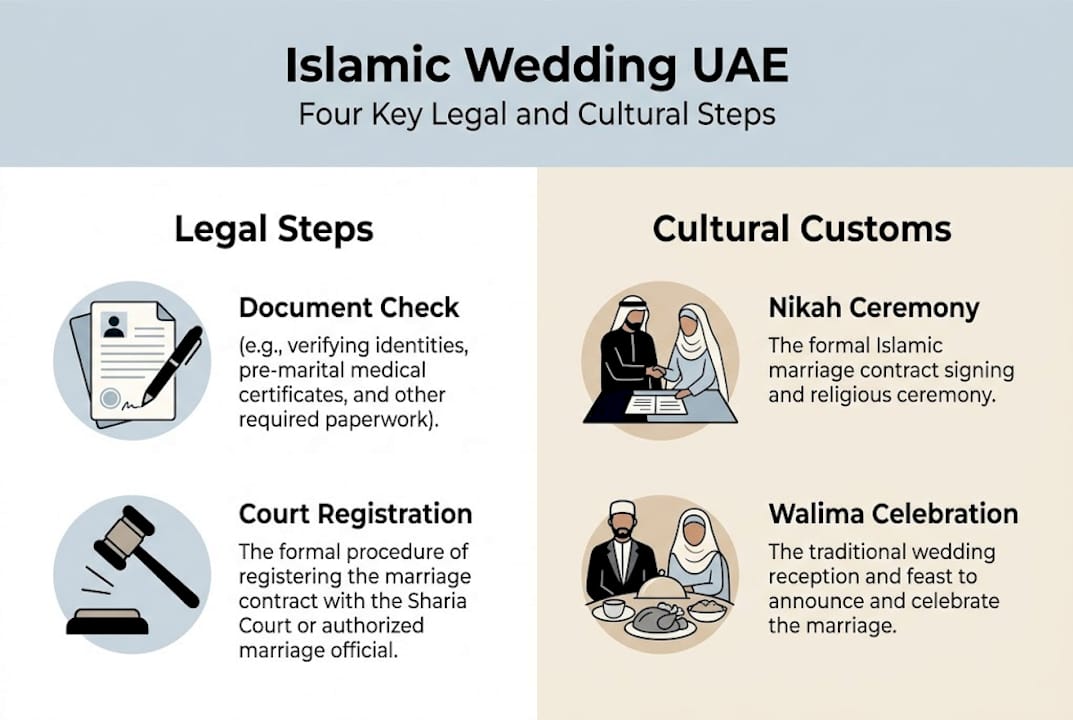
The Nikah is a legally binding Islamic marriage contract requiring offer, guardian, witnesses, and dowry.
Marriage registration at the Sharia court within 30 days is essential for legal recognition in the UAE.
Cultural wedding traditions in UAE include proposal, henna night, Zaffa procession, and Walima feast.
What Happens at an Islamic Wedding? An Islamic wedding in the UAE holds a beautiful contradiction at its core: the ceremony that matters most legally and spiritually can take as little as 30 minutes, yet the cultural celebration around it can last for days. If you're wondering what happens at an Islamic wedding, the Nikah is a sacred contract requiring mutual consent, a bride’s guardian (Wali), two Muslim male witnesses, and a Mahr (dowry). Understanding each step of the process helps you avoid costly surprises and lets you focus on what truly makes your day unforgettable.
Table of Contents
Key Takeaways of What Happens at a Islamic Wedding
Point | Details |
Nikah is the core | The Nikah contract and its registration legally and spiritually bind the couple in the UAE. |
Legal requirements matter | Fulfill age, medical, and documentation rules to avoid problems with marriage validity. |
Rich Emirati traditions | Unique customs like henna nights and segregated celebrations make UAE weddings special. |
Mind the edge cases | Unique situations such as interfaith marriage or non-registered Nikah need extra caution. |
The heart of the ceremony: Understanding the Nikah
The Nikah is not just a ritual. It is the legal and spiritual foundation of an Islamic marriage in the UAE, and everything else, from the henna night to the Walima feast, flows from it. Think of the Nikah the way you would think of signing a deed for a home. The deed is the binding moment; all the celebrations before and after are the open house.
At its core, the Nikah requires four non-negotiable elements:
Ijab and Qubul (offer and acceptance): Both parties must verbally agree to the marriage.
Wali: The bride’s male guardian, typically her father, must be present and consent.
Two Muslim male witnesses: Both must hear the offer and acceptance clearly.
Mahr: A mandatory gift from the groom to the bride, agreed upon before the ceremony.
In the UAE, the Nikah ceremony is officiated by a Sharia court judge or a licensed Mazoon. The event begins with a Quran recitation and a Khutbah (sermon), followed by the verbal offer and acceptance between both parties, and then the signing of the marriage contract. It is straightforward, deeply meaningful, and legally binding the moment the contract is signed.
Here is what most couples miss: the ceremony itself does not finalize your legal status. The contract must be registered at the Sharia court within 30 days to be recognized under UAE law. Skip that step, and your Nikah exists spiritually but not legally.
“The Nikah ceremony is officiated by a Sharia court judge or licensed Mazoon and must be registered at Sharia court within 30 days for legal validity.”
Pro Tip: Book your court registration appointment before the ceremony date, not after. Courts can have waiting periods, and a delayed registration can create headaches for visa applications, residency, and inheritance rights down the line.
For a detailed walkthrough of what to expect, see the full Nikah registration steps and learn what paperwork to bring on the day. If you are still exploring the basics, a broader look at getting married in UAE will help orient you to the full process.
Legal steps: Requirements for a valid Islamic wedding in the UAE
Understanding the spiritual side is just half of the equation. Here is how to ensure your marriage is legal and fully recognized.
The UAE has clearly defined legal requirements that couples must satisfy before the Nikah can proceed. According to official Sharia marriage requirements, both parties must be at least 18 years old (by the Gregorian calendar), complete a premarital medical screening, and hold valid IDs and visas. Proof of single status is also mandatory.
Requirement | Details |
Minimum age | 18 (Gregorian calendar) |
Medical screening | Premarital blood test required |
Proof of single status | Official certificate from home country or relevant authority |
Valid ID/visa | Passport and residence documentation |
Age gap over 30 years | Requires court approval |
Mahr (UAE nationals) | Capped at AED 50,000; prompt payment AED 20,000 |
Here is the step-by-step process most couples follow:
Confirm eligibility (age, religion, nationality rules).
Complete the premarital medical screening at an approved health center.
Gather all documents: passports, visas, birth certificates, and proof of single status.
Submit the application at the Sharia court or through an approved marriage office.
Attend the Nikah ceremony officiated by the court judge or Mazoon.
Register the signed contract at the Sharia court within 30 days.
Pro Tip: The medical test has a validity window, so schedule it no more than three months before your planned ceremony date. Arriving with an expired test result is one of the most common reasons couples face avoidable delays.
Couples should also pay close attention to the Mahr rules. For UAE nationals, the Mahr is capped at AED 50,000 total, with AED 20,000 designated as the prompt (immediate) payment. Understanding this upfront prevents disputes later. For more detail, review the full list of Islamic marriage requirements and the Muslim marriage rules that apply in 2026.
Traditions that make the celebration unique
Once the paperwork is in order, couples look forward to the customs that make each wedding memorable.
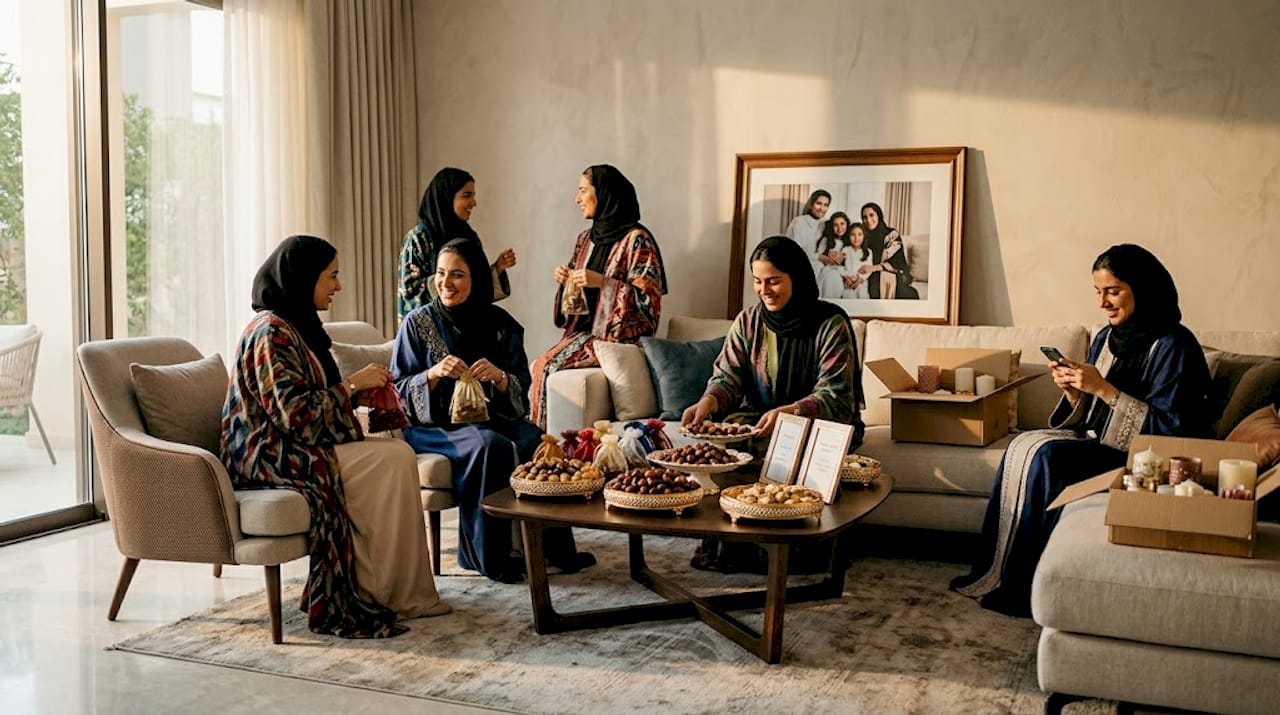
Emirati Islamic weddings are layered with cultural richness that extends far beyond the Nikah itself. The traditions in UAE weddings follow a distinct arc from proposal to post-wedding feast, and knowing what to expect at each stage helps you plan with purpose.
Stage | Islamic Requirement | Emirati Cultural Custom |
Pre-wedding | Wali’s consent (Khitbah) | Formal proposal gathering, Henna night |
Ceremony | Nikah contract | Zaffa procession, segregated celebrations |
Post-wedding | Walima (recommended) | Multi-day feasts, traditional dances |
Here is a closer look at the key traditions:
Khitbah (proposal): The groom’s family formally visits the bride’s family to request her hand in marriage. This is a deeply respected step in Emirati culture.
Henna night: Held before the Nikah, the bride’s hands and feet are adorned with intricate henna patterns. This gathering is typically women-only and filled with music and celebration.
Zaffa procession: A festive entrance for the groom, often accompanied by drummers, bagpipes, and traditional dancers. It sets the celebratory tone for the reception.
Segregated celebrations: Men and women traditionally celebrate in separate halls. This is still widely practiced in conservative Emirati families.
Walima: The post-Nikah feast hosted by the groom’s family. Attending the Walima is considered a Sunnah (recommended practice) and signals the public announcement of the marriage.
Modern Emirati couples increasingly blend traditional customs with contemporary touches, such as professional photography, luxury venues, and wedding traditions in Abu Dhabi that reflect regional flavor. The key is honoring both your faith and your family’s heritage. For a detailed breakdown of what each step of the ceremony looks like in practice, the guide to Nikah ceremony steps walks through it clearly.
Edge cases and unique situations
While most couples follow a straightforward process, some situations require special attention and careful legal navigation.
The UAE’s Sharia-based marriage framework is clear for the majority of cases, but certain situations fall outside the standard path. Knowing your scenario in advance saves time and protects both spouses legally.
Common edge cases include:
Interfaith marriage: A Muslim man may marry a Christian or Jewish woman under Islamic law. However, a Muslim woman cannot marry a non-Muslim man without him converting first.
Polygamy: Polygamy is permitted for Muslim men up to four wives, provided they can treat all wives equitably. A new wife’s addition requires court process and, in some cases, notification of the existing wife.
Large age gaps: If the age difference between spouses exceeds 30 years, the couple must obtain court approval before the Nikah can proceed.
Minors: Any applicant under 18 requires a court order. This is not a rubber stamp. Judges assess maturity and circumstances individually.
Misyar marriage: A lesser-known contract form where the wife waives certain rights (like cohabitation). It is legal under UAE Sharia but carries specific implications for both parties.
“An unregistered Nikah creates real legal risks. Without Sharia court registration, the marriage may be considered invalid for purposes of inheritance, divorce proceedings, and spousal residency rights.”
This is not a technicality to brush off. Couples who conduct a private Nikah ceremony without court registration can find themselves in a legal gray area that affects everything from housing to custody. The marriage laws in the UAE are designed to protect both spouses, but only when the process is followed correctly. For a full breakdown of edge cases and what to do in each situation, the guide to Islamic marriage in UAE is a good starting point.
Our perspective: Why getting the legal and cultural details right matters
After years of supporting couples through the Islamic marriage process in the UAE, one pattern stands out clearly: the couples who struggle most are not those who lack love or commitment. They are the ones who treated the legal process as an afterthought.
We see it regularly. A couple invests months planning the henna night, the Zaffa, and the Walima, but books their Sharia court appointment two weeks before the ceremony. Then a document is missing, or the medical test has expired, and the entire timeline shifts. The celebration becomes a source of stress rather than joy.
Our honest advice: get the Islamic marriage process locked in first. Confirm your eligibility, gather your documents, and schedule your court appointments before you book a single vendor. Once the legal foundation is secure, you can pour your energy into honoring Emirati traditions with the enthusiasm they deserve. The ceremony is sacred. Protect it by preparing properly.
Next steps: Professional help for your Islamic wedding in the UAE
Planning an Islamic wedding in the UAE involves more moving parts than most couples anticipate. From Sharia court timelines to cultural customs and documentation requirements, the details add up fast.

At Harris & Charms, we help couples navigate every stage of the process, from the first document checklist to the final court registration. Our Islamic wedding packages are designed to cover both the legal and celebratory sides of your marriage, so nothing falls through the cracks. Whether you have a straightforward case or an unusual situation that needs expert guidance, we are here to help. Speak with a specialist today and take the first step toward a ceremony that is both legally sound and deeply meaningful.
Frequently asked questions
Who can legally marry under Islamic law in the UAE?
Muslim men and women who meet age, consent, and documentation requirements can marry; Muslim men may also marry Christian or Jewish women through the proper legal process.
Is the Nikah ceremony enough for a valid marriage in the UAE?
No. The Nikah must be registered at the Sharia court within 30 days of the ceremony for it to carry legal weight in the UAE.
What documents are required for a Muslim wedding in the UAE?
You need valid passports and IDs, proof of single status, premarital medical test results, and visa documentation for both the bride and groom.
How long does the Nikah ceremony take in the UAE?
The core Nikah takes around 30 minutes, though cultural celebrations, including the Walima and other festivities, can extend over multiple days.
What is the significance of the Walima in UAE weddings?
The Walima feast is hosted by the groom’s family after the Nikah to publicly celebrate the marriage and bring both families together in shared joy.
Recommended
Comments