
Legal Benefits of Civil Marriage UAE: What Expats Gain


More than 95 percent of American expatriate couples in the United Arab Emirates face confusing marriage paperwork or unexpected legal barriers when formalizing their unions. Choosing the right marriage framework matters because it impacts not only your personal status but also essential benefits like residency, asset protection, and inheritance rights. This guide highlights the crucial legal differences between civil and Islamic marriage processes in the UAE, while offering practical steps for a smoother experience and complete legal security.
Table of Contents
Key Takeaways of Legal Benefits of Civil Marriages UAE
Point | Details |
Legal Recognition | Marriage in the UAE is governed by Islamic Sharia law for Muslims and civil regulations for non-Muslims. This dual system provides legal protections and rights to all couples. |
Types of Marriage | The UAE offers Islamic and civil marriage frameworks, each with unique procedural requirements, accommodating the diverse needs of its residents. |
Financial Protections | Married couples benefit from legal asset ownership, inheritance rights, and the ability to make joint financial decisions, ensuring economic security. |
Documentation Compliance | Navigating marriage documentation in the UAE requires careful attention to local regulations and proper authentication of all necessary documents for both marriage types. |
Legal Definition and Scope in the UAE
Marriage in the United Arab Emirates represents a complex legal framework that accommodates the diverse cultural and religious landscape of the region. Legal marriage in the UAE is officially recognized through two primary pathways: Islamic Sharia law for Muslim residents and civil regulations for non-Muslim expatriates and citizens. This dual system ensures comprehensive legal protections and rights for all married couples within the national jurisdiction.
The UAE’s legal definition of marriage encompasses several critical components that distinguish it from other regional frameworks. For Muslims, marriages are conducted under traditional Islamic principles requiring explicit consent, formal witnesses, and adherence to religious protocols. Non-Muslim residents, however, can pursue legal marriage options that align with their personal legal traditions while still meeting UAE governmental standards.
Recent legal reforms have significantly expanded the scope of marriage recognition in the UAE. The government now provides official state registration for marriages across different religious and cultural backgrounds, modernizing the traditional legal landscape. These reforms ensure that all legally registered marriages receive equal protection under UAE law, regardless of the spouses’ national origin, religious affiliation, or personal legal status.
Pro tip: Before initiating marriage procedures in the UAE, carefully review your specific legal category and consult official documentation to understand the precise requirements for your personal situation.
Types of Marriage: Civil and Islamic
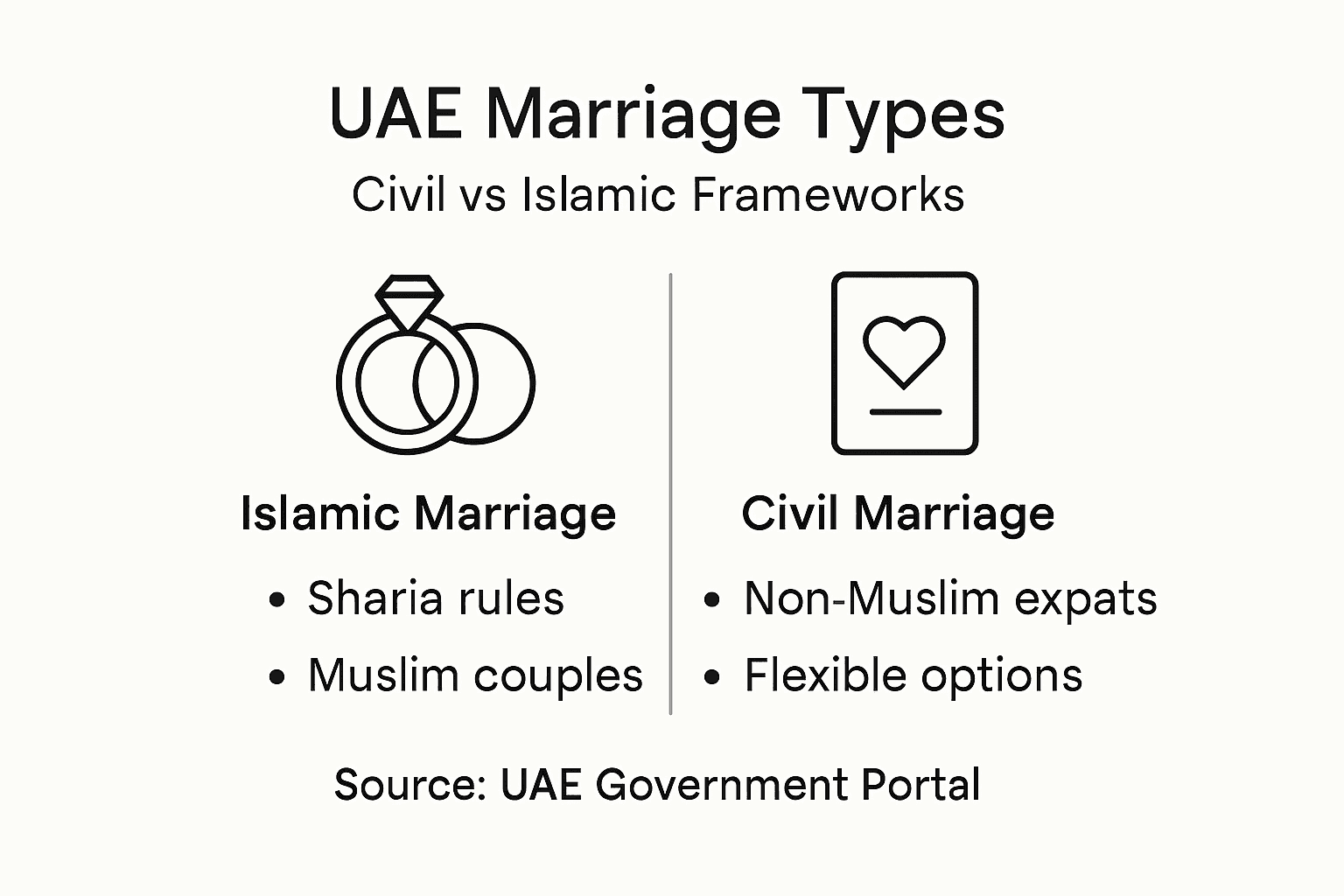
The United Arab Emirates offers two distinct marriage frameworks that cater to the diverse needs of its multicultural population: Islamic marriages and civil marriages. These two legal pathways provide comprehensive options for residents and expatriates seeking to formalize their union under UAE law, each with unique characteristics and procedural requirements.
Islamic marriages remain deeply rooted in traditional Sharia law, primarily designed for Muslim couples. These marriages require specific religious protocols, including mandatory consent from both parties, formal witnesses, and registration through Sharia courts. The process emphasizes traditional Islamic principles and cultural expectations, ensuring marriages align with religious and social norms. Civil marriage options represent a more contemporary approach, specifically introduced to accommodate non-Muslim residents and provide a secular legal framework for marriage registration.
Recent legal reforms have significantly expanded marriage recognition in the UAE, particularly for non-Muslim expatriates. Civil marriages now offer a standardized legal contract independent of religious constraints, allowing couples from diverse backgrounds to marry under a unified secular framework. This approach reflects the UAE’s progressive stance on personal legal rights, providing flexibility while maintaining strict legal standards for marriage registration and documentation.
Pro tip: Carefully research and understand the specific requirements for your chosen marriage type, as documentation and procedural steps can vary significantly between Islamic and civil marriage processes.
Here’s a concise comparison of Civil and Islamic marriage frameworks in the UAE:
Feature | Islamic Marriage | Civil Marriage |
Applicable To | Muslim couples | Non-Muslim residents |
Registration Venue | Sharia courts | Specialized civil courts |
Legal Basis | Sharia law principles | Secular UAE statutes |
Witness Requirement | Mandatory religious witnesses | Legal witnesses, not religious |
Flexibility | Limited by tradition | More flexible, no religious protocols |
Documentation | Religious and official documents | Civil documents, official clearances |
Key Legal Protections for Married Couples
Marriage in the United Arab Emirates provides extensive legal protections that safeguard the rights and interests of both spouses, creating a comprehensive framework of mutual support and security. These protections extend across multiple domains, including financial, residential, healthcare, and personal status considerations, ensuring that married couples have robust legal standing within the UAE’s judicial system.
Financial protections represent a critical aspect of marital legal rights in the UAE. Married couples gain significant advantages in areas such as property ownership, inheritance rights, and financial decision-making. Legal implications of marriage demonstrate that spouses can jointly own assets, access shared bank accounts, and make critical financial decisions with legal recognition. This framework provides a secure foundation for couples to build their economic future together, with clear legal mechanisms protecting individual and collective financial interests.
Personal status protections are equally comprehensive, covering essential aspects of family life and individual rights. Married couples receive legal recognition for dependent visas, healthcare access, emergency medical decision-making, and inheritance rights. The UAE’s legal system ensures that spouses have comprehensive rights to support each other in critical life situations, including medical emergencies, property disputes, and familial responsibilities. These protections create a robust legal safety net that extends beyond mere documentation, offering genuine security and mutual support.
Pro tip: Consult with a local legal expert to fully understand the specific legal protections applicable to your marriage type and personal circumstances in the UAE.
Residency, Sponsorship, and Family Rights
Marriage in the United Arab Emirates unlocks critical residency and sponsorship opportunities for expatriate couples, creating a comprehensive legal pathway for family unification and long-term stability. The UAE’s legal framework provides unique mechanisms that enable married couples to establish a secure residential status, transforming their personal relationship into a robust legal foundation for living and working in the country.
Sponsorship rights represent a pivotal advantage for married couples in the UAE. Through marriage, expatriate spouses gain the ability to legally navigate residency requirements, with the primary spouse able to sponsor their partner’s residence visa. This sponsorship extends critical benefits including work permissions, healthcare access, and the right to live together legally in the UAE. The sponsorship mechanism is particularly powerful for couples where one spouse holds a professional or skilled work permit, enabling family members to establish a stable and secure legal presence.
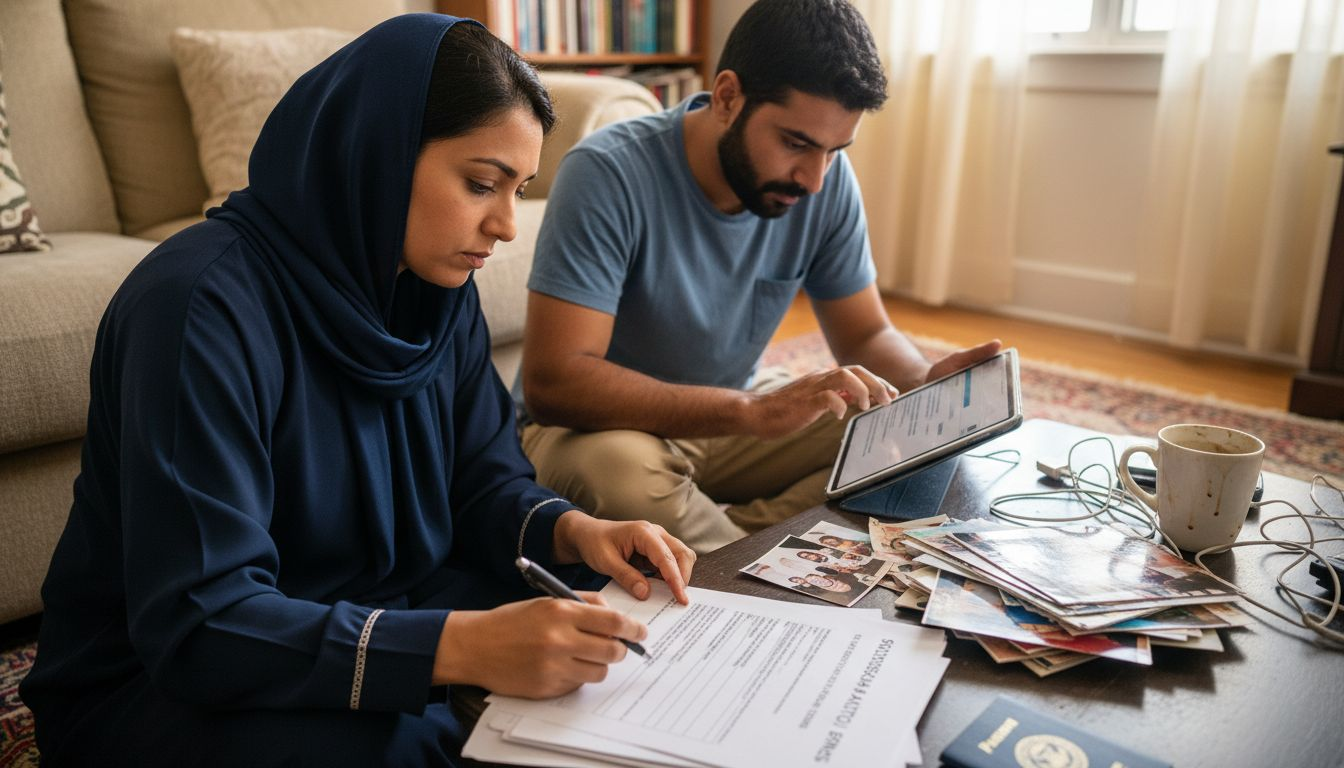
Family rights under UAE law are comprehensive and designed to protect the interests of all family members. Married couples can secure dependent visas for their children, access shared healthcare services, and enjoy legal protections that ensure family unity. The legal system provides clear pathways for family reunification, education access, and social service benefits. These rights create a robust safety net that goes beyond mere documentation, offering genuine security and support for families navigating the complex landscape of expatriate life in the UAE.
Pro tip: Carefully document and verify all marriage and sponsorship requirements, as immigration regulations can change and precise documentation is crucial for maintaining legal residency status.
Financial, Asset, and Inheritance Benefits
Marriage in the United Arab Emirates establishes a comprehensive financial framework that provides married couples with significant legal protections and economic advantages. The UAE’s legal system recognizes marriage as a profound economic partnership, offering robust mechanisms for asset protection, joint financial management, and inheritance rights that safeguard the financial interests of both spouses.
Asset ownership and management represent a critical dimension of marital financial benefits. Married couples gain the legal ability to jointly own property, make collective financial decisions, and protect shared assets from unilateral disposal. Legal implications of marriage demonstrate that spouses can establish joint bank accounts, co-own real estate, and create integrated financial strategies with full legal recognition. This framework enables couples to build wealth collaboratively, with clear legal protections preventing unauthorized financial actions by either partner.
Inheritance rights in the UAE provide another crucial layer of financial security for married couples. The legal system ensures comprehensive protections for surviving spouses, guaranteeing inheritance entitlements through both Sharia law principles and civil statutes. These provisions protect the economic interests of the surviving spouse, ensuring financial stability during challenging life transitions. The inheritance mechanisms cover various scenarios, including asset distribution, property rights, and financial support, creating a robust safety net that extends beyond immediate marital considerations.
Pro tip: Consult with a local financial advisor specializing in UAE marriage laws to develop a comprehensive asset protection and inheritance strategy tailored to your specific marital and financial circumstances.
This table summarizes key financial benefits for married couples in the UAE:
Benefit Category | Description | Impact on Couples |
Joint Asset Ownership | Legal ability to co-own property | Easier wealth accumulation |
Inheritance Protection | Surviving spouse rights ensured | Financial security in transitions |
Shared Bank Accounts | Joint access and management | Simplified financial planning |
Collective Decision Making | Both spouses recognized legally | Stronger partnership structure |
Navigating Documentation and Compliance
Marriage documentation in the United Arab Emirates involves a complex legal compliance process that requires meticulous attention to detail and precise understanding of both civil and religious regulatory frameworks. Expatriate couples must navigate a multifaceted system that demands comprehensive documentation, official certifications, and strict adherence to national legal standards for marriage registration and recognition.
For non-Muslim couples, the documentation requirements are particularly nuanced. Individuals must prepare an extensive collection of official documents, including valid passports, comprehensive medical certificates, proof of single status, and legal clearances from their home countries. Legal implications of marriage underscore the importance of obtaining accurate translations and official attestations for all international documents, ensuring they meet the UAE’s stringent authentication protocols. This process often involves multiple government agencies and requires strategic coordination to successfully complete marriage registration.
The compliance landscape differs significantly between civil and Islamic marriage pathways. Muslim couples typically follow Sharia court procedures, which involve specific religious documentation and witnesses, while civil marriages require registration through specialized courts with more secular documentation requirements. Both pathways demand precise procedural compliance, with potential complications arising from incomplete or improperly authenticated documents. The UAE’s legal system maintains strict standards to prevent fraudulent marriages and protect the rights of all parties involved, making thorough document preparation and verification absolutely critical.
Pro tip: Work with an experienced local marriage documentation specialist who understands the intricate requirements for your specific marriage type to ensure smooth and error-free registration process.
Secure Your Marriage Benefits in the UAE with Expert Support
Navigating the complex legal landscape of marriage in the United Arab Emirates can be overwhelming for expats. From understanding the differences between Islamic and civil marriage to managing documentation, residency sponsorship, and inheritance rights, the process involves many critical steps where mistakes can cost you time and peace of mind. If you want to ensure that your union is legally recognized and fully protected, expert guidance is essential.
At Harris & Charms, we specialize in offering tailored assistance that takes the stress out of marriage planning and legal documentation. Whether you are pursuing a civil marriage or an Islamic marriage, our team provides comprehensive services including legal document processing, event arrangements, and partnership with visa and attestation experts. With a personal touch inspired by our founders’ own love story, we help couples like you move forward confidently and without hassle.
Take control of your marriage journey today and secure the legal benefits that the UAE offers to married couples.

Discover more about how our services protect your rights and simplify marriage compliance by visiting our main website and explore our support options for legal marriage documentation and civil marriage procedures. Contact us now to get started on your seamless marriage experience in the UAE.
Frequently Asked Questions
What legal protections do married couples receive in the UAE?
Married couples in the UAE benefit from extensive legal protections, including rights related to financial assets, healthcare access, and residency. These protections ensure mutual support and security in critical life situations.
How does marriage impact residency and sponsorship for expatriates?
Marriage allows expatriate couples to navigate residency requirements more easily, with the primary spouse able to sponsor their partner’s residence visa, providing access to work permissions and healthcare.
What financial benefits do married couples gain in the UAE?
Married couples can jointly own property, open shared bank accounts, and enjoy inheritance rights, providing a strong financial framework that ensures both partners’ economic security.
What documentation is required to legally marry in the UAE?
Couples must prepare a collection of official documents, including valid passports, medical certificates, and proof of single status, along with any necessary translations and legal clearances, depending on whether they choose Islamic or civil marriage.
Recommended
Comments