
Marriage Registration Step by Step for a Legal UAE Union


Every UAE expat couple dreaming of a smooth wedding often finds the marriage registration process more complex than expected. With government requirements for passports, Emirates IDs, residency visas, and certified medical certificates, missing a single document can stall your plans and cause unnecessary stress. This clear guide explains each crucial document, tips for organizing your paperwork, and what you need to know before your ceremony, so your path to a legally recognized marriage is as straightforward as possible.
Table of Contents
Quick Summary of Marriage Registration Step by Step
Essential Insight | Detailed Explanation |
1. Gather All Required Documents | Compile necessary documents including a valid passport, Emirates ID, and certified copies for marriage registration in the UAE. |
2. Submit Application on Time | Apply to the appropriate authority at least 4-6 weeks before your wedding to avoid delays and secure your appointment. |
3. Attend the Ceremony Prepared | Arrive early with all required documents for your marriage ceremony to ensure a smooth and professional process. |
4. Verify and Legalize Your Certificate | Check for accuracy on your marriage certificate and complete the legalization process for international recognition if needed. |
5. Backup Your Documents Digitally | Create digital copies of your important marriage documents to safeguard against loss or damage during the registration process. |
Step 1: Gather Required Documents for Registration
Before you can legally marry in the UAE, you’ll need to compile a specific set of documents that prove your identity, eligibility, and health status. This step is foundational—without these documents, your registration simply won’t proceed. Let’s walk through what you need and why each document matters.
Your passport is your first essential document. It must be valid for at least six months beyond your planned marriage date. Many couples overlook this validity window and face delays, so check your passport expiration right now. If yours is expiring soon, renew it before moving forward.
If you’re residing in the UAE, you’ll also need your Emirates ID. This confirms your legal residency status and is required by UAE authorities for all marriage registrations. Alongside your ID, bring your residency visa or residence permit documentation. Together, these establish that you have legal capacity to marry in the UAE.
Here’s what the UAE government requires to confirm your eligibility:
Birth certificate (certified copy) to verify your age and identity
Pre-marital medical certificate confirming you’re free from infectious diseases
Proof of marital status (divorce decree if previously married, death certificate if widowed)
Passport copies (usually 2-4 certified copies, depending on your specific situation)
All documents must be officially certified or notarized if they’re issued outside the UAE. If your documents are in a language other than Arabic or English, you’ll need certified translations. This is non-negotiable—authorities will not accept originals without translations.
Gathering documents takes time, especially if you need translations or certifications. Start this process at least 4-6 weeks before your intended wedding date to avoid last-minute stress.
You’ll notice the 7 Key Examples of Marriage Documents UAE Expats Need article breaks down exactly which documents apply to your situation, whether you’re entering a civil or Islamic marriage.
Once you’ve assembled everything, create copies of each document. Keep originals in a safe place and use the copies for the registration process. Organization matters here—misplaced documents can delay your registration by weeks.
Here’s a summary of key documents and their purposes for UAE marriage registration:
Document Type | Why It’s Needed | Special Note |
Passport | Proves identity and nationality | Must be valid 6+ months past wedding date |
Emirates ID | Confirms UAE legal residency | Required for all residents |
Residency Visa/Permit | Shows legal right to live in UAE | Needed alongside Emirates ID |
Birth Certificate | Verifies age and identity | Certified copy required |
Marital Status Proof | Confirms eligibility to marry | Divorce or death certificate if applicable |
Medical Certificate | Confirms absence of infectious disease | Must be issued by authorized clinics |
Certified Translations | Ensures official language compliance | Required if documents not in English/Arabic |
Pro tip: Create a digital backup of all documents by scanning them to cloud storage before your registration appointment. If anything gets lost or damaged, you’ll have instant access to replacements.
Step 2: Submit Marriage Application and Schedule Appointment
With your documents organized, you’re ready to submit your marriage application to the relevant UAE authority. This step transforms your paperwork into an official request that sets your wedding date in motion. The process is straightforward once you understand what to expect.
Start by identifying the correct authority for your situation. If you’re a non-Muslim couple, you’ll submit to your emirate’s civil marriage court. Muslim couples typically work with the Islamic law department. The location depends on where you’re registered as a resident.
You’ll complete an official application form that declares you have no legal impediments to marriage. This form confirms that both parties are entering the union voluntarily and meet all legal requirements. Be thorough and honest when filling it out—any discrepancies will trigger requests for clarification.
Here’s what happens during the application submission:
Present all original documents plus certified copies to the court or matrimonial authority
Submit your completed application form with required declarations
Pay the applicable marriage registration fee (varies by emirate)
Receive a confirmation receipt with your application reference number
Non-Muslim couples should expect an interview with the court official. This conversation confirms that both partners consent to the marriage freely and understand the legal implications. It’s not intimidating—officials simply want to verify everything is legitimate.
Once your application is accepted, you’ll book your appointment for the formal marriage ceremony and contract signing. Most authorities allow you to schedule this online through their portal or by calling directly. Appointments typically occur within 2-4 weeks of submission.
Compare how the marriage appointment process differs for Muslim and non-Muslim couples in the UAE:
Step/Requirement | Muslim Couples | Non-Muslim Couples |
Submission Authority | Islamic Law Department | Civil Marriage Court |
Mandatory Interview | Usually not required | Required with court official |
Ceremony Location | Islamic court or mosque | Civil court or registry office |
Witness Requirements | Male Muslim witnesses often required | Court or personal witnesses allowed |
Booking your appointment early prevents long waiting periods and gives you time to prepare for the contract signing ceremony itself.
When scheduling, the Marriage Application Workflow Dubai: Step-by-Step Guide provides specific details about timing expectations and what to bring to your appointment.
Keep your confirmation receipt and application reference number safe. You’ll need these for your appointment and any future follow-ups. If you don’t hear back within the expected timeframe, contact the authority using your reference number.
Pro tip: Submit your application early in the week (Monday or Tuesday) rather than toward the end of the week. This gives the court more time to process your documents before the weekend, reducing delays in receiving your appointment confirmation.
Step 3: Attend Official Ceremony and Complete Signing
Your appointment day has arrived. This is when your marriage becomes legally binding in the UAE. The official ceremony is formal but straightforward, and understanding what happens will calm any nerves.
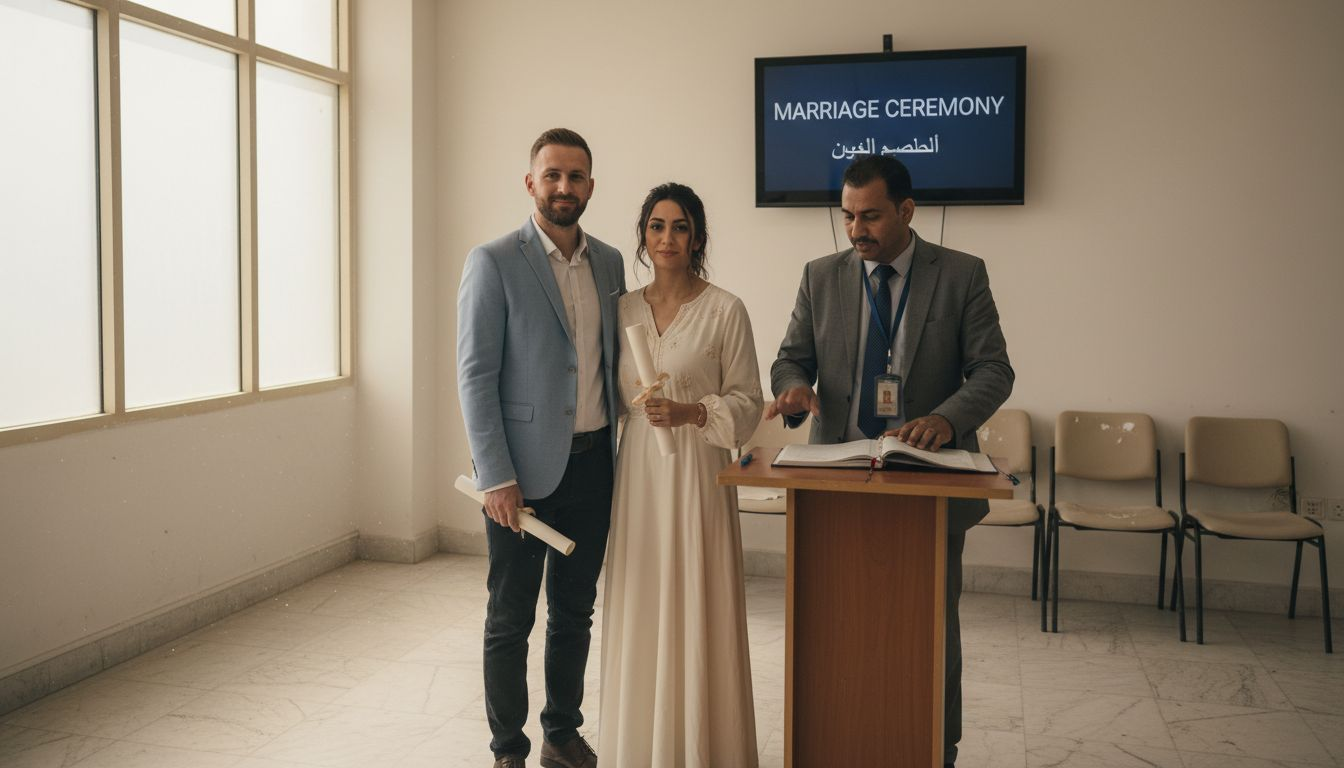
Arrive 15 minutes early with both your spouse and all required documents. Bring your original passport, Emirates ID, and any other documents the court specified in your appointment confirmation. Being punctual shows respect to the court and prevents complications.
The marriage officer or judge will conduct the ceremony in a dedicated courtroom or civil marriage office. This isn’t a elaborate celebration—it’s an official legal proceeding that typically lasts 15 to 30 minutes. The atmosphere is professional and businesslike, which is exactly what you want.
Here’s what happens during the ceremony:
The officer verifies your identities and confirms all documentation is correct
Both you and your spouse are asked to declare your explicit consent to marry
The marriage contract is presented and reviewed with you
You both sign the contract in the presence of the officer and witnesses
The officer signs and stamps the official marriage certificate
If you have legal witnesses, they’ll be present during signing. Witnesses can be friends, family, or legal representatives—check your emirate’s specific requirements beforehand. Some couples bring their own witnesses; others use those provided by the court.
After signing, you’ll receive your official marriage certificate. This is your proof of marriage and must be kept safe. You’ll need certified copies for various purposes—visas, name changes, insurance updates, and more.
The marriage certificate you receive on the day is the legal document that officially binds your union under UAE law and is recognized internationally.
Once the ceremony concludes, you’ll be informed about obtaining additional certified copies of your marriage certificate and any next steps for registration completion. Keep your original certificate in a secure location and request certified copies as needed.
Pro tip: Request at least 4-6 certified copies of your marriage certificate on the same day it’s issued. Obtaining additional copies later requires returning to the court and waiting in line again. Having extras saves significant time when updating your name with banks, insurance companies, and government agencies.
Step 4: Verify Certificate and Finalize Legalization
Your marriage certificate is in hand, but your work isn’t quite finished. Verifying accuracy and legalizing your certificate ensures it’s valid not just in the UAE, but worldwide. This final step protects your marriage legally across borders.
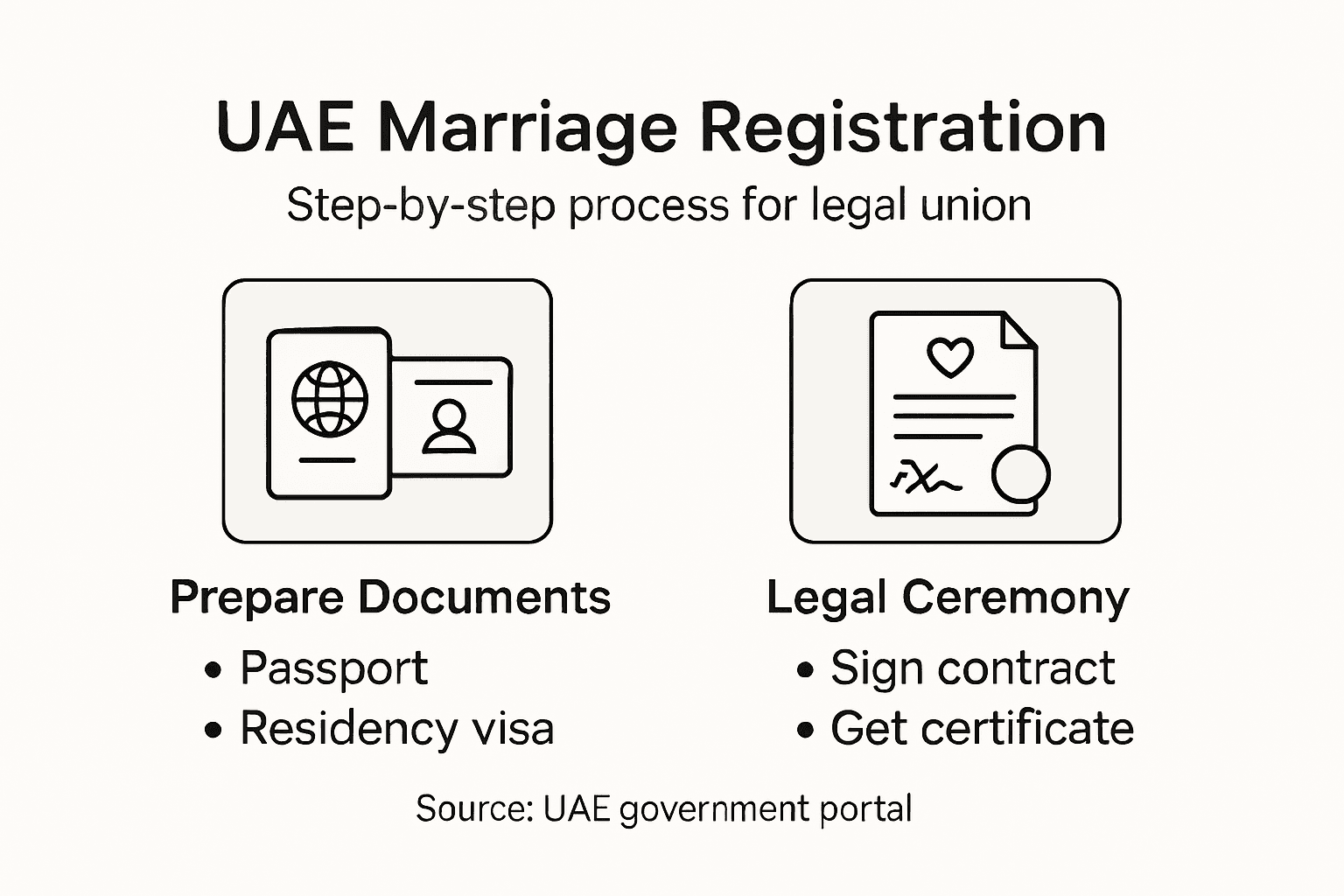
Start by carefully reviewing every detail on your marriage certificate. Check that both names are spelled correctly, birthdates match your passports, and the registration date is accurate. Even small errors can cause major headaches when you need the certificate for visa applications or official purposes.
If you spot any mistakes, contact the court immediately with your certificate and application reference number. Courts can issue corrected certificates, but corrections take additional time. This is why catching errors now saves you weeks of frustration later.
Next, determine whether you need international legalization. If you’re planning to use your marriage certificate abroad for visa applications, name changes, or residency purposes, legalization is mandatory. Without it, foreign authorities won’t recognize your UAE marriage.
The legalization process involves these steps:
Translate your certificate into the language required by your destination country (if needed)
Request attestation from the UAE Ministry of Foreign Affairs and International Cooperation (MOFAIC)
Submit attestation to your destination country’s embassy or consulate (if required)
Receive the fully legalized certificate valid for use internationally
MOFAIC attestation typically takes 5 to 10 working days. You can submit documents in person at their office in Abu Dhabi or use authorized service centers in other emirates. Many couples use professional legal services to handle this step efficiently.
Legalization through MOFAIC makes your marriage certificate internationally recognized and legally binding in any country where you might need it.
Your Marriage Certificate Attestation Dubai: Complete Guide walks through the specific requirements for your destination country and which attestation levels you actually need.
Keep your original certificate in a safe location. Store at least one certified copy with your important documents. If traveling frequently, carry a certified copy with you.
Pro tip: Before paying for international attestation, contact the specific organization or country where you’ll use your marriage certificate. Requirements vary significantly—some countries need only MOFAIC attestation, while others require embassy certification as well. This one phone call can save you from unnecessary processing fees and wasted time.
Make Your UAE Marriage Registration Stress-Free with Expert Support
Navigating the complex process of marriage registration in the UAE can feel overwhelming with so many critical steps like gathering certified documents, scheduling official appointments, and securing legal attestation. Common challenges include ensuring your passport and Emirates ID meet all validity requirements, managing pre-marital medical certificates, handling translations, and booking your ceremony appointment on time. You deserve a seamless journey that respects the importance of your union without the frustration of paperwork delays or missed deadlines.
Harris & Charms specializes in simplifying every step of your legal UAE marriage. From helping you organize essential documents to guiding you through your marriage application and ceremony, our team provides personalized assistance that echoes the heartfelt experience behind our founders’ own wedding story. We also handle crucial follow-up services like marriage certificate attestation and international legalization, ensuring your marriage is recognized both locally and globally. Trust us to transform the complex legal process into a smooth and joyful milestone.
Looking to take the stress out of your wedding preparations and legal documentation? Discover our full range of services and expert guidance by visiting Harris & Charms.

Begin your worry-free marriage registration journey today. Get in touch with us to receive tailored support that respects your unique story. Explore how our knowledgeable team can make your UAE marriage simple and legally secure by visiting our website now at Harris & Charms. For detailed insights on document requirements and appointment scheduling, check out our guides such as 7 Key Examples of Marriage Documents UAE Expats Need and Marriage Application Workflow Dubai: Step-by-Step Guide. Your perfect legal union starts here.
Frequently Asked Questions
What documents do I need for marriage registration in the UAE?
You will need several key documents including your passport, Emirates ID, residency visa, certified birth certificate, pre-marital medical certificate, proof of marital status, and certified translations if applicable. Start gathering these documents at least 4-6 weeks before your planned wedding date to avoid delays.
How do I submit my marriage application in the UAE?
Submit your marriage application by identifying the correct authority based on your situation, such as a civil marriage court for non-Muslim couples. Complete the official application form, pay the registration fee, and present all required documents to initiate the process.
What happens during the official marriage ceremony in the UAE?
During the official marriage ceremony, a marriage officer will verify identities, confirm your consent to marry, and present the marriage contract for you to sign. Arrive 15 minutes early with all necessary documents and be prepared for the process, which typically lasts 15-30 minutes.
How do I verify and legalize my marriage certificate after the ceremony?
Carefully review your marriage certificate for any errors immediately after the ceremony, then determine if you need international legalization. Follow the steps for attestation by submitting your certificate to the relevant authority and ensure it meets the requirements of the country where you intend to use it.
How long does the marriage registration process take in the UAE?
The entire marriage registration process can take several weeks, including document preparation, application submission, and scheduling the ceremony. Plan for a timeframe of at least 4-6 weeks from the start of document gathering to the date of your official marriage ceremony.
What should I do if there are mistakes on my marriage certificate?
If you find mistakes on your marriage certificate, contact the authority that issued it immediately to request corrections. This process may take additional time, so it’s crucial to review all details carefully at the time of issuance.
Recommended
Comments