
UAE Marriage Legalization 2026: Why Marriage Legalization Matters for Couples

TL;DR:
Legal marriage registration is essential for rights like visas, inheritance, and property in the UAE.
Civil and Islamic marriages differ in requirements, eligibility, and religious significance.
Many couples are increasingly registering their marriages due to new legal recognition and protections.
Many couples in the UAE pour months into planning the perfect ceremony, only to discover later that their wedding day meant nothing legally. Without formal registration, a marriage simply does not exist in the eyes of UAE law. Legal registration is mandatory for official recognition, granting rights to visa sponsorship, inheritance, property ownership, child custody, and international validity. Unregistered marriages offer zero legal protections. Whether you are a Muslim couple following Sharia procedures or an expat couple pursuing a civil route, understanding what legalization actually requires, and why it matters, can protect everything you are building together.
Table of Contents
Key Takeaways
Point | Details |
Legalization grants rights | Only registered marriages are recognized and protected under UAE law. |
Choose the right pathway | Civil and Islamic routes serve different needs; select the one that best fits your background. |
Unregistered risks | Couples without legal registration lose access to vital legal protections. |
Registration is surging | More couples now legalize their unions due to new laws and growing awareness. |
The foundations: What marriage legalization means in the UAE
Let’s be direct: a ceremony, whether religious or cultural, is not the same as a legally recognized marriage in the UAE. Legalization means formally registering your union with the appropriate UAE authorities so that it becomes enforceable under the law. There are two distinct pathways, and each serves a different audience.
Civil marriage was introduced under Federal Decree-Law No. 41/2022 for non-Muslims, with Abu Dhabi’s Law No. 14/2021 also open to non-citizen Muslims. Requirements include being at least 18 to 21 years of age depending on the emirate, providing mutual consent, having no close blood relation, and having no existing prior marriage. Notably, no wali (male guardian), witnesses, or premarital medical test is required under this route. This makes it one of the most accessible legal frameworks for expat couples from virtually any background.
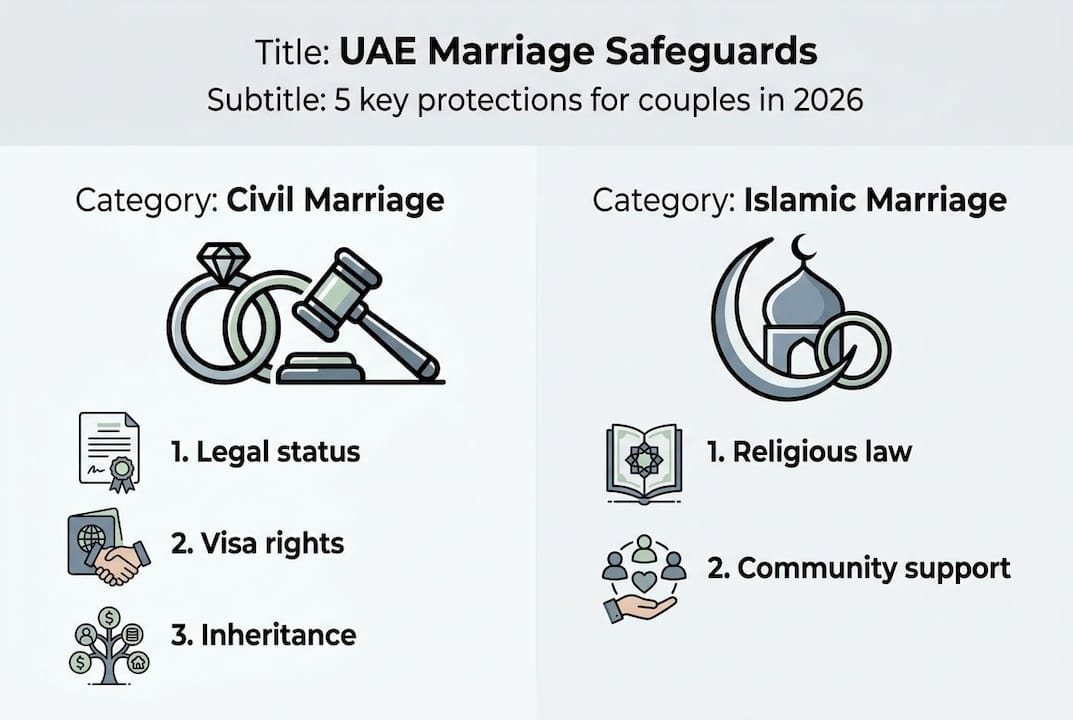
Islamic marriage operates under Sharia and the UAE Personal Status Law. Islamic marriage requires the bride and groom to be at least 18 years old, the performance of ijab and qabul (offer and acceptance), a wali for the bride, two male witnesses, agreement on mahr (a gift from groom to bride), and completion of a premarital screening. This pathway applies to Muslim UAE citizens and is typically required for Muslims residing in the country.
Here is a quick summary of what both routes share and where they differ:
Both routes result in an officially recognized marriage certificate
Both provide access to spousal rights under UAE law
Civil marriage skips religious prerequisites entirely
Islamic marriage includes spiritual and community validity alongside legal standing
Both can be attested for international use
Exploring the civil vs Islamic marriage differences in detail will help you identify which path fits your situation. If you need a step-by-step breakdown, the marriage registration steps guide walks you through the full process.
Pro Tip: Even if your home country recognizes your religious ceremony, the UAE will not unless you complete local registration. Do not assume your foreign marriage certificate automatically transfers legal status here.
Why marriage legalization matters: Key protections and real-life impacts
Now for the real question: what do you actually gain, and what might you lose, by formally legalizing your marriage in the UAE?
The answer is stark. Legal registration is mandatory for accessing visa sponsorship, inheritance rights, property ownership, child custody, and international validity. Without it, none of these rights exist in a legally enforceable way. If your partner is hospitalized and you are not legally married, you may have no say in medical decisions. If your spouse passes away without a registered marriage, you could be excluded from inheritance entirely.
Consider these real-world protections that only a legalized marriage provides:
Visa sponsorship: Only a legally recognized spouse can sponsor a partner’s UAE residency visa
Inheritance: Without registration, a surviving partner has no automatic legal claim to assets
Child custody: Courts recognize parental rights based on legal marital status
Property rights: Joint property ownership and transfer require a valid marriage certificate
International recognition: Attested marriage certificates are required for immigration and legal processes abroad
“Unregistered marriages offer no legal protections in the UAE. Every right a couple expects, from residency to inheritance, depends entirely on formal registration.”
The stakes are especially high for expat and interfaith couples. The legal benefits for expat couples are significant, and without registration, those benefits simply vanish the moment a dispute or emergency arises. It is also worth noting the advantages of registering your marriage extend well beyond the UAE, particularly if you ever relocate or need your marital status recognized abroad.
Research on premarital counseling consistently shows that couples who address legal and relational foundations early experience fewer conflicts later. Legalization is part of that foundation.
Civil vs Islamic marriage: Which path offers what?
Deciding which marriage pathway fits your circumstances is not always obvious. Here is a side-by-side comparison to make it clearer.
Feature | Civil marriage | Islamic marriage |
Eligible parties | Non-Muslims, non-citizen Muslims | Muslim UAE citizens, resident Muslims |
Wali required | No | Yes |
Witnesses required | No | Yes (two male witnesses) |
Mahr required | No | Yes |
Premarital medical test | No | Yes |
Minimum age | 18 to 21 (varies by emirate) | 18+ |
Religious validity | No | Yes |
International attestation | Yes | Yes |
As confirmed by UAE government guidelines, civil marriage requires no wali, witnesses, or medical test, making it a streamlined process for most expats. Meanwhile, Islamic marriage requires ijab and qabul, a wali, two witnesses, mahr, and premarital screening, all of which carry deep religious and cultural significance.
To choose the right path, consider these four factors:
Your religion: Muslims are generally expected to follow the Islamic route; non-Muslims use the civil route
Your nationality: Some embassies only recognize specific marriage types for visa and immigration purposes
Your family expectations: Islamic marriage carries community and religious weight that civil marriage does not
Your future plans: If you plan to relocate internationally, check which format your destination country accepts
For a deeper breakdown, see the civil vs Islamic marriage comparison and the specific civil marriage benefits that apply to expat couples.
Pro Tip: After registration, get your marriage certificate attested by the UAE Ministry of Foreign Affairs and your home country’s embassy. This single step makes your marriage internationally valid and saves enormous hassle if you ever need it recognized abroad.
Surge in registrations: What the numbers reveal about UAE today
The data tells a compelling story. Since civil marriage legalization, registration numbers have climbed sharply across the UAE.
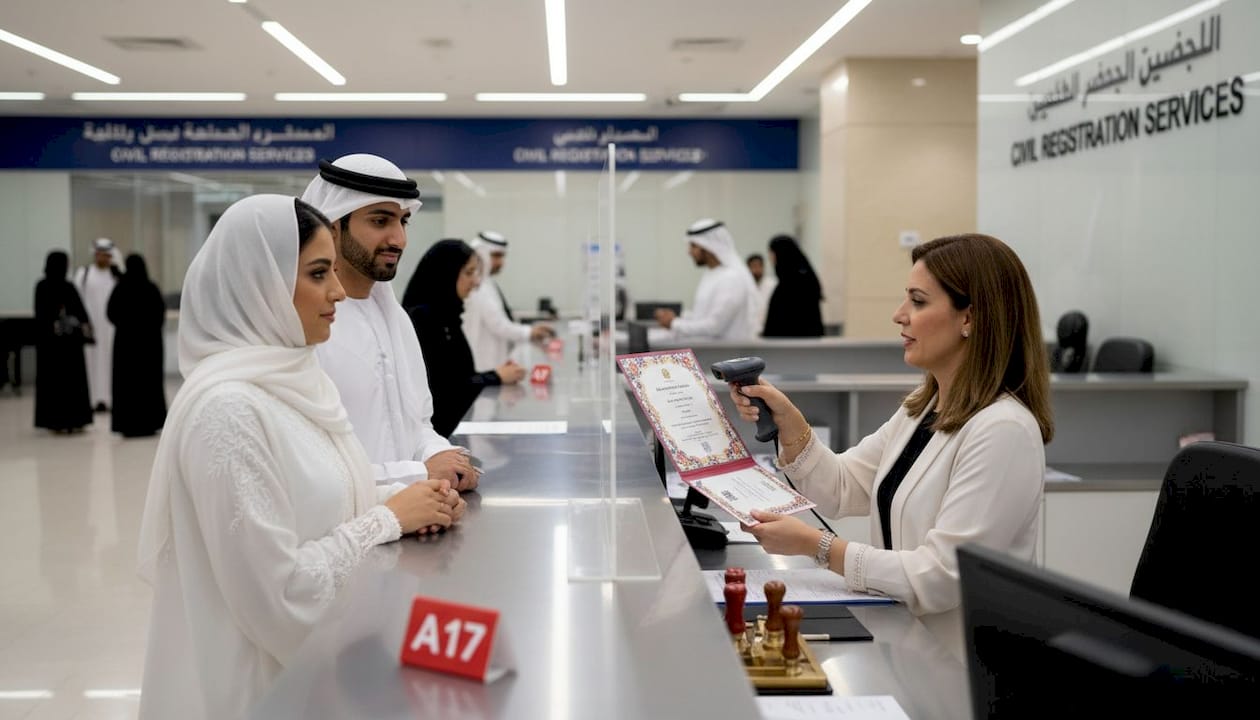
According to Gulf News, the Abu Dhabi Civil Family Court has registered approximately 53,000 civil marriages since 2021, with around 19,000 in 2025 alone, representing a 17% year-over-year increase. Dubai recorded 4,636 non-Emirati marriages in 2024. These are not small numbers. They reflect a fundamental shift in how couples in the UAE are approaching legal recognition.
Year | Abu Dhabi civil marriages | Growth |
2021 to 2024 | ~34,000 cumulative | Baseline |
2025 | ~19,000 | +17% YoY |
Dubai 2024 | 4,636 non-Emirati | Significant |
Why the surge? Several factors are driving it:
Expat couples now have a clear, accessible legal route that did not exist before 2021
Multinational couples need recognized documentation for visa and residency purposes
Awareness of key legalization benefits has grown significantly through government campaigns
International mobility demands attested marriage certificates
The divorce data adds urgency. According to Dubai Statistics Center data, roughly 30% of UAE divorces occur within the first year of marriage between 2020 and 2024, with Dubai Emiratis showing a rate of approximately 1.96 per 1,000 marriage-age population in 2024. Without legal registration, couples in these situations have no formal recourse. No certificate means no standing in court.
The registering marriage advantages are no longer just theoretical. Thousands of couples are acting on them every year, and the trend is accelerating.
An expert view: What most couples miss about marriage legalization
Having worked with couples across many different backgrounds and nationalities, we have noticed a pattern. Most people understand that legalization matters in theory. Very few grasp what it means in practice until something goes wrong.
The most common misconception is that social acceptance equals legal protection. A family blessing, a religious ceremony, or even a long-term cohabitation arrangement carries no weight in a UAE courtroom. When a dispute arises, when a visa is denied, or when a partner passes away, only a registered marriage document matters.
What couples also miss is the cross-border dimension. Registering your marriage abroad or ensuring your UAE certificate is properly attested can mean the difference between a smooth immigration process and a legal nightmare in another country. We have seen couples relocate to Europe or North America only to discover their UAE marriage was never attested, creating months of delays.
Legalization is not paperwork for paperwork’s sake. It is the mechanism that gives your relationship legal visibility everywhere, not just in the UAE. Treat it as seriously as you treat the ceremony itself.
How to simplify your marriage legalization in the UAE
If you are ready to move forward and want professional support, navigating the process does not have to be stressful.

At Harris & Charms, we specialize in both civil marriage packages and full comprehensive marriage services across the UAE, covering documentation, legal registration, attestation, and event planning under one roof. Our team has guided hundreds of couples through both civil and Islamic registration processes, ensuring nothing gets missed and no deadline is skipped. Whether you are an expat couple navigating the civil route or a Muslim couple completing Islamic registration requirements, we handle the complexity so you can focus on the moment. Ready to get started? Speak with a legal expert on our team today and get a clear, personalized plan for your situation.
Frequently asked questions
Is marriage legalization required for expats in the UAE?
Yes, expat marriages must be legally registered to be officially recognized and to access rights like visa sponsorship, inheritance, and child custody. Without registration, no legal protections apply.
Which is better for couples: Civil or Islamic marriage registration in the UAE?
Civil marriage offers flexibility and global recognition for expats, while Islamic marriage provides required religious validity for Muslims. The best route depends on your religious background, nationality, and long-term plans.
What are the risks of an unregistered marriage in the UAE?
Unregistered marriages have no legal standing, meaning couples risk losing rights in disputes, emergencies, and when living or traveling abroad. Courts cannot act on a marriage that does not exist in official records.
Are there a lot of civil marriages now in the UAE?
Yes, the numbers are striking. The Abu Dhabi Civil Family Court registered approximately 53,000 civil marriages since 2021, with 19,000 in 2025 alone, a 17% year-over-year increase reflecting the rapid growth of civil registration among expats.
Recommended
Comments