
Why Get Married in UAE Guide: Step-by-Step for Expats


For many American and international couples, the UAE’s marriage process can feel like stepping into unfamiliar territory. The legal requirements vary based on your nationality, religious preferences, and chosen emirate. Recent UAE law changes give non Muslim expats more options, expanding both civil and Islamic marriage pathways. This guide breaks down every step, from eligibility checks to official documentation, so you avoid common delays and confidently prepare for your wedding in the UAE.
Table of Contents
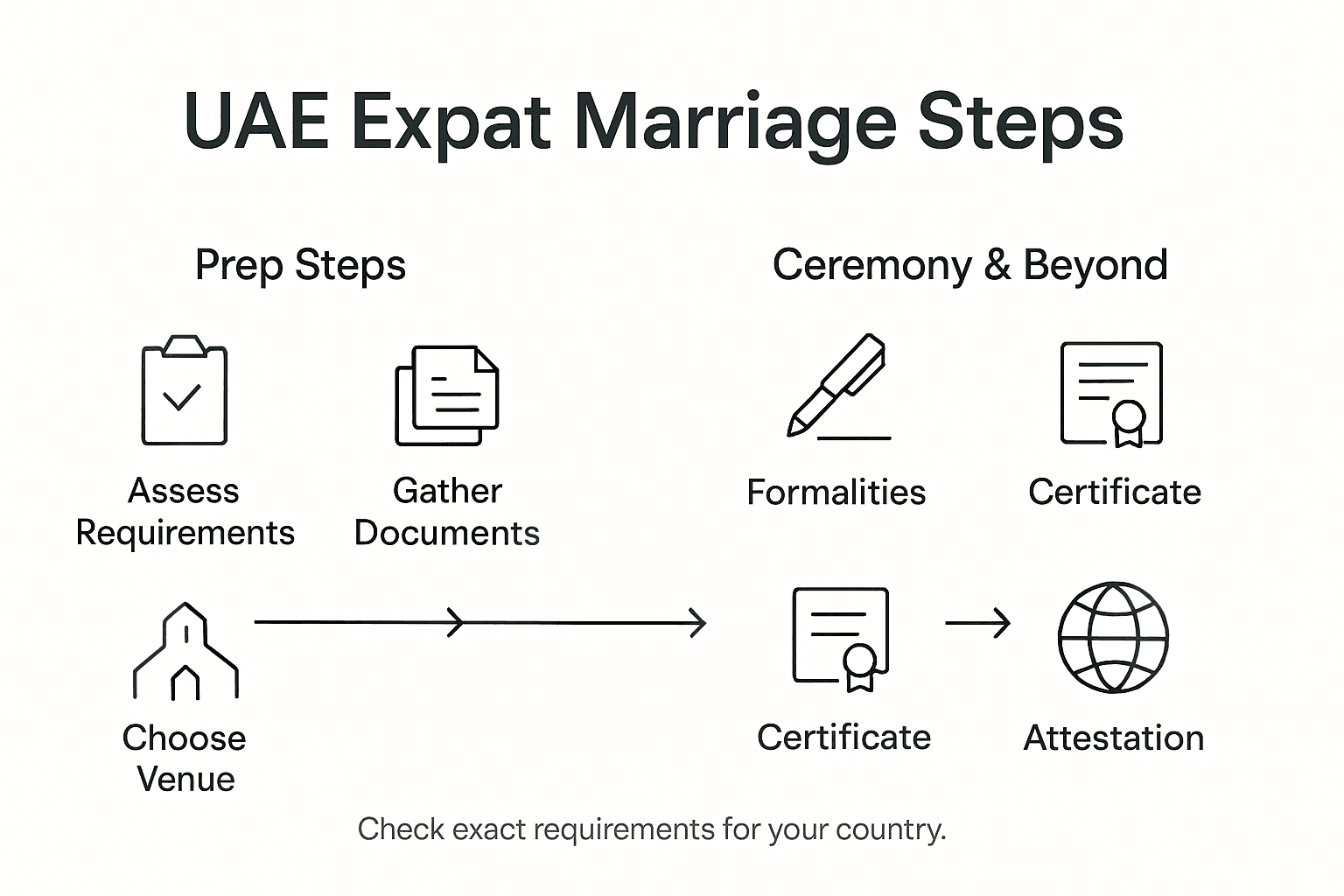
Quick Summary
Key Insight | Explanation |
1. Confirm Marriage Requirements | Understand requirements based on nationality and religion before proceeding. This ensures you meet all legal obligations in the UAE. |
2. Prepare Essential Documents | Gather necessary paperwork like passports, residence visas, and medical certificates for both partners to facilitate registration. |
3. Choose Appropriate Venue | Select a marriage service that fits your needs, considering both legal requirements and personal preferences. Different emirates have varying rules. |
4. Complete Official Procedures | Submit all required documents and attend the approved ceremony to formalize your marriage status legally. Ensure compliance with all steps. |
5. Initiate Certificate Attestation | After marriage, begin the attestation of your marriage certificate through the relevant authorities to ensure international recognition. |
Step 1: Assess Marriage Requirements for Your Situation
Navigating marriage requirements as an expat in the UAE demands careful research and understanding of legal nuances. Your specific marriage pathway depends on multiple factors including nationality, religious background, and individual circumstances.
Non Muslim expats now have significant flexibility thanks to the Federal Decree Law No. 41 of 2022, which allows marriage under your home country laws or alternative personal status regulations in the UAE. For most couples, this means you can choose between a civil marriage process in Dubai or an Islamic marriage registration. Key eligibility criteria include having valid residence visas, obtaining a medical screening certificate demonstrating genetic compatibility and absence of infectious diseases, and ensuring mutual consent between partners.
Carefully review your specific requirements based on your home country regulations and current UAE legal framework. Some emirates like Abu Dhabi offer more flexible civil marriage options with minimal restrictions, while others might have more complex documentation processes. Gather all necessary identification documents including passports, residence permits, and any required certificates from your home country well in advance of your marriage application.
Pro Tip: Schedule a preliminary consultation with UAE marriage registration authorities to confirm your exact documentation requirements and streamline your marriage preparation process.
Step 2: Gather Essential Legal and Personal Documents
Preparing for marriage in the UAE requires meticulous document collection to ensure a smooth legal registration process. Your goal in this step is to compile a comprehensive set of official paperwork that validates your identity, legal status, and marriage eligibility.

Start by gathering critical documents for both partners: valid passports with at least six months remaining before expiration, current residence visas, Emirates IDs for residents, original birth certificates, and premarital medical screening certificates. Non Muslim expats will need additional documentation that might include divorce or death certificates from previous marriages, translated and legally attested by authorized UAE translation centers. Each emirate might have slightly different requirements, so confirm specific documentation needs with local marriage registration authorities.
For international couples, you will likely need to obtain official authenticated copies of your documents. This typically involves getting original certificates apostilled or attested by your home country’s ministry of foreign affairs and then further authenticated by the UAE embassy. Some documents may require certified translations into Arabic, which must be completed by recognized translation centers. Budget extra time for this process, as document authentication can take several weeks depending on your home country and specific governmental procedures.
For quick reference, here is a comparison of required documents for marriage registration in the UAE:
Document Type | Required For Residents | Required For Tourists | Special Notes |
Valid Passport | Yes | Yes | At least 6 months validity |
Residence Visa | Yes | Sometimes | Required for most residents |
Birth Certificate | Yes | Usually | Often translated and attested |
Medical Screening Certificate | Yes | Yes | From UAE authorized medical center |
Divorce/Death Certificate | If applicable | If applicable | Must be legally attested and translated |
Pro Tip: Create digital and physical backup copies of all important documents and store them in separate secure locations to prevent potential loss during the marriage registration process.
Step 3: Choose Appropriate UAE Marriage Service and Venue
Selecting the right marriage service and venue in the UAE requires careful consideration of your religious background, nationality, and legal requirements. Your choice will directly impact the legal framework governing your marriage and the overall registration process.
Non Muslim expats have multiple options for marriage ceremonies, with civil marriage services in Abu Dhabi providing the most flexible legal framework. You can choose between civil courts, authorized registration centers, or embassy venues depending on your specific circumstances. Muslim couples typically follow Sharia law and will need to complete their marriage through official Islamic courts or authorized religious institutions. International couples should pay close attention to venue specific requirements, as each emirate and religious institution may have unique documentation and procedural guidelines.
Beyond legal considerations, evaluate venues based on your personal preferences, budget, and cultural expectations. Some couples prefer intimate embassy ceremonies, while others might select more traditional court settings or specialized marriage centers. Confirm all requirements directly with the chosen venue, including required documentation, potential language translation needs, and any specific cultural or religious protocols you must follow during the ceremony.
Here’s a summary of marriage ceremony options and their main features for expats in the UAE:
Ceremony Type | Key Legal Framework | Typical Venue Options | Main Considerations |
Civil Marriage | Home country laws/Decree 41 | Civil courts, embassies | Flexible process for non-Muslims |
Islamic Marriage | Sharia Law | Islamic courts, religious bodies | Strict documentation, follows Sharia |
Embassy Marriage | Home country rules | Home country embassy/consulate | Venue capacity and appointment needed |
Pro Tip: Schedule preliminary consultations with multiple marriage service providers to compare their specific requirements, processing times, and associated fees before making a final decision.
Step 4: Complete Official Marriage Formalities and Ceremony
Finalizing your marriage in the UAE requires carefully navigating a series of official procedures that transform your personal commitment into a legally recognized union. This critical step involves multiple administrative and ceremonial requirements that must be executed with precision and attention to detail.
The marriage formalities begin with submitting your comprehensive application package, which includes all previously gathered documents. You will need to attend a mandatory premarital medical screening and schedule your official ceremony at the selected venue. During the ceremony, you will sign the official marriage contract and complete the legal registration process. For non Muslim couples, this typically involves appearing before authorized officials who will verify your documentation, witness your mutual consent, and formally document your marriage. Muslim couples will follow additional Islamic legal protocols specific to Sharia law requirements.
After the ceremony, expect to receive your official marriage certificate a few days to weeks after the event, depending on the specific emirate and registration center. This document is crucial for subsequent legal processes including visa applications, name changes, and other administrative procedures. Ensure you request multiple certified copies of your marriage certificate, as you will likely need them for various official transactions in the UAE and potentially in your home country.
Pro Tip: Request at least three certified copies of your marriage certificate immediately after the ceremony and store them in separate secure locations to prevent potential future complications.
Step 5: Validate Legal Status and Start Attestation Process
Validating your marriage status and obtaining international legal recognition requires navigating a complex but critical documentation process. This step transforms your marriage certificate from a local document into a globally recognized legal instrument.
Begin by requesting multiple original copies of your marriage certificate from the registration authority. Your next crucial step involves initiating the marriage certificate attestation process through the UAE Ministry of Foreign Affairs and International Cooperation. This process verifies the authenticity of your document and prepares it for international use. You will need to submit your original marriage certificate along with supporting identification documents, pay the required processing fees, and potentially schedule an in person verification appointment depending on the specific emirate where you were married.
The attestation process typically involves multiple verification stages including authentication by UAE government authorities and potentially your home country’s embassy or consulate. Each stage adds an official stamp or seal that confirms the document’s legitimacy. Depending on your nationality and specific requirements, you might need to complete additional steps such as translation into Arabic or further diplomatic verification. Plan for this process to take anywhere from one to four weeks, and ensure you maintain multiple copies of all submitted documents throughout the attestation journey.
Pro Tip: Request digital and physical copies of all attestation documents and maintain a comprehensive file tracking the progress of each verification stage to prevent potential bureaucratic complications.
Simplify Your UAE Marriage Journey With Expert Support
Getting married as an expat in the UAE comes with complex legal requirements, detailed documentation, and choosing the right type of marriage ceremony. Whether you are navigating medical screenings, gathering official documents, or planning your civil or Islamic marriage, the process can quickly become overwhelming. Harris & Charms understands the emotional and administrative challenges that couples face during this exciting time. Our personalized services help you manage every step from legal paperwork to venue selection, ensuring a stress-free and memorable experience.
Avoid delays and paperwork frustrations by working with experts who know the UAE marriage system inside out. We offer comprehensive support including legal document processing, venue management, and attestation services tailored to your unique background and preferences. To explore how we can ease your marriage registration journey, visit our main site at Harris & Charms. Discover the flexible options for civil and Islamic marriages and learn how we partner with professional translators and legal authorities to streamline your process.
Plan your perfect wedding day while we handle the complexities of documentation and official formalities through our trusted services outlined at Harris & Charms.

Ready to turn your dream marriage into reality with no hassle? Contact Harris & Charms today at https://harrisandcharms.com to get started on your stress-free wedding and legal support journey in the UAE.
Frequently Asked Questions
What are the initial steps to get married in the UAE as an expat?
To get married in the UAE as an expat, first assess the marriage requirements based on your nationality and religion. Gather all necessary documents, such as valid passports, residence visas, and medical screening certificates, before applying for a marriage license.
What types of marriage ceremonies are available to non-Muslim expats in the UAE?
Non-Muslim expats can choose from flexible options such as civil marriages, which can be processed under home country laws. Consider visiting civil courts or authorized registration centers to discuss available venues and procedures.
How do I prepare the required documents for marriage registration in the UAE?
To prepare documents for marriage registration, collect essential paperwork like passports, birth certificates, and medical certificates. Ensure your documents are translated and attested where necessary, and confirm specific requirements with local authorities in your emirate.
What is the process for attesting my marriage certificate after the ceremony?
After getting married, initiate the attestation process for your marriage certificate through the relevant UAE governmental office. Submit your original marriage certificate along with identification documents, and expect the process to take one to four weeks for verification.
How long does the entire marriage registration process take in the UAE?
The duration of the marriage registration process can vary, but typically you can expect a timeframe of several weeks. Prepare documents in advance, and allow for additional time during the attestation process, which may take up to a month or more depending on your circumstances.
Recommended
Comments