
Why Register Marriage Abroad: Legal and Life Impacts

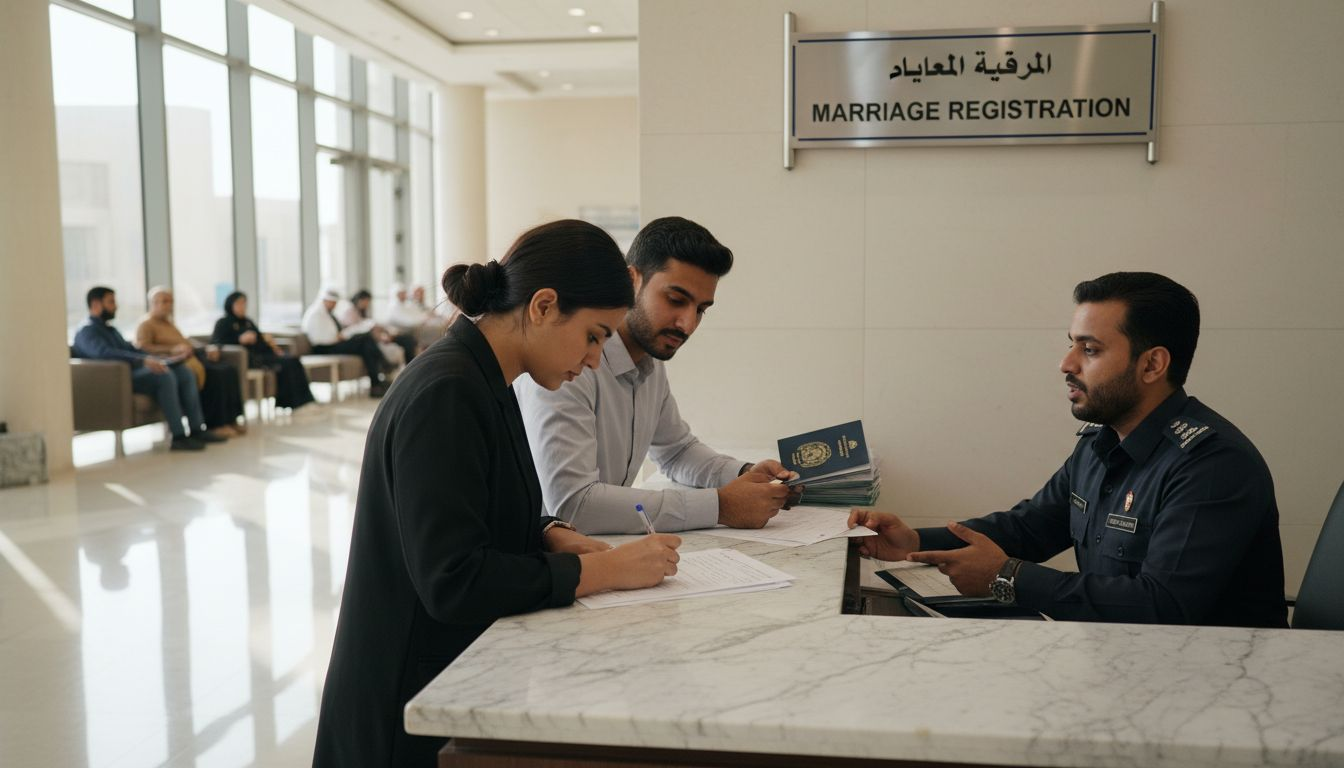
Sorting out marriage registration as an expat in the UAE can feel overwhelming when every country has its own rules and paperwork. Your marriage certificate is not just symbolic—it’s the foundation for legal protection, rights, and future decisions. This guide helps you clearly understand the steps, key differences, and documentation requirements for registering your marriage abroad, so your union is officially recognized wherever life takes you.
Table of Contents
Key Takeaways
Point | Details |
Understand the Registration Process | Registering a marriage abroad is a legal requirement that varies by country, requiring specific documentation and compliance with local laws. |
Recognize the Importance of Legal Validity | A registered marriage protects legal rights, such as inheritance and custody, and must be recognized in your home country for full validity. |
Plan for Multi-Country Recognition | Each country may have different recognition and registration requirements, necessitating thorough preparation and understanding of both jurisdictions. |
Seek Professional Assistance | Engaging legal experts and documentation services can help navigate complex processes and prevent costly errors that could delay registration. |
Registering Marriage Abroad Explained
Marriage registration abroad means officially documenting your union in a country outside your home nation. This creates a legal record that governments recognize and enforce. For expats in the UAE planning marriages, understanding this process is crucial for protecting your rights and ensuring legal validity.
What Marriage Registration Actually Involves
When you register a marriage, you’re creating an official document that certifies your union. This isn’t just a ceremonial step—it’s a legal requirement in most countries. The registration process varies significantly depending on which country’s laws govern your marriage.
Different nations recognize various forms of marriage, including civil, religious, and customary unions. Each comes with different requirements, documentation needs, and recognition standards. Your marriage certificate becomes the foundation for countless life decisions ahead.
Why the Process Differs Everywhere
Marriage law varies considerably among countries and regulates the initiation, continuation, and validity of marriages. What’s required in one nation might be completely different in another. This is why understanding your specific country’s requirements matters before taking action.
The United Nations has established international standards through the Convention on Consent to Marriage, promoting free and full consent, minimum age requirements, and compulsory registration. Most countries follow these principles, but implementation differs widely.
Key variations include:
Documentation requirements (birth certificates, divorce decrees, health checks)
Minimum age rules and consent procedures
Processing timelines (from days to several months)
Costs and fees associated with registration
Validity recognition in your home country
The Registration Creates Legal Protection
A registered marriage provides official documentation that establishes your legal status as a couple. This document protects inheritance rights, medical decision-making authority, tax benefits, and custody arrangements. Without formal registration, you lack legal standing in most situations.
For expats in the UAE, having a registered marriage means your union is recognized when you travel, work, or conduct business internationally. It simplifies visa sponsorship, insurance claims, and succession planning.
Common Steps in Marriage Registration
Almost every country follows similar broad steps, though specific details change:
Gather required documentation (passports, birth certificates, proof of single status)
Submit applications to the appropriate government authority
Wait for processing and approval
Receive your official marriage certificate
Get the certificate attested or notarized for international use
The step-by-step marriage registration guide for UAE expats walks through each phase in detail so you know exactly what to expect.
Why This Matters for Your Future
Registration isn’t optional—it’s the foundation for every legal claim you’ll make as a married couple. Without it, you have no legal standing in divorce proceedings, inheritance matters, or custody decisions.
A registered marriage certificate is the single most important document you’ll create together. Without it, everything else becomes complicated.
Pro tip: Start gathering your documents immediately, even before your wedding date, since obtaining birth certificates, divorce decrees, or police clearances can take weeks or months in some countries.
Key Differences From Local Registration
Registering your marriage abroad looks different from registering it locally, and those differences matter more than you might think. Local registration typically happens in your home country’s system, while international registration creates recognition across multiple jurisdictions. Understanding these distinctions helps you avoid complications later.
Where Authority Comes From
Local marriage registration operates under your home country’s laws and government authority. Civil registration systems worldwide vary in legal requirements, processes, and how marriage records are handled. The extent of civil versus religious authority in registering marriages differs significantly between nations.
Abroad registration, by contrast, follows the laws of the country where you’re getting married. In the UAE, this means your marriage follows Emirati legal frameworks and Islamic principles if you’re having an Islamic ceremony. The governing authority changes, which affects everything from required documents to legal recognition.
Speed and Processing Timelines
Local registration often moves faster because you’re working within a familiar system. Processing typically takes days or weeks at most. Your home country’s authorities already have your records on file.
Abroad registration can take considerably longer. You’re working with unfamiliar systems, translating documents, obtaining certificates from another country, and potentially waiting for attestations. What takes two weeks locally might take two months internationally.
Recognition and Legal Validity
Here’s where the stakes get real: a locally registered marriage is automatically recognized in your home country. An abroad registration requires additional steps for your home country to recognize it.
Marriage practices and registration differ widely across countries, with variations in societal norms, legal frameworks, and cultural traditions influencing how marriages are recognized. A marriage valid in the UAE might need attestation, translation, or additional documentation to be recognized back home.
Key recognition differences include:
Local registration = automatic validity at home
Abroad registration = requires attestation or notarization
Some countries require additional court filings for recognition
Processing times vary for international recognition
Costs increase when seeking multi-country recognition
Documentation and Requirements
Local registration asks for documents you likely have readily available. Abroad registration demands more—often including documents from your home country, police clearances, and additional proofs of legal status.
You’ll also face translation requirements for documents. Everything typically needs certified translations into the language of the country where you’re marrying. This adds time and expense that local registration doesn’t require.
The Attestation Factor
Local marriages don’t need attestation because they’re already official in your home jurisdiction. Abroad marriages typically require apostille certification or official attestation to gain recognition internationally.
This extra step proves your marriage certificate is genuine and official. It’s necessary for visa applications, insurance claims, and legal proceedings in countries that demand it. Local registration skips this entirely.
Registering abroad means planning for two systems, not one—your marriage must be legally valid where you marry AND where you live.
Pro tip: Before choosing where to register, contact your home country’s embassy in the UAE to confirm exactly what documentation and attestation they’ll require for recognizing your marriage, then work backward from their requirements to avoid delays.
To better understand registration differences, here’s a clear comparison:
Aspect | Local Marriage Registration | Marriage Registration Abroad |
Legal Authority | Home country government | Foreign country’s legal system |
Processing Time | Usually days to weeks | Often weeks to months |
Validity | Automatic in home country | Requires extra attestation |
Documentation Needs | Common documents | Multiple, often translated documents |
Cost Factors | Lower, familiar fees | Higher, multi-country expenses |
Legal Recognition and Documentation Abroad
A marriage certificate from abroad is only as valuable as its recognition in the countries where you’ll actually live and work. Getting your marriage registered is one thing; ensuring it’s legally valid everywhere you need it is another entirely. This distinction shapes your entire legal position as a married couple.
What Legal Recognition Actually Means
Legal recognition means a government officially accepts your marriage as valid under its laws. Your UAE marriage certificate means nothing in your home country unless that country formally acknowledges it. Without recognition, you have no legal standing for spousal benefits, inheritance rights, or joint custody.
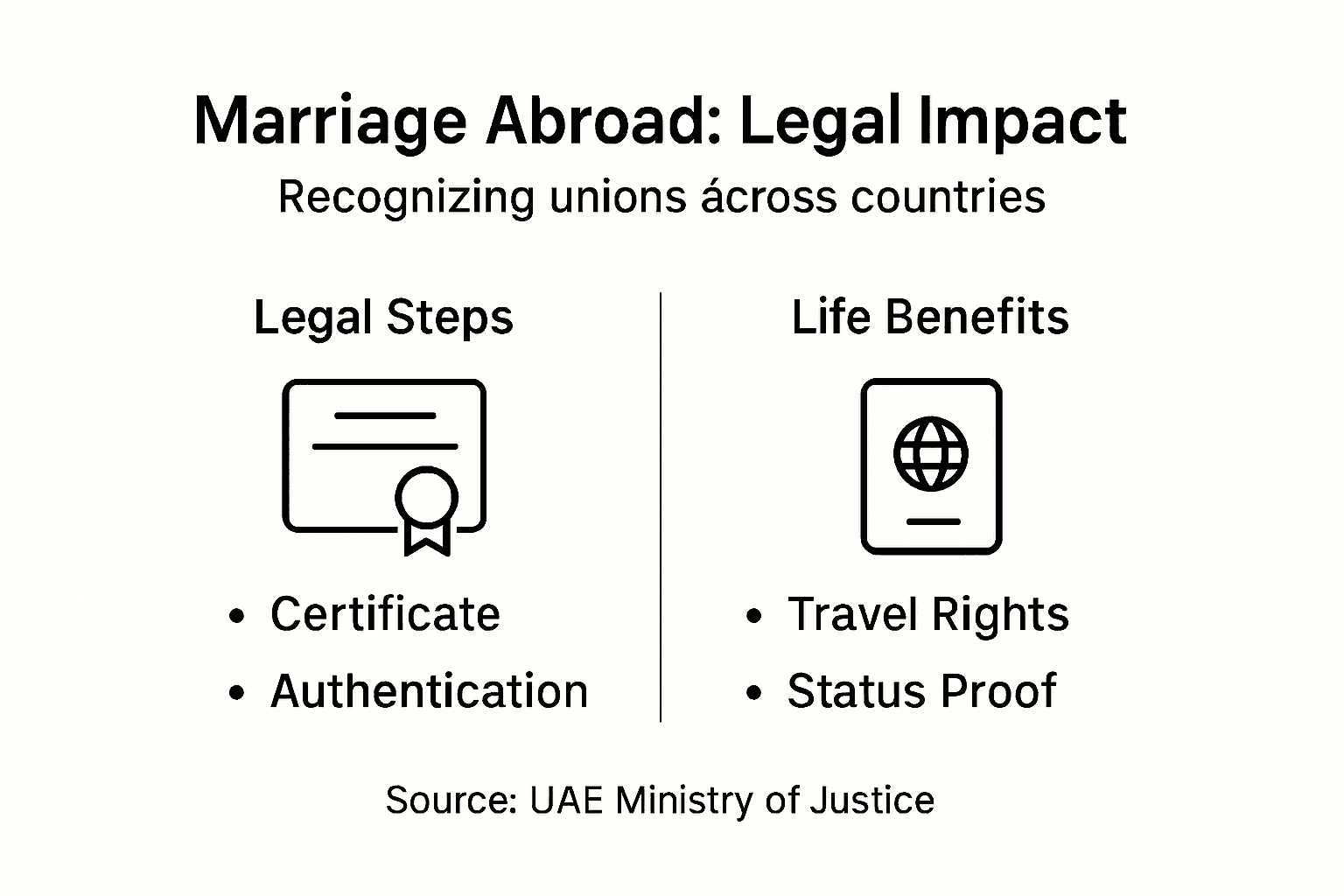
Foreign marriages require verification, potential legalization, and registration in the receiving country’s system to be recognized. Different nations have different standards for what constitutes proof of a valid marriage.
The Authentication and Apostille Process
Most countries require your marriage certificate to be authenticated before they’ll recognize it. This typically means obtaining an apostille—an official certification that your document is genuine and properly issued.
An apostille is essentially a government’s seal confirming your marriage certificate is legitimate. The U.S. Department of State and similar agencies worldwide provide these services. Without an apostille, many countries will reject your marriage certificate outright.
Authentication steps usually include:
Obtaining your original marriage certificate from the UAE authority
Requesting an apostille from the appropriate government office
Having documents certified or notarized if your destination country requires it
Sometimes translating documents into the destination country’s language
Getting Recognition in Your Home Country
Your home country will likely demand specific documentation before recognizing your marriage. The Netherlands, for example, requires marriages registered in Dutch law with specific documentation and procedural requirements. Legal recognition includes the necessity of proper registration in the national civil registry.
You’ll typically need to:
Submit your UAE marriage certificate
Provide an apostille or authentication
Include any required translations
Complete registration forms for your home country’s system
Pay any applicable fees
Wait for official recognition (timelines vary by country)
Multi-Country Recognition Challenges
If you plan to live or work in multiple countries, each one may have different recognition requirements. A marriage valid in the UAE and recognized in Canada might not be automatically valid in the UK without additional steps.
This is why understanding the validity of UAE marriages abroad becomes crucial for expats with complex international lives. Your marriage isn’t universally recognized—it requires deliberate action in each jurisdiction.
Documentation You’ll Need
Keep multiple certified copies of your marriage certificate. You’ll need originals or certified copies for visa applications, bank accounts, insurance, and legal proceedings. Digital copies alone won’t suffice for official matters.
Store documents in secure locations and maintain organized records. You’ll reference these throughout your married life, and losing them creates expensive headaches.
Legal recognition isn’t automatic—it requires deliberate action in every country where your marriage must be valid.
Pro tip: Request at least five certified copies of your marriage certificate and one apostille immediately after registration, then store them in separate secure locations so you always have copies available for official submissions.
Common Challenges for UAE Expats
Registering a marriage abroad as an expat in the UAE presents unique obstacles that locals rarely face. You’re navigating multiple legal systems, cultural differences, and bureaucratic hurdles simultaneously. Understanding these challenges upfront helps you prepare and avoid costly mistakes.
Financial and Cost Barriers
Marriage in the UAE costs significantly more than many expats expect. Delayed marriage among Emirati youth is influenced by financial barriers and high costs of marriage, with housing challenges creating additional strain. Expats face similar pressures—ceremony expenses, registration fees, attestations, and document translations add up quickly.
You’ll pay for services across multiple countries. Obtaining documents from your home nation, translating them, getting apostilles, and registering in the UAE all carry separate fees. A straightforward marriage can easily cost several thousand dirhams beyond the ceremony itself.
Documentation and Procedural Hurdles
Expats face legal complexities and procedural hurdles that complicate registration. Your birth certificate from Canada looks different from one issued in Australia. Each country’s documents require different authentication methods and translations.
Common documentation challenges include:
Birth certificates not recognized without official translations
Divorce decrees requiring additional attestations
Police clearances taking weeks to obtain from home countries
Missing or incomplete documents forcing you to restart applications
Conflicting requirements between UAE authorities and your home country
Recognition Issues Across Jurisdictions
A marriage valid in the UAE might not be automatically recognized in your home country. Understanding why civil marriage is required for UAE expats becomes essential because religious marriages alone often lack legal standing internationally.
UAE expatriates face challenges including restrictions on rights, procedural hurdles, and recognition of foreign marriages. You might need to register your marriage twice—once in the UAE and again in your home country—just to achieve full legal recognition everywhere you need it.
Time and Processing Delays
Nothing moves quickly when dealing with government agencies across multiple countries. Processing times vary wildly depending on where your documents originate and which systems must approve them.
Typical timelines:
Gathering documents from home country (2-6 weeks)
Official translations and notarizations (1-3 weeks)
UAE registration application review (2-4 weeks)
Home country recognition (4-12 weeks)
Obtaining apostilles and attestations (1-3 weeks)
What should take a month easily stretches to three or four months when international processes are involved.
Social and Family Pressures
Beyond bureaucracy, expats face unique social pressures. Family members in your home country might question your marriage validity. Employers sometimes doubt whether internationally registered marriages grant spousal benefits. These social doubts can create real legal and financial complications.
The UAE marriage registration process isn’t just about paperwork—it’s about protecting your legal standing across multiple countries simultaneously.
Pro tip: Hire a professional marriage documentation service early in your planning process rather than attempting this alone, as they navigate country-specific requirements and prevent costly errors that can delay your entire registration by months.
Here’s a quick reference for expats facing challenges abroad:
Challenge | Typical Impact | Recommended Solution |
Document Delays | Causes registration waiting periods | Start early, use professionals |
Recognition Issues | Risk of marriage being invalid | Seek legal advice and embassy help |
Translation Requirements | Adds cost and complexity | Hire certified translation services |
Multiple Fees | Significant financial burden | Budget extra, confirm all tariffs |
Social Doubts | Complicates benefits and support | Maintain official records, clarify status |
Protecting Rights and Avoiding Pitfalls
One mistake during marriage registration abroad can create legal complications that haunt you for years. The key to protecting your rights is understanding what can go wrong and taking deliberate steps to prevent it. Smart planning now saves enormous headaches later.
Know Your Country’s Laws Before You Marry
Marrying abroad requires understanding the laws of the country where the marriage will occur, including requirements for consent, documentation, and registration. Many expats assume their home country’s marriage laws apply everywhere—they don’t. What’s legal in your home nation might be completely different in the UAE.
Research your destination country’s specific requirements before your wedding date. Contact the UAE Ministry of Justice or your embassy for clarity on what documents you’ll need. This groundwork prevents surprises when you’re ready to register.
Understand Recognition Differences
Your marriage may need to be recognized and registered in your home country separately from UAE registration. Differences in recognition especially apply to same-sex marriages, which some countries don’t legally acknowledge. Before marrying, confirm whether your home country will recognize a UAE marriage without additional procedures.
Create a checklist of recognition requirements:
Contact your home country’s embassy or consulate
Ask specifically about apostille requirements
Determine if you need additional registration beyond UAE documentation
Confirm whether religious or civil ceremonies are recognized
Clarify any special requirements based on your citizenship
Get Legal Advice Early
Legal advice and proper documentation are essential to protect rights and avoid pitfalls. An attorney familiar with both UAE law and your home country’s requirements prevents costly misunderstandings. This isn’t an expense—it’s protection.
A qualified lawyer can review your specific situation and identify potential problems before they occur. They’ll confirm you have the right documents, understand local procedures, and know what happens next. The consultation fee is minimal compared to fixing registration problems later.
Document Everything Properly
When getting married abroad, it is vital to follow the legal procedures of your chosen country, including obtaining necessary documents like certificates of no impediment. Never skip steps or assume documents aren’t necessary. Incomplete paperwork forces you to restart applications.
Essential documentation steps include:
Obtain original birth certificates with official seals
Get divorce decrees or death certificates if previously married
Secure police clearance from your home country
Have all documents officially translated
Request apostilles for international recognition
Keep certified copies in multiple secure locations
Prevent Common Registration Errors
Common pitfalls include submitting incomplete applications, using unofficial translations, or missing certification deadlines. Double-check every requirement before submitting paperwork. One missing document can delay registration by weeks.
Verify names match exactly across all documents. If your birth certificate says “Sarah Elizabeth” but you use “Sara Elizabeth,” this discrepancy creates problems. Ensure marital status is clearly documented if you’ve been previously married.
Plan for Future Recognition
Think beyond initial registration. How will you prove your marriage status when applying for visas, insurance, or spousal benefits? Will your employer accept a UAE marriage certificate, or do they need home country recognition?
Protecting your marriage rights means planning for every country where your marriage must be legally valid—not just where you marry.
Pro tip: Before finalizing any marriage plans, schedule consultations with both a UAE family law attorney and an attorney in your home country to identify specific requirements and potential conflicts, ensuring your marriage is ironclad everywhere you’ll need it.
Secure Your Marriage Registration Abroad with Trusted UAE Experts
Navigating the complexities of registering your marriage abroad can feel overwhelming. From understanding legal recognition and apostille requirements to managing document translations and multiple jurisdictional challenges, the process demands precision and expert guidance. If you want to protect your rights, avoid costly delays, and ensure your marriage is valid both in the UAE and your home country, you need support tailored to your unique situation.
Harris & Charms is here to simplify every step of your marriage journey in the UAE. Our personalized approach covers comprehensive assistance with civil and Islamic marriage registrations, official document processing, and legal attestations that meet international standards. Don’t let confusing paperwork or conflicting legal systems put your future at risk. Let the team behind the story of a viral wedding video help you create a seamless and stress-free experience.
Are you ready to turn the complicated process of marriage registration abroad into a clear, secure path? Start with our wedding and marriage assistance services designed especially for expats navigating UAE laws.

Contact us today at Harris & Charms and begin your journey towards a legally recognized and beautifully celebrated marriage. Protect your love with expert care now.
Frequently Asked Questions
What are the benefits of registering my marriage abroad?
Registering your marriage abroad provides legal recognition of your union in the country where you marry, ensuring that your marriage is valid for legal matters like inheritance, tax benefits, and custody arrangements.
How does the marriage registration process differ between countries?
The marriage registration process varies widely across countries, including requirements for documentation, processing timelines, and how marriages are recognized internationally. It’s essential to research the specific rules of the country where you plan to marry.
What documentation is typically required for marriage registration abroad?
Common documentation needed includes passports, birth certificates, proof of single status, and any divorce decrees if applicable. Some countries may also require background checks or health certificates.
Why is legal recognition of my marriage crucial?
Legal recognition is essential for establishing your rights as a married couple, including support for inheritance claims, joint financial obligations, and legal standing in any future legal proceedings related to your marriage.
Recommended
Comments