
Cross-Cultural Wedding in the UAE: Law, Customs and Planning

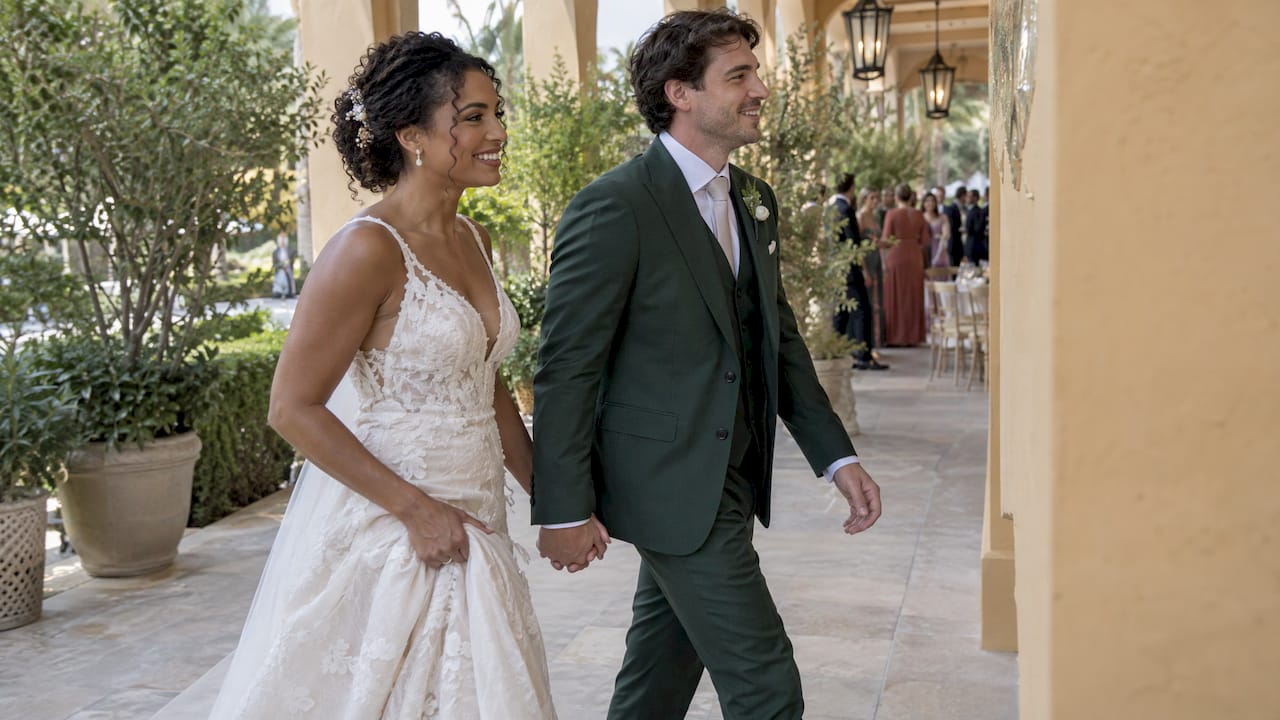
A cross-cultural wedding in the UAE works when two things are settled in the right order: first the legal route your faiths and nationalities allow, then the celebration that honors both families. Get the order wrong and you can book a venue before you know which type of marriage you are even eligible for. We handle the marriage paperwork, court applications, attestation, venue and photography for couples of mixed backgrounds, so the legal route and the celebration are planned together.
TL;DR
Your route depends on religion: Sharia (Islamic) marriage applies when the groom is Muslim, while civil marriage in the UAE is for non-Muslims.
A Muslim woman marrying a non-Muslim man needs proof of his conversion to Islam. A Muslim man can marry a Christian or Jewish woman.
Foreign documents usually need attestation and Arabic translation before any court or registry will accept them.
Emirati customs such as the zaffa, the henna night and separate men’s and women’s parties shape how a blended celebration is planned.
Our civil packages start at AED 2,850 and our Islamic marriage service in Dubai or Abu Dhabi is AED 3,850.
Table of Contents for Cross Cultural Wedding in UAE
Start with the legal route, not the venue
In the UAE, marriage law follows religion before it follows nationality. Two systems matter to most couples.
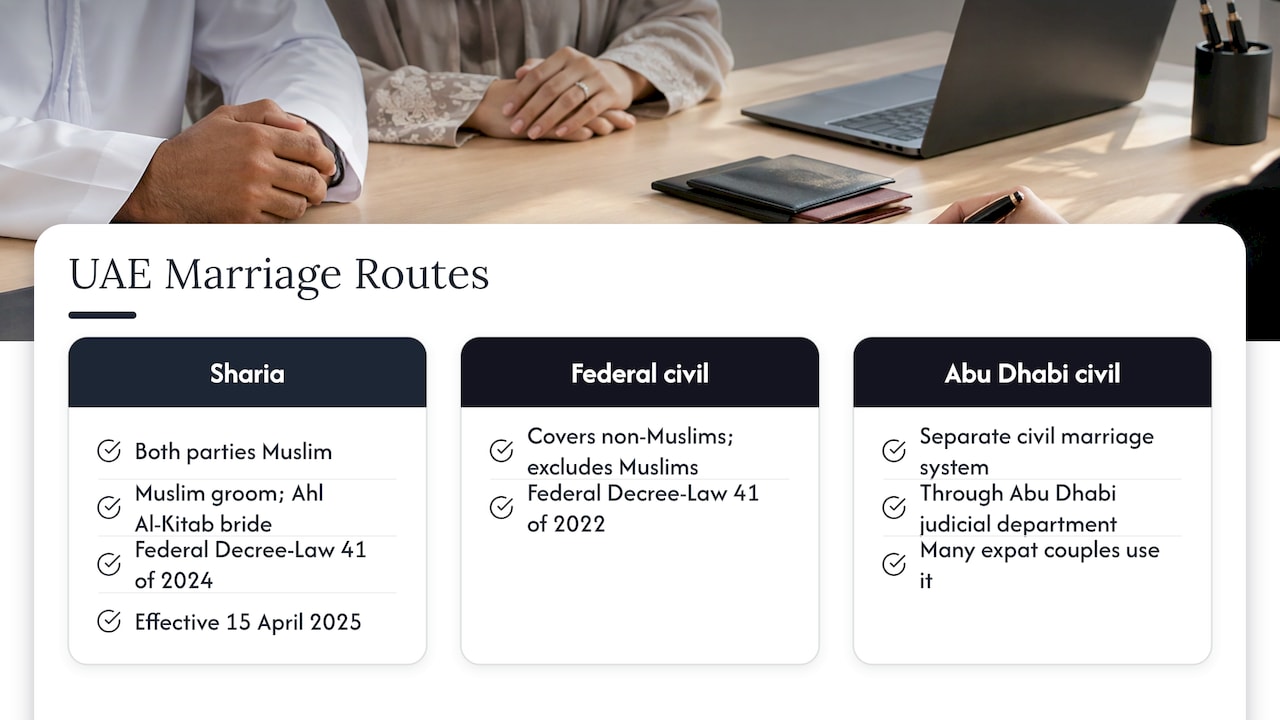
Sharia marriage. Muslim marriage is governed by Federal Decree-Law No. 41 of 2024 on the Personal Status Law, which took effect on 15 April 2025. According to the UAE government portal, its provisions apply regardless of nationality when both parties are Muslim, or when the groom is Muslim and the bride belongs to the “People of the Book” (Ahl Al-Kitab), for example a Christian.
Civil marriage. Federal Decree-Law No. 41 of 2022 on Civil Personal Status covers non-Muslims. It does not apply to Muslims. Abu Dhabi also runs its own civil marriage system through its judicial department, which many expat couples use.
So the first question for a mixed couple is simple: is either of you Muslim, and if so, which of you?
Which combinations work
Couple | Route |
Muslim man and Muslim woman | Sharia marriage |
Muslim man and Christian or Jewish woman | Sharia marriage |
Muslim woman and non-Muslim man | Sharia marriage, with proof that he has converted to Islam |
Two non-Muslims of any nationalities | Civil marriage |
The law also lists marriage of a Muslim man to a woman who is neither Christian nor Jewish among its prohibited unions, and a Muslim woman to a non-Muslim man. If your pairing is not in the table, speak to us before you spend anything on the day itself. We have a full guide on interfaith marriage in the UAE and one on marriage eligibility.
What each route asks of you
Sharia marriage paperwork
The UAE government lists the following for a Sharia marriage:
Emirates IDs for residents, and valid passports for non-Emiratis.
Proof of marital status: a final divorce certificate or a death certificate if either of you was married before.
A mandatory medical examination and fitness certificate for both of you.
An entry visa where applicable.
Valid IDs or travel documents for two Muslim witnesses.
The law requires two witnesses, each a sane adult man who heard and understood the offer and acceptance, and Muslim if the husband is Muslim. If the bride is Muslim, a guardian’s offer is also required, with an exception for a non-citizen Muslim bride whose home law does not require a guardian.
The step that trips up most foreign couples is documents issued abroad. They must be attested, translated into Arabic by an authorized translator and certified by the UAE Ministry of Justice, the Ministry of Foreign Affairs or a UAE embassy or consulate. A divorce certificate that is one stamp short stops the whole application.
Civil marriage paperwork
Civil marriage has fewer moving parts. Under the Abu Dhabi regulation, applicants are exempt from submitting a pre-marital medical certificate and no witnesses are required. After you apply, the court contacts you within a few working days to set a date for your bilingual civil marriage certificate. The UAE government portal describes applications going through the Abu Dhabi judicial department’s website or its typing centers, with approval taking up to 10 working days. Both parties must consent, neither can be currently married, and you cannot be related within the prohibited degrees. The minimum age is set by the rules that apply to your case, so confirm it before you book.
For the document lists in detail, see documents needed for marriage registration and what you need for a civil marriage. If one of you lives abroad, read our guide to non-resident civil marriage.
Where it goes wrong
Attestation done in the wrong order, or in a country whose documents the UAE needs certified differently.
Names spelled differently across passports, divorce papers and translations.
Booking a ceremony date before the court or registry has confirmed yours.
Assuming a wedding abroad or a religious blessing is a legal UAE marriage. Only the registered contract is.
This is the part of the process we take off your hands. We prepare the marriage documentation, support the court application and arrange marriage certificate attestation, with legal translation available alongside.
Customs worth understanding before you plan
A cross-cultural wedding is also a meeting of two families, and in the UAE the Emirati side has traditions with deep roots. You do not need to copy them. You need to know what they mean so you can decide what to include and what to respect.
The zaffa
In 2025 UNESCO inscribed the zaffa, the traditional wedding procession, on its list of intangible cultural heritage, for a group of states including the UAE. The file describes a bridal procession with cleansing rituals, henna, symbolic acts such as drinking milk or cracking an egg, and a festive parade of music, shouts and thrown sweets and flowers. It reinforces ties between families, with elders ensuring tradition is respected and mothers preparing each stage.
The Abu Dhabi culture department notes several forms: a morning zaffa escorting the bride to her marital home the day after the celebration, a wedding-night zaffa straight after the party, and a coastal tradition in which the bride stays at her family’s home for seven days first. Many mixed couples take just one element, such as a short zaffa entrance with drums at the reception, which is usually welcomed as a gesture of respect.
The henna night
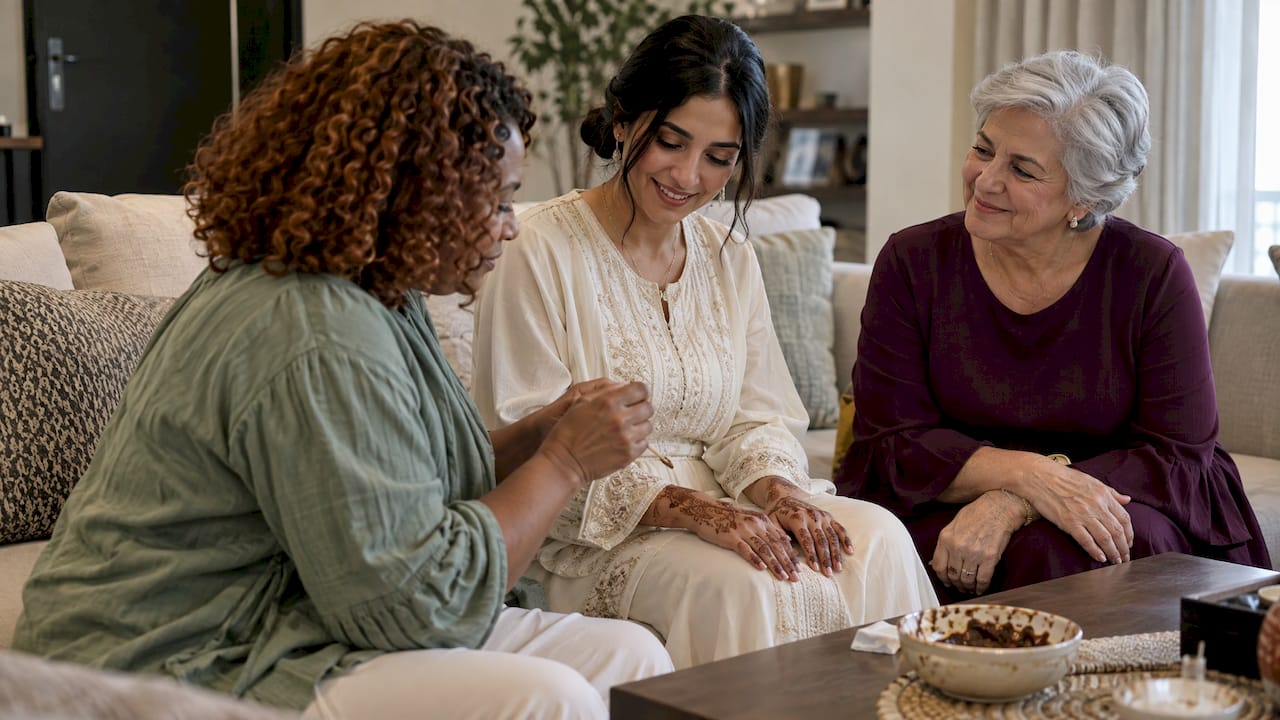
According to a Zayed University publication, a traditional Islamic wedding includes a henna night around three days before the main event, and brides often echo designs from their mothers’ weddings. It is a gathering of women from both families. If your own tradition has a pre-wedding event, this is a natural place to join the two.
Men’s and women’s celebrations
Research by anthropologist Jane Bristol Rhys describes the typical Emirati wedding as two segregated parties of about 400 guests each. If Emirati relatives or friends attend, ask early how they expect the day to be arranged. Options couples use include a joint ceremony with separate seating, or two receptions on the same day. Decide this before you choose a venue, because layout, entrances and photographers’ access all follow from it.
Etiquette for the guests you bring
A US government cultural guide to the UAE notes a few habits that help international guests:
Accept at least two cups of Arabic coffee; shaking the empty cup signals you have had enough.
Remove your shoes before entering an Emirati home.
Give and receive items with the right hand.
Do not photograph local people, especially women, without permission. Brief your guests and your photographer.
The Dubai Code of Conduct adds that public kissing is an offense against public decency, while married couples holding hands is tolerated, and that religious activity without a licence from the competent authority is not permitted. For a couple planning an outdoor ceremony with a religious element from another faith, that last point matters. Plan the venue and the ceremony together.
Blending traditions without offending either family
The approach that works is to agree a few principles with both sets of parents before anything is booked.
Ask each family for their two non-negotiables. Often it is one ritual and one meal, not the whole program.
Give each tradition its own moment. A zaffa entrance, a henna evening, a first dance and a toast can sit in one timeline without mixing symbols awkwardly.
Plan food and music for both sides. Offer menus that suit halal requirements and other dietary needs, and a music set that moves between styles.
Decide guest arrangements early. Seating, mixed or separate, and the dress guidance on the invitation, so nobody is surprised at the door.
Keep the legal ceremony simple. The registration is a legal event. The celebration can be as large or as small as you like.
If you want the celebration on the water, our yacht wedding option suits couples who want a setting that is neutral to both families. We also offer venue management and event photography for the day itself.
Our point of view
Our founders went through the UAE marriage process themselves, and the lesson is that the paperwork decides the calendar. Couples from two cultures often start with the dress and the guest list, then discover that an attestation or a missing document sets the earliest possible date. That is why we begin with the legal route and the documents, and only then move to the venue, the photographer and the traditions you want to bring in. A couple who knows their route is a couple who can enjoy planning the rest. We believe a cross-cultural wedding should feel like both families were in the room when it was planned. Our approach is personal and practical: we handle the forms, the court application and the attestation, so your energy goes to the people you are marrying with. Harris
Our packages for mixed-background couples
For non-Muslim couples marrying civilly, our civil wedding packages are the Basic Package at AED 2,850, the Basic Package with add-ons at AED 3,850, the Express Package at AED 6,250 and the Express VIP Package at AED 7,500. For Sharia marriage, our Islamic marriage service in Dubai or Abu Dhabi is AED 3,850. Document clearing and visa services, such as a UAE family visa or Golden visa, are billed separately.

Tell us your nationalities and faiths and we will confirm the route, the documents and the sequence. You can reach us through our main page.
FAQ
Can a Muslim woman marry a non-Muslim man in the UAE?
UAE law does not allow it without proof that the man has converted to Islam. The law lists the marriage of a Muslim woman to a non-Muslim man among the prohibited unions. Contact us with your situation so we can explain the available options.
Do we need witnesses and a medical test?
For a Sharia marriage, yes: two Muslim witnesses and a medical examination with a fitness certificate for both parties. For a civil marriage in Abu Dhabi, the regulation exempts applicants from the pre-marital medical certificate and requires no witnesses.
Do our foreign documents need translating?
Yes, in most cases. Foreign-issued documents must be attested and translated into Arabic by an authorized translator, then certified by the relevant UAE ministry or a UAE embassy or consulate. We arrange attestation and legal translation as part of the paperwork.
Can we include Emirati traditions if neither of us is Emirati?
Yes. Many couples add a zaffa-style entrance, a henna evening or Arabic coffee service as a gesture of respect. Ask any Emirati relatives or guests which elements matter most to them, and plan layout and dress guidance around the answer.
Can we hold a religious ceremony from our own faith?
The Dubai Code of Conduct states that religious activities require a licence from the competent authority. Keep the legal registration separate from any blessing, and confirm what is permitted at your venue before you invite guests.
Recommended
Comments