
Avoid Legal Delays: Dubai Desert Wedding with Planner Led Registration

Updated: Sep 7
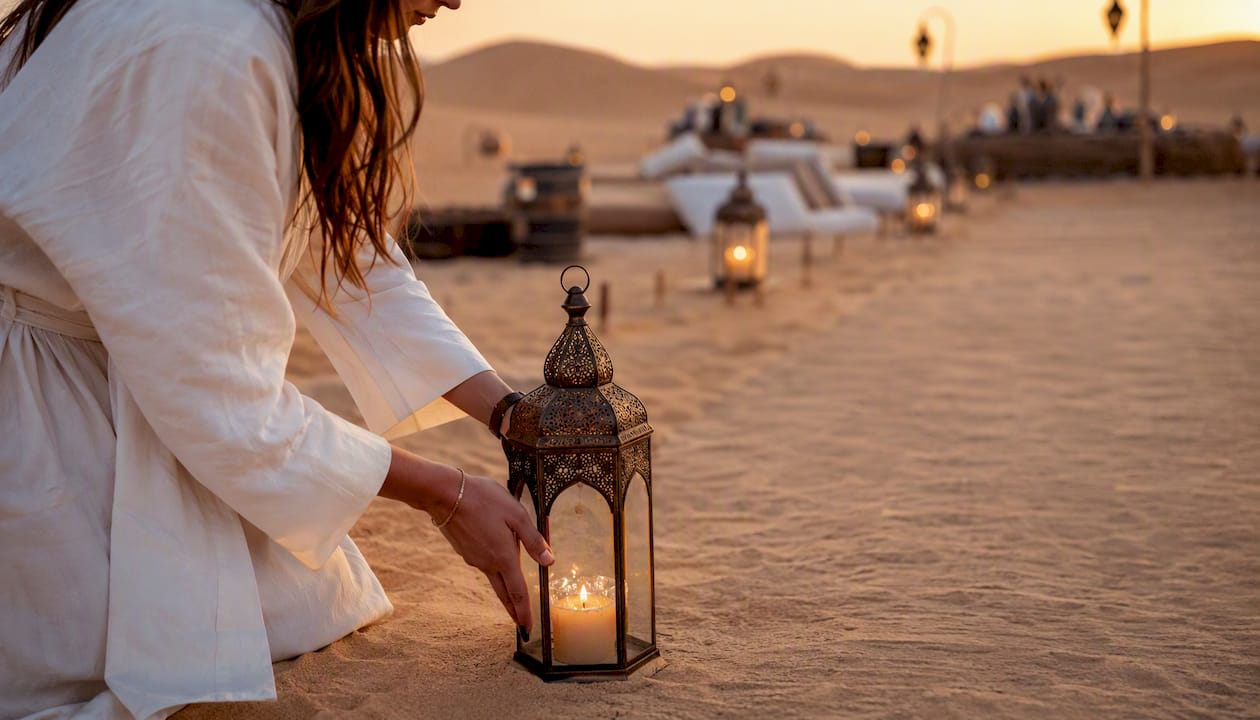
Yes, you can have a luxury desert wedding in Dubai. The fastest, lowest-risk route is hiring a UAE-licensed, full-service planner who bundles the event logistics with your legal marriage registration, so permits, power, sanitation, and paperwork all move on one timeline instead of three separate ones.
TL;DR:
Nearly all desert wedding venues in Dubai require advance permit applications and setup planning, especially for larger guest counts or high-end services.
Staff and vendors must transport and install all infrastructure, including power generators, toilets, and shade, since natural conditions provide no built-in facilities.
Booking well in advance (12+ months for peak dates) is essential to secure luxury resorts or private camps before they are reserved, with final permits finalized three months prior.
Weather contingencies for sandstorms and wind should be included in contracts, as these environmental factors can cause last-minute delays or changes.
Couples should select culturally authentic elements and early-season dates, with November to March being ideal for comfortable outdoor conditions.
Table of Contents
What Are the Desert Wedding Venues in Dubai and What Should You Expect?
How Do You Plan a Desert Wedding? A Booking Timeline That Works
What Logistics Do Desert Venues Require (Power, Toilets, Transport, Safety)?
How Harris & Charms Handles Desert Wedding Planning and Legal Registration
How Do You Keep Guests Comfortable and Safe at a Desert Wedding?
Where to Learn More About Desert Weddings and UAE Registration
What Are the Desert Wedding Venues in Dubai and What Should You Expect?
Every desert wedding Dubai venue falls into roughly three categories, and the right one depends on guest count, budget, and how much infrastructure you want built in versus trucked in.
Luxury resort venues. Properties like Al Maha Desert Resort & Spa host weddings with curated menus, on-site accommodation, and built restrooms already in place, offering various guest capacity options. These are the easiest option operationally because the resort supplies power, water, and staff, but that convenience comes with strict rules: fixed closure times, noise limits after certain hours, and pyrotechnic restrictions tied to fire and wildlife safety on protected land.
Private Bedouin-style camps. These suit intimate ceremonies, often 2 to 30 guests, and deliver the most photogenic, unfiltered dune backdrop. Operators running these micro-wedding setups note that larger events generally benefit from professional planner involvement, because a private camp has no built infrastructure. You are renting empty desert, which means every toilet, generator, and light fixture arrives by truck.
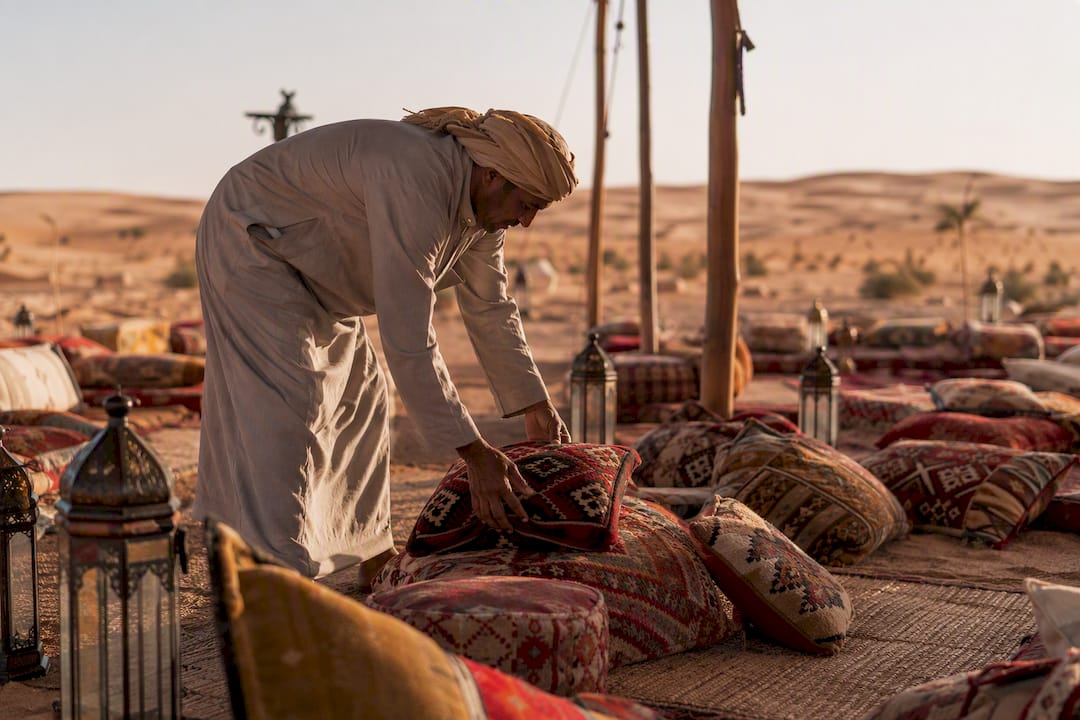
Conservation reserves. Sites inside protected desert areas offer the most dramatic, untouched scenery but come with the tightest access controls. Reserve management typically restricts vehicle routes, sets firm arrival and departure windows, and requires advance clearance for anything involving fire, drones, or amplified sound.
A few things hold true across all three venue types:
Most desert sites enforce a closure window from sunset to late evening, rather than offering full-night bookings.
Noise ordinances are stricter after dark, especially near residential or conservation boundaries.
Fireworks and open flame often require separate written approval, sometimes from more than one authority.
Vehicle access is usually limited to a single approved route, which affects how guests and vendors arrive.
Couples chasing a more remote landscape sometimes look beyond Dubai proper to Liwa, Al Ain, or Hatta, where dune formations differ and permit conditions vary by emirate.
How Do You Plan a Desert Wedding? A Booking Timeline That Works
A desert wedding has more moving parts than a hotel ballroom wedding, mostly because nothing at the site exists until someone brings it there. Here’s a realistic timeline that keeps you ahead of vendor availability and registration deadlines.
12+ months out: Confirm your planner and a preferred date window before you lock a venue. Peak season dates at resorts and popular private camps get reserved far in advance, and a planner can flag which weekends carry premium pricing.
6 to 9 months out: Lock your photographer, videographer, catering team, and transport vendor. If guests are flying in, confirm accommodation blocks now, since desert-adjacent hotels fill quickly around wedding season weekends.
3 months out: Finalize permits, floorplan, and vendor contracts. This is also when you should confirm power and sanitation logistics in writing, not verbally, so there’s no ambiguity about who supplies what on the day.
1 to 2 weeks out: Confirm generator delivery windows, guest transfer schedules, and a weather contingency plan. This is also the point where your civil or Islamic marriage documentation should be finalized and handed off to whoever is managing your court registration.
Pro Tip: Build your registration paperwork into the 3-month milestone, not the week-of. Courts and registration offices in the UAE move on their own schedule, and a planner who tracks both the event and the legal file at the same time catches gaps before they become a delay at the altar.
One detail trips up more couples than anything else: the venue does not register your marriage. A resort, a camp operator, or a reserve manager can host your ceremony beautifully and have zero involvement in making it legally recognized. That process runs through UAE civil or Islamic marriage channels, and it needs its own documentation trail. Planners who bundle both, like the model Harris & Charms uses, coordinate the two timelines so your legal registration is complete before or shortly after your desert ceremony, not weeks behind it.
What Logistics Do Desert Venues Require (Power, Toilets, Transport, Safety)?
A desert site looks simple. Operationally, it’s the opposite of simple, because everything a building normally provides has to be trucked in and calculated ahead of time.
Power. Generator sizing needs to account for continuous kilowatt demand, not just peak load, and include a fuel-supply contingency. Planners frequently under-estimate lighting and sound draw, which is exactly what causes generators to trip mid-reception. Cable runs also need to be planned around guest walkways so nothing becomes a tripping hazard once the sun goes down.
Sanitation and comfort. Portable restroom units, shaded waiting areas, insect control, and hydration stations are not optional extras at a desert event. They are the baseline that keeps 100 guests comfortable for four hours in an environment with no shade of its own.
Transport and access. Desert sites usually have one approved entry road, so convoy logistics matter. That means:
Staggered guest transfer times to avoid a bottleneck at a single access point
Clear signage from the main road, since GPS pins are unreliable in open desert
A parking plan that accounts for vendor trucks arriving hours before guests
Accessibility planning for guests with mobility limitations, since soft sand is difficult for wheelchairs and walkers without matting
Permits and waste. Conservation and municipal land both carry rules around waste removal and environmental impact. Every generator, decor piece, and food service setup has to leave the site exactly as it arrived, and permits typically specify how quickly.
What Does a Desert Wedding Package in Dubai Actually Cost?
Package structures vary, but most desert wedding packages Dubai vendors quote are built from the same core line items, which makes comparing quotes easier once you know what to look for.
A typical package includes the site hire window, setup (arches, seating, carpets, lighting rig, sound system), catering priced per head, event staffing, a photographer and videographer, guest transport, permit fees, event insurance, and a stated overtime rate.
The line items that push a budget up fastest:
Guest count, since catering and seating scale directly with it
Custom decor beyond the standard package (specialty florals, imported furniture)
Premium entertainment bookings
Pyrotechnics or fireworks, which usually require a separate permit fee on top of the display cost
Late-hour extensions past the venue’s stated closure time
That last point deserves a highlight of its own. Venue documentation across the industry consistently flags limited late-night hours and steep extension fees as a common surprise. Before signing anything, get the closure time, the overtime rate per hour, and a written cancellation or force-majeure clause covering extreme heat, sandstorms, or access closures, in the contract itself, not a verbal assurance.
How Harris & Charms Handles Desert Wedding Planning and Legal Registration
Harris & Charms runs civil and Islamic marriage packages that combine venue management, event photography coordination, and document handling under one team, rather than splitting the ceremony from the paperwork.
The workflow is straightforward:
A planner books the site and manages vendor logistics (power, catering, transport, permits).
The same team coordinates document handling for civil or Islamic registration.
Registration is confirmed through the appropriate court or documentation channel after the ceremony, closing the loop between the wedding and its legal status.
Bundling legal registration support with event planning cuts the risk of last-minute documentation gaps, particularly for expat couples and international guests unfamiliar with UAE court processes. Harris & Charms also supports related needs many desert wedding couples ask about, including prenup photoshoots, yacht wedding packages for couples who want to pair a desert ceremony with a Dubai Marina reception, and marriage registration support for Golden Visa holders navigating residency-linked paperwork.
What’s the Weather Like for a Desert Wedding in Dubai?
Dubai’s desert climate splits sharply by season, and that split should shape your date more than almost anything else on your checklist. Between November and March, evening temperatures typically settle into a comfortable range for outdoor ceremonies, which is why this window is peak booking season for every desert venue in the emirate.
Summer months, roughly May through September, bring daytime heat that makes any outdoor ceremony before sunset genuinely risky for guest health. Most planners will steer you toward an after sunset start time year round, but in summer it becomes a hard requirement rather than a preference.
Sandstorms, while infrequent, do happen and tend to cluster in the spring transition months. A contract without a weather contingency clause leaves you exposed if a storm forces a last-minute venue change or delay. This is exactly the kind of clause worth checking against broader event contract standards, similar to the protective language you’d expect in any binding agreement, the same way a prenuptial agreement spells out contingencies before they’re needed rather than after.
Wind is the quieter risk factor. Even without a full sandstorm, evening desert wind can affect lighting rigs, table linens, and open flame elements like unity candles. A planner who has run desert events before will default to weighted decor and windbreak placement without being asked.
What Cultural Elements Define a Desert Wedding in Dubai?
A desert wedding in the UAE draws naturally from Emirati and Bedouin tradition, and leaning into that heritage tends to produce a more memorable event than importing a generic Western outdoor wedding template into the sand.
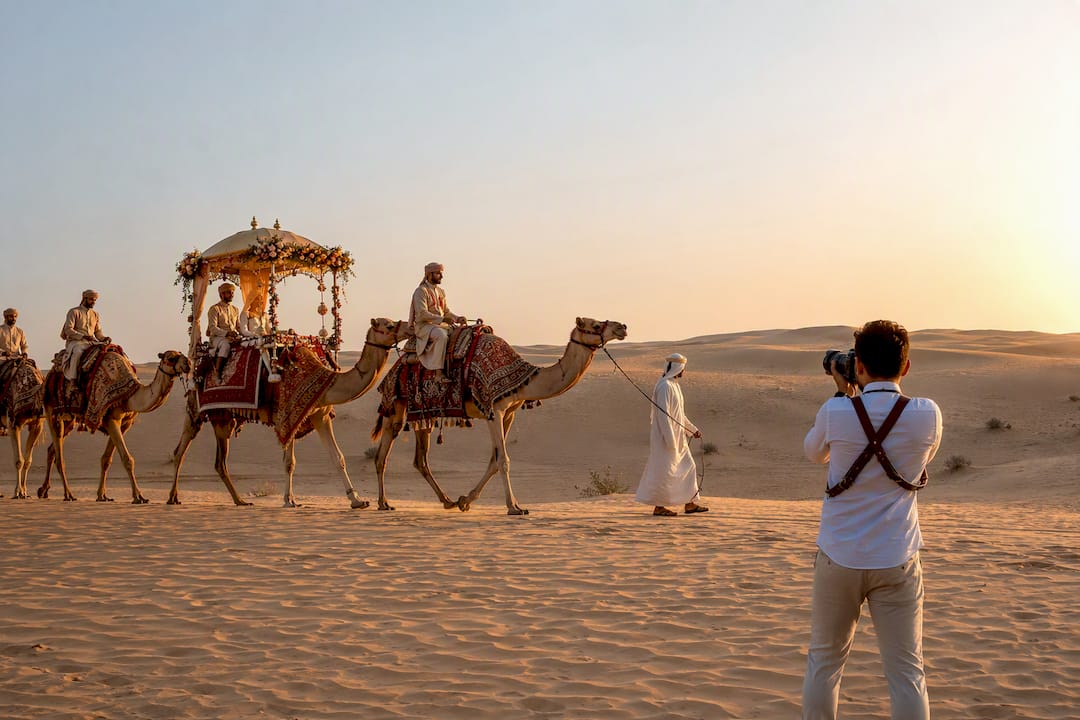
Camel processions remain one of the most requested traditional touches, often used for the couple’s arrival or as a photo moment during cocktail hour. Henna application is another common addition, sometimes offered as a guest activity station rather than reserved only for the bride. Falconry displays, a nod to a centuries-old Emirati tradition, work particularly well as a pre-ceremony guest activity while the wedding party finishes final preparations.
Lantern-lined pathways and Majlis-style low seating areas borrow directly from traditional Bedouin hospitality, creating a lounge atmosphere that suits the desert’s open layout far better than rigid banquet rows. Arabic coffee and dates served on arrival is a small gesture that immediately signals cultural respect to Emirati guests and adds an authentic sensory note for international guests experiencing it for the first time.
None of this needs to be exhaustive. The strongest desert weddings tend to pick two or three cultural elements and execute them well, rather than layering in every available tradition and diluting all of them. A planner familiar with the region will know which combinations feel cohesive.
What Should You Wear to a Desert Wedding in Dubai?
Desert conditions dictate attire choices more than fashion preference does, and couples who plan around the environment end up with better photos and more comfortable guests.
For the couple, breathable fabrics matter more than they would at an indoor venue. Heavy structured gowns trap heat and collect sand at the hem; lighter chiffon or crepe fabrics move better in evening wind and photograph well against dune backgrounds. Grooms generally do better in lightweight linen or tropical-weight suiting rather than heavier wool blends, even for evening ceremonies once temperatures drop.
Footwear deserves real thought. Stilettos sink into sand within minutes, so many brides carry a second pair of flat sandals or wedges with a wider base for the ceremony itself, saving heels for any hard-surface reception area.
Guest attire should be communicated clearly on the invitation, ideally with a note about sand-friendly footwear and layering for evening temperature drops. A desert-themed dress code that specifies “elevated resort wear, flat or wedge shoes recommended” saves guests from arriving in impractical outfits and saves you from apologetic texts halfway through cocktail hour.
How Do You Keep Guests Comfortable and Safe at a Desert Wedding?
Guest comfort in the desert isn’t a nice touch, it’s the difference between an event people remember fondly and one they remember enduring.
Hydration stations should be visible and staffed from the moment guests arrive, not just set up near the bar. Desert air pulls moisture out of the body faster than guests expect, even after sunset, and chilled water or infused options placed at multiple points around the venue keep people from having to search for relief.
Sun protection matters most for any daytime portion of the event, cocktail hours or photo sessions before the ceremony itself. Shaded lounge areas, provided parasols, or a simple basket of sunscreen at the welcome table cost little and prevent the kind of sunburn that shows up in every photo taken an hour later.
Mobility across sand is a real accessibility issue that gets overlooked constantly. Matting or boardwalk paths from the parking area to the ceremony space make the difference for elderly guests, anyone in heels, or guests using mobility aids. Budget for this the same way you’d budget for lighting; it’s not optional infrastructure, it’s baseline hospitality.
What Do Planners and Photographers Wish Every Couple Knew?
Schedule portraits immediately after the ceremony to catch golden hour before the light shifts fast. Photographers should carry flash and diffusion gear ready for the quick transition from dusk to full dark. Sand and dust damage camera gear fast, so protective covers and spare batteries kept warm and accessible matter more than most couples realize. And small touches, lantern-lined paths, a shaded lounge, a hydration station, tend to leave a bigger impression on guests than the size of the floral budget ever does.
— Harris
Where to Learn More About Desert Weddings and UAE Registration
For deeper detail on the legal side, review what’s required to get married by court in the UAE, or check the full list of documents required to register a marriage. Both cover the paperwork trail that runs parallel to your event planning.
Ready to Plan Your Desert Wedding?
If you’re comparing venue listings, operator pages, and separate visa or documentation services trying to piece together a desert wedding on your own, you already know how many moving parts that involves. Harris & Charms is built to remove that coordination burden entirely: one team handles your venue booking, event photography, and civil or Islamic marriage registration together, so nothing falls through the gap between the ceremony and the paperwork.

That single-team model suits couples planning a desert ceremony in Dubai, a yacht wedding on the Marina, or a Golden Visa holder who needs registration handled alongside residency documentation. Harris & Charms also coordinates prenup photoshoots and makeup services for brides who want the full experience managed by one point of contact rather than five separate vendors.
If a desert wedding is on your calendar, the next step is simple: reach out through the Harris & Charms wedding services page to check date availability and get a package outline built around your guest count and venue preference.
Recommended
Comments