
Legal marriage options UAE: choose the best fit 2026


Choosing the right legal marriage option in the UAE can feel overwhelming. Religious requirements, nationality status, and residency laws create a complex maze for couples. This guide clarifies how to evaluate your situation, understand civil versus Islamic marriage pathways, and select the option that fits your legal, religious, and international needs in 2026.
Table of Contents
Key takeaways
Point | Details |
Marriage eligibility depends on religion and nationality | Islamic marriages use Sharia courts; civil marriages work through embassies or courts for non-Muslims and mixed couples. |
Processing timelines vary significantly | Islamic marriages complete in 1-2 weeks, civil marriages take 2 weeks to 2 months depending on embassy. |
Cost differences impact budgets | Islamic marriages start around AED 3,000; civil options range AED 10,000-15,000 with translations and fees. |
Documentation requirements are extensive | All marriages need passports, visas, birth certificates, medical fitness tests, and No Objection Certificates where applicable. |
International recognition affects future plans | Civil marriages offer broader global recognition; Islamic marriages may require extra attestation abroad. |
How to choose your legal marriage option in the UAE
Your religious affiliation determines eligibility for Islamic or civil marriage. Muslim couples typically qualify for Sharia court registration, while non-Muslim and mixed-faith couples pursue civil options through embassies or local courts. This distinction forms the foundation of your decision.
Nationality and residency status directly impact which documents you’ll need and how long the process takes. Expats from countries with UAE embassy representation often find civil marriage more straightforward. Residents from nations without local embassies face additional complexity and may need to travel or use alternative legal pathways.
The civil marriage requirements guide outlines specific documentation based on nationality. Each embassy sets unique requirements, so research early to avoid surprises.
Consider how you’ll use your marriage certificate internationally. Couples planning to relocate abroad or apply for visas in Western countries should prioritize options with simpler international recognition. Civil marriages generally require less attestation for foreign use, while Islamic marriages might need additional authentication steps.
Pro Tip: Schedule a consultation with legal experts at least 60 days before your target wedding date to map out documentation timelines and avoid costly delays or re-submissions.
Budget constraints matter. The financial gap between options is significant. If you’re working with limited funds, Islamic marriage offers substantial savings without compromising legal validity within the UAE.
Processing speed affects couples with urgent timelines. Visa requirements, family visits, or employment regulations might create time pressure. Islamic marriages complete faster, typically within two weeks. Civil marriages through embassies stretch to two months in some cases.
Religious compliance needs
International relocation plans
Budget and cost sensitivity
Required processing speed
Nationality-specific embassy availability
Future family planning and visa needs
Civil marriage in the UAE: embassy and court options
Civil marriages in the UAE operate through foreign embassies or designated courts that handle non-Muslim and certain mixed-faith unions. Each embassy follows its home country’s marriage laws while operating on UAE soil. This creates diverse procedures depending on your nationality.
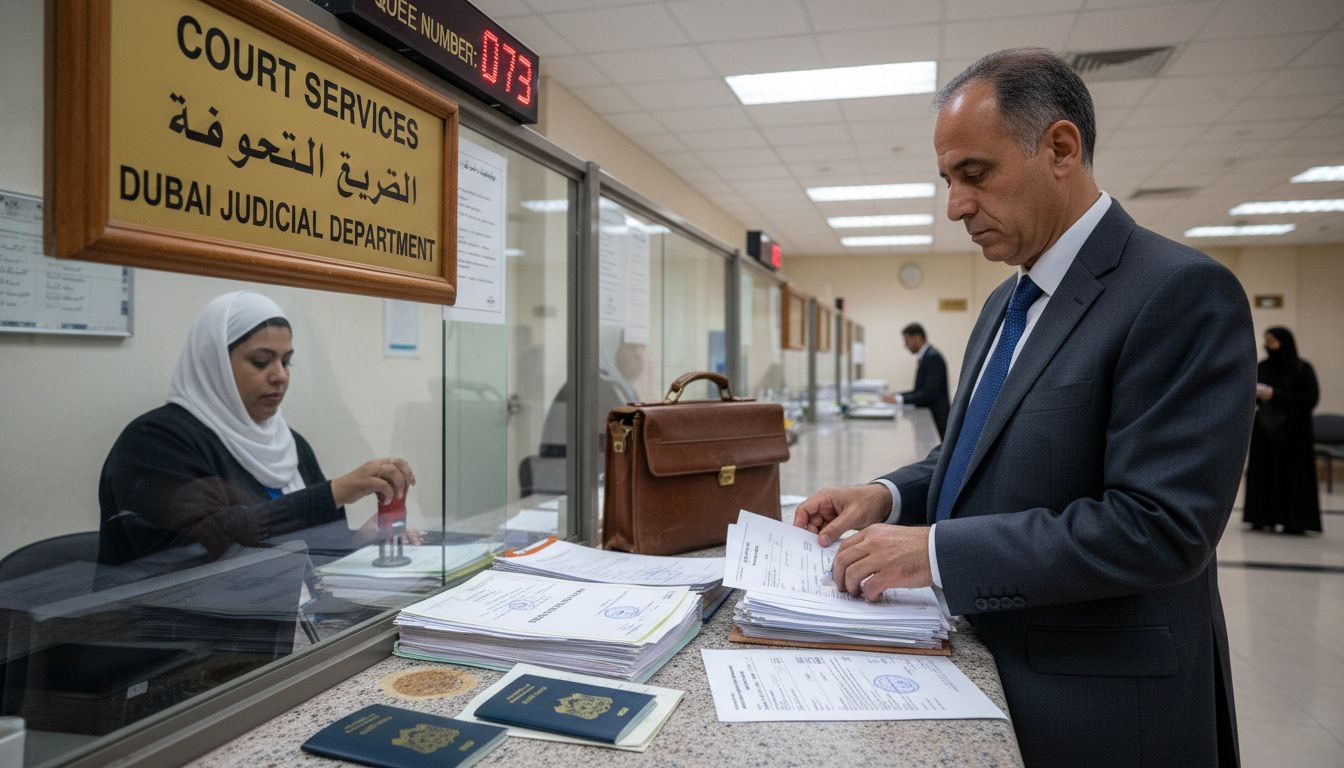
The document bundle typically includes valid passports, current UAE residency visas, original birth certificates, divorce decrees if previously married, and a No Objection Certificate from your embassy. Many embassies require these documents translated into English or Arabic by approved translation services.
Medical fitness certificates must come from government-approved clinics in the UAE. These tests screen for infectious diseases and typically remain valid for three to six months. Schedule these strategically to ensure validity through your wedding date.
The civil marriage step-by-step process breaks down into manageable phases:
Contact your embassy to confirm specific requirements and appointment availability
Gather and translate all required documents through approved channels
Complete medical fitness tests at designated UAE health facilities
Submit your complete application package to the embassy with required fees
Attend any mandatory interviews or counseling sessions
Receive provisional approval and schedule your ceremony date
Complete the marriage ceremony at the embassy or approved venue
Obtain your official marriage certificate
Attest the certificate through UAE Ministry of Foreign Affairs if needed internationally
Civil marriages through embassies range AED 10,000 to AED 15,000 due to varied procedural fees and document translations. European embassies often charge higher fees than Asian counterparts. Factor in translation costs, medical tests, attestation fees, and ceremony expenses when budgeting.
Timeline expectations vary by embassy workload and your nationality. British and American embassies typically process applications within three to four weeks. Some Asian and African embassies may extend to eight weeks. Public holidays and embassy closures can add unexpected delays.
The civil marriage application guide provides nationality-specific timelines and document checklists. Review your embassy’s current procedures since requirements change periodically.
Embassy appointment slots book months in advance
Document validity windows create timing pressure
Translation and attestation add 1-2 weeks to the process
Some embassies require both partners to attend multiple appointments
Certificate collection may require additional embassy visits
Islamic marriage in the UAE: Sharia court procedures
Sharia courts throughout the UAE handle Islamic marriage registrations for Muslim couples. Dubai Courts, Sharjah Courts, and Abu Dhabi Judicial Department operate dedicated family services sections. The process moves faster and costs less than civil alternatives.
Eligibility requires both partners to be Muslim or one partner to convert to Islam through official channels before registration. Courts require proof of religious status through passport nationality or conversion certificates. Mixed-nationality Muslim couples qualify without additional barriers.
Mandatory documentation mirrors civil requirements with religious additions. You’ll need passports, valid UAE residency visas, original birth certificates, divorce certificates if applicable, and medical fitness certificates. Female applicants typically need guardian consent depending on their nationality and school of Islamic jurisprudence.
The Islamic marriage process guide details court-specific requirements. Dubai Courts operate the most streamlined system with online appointment booking and digital document submission.
Medical fitness certificate validity is critical. Courts reject expired certificates, forcing couples to repeat expensive tests. Most courts accept certificates valid within three months of issuance.
Islamic marriages in UAE start around AED 3,000 and finalize within 1-2 weeks. Court fees remain nominal at AED 500-1,000. The bulk of costs come from medical tests, document attestation, and optional ceremony expenses.
The Islamic marriage registration steps follow this sequence:
Book an appointment through the court’s online portal or in person
Complete medical fitness tests at approved facilities
Gather and attest all required documents through Notary Public
Attend the court appointment with both partners and witnesses (typically two Muslim males)
Sign the marriage contract (nikah) in the presence of a judge or authorized official
Pay court fees and collect your temporary marriage certificate
Return after processing period to receive the official attested marriage certificate
Register with your embassy if required for international use
Pro Tip: Complete your medical exams no more than six weeks before your court date to ensure certificate validity and avoid expensive re-testing.
Sharia courts require two Muslim male witnesses or one male and two female witnesses depending on the court’s interpretation. Bring witnesses with valid Emirates IDs. Courts can provide official witnesses for a small fee if you don’t have eligible friends or family available.
The Islamic marriage checklist helps you track document preparation. Missing even one item delays your registration by weeks as you’ll need to rebook appointments.
Court appointments can be secured within days
Mahr (dowry) amount must be agreed and stated in the contract
Prenuptial agreements can be included in the Islamic marriage contract
Some courts offer English translation services during proceedings
Certificate attestation for international use requires additional steps
Key legal documentation and procedural steps for all marriages
Regardless of your chosen marriage type, UAE law mandates specific documents and procedural steps. Understanding these universal requirements prevents delays and ensures legal validity.
Couples must submit passports, residency visas, birth certificates, medical fitness certificates, and NOCs where applicable for legal marriage registration in UAE. Every document must be original or certified copy. Photocopies get rejected immediately.
Passport validity matters more than most couples realize. Both passports need at least six months of remaining validity from your wedding date. Expired or soon-to-expire passports trigger automatic rejection. Renew early if you’re close to expiration.
Residency visa status must be current and valid. Tourist visa holders cannot register marriages in most UAE courts and embassies. You’ll need resident or work visa status. Some embassies make exceptions for nationals, so verify with your specific embassy.
Birth certificates require apostille or embassy attestation from your home country before UAE acceptance. This process alone can take four to eight weeks if you’re ordering documents internationally. The legal marriage documents examples show properly attested formats.
Medical fitness certificates come from Ministry of Health approved facilities only. Private clinic certificates get rejected. Tests screen for HIV, Hepatitis B and C, and other infectious diseases. Both partners must test at facilities on the approved list.
No Objection Certificates function as permission letters from your embassy confirming you’re legally free to marry. Not all nationalities require NOCs. British, American, and most European citizens need them. Asian and African requirements vary by country. Contact your embassy directly to confirm.
The marriage attestation process UAE explains how to validate foreign documents. Translation and attestation typically cost AED 500-1,500 per document depending on the language and urgency.
Complete document preparation follows this general workflow:
Request birth certificates and previous marriage dissolution documents from your home country
Obtain apostille or embassy attestation on all foreign documents
Translate non-English documents through UAE-approved translation offices
Attest translations through UAE Notary Public
Complete medical fitness tests at approved facilities
Request NOC from your embassy if required
Compile complete document package in ordered folders
Submit to court or embassy as directed
The certificate attestation guide details Ministry of Foreign Affairs requirements. International document use requires this final attestation step after marriage registration.
Start document collection 90 days before your target wedding date
Order international documents early to account for shipping delays
Keep digital copies of everything as backup
Organize documents in clear folders labeled by type
Confirm current requirements since regulations update periodically
Comparing costs, timelines, and accessibility of marriage options
A direct comparison reveals substantial differences between Islamic and civil marriage pathways. Your choice impacts your wallet, schedule, and future legal flexibility.
Factor | Islamic Marriage | Civil Marriage |
Total Cost | AED 3,000-5,000 | AED 10,000-15,000 |
Processing Time | 1-2 weeks | 2 weeks to 2 months |
Eligibility | Muslim couples only | Non-Muslims and mixed couples |
International Recognition | Requires attestation | Broadly recognized |
Documentation Complexity | Moderate | High |
Court/Embassy Availability | Multiple UAE locations | Limited by nationality |
Witness Requirements | Yes (2 Muslim males) | Varies by embassy |
Religious Ceremony | Mandatory Islamic nikah | Optional or secular |
Islamic marriages start around AED 3,000; civil marriages cost between AED 10,000-15,000 due to fees and document translations. Budget-conscious couples with religious eligibility save substantially choosing Islamic registration.
Processing speed favors Islamic marriages significantly. Sharia courts complete registrations in one to two weeks once documents are submitted. Civil embassy procedures extend to two months in worst-case scenarios. Couples facing urgent visa deadlines or family visit timing should factor this carefully.
Accessibility depends on your religious and national profile. Muslim couples access both options but find Islamic registration simpler. Non-Muslim couples must use civil pathways exclusively. Mixed-faith couples face the most complexity, often requiring one partner’s conversion or careful embassy selection.
Document preparation intensity differs substantially. Islamic marriages require fewer translations since courts operate in Arabic. Civil marriages through foreign embassies demand extensive English translations, apostilles, and multiple attestation layers. This adds both time and cost.
Pro Tip: Factor in your long-term plans when comparing options. The AED 7,000-12,000 savings from Islamic marriage might disappear if you need extensive attestation for immigration to Western countries later. Calculate total lifecycle costs, not just upfront expenses.
Nationality creates accessibility barriers for civil options. If your country lacks UAE embassy representation, you’ll need to travel to a neighboring country or use alternative legal mechanisms. This adds flights, accommodation, and international travel complexity to your marriage process.
Islamic option works only for Muslim couples
Civil option offers more international portability
Cost difference is substantial but not the only consideration
Timeline pressure may force selection despite preference
Future relocation plans should influence your choice
International legal recognition and post-marriage considerations
How foreign governments recognize your UAE marriage affects visa applications, residency rights, and legal benefits abroad. Recognition requirements differ between civil and Islamic registrations.
Civil marriages registered through embassies receive automatic recognition in the embassy’s home country. A British embassy marriage certificate works immediately in the UK with zero additional steps. This seamless recognition extends to most Western countries through international treaty agreements.
Islamic marriages require additional attestation for international use. You’ll need UAE Ministry of Foreign Affairs attestation, then embassy attestation from your destination country. Some nations require further authentication through their own foreign affairs ministry. This creates a three-tier attestation process taking four to eight weeks.
Western countries generally recognize both marriage types once properly attested. Issues arise mainly with translation requirements and understanding of Islamic marriage contracts. Immigration authorities may request English translations of Arabic marriage certificates.
Post-marriage residency rights in the UAE depend on visa sponsorship, not marriage type. Your employer typically sponsors your work visa. Marriage allows spousal visa sponsorship if one partner holds a qualifying salary and job position. The marriage certificate type matters less than meeting salary thresholds.
Family benefits like dependent visas, health insurance coverage, and school enrollment accept both Islamic and civil marriage certificates equally within the UAE. Problems emerge only when using these documents internationally.
Foreign nationals planning to apply for spouse visas in Western countries should research specific embassy requirements early. Some countries have documented preferences or specific Islamic marriage certificate formatting requirements. The US and UK embassies publish detailed guidelines online.
Civil marriages rarely need extra attestation for Western countries
Islamic marriages typically require multi-level attestation
Both types are equally valid within the UAE
Spousal visa sponsorship in UAE accepts both forms
International immigration processes favor simpler civil documentation
Keep multiple certified copies of your marriage certificate
Attestation costs and timelines add to total marriage expenses
Situational recommendations: choosing the best marriage option for you
Your specific circumstances should drive your decision more than general advice. Match your profile to these scenarios for personalized guidance.
Muslim couples prioritizing religious compliance and speed should choose Islamic marriage through Sharia courts. You’ll save money, complete registration quickly, and fulfill religious obligations. Accept that international use may require additional attestation steps later.
Non-Muslim expats planning long-term stay in the UAE benefit from civil marriage through their embassy. The higher cost and longer timeline provide easier international recognition. This proves valuable for future immigration applications or if you relocate globally.
Mixed nationality couples planning frequent international travel or future relocation should prioritize civil marriage. Immigration processes in multiple countries run smoother with embassy-registered certificates. Budget the extra AED 7,000-12,000 as insurance against future complications.
Couples facing urgent timelines due to visa requirements or family circumstances lean toward Islamic registration if religiously eligible. Two weeks beats two months when time pressure is intense. You can always complete additional attestation later if needed.
Budget-constrained couples with religious eligibility choose Islamic marriage to preserve funds for housing, honeymoon, or other priorities. The AED 10,000+ savings is substantial for young couples establishing their lives.
Pro Tip: Book a consultation with marriage specialists at Harris & Charms early in your planning. Their legal expert contact page connects you with professionals who assess your specific situation and map optimal pathways before you commit time and money to document collection.
Couples without strong religious or budget drivers should default to civil marriage for its international flexibility. The extra investment typically pays dividends through simplified future legal processes across borders.
Muslim couples: Islamic marriage offers speed and cost advantages
Non-Muslims: Civil marriage is your only option
International relocators: Civil marriage simplifies future immigration
Urgent timelines: Islamic registration completes fastest
Budget priority: Islamic option saves AED 7,000-12,000
No strong preferences: Civil marriage provides maximum flexibility
Explore custom marriage services with Harris & Charms
Navigating UAE marriage regulations becomes significantly easier with expert guidance. Harris & Charms specializes in both civil marriage packages Dubai and Islamic marriage facilitation throughout the UAE.

Their team handles document preparation, translation coordination, attestation processes, and appointment scheduling. You avoid the confusion of contradictory online information and outdated embassy requirements. They know current 2026 procedures across all UAE courts and major embassies.
Custom packages bundle legal registration with venue coordination, photography, and celebration planning. Couples get comprehensive support from document gathering through wedding day. The Dubai civil wedding services page outlines complete package options.
Whether you’re pursuing Islamic or civil registration, their personalized approach ensures you meet all requirements on schedule. Contact their marriage experts to discuss your specific situation and receive a customized roadmap for your UAE marriage journey.
Frequently asked questions
What documents are required for legal marriage in the UAE?
All marriages require valid passports, current UAE residency visas, original birth certificates, medical fitness certificates from approved facilities, and No Objection Certificates for certain nationalities. Islamic marriages may need additional guardian consent documents. Review the legal marriage documents examples to see properly formatted and attested documents.
How long does it take to complete civil vs Islamic marriage registration in the UAE?
Islamic marriages through Sharia courts typically complete within 1-2 weeks from document submission to certificate collection. Civil marriages through embassies take 2 weeks to 2 months depending on your nationality and embassy processing capacity. The civil marriage timeline UAE breaks down expected durations by nationality.
Are civil marriages in the UAE recognized internationally?
Civil marriages registered through embassies receive broad international recognition, usually requiring minimal or zero additional attestation for use in Western countries. Islamic marriages are equally valid but typically need UAE Ministry of Foreign Affairs attestation plus embassy attestation for international use, creating a multi-step process.
When should couples consult legal experts for marriage in the UAE?
Consult marriage specialists at least 60-90 days before your target wedding date, especially if you’re uncertain about eligibility requirements, document preparation, or international recognition implications. Early consultation prevents expensive mistakes, rushed document ordering, and missed appointment windows. The contact legal experts UAE marriages page connects you with experienced professionals who assess your situation and provide customized guidance.
Recommended
Comments