
Marriage Eligibility UAE: Complete Guide for Couples

Updated: Dec 24, 2025

Over one third of american couples relocating to the UAE report confusion around marriage laws and documentation requirements. With legal rules that differ sharply from those in the United States, understanding marriage eligibility in the Emirates is essential for anyone hoping to marry abroad. This guide brings clarity to eligibility standards, legal pathways, and potential obstacles, equipping couples with practical knowledge for a smooth marriage process in the UAE.
Table of Contents
Key Takeaways
Point | Details |
Marriage Eligibility | Couples must meet age, mental capacity, and kinship criteria. Expatriates should be aware of additional legal requirements. |
Civil vs. Islamic Marriage | Understanding the distinction between civil and Islamic marriages is essential, particularly regarding documentation and consent requirements. |
Documentation and Attestation | A comprehensive set of documents, including medical certificates and proof of identity, is necessary for marriage registration. |
Expat Marriage Challenges | Expatriates face unique legal complexities that require careful navigation of local regulations and potential financial implications. |
Defining Marriage Eligibility in the UAE
Marriage eligibility in the United Arab Emirates involves a comprehensive set of legal requirements designed to ensure legitimate, consensual unions that respect both individual rights and societal norms. Understanding these marriage requirements in the UAE is crucial for couples planning to formalize their relationship within the country.
The core legal framework governing marriage eligibility centers on several fundamental criteria. Prospective spouses must meet specific age requirements, with both parties typically needing to be at least 18 years old. Mental capacity plays a critical role, meaning both individuals must demonstrate sound psychological health and the ability to provide informed consent. The law explicitly prohibits marriages between individuals with close kinship ties, ensuring genetic and familial boundaries are maintained.
For expatriates and international couples, marriage eligibility becomes more nuanced. Non-Muslim couples can pursue civil marriage procedures, which do not require a religious ceremony and are based on secular legal principles. Each party must provide valid identification documents, including passports and residency permits. Medical fitness certificates are often mandatory, demonstrating both partners are free from specific communicable diseases. Notably, the UAE legal system strictly enforces monogamy, meaning polygamous marriages are not recognized, and individuals must be legally unmarried or divorced prior to entering a new marriage contract.
Navigating marriage eligibility requires careful attention to documentation and legal requirements. Couples should be prepared to submit comprehensive paperwork, including birth certificates, passport copies, and potentially additional attestation documents. Legal implications of marriage in the UAE can be complex, making professional guidance invaluable for ensuring a smooth, legally compliant union.
Civil vs. Islamic Marriage Requirements
The United Arab Emirates offers two primary pathways for marriage: civil and Islamic, each with distinct legal frameworks and procedural nuances. Civil marriage procedures provide a secular alternative for couples seeking a non-religious union, particularly beneficial for non-Muslim expatriates and international couples residing in the UAE.

Islamic marriage, traditionally governed by Sharia law, involves specific religious and cultural protocols. For Muslim couples, the process requires a nikah (religious marriage contract) facilitated by an authorized religious official. Key differences emerge in documentation, consent requirements, and legal recognition. Islamic marriages typically mandate guardian approval for the bride, a practice not universally required in civil marriages. Premarital medical examinations are compulsory in both formats, ensuring the health and compatibility of prospective spouses.
Documentation requirements differ significantly between civil and Islamic marriages. Civil marriages demand comprehensive paperwork including valid passports, residency permits, and certificates of no impediment. Muslim marriages often incorporate additional religious documentation, such as proof of Islamic faith and family lineage. Both marriage types strictly enforce age restrictions, typically requiring participants to be at least 18 years old, with provisions for judicial exceptions in specific circumstances.
Understanding the nuanced differences between civil and Islamic marriage pathways is crucial for couples navigating the UAE’s legal landscape. While civil marriages offer a more secular approach, Islamic marriages remain deeply rooted in cultural and religious traditions. Regardless of the chosen path, couples must carefully prepare their documentation and understand the legal implications of their marital choice.
Legal Documents and Attestation Process
The marriage legal documentation and attestation process in the United Arab Emirates represents a critical pathway for couples seeking official recognition of their union. Marriage certificate attestation involves a multi-step verification process designed to ensure the legal validity and international recognition of marriage documents.
Documentation requirements are comprehensive and vary depending on the couple’s specific circumstances. Couples must typically prepare a detailed portfolio of documents, including original birth certificates, valid passports, valid residence permits, and medical fitness certificates. For expatriate couples, additional documentation such as certificates of no impediment and single status declarations become crucial. Each document must be carefully translated into Arabic and authenticated by authorized government entities, a process that demands precision and attention to administrative details.
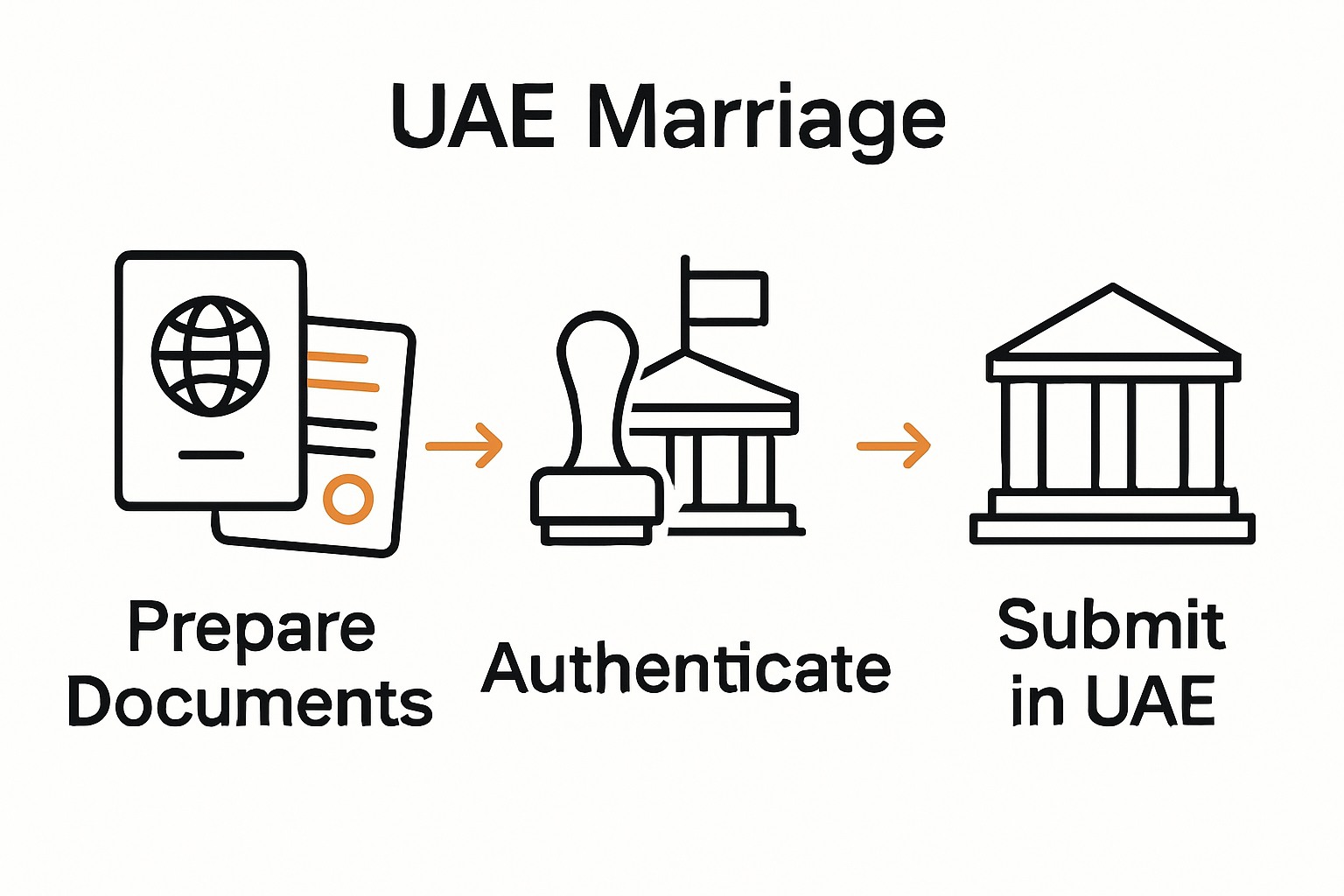
The attestation process itself follows a structured sequence of verification steps. Initially, documents must be authenticated by the issuing country’s foreign ministry, then verified by the UAE embassy in that country. Upon arrival in the UAE, these documents undergo further scrutiny by the Ministry of Foreign Affairs and the relevant local marriage registration authorities. Couples should anticipate this process taking several weeks and budget both time and financial resources for potential additional administrative requirements.
Navigating the legal documentation landscape requires strategic planning and meticulous preparation. Expatriate couples face additional complexity, with requirements potentially differing based on nationality, residency status, and specific emirate regulations. Professional guidance can significantly streamline this intricate process, helping couples avoid common pitfalls and ensuring smooth progression through the UAE’s rigorous marriage documentation protocols.
Marriage for Expats and Foreign Nationals
Foreign nationals navigating marriage in the United Arab Emirates face a complex but navigable legal landscape that requires careful preparation and understanding of local regulations. Marriage visa requirements represent a critical first step for expatriate couples seeking to formalize their union within the country.
The UAE offers distinct pathways for different nationalities and religious backgrounds. Non-Muslim couples can leverage the 24-hour civil marriage service available in Dubai, which provides a streamlined approach to marriage registration. Key requirements typically include valid passports, residence permits, medical fitness certificates, and proof of single status. Each foreign national must provide authenticated documents from their home country, translated into Arabic and verified by official government entities. Specific documentation can vary based on nationality, with some countries requiring additional apostille or legalization processes.
Financial and legal preparations are equally important for expatriate marriages. Couples must demonstrate sufficient financial stability, often requiring proof of income or sponsorship. Medical screening is mandatory, with couples undergoing comprehensive health examinations to ensure they meet the UAE’s health standards. Some nationalities, particularly those from Asian and African countries, may face additional scrutiny and documentation requirements. Professional marriage consultants can provide invaluable guidance in navigating these complex regulatory landscapes.
Special considerations exist for specific expatriate groups. Some nationalities have unique bilateral agreements that simplify marriage processes, while others might require more extensive documentation. Religious differences, cultural backgrounds, and individual emirate regulations can significantly impact the marriage registration process. Expatriate couples should anticipate potential challenges, maintain flexible expectations, and seek professional guidance to ensure a smooth and legally compliant marriage journey in the United Arab Emirates.
Common Pitfalls and Legal Challenges
Marriage in the United Arab Emirates presents a complex legal landscape fraught with potential challenges that can catch uninformed couples off guard. Legal implications of marriage require meticulous attention to detail, with numerous potential pitfalls that can derail even the most carefully planned unions.
One of the most significant challenges involves jurisdictional complexities surrounding interfaith and international marriages. The UAE legal system maintains strict regulations regarding marriage between Muslims and non-Muslims, with specific requirements that can vary dramatically between emirates. Couples must navigate intricate documentation processes, including comprehensive background checks, medical examinations, and authentication of international documents. Potential complications arise from differences in legal interpretations, particularly for couples with mixed nationalities or religious backgrounds.
Financial and residency considerations represent another critical area of potential legal challenges. Marriage in the UAE does not automatically guarantee residency rights, and couples must carefully understand the specific visa implications of their union. Some nationalities face additional scrutiny, with more complex documentation requirements and potential limitations on spousal sponsorship. Expatriate couples must be particularly vigilant about understanding the nuanced legal framework, including potential restrictions on property ownership, inheritance rights, and legal protections that may differ significantly from their home countries.
Cultural and legal misunderstandings can create unexpected obstacles for couples. Same-sex marriages remain legally unrecognized, and marriages that do not conform to traditional Islamic or civil marriage frameworks can face significant legal barriers. Prenuptial agreements, divorce proceedings, and child custody arrangements are governed by complex legal principles that may differ dramatically from Western legal systems. Couples must approach their marriage with a comprehensive understanding of these potential challenges, seeking professional legal guidance to navigate the intricate landscape of marriage in the United Arab Emirates.
Simplify Your Marriage Journey in the UAE with Expert Support
Navigating the complex marriage eligibility requirements in the UAE can feel overwhelming with all the documentation, medical certificates, and legal attestation involved. Whether you are preparing for a civil or Islamic marriage, dealing with multinational paperwork, or trying to understand the specific age and residency regulations, the process demands careful attention to avoid delays and legal pitfalls. Key challenges such as meeting the legal age, obtaining required certificates, and ensuring proper legalization can cause frustration and uncertainty for couples wanting a smooth wedding experience.
At Harris & Charms, we specialize in removing the stress from your marriage preparations by handling everything from document verification to venue management with a personal touch drawn from our own love story. Our comprehensive services cover civil and Islamic marriage support, legal documentation attestation, photoshoots, and even coordination with partner firms to accelerate visa and certificate processing. Let us guide you step-by-step so you can focus on what matters most: celebrating your union without worry about bureaucratic hurdles.
Experience a trusted partner who understands the emotional and legal intricacies of getting married in the UAE. Start your seamless marriage journey right now by exploring how we can assist at Harris & Charms and learn more about our specialized civil marriage services.
Take control of your marriage plans today and avoid common legal challenges by reaching out for personalized support that adapts perfectly to your unique needs.
Are you ready to turn your marriage eligibility worries into a joyful and hassle-free reality?

Contact Harris & Charms now to get started on your smooth and legally compliant marriage journey in the UAE.
Frequently Asked Questions
What are the age requirements for marriage eligibility in the UAE?
Both parties must typically be at least 18 years old to legally marry in the UAE.
What documents are required to get married in the UAE?
Couples must provide original birth certificates, valid passports, residency permits, medical fitness certificates, and, for expatriates, certificates of no impediment and single status declarations.
Can expatriates pursue civil marriage in the UAE?
Yes, non-Muslim expatriates can pursue civil marriage procedures that do not require a religious ceremony and are based on secular legal principles.
Is polygamy recognized in marriages within the UAE?
No, the UAE legal system strictly enforces monogamy, and polygamous marriages are not recognized.
Recommended
Comments