
Book Three Roles Early: Plan Your Perfect bilingual wedding ceremony dubai with expert tips

Updated: Sep 7
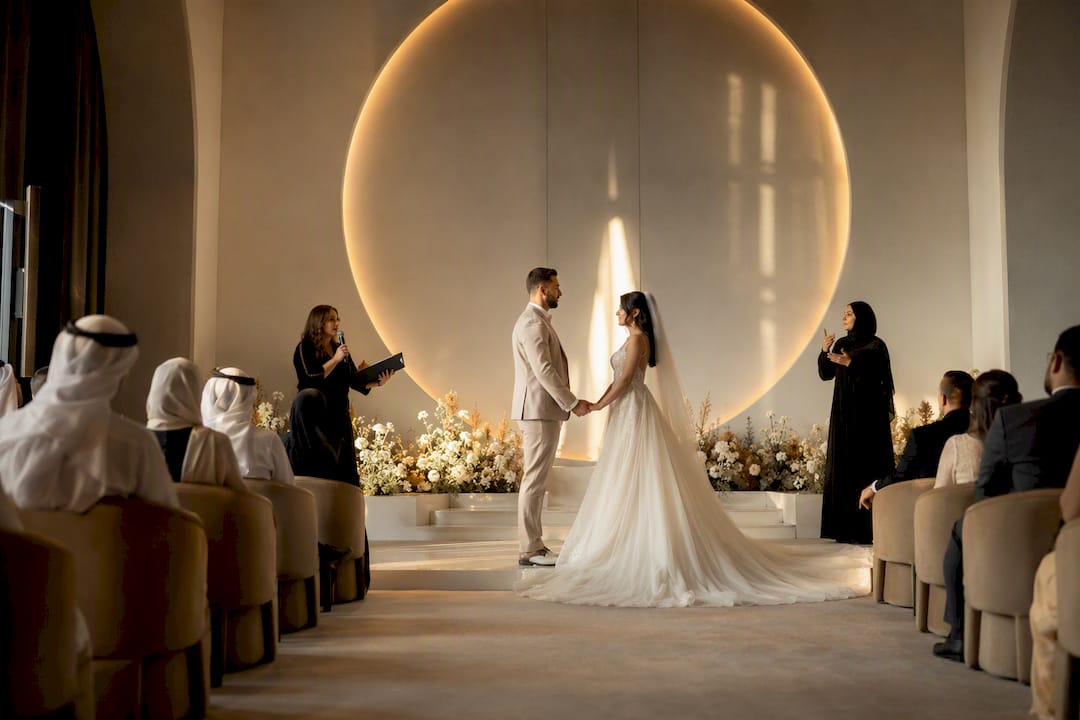
Yes, a bilingual wedding ceremony is entirely practical in Dubai. Your next move is simple: pick your primary languages, then book a bilingual celebrant or MC (paired with an interpreter if needed) as early as possible. Dubai’s October to April wedding season books up fast, so treat this as a priority task, not a someday item.
TL;DR:
Choosing the right interpreters and booking them early is crucial, especially during Dubai’s peak wedding season from October to April when demand is high.
Clear language mapping for vows, readings, and legal pronouncements must be finalized before rehearsals, with interpreter timing and script approval confirmed in advance.
Bilingual scripts should use alternating lines, consecutive blocks, or focused summaries for emotional moments, with clear cues and pauses to ensure natural flow.
Legal documentation requires certified translation and attestation, so gather foreign documents early especially if the marriage involves previous foreign registrations or visas.
Handling multiple vendors for ceremony hosting, interpretation, and legal paperwork through a single coordinated service simplifies logistics and reduces planning stress.
Table of Contents
How Do You Plan a Bilingual Wedding Ceremony in Dubai?
A bilingual ceremony works best when you treat it like a script project with a deadline, not an afterthought you tack on the week before the wedding. Dubai’s wedding market already caters to multicultural couples, so the pieces exist. You just need to assemble them in order.
Here’s the sequence that keeps things sane:
Map every ceremony moment to a language. Decide upfront whether your vows, readings, and the legal pronouncement will run in one language, both, or alternate. Don’t leave this vague until rehearsal.
Pick your interpretation style. Short ceremony, close language pair? Alternating lines work. Longer program with speeches? Consecutive blocks or a summarized version keeps things moving.
Book your bilingual celebrant/MC or celebrant-plus-interpreter combo now, not after you’ve locked the venue. Confirm script and rehearsal deadlines the same day you book.
Get written translations sorted early for anything a registrar or embassy might need, and prepare printed programs with language cues so guests aren’t lost mid ceremony.
Lock your audio setup. Consecutive interpretation needs little more than a solid PA and clear mic handoffs. True simultaneous interpretation requires headsets or an FM/IR system with a technician on-site, which changes your rental list and your budget.
Confirm who is translating what, and by when.
Assign one point person (planner or MC) to own the bilingual script.
Build in one full rehearsal with the interpreter present, not just the couple.
Pro Tip: Hand your celebrant a one-page “language map” of the ceremony before the first planning call. It saves everyone from re-explaining the same structure three times.
How Should You Sequence Languages in a Bilingual Script?
There’s no single right formula, but three patterns cover most weddings. Alternating lines suit short, punchy phrases. Consecutive blocks, where one language runs a full passage before the other repeats it, suit longer readings. And for the emotional peaks, like the vows themselves, many experienced celebrants recommend picking one language and giving the rest a brief spoken summary rather than a full repeat, so the moment doesn’t lose its weight to repetition.
A few practical rules keep bilingual scripts from feeling clunky:
Mark speaker cues clearly in the script so nobody guesses when to switch.
Keep emotionally charged lines short. A long vow translated twice loses its punch the second time.
Print translations in the guest program instead of narrating everything live.
Build in pauses. Interpretation needs breathing room, and rushing it kills the moment.
For guest speeches, ask speakers for a written copy in advance and assign someone to summarize on the spot if a full translation isn’t practical. Save certified translation for anything with legal weight, like registrar documents. Live summaries are fine for toasts and speeches; they’re not fine for paperwork.
Pro Tip: Rehearse the vows with your interpreter at least once before the wedding day. Tone and timing rarely match on the first try, and the ceremony is the wrong place to find that out.
What Legal and Documentation Steps Apply to Bilingual Weddings in the UAE?
Your bilingual ceremony script and your legal marriage registration are two separate things, and mixing them up causes real headaches. The words you and your celebrant choose for the emotional, symbolic part of the day don’t have to match the exact language requirements your registrar sets for the official process. Confirm those requirements directly with your registrar before you finalize anything.
Where translation actually matters legally is in your documentation. If either partner holds documents issued outside the UAE, you’ll likely need certified translation and attestation before those papers are accepted for registration. This is worth starting early, since certified translation for marriage certificates can take time to process correctly, especially when embassy legalization is involved.
A short list worth keeping on hand:
Confirm your registrar’s exact language requirements for the legal ceremony itself.
Check the documents required for UAE marriage registration and start gathering them now.
Line up attestation for foreign marriage certificates if either of you married abroad previously or holds foreign civil documents.
If visa or residency processes hinge on your marriage certificate, look into translation requirements for expat visa purposes well before your target date.
Embassy legalization timelines vary by country, so run that process in parallel with your ceremony planning rather than after it.
Who Do You Hire, and When Should You Book Them?
Three roles matter here, and they’re not interchangeable. Your celebrant or MC runs the ceremony and sets its emotional tone. Your interpreter handles the live language switching during the event itself. Your certified translator handles the paperwork, which is a completely separate skill set and often a separate vendor.
Dubai has a genuine bench of talent for this. Multilingual hosting agencies in the city offer trained linguists who double as hosts, some claiming coverage across dozens of languages, and individual bilingual MCs with a decade or more of experience moving between corporate events and private weddings. Some of the most established multilingual event agencies also bundle translation and attestation services alongside live hosting, which simplifies logistics considerably if you need both a ceremony interpreter and post-wedding document support from the same source.
Timing matters more than people expect. Book well in advance for weddings during the October to April peak season, when demand for bilingual-capable professionals is highest. Off-season, 3 to 6 months is usually enough breathing room.
Before you sign anyone:
Ask for a sample bilingual script, not just a general portfolio.
Request references specifically from live bilingual events, not just single-language weddings.
Confirm whether they also handle translation and attestation, or whether you’ll need a separate provider.
Negotiate rehearsal time into the contract. Don’t assume it’s included.
Pro Tip: If your celebrant offers both languages personally rather than working through a separate interpreter, ask how they keep the ceremony from feeling like two ceremonies stitched together. The best ones treat translation as invisible, prioritizing flow over line-for-line accuracy.
What Does a Bilingual Ceremony Run Sheet Look Like?
A run sheet turns your plan into something a vendor can actually follow without asking you questions all afternoon. Here’s a compressed template you can adapt:
Processional (5 min): Music cue, no language needed.
Welcome (3 min): Celebrant opens in Language A, brief summary in Language B.
Readings (5 min): Alternating lines or consecutive blocks, per your script.
Vows (6 min): Delivered in primary language, short spoken summary in the second. Mic swap between speaker and interpreter noted clearly.
Pronouncement (2 min): Stated in both languages in full, since this is the moment guests remember.
Closing and recessional (4 min): Music fade in, no interpretation needed.
Note mic handoffs and translation pauses directly on the sheet, and run it once at rehearsal with your interpreter present, not just your wedding party.
How Harris & Charms Handles Bilingual Ceremony Planning in Dubai
Planning a bilingual ceremony means juggling scriptwriting, vendor coordination, legal translation, and day-of logistics at the same time, which is exactly where most couples lose momentum. Harrisandcharms handles this differently. Instead of piecing together a celebrant here and a translator there, Harrisandcharms coordinates bilingual ceremony scripting, celebrant and MC booking, certified translation and attestation, venue and photoshoot logistics, and day-of coordination as one connected process.

The process starts with a discovery call to map your language needs and ceremony style, followed by script drafting, a full rehearsal, day-of coordination, and post-wedding support for document registration. Harrisandcharms also assists couples handling civil and Islamic marriage registration, including cases involving UAE Golden Visa holders, along with venue management, prenup photoshoots, and yacht wedding packages for couples who want their bilingual ceremony set against the Dubai skyline. For your first call, bring your rough guest list breakdown by language and any foreign documents that may need translation or attestation. From there, Harris & Charms’ wedding services can build the rest of the plan around your timeline.
A Founder’s Note on Bilingual Ceremonies
Our own story started with two languages and two families who didn’t always understand each other’s traditions at first. That gap is exactly why bilingual ceremonies matter to us, not as a service category, but as something personal.
What surprises most couples is how manageable the legal side actually is once someone maps it out early. The ceremony itself can be as emotional and layered as you want. The paperwork just needs a clear timeline running alongside it, not after it. That’s the part we obsess over, so you don’t have to.
If you’re weighing how to bring two languages, two families, and two traditions into one ceremony, reach out and we’ll build a plan around your specific situation.
— Harris
Recommended
Comments