
What is the process of register marriage in the UAE? Your clear guide by Harris N Charms

Updated: Sep 4

Registering a marriage in the UAE means choosing one of two legal routes: the Islamic/Sharia route for Muslim couples (handled through the Ministry of Justice) or the civil route for non-Muslims (handled by Dubai Courts or the Abu Dhabi Judicial Department). Both routes now have online options through UAE PASS, though in-person attendance is still required at key steps.
Your three immediate next steps:
Choose your route. Muslim couples apply through the Ministry of Justice (MOJ). Non-Muslims apply through Dubai Courts or the ADJD, depending on their emirate.
Gather your core documents. At minimum: valid passports, Emirates IDs or residency visas, passport-size photos, and proof of current marital status.
Book your appointment. Start on the UAE PASS app or visit the relevant court portal. For complex cases — mixed nationalities, Golden Visa applications, or previously married persons — a full-service provider like Harrisandcharms can handle the booking and document prep on your behalf.
Key Takeaways
Registering a marriage in the UAE requires choosing the correct legal route, gathering attested documents in the right order, and attending in person for the signing — no step can be skipped.
Point | Details |
Two legal routes | Muslim couples use the MOJ/Islamic route; non-Muslims use Dubai Courts or ADJD under Federal Decree Law No. 41 of 2022. |
Documents must be attested in sequence | Home country foreign affairs ministry attests first; UAE Ministry of Foreign Affairs attests second; certified Arabic translation follows. |
In-person attendance is required | Both parties and witnesses must appear physically for the signing session regardless of online portal use. |
Build in extra time for international use | Apostille or embassy legalization adds weeks; plan accordingly if the certificate is needed abroad. |
Harrisandcharms handles end-to-end | From document pre-checks and translation to appointment booking and Golden Visa registration support. |
Table of Contents
What is the process of registering a marriage in the UAE?
The process differs meaningfully by route, so the steps below are split accordingly. Follow the one that matches your situation.
Islamic/Sharia route (Muslim couples)
Confirm eligibility. Both parties must be Muslim. The groom’s guardian (wali) and at least two adult male Muslim witnesses must be present.
Gather and attest documents. Passports, Emirates IDs, birth certificates, and proof of marital status (divorce decree or death certificate if previously married) must be ready. Non-Arabic documents need certified Arabic translation before submission.
Submit the marriage contract request. Log into the MOJ portal via UAE PASS, upload documents, and pay the application fee. The MOJ’s online “Request for Marriage Contract” service handles authentication digitally.
Attend the signing session. Both parties, the wali, and two witnesses appear in person. The marriage contract (Aqd) is signed and witnessed.
Collect the registered certificate. The MOJ issues the official marriage certificate, which can be downloaded through the portal or collected in person.
For a detailed walkthrough of the Islamic marriage registration process, including witness rules and document tips, Harrisandcharms has a dedicated guide.
Civil route (non-Muslim couples)
Confirm eligibility under Federal Decree Law No. 41 of 2022. This law expanded civil personal status options for non-Muslims in the UAE, making it possible to marry civilly regardless of nationality or religion.
File a notice of intent. Submit an application at Dubai Courts or ADJD. A notice period applies before the ceremony can proceed.
Gather and submit documents. Passports, residency visas, proof of marital status, and witness IDs are required. Upload via the court portal or bring originals in person.
Attend the solemnization. Both parties and two adult witnesses appear before the court registrar. The registrar officiates and both parties sign the marriage contract.
Receive the marriage certificate. The court issues the certificate, typically within a few working days of the signing.
Pro Tip: Translate and attest all non-Arabic, non-English documents before booking your appointment slot. Arriving with untranslated documents is the single fastest way to lose your appointment and wait weeks for the next one.
Which authority handles your registration?
The right office depends entirely on your route and emirate.
Ministry of Justice (MOJ): Handles Islamic marriage contract requests across the UAE. The MOJ portal, accessible via UAE PASS, lets you submit documents, pay fees, and track your application online. Visit moj.gov.ae for the service directory.
Dubai Courts: Manages civil marriage services in Dubai, including an expedited option for couples who need faster processing. The Dubai Courts portal (dc.gov.ae) lists service codes and appointment booking steps.
Abu Dhabi Judicial Department (ADJD): The competent authority for civil family matters in Abu Dhabi. The ADJD Civil Family Court handles non-Muslim marriage registrations and related family services.
UAE PASS: The federal digital identity platform used to authenticate applications on both the MOJ and court portals. You will need a verified UAE PASS account before you can submit any online application. Have your Emirates ID and a registered UAE mobile number ready for the verification step.
When to go in person vs. online: Online portals handle document uploads and fee payments well. But both parties and witnesses must appear physically for the signing session regardless of route. If the portal throws an error during document upload (a common issue with large PDF files), compress files below 5MB or visit the court’s service center directly.
The UAE marriage registration step-by-step guide on Harrisandcharms covers emirate-specific portal navigation in more detail.
What documents do you need for marriage registration?
Core documents (both routes)
Valid passports (both parties)
Emirates IDs or valid UAE residency visas
Two recent passport-size photographs each
Proof of current marital status: single status certificate, divorce decree, or death certificate of former spouse
Birth certificates (required for age verification in most cases)
Valid IDs for both witnesses
Route-specific additions
Islamic route: The wali’s (guardian’s) passport and ID; a No Objection Certificate (NOC) from the bride’s guardian if she is a foreign national; and, in some emirates, a medical fitness certificate.
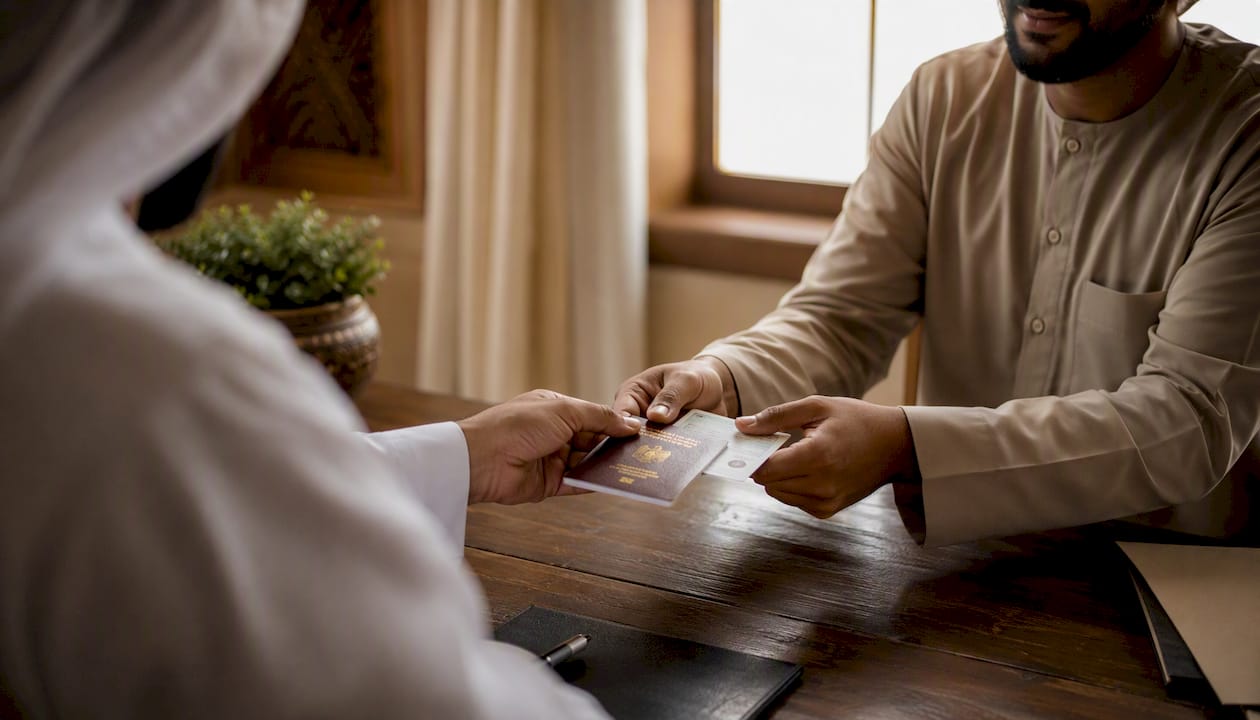
Civil route: A completed notice/application form from the relevant court; an affidavit of single status if your home country does not issue single status certificates; and, for some nationalities, a letter from your embassy confirming eligibility to marry.
Translation and attestation
Documents not in Arabic or English must be translated by a UAE-certified legal translator. Attestation order matters: your home country’s foreign affairs ministry attests first, then the UAE Ministry of Foreign Affairs attests the translated copy. Skipping a step in that chain invalidates the attestation.
Pro Tip: Name spelling must match exactly across every document — passport, Emirates ID, visa, and any translated certificate. Even a middle name appearing on one document but not another can trigger a rejection. Check every document side by side before your appointment.
Common document bundles by scenario:
Both spouses UAE residents: Passports, Emirates IDs, single status certificates (attested), witness IDs.
One spouse a foreign national: Add embassy letter or NOC, attested home-country documents, and certified translations.
Previously married person: Add divorce decree or death certificate, attested and translated, plus any court orders relating to custody or property if applicable.
For the full documents required for marriage registration in the UAE, Harrisandcharms publishes an updated checklist.
How much does it cost, and how long does it take?
Fee structures vary by emirate and service type, so the figures below reflect typical ranges rather than fixed amounts.
Typical fee ranges:
MOJ marriage contract application: a varying registration fee applies, with additional charges for urgent processing or extra certificate copies.
Dubai Courts civil marriage: fees vary depending on the service tier (standard vs. expedited).
Document attestation at the UAE Ministry of Foreign Affairs incurs a fee; home-country attestation fees also apply separately.
Certified legal translation fees depend on the language and document complexity.
Processing timelines:
Expedited civil marriage at Dubai Courts may be completed within a few days, where available.
Standard civil marriage registration typically takes several days after the notice period.
Cases involving international document attestation, embassy legalization, or apostille processing can take several weeks.
Build in at least two extra weeks if your marriage certificate will be used abroad. Apostille processing through the UAE Ministry of Foreign Affairs and then the destination country’s embassy can add significant time, especially for countries with slower consular processing.
Note: Fee amounts are subject to change. Always confirm current fees on the official MOJ, Dubai Courts, or ADJD portal before your appointment.
Special situations: expats, tourists, and previously married persons
Expats and tourists
UAE residents follow the standard process above. Tourists face an additional step: most courts require proof of legal entry (a valid visa) and, in some cases, a letter from the couple’s embassy confirming they are free to marry under their home country’s law. Without that letter, the registration can stall.
Apostille is required if your home country is a signatory to the Hague Apostille Convention. If not, full embassy legalization applies. Check your country’s status before assuming apostille is sufficient.
For practical tips specific to expat couples, the marriage registration guide for expats on Harrisandcharms covers residency and visa interplay in detail.
Previously married persons
A divorce decree or death certificate is mandatory. It must be attested by the issuing country’s foreign affairs ministry, then by the UAE Ministry of Foreign Affairs, and translated into Arabic by a certified translator. Courts will not proceed without a clean chain of attestation on this document.

Recognizing a foreign marriage in the UAE
If you married abroad and need UAE recognition, submit your foreign marriage certificate through the same attestation chain: home country foreign affairs ministry, then UAE Ministry of Foreign Affairs. Banks, immigration, and property authorities typically ask for the attested certificate plus a certified Arabic translation. Some institutions also request a UAE court recognition order for marriages from countries with very different legal frameworks.
India-specific note: Indian couples registering under the Hindu Marriage Act or the Special Marriage Act (which carries a 30-day notice period) should attest their Indian marriage certificate through the Ministry of External Affairs in India before UAE attestation. State-issued certificates require state-level attestation first.
How to attest and use your marriage certificate
Attestation flow
Notarize the original certificate at a notary public in the issuing country (if required by that country).
Home country foreign affairs attestation: The relevant ministry stamps the document.
UAE Ministry of Foreign Affairs attestation: Submit the attested document at a UAE MOFA service center or through an authorized typing center.
Certified Arabic translation: If the certificate is not in Arabic, a UAE-certified legal translator must produce a certified translation, which is then attested separately.
Embassy or apostille (for overseas use): If the certificate will be used in a third country, submit it to that country’s embassy in the UAE or obtain an apostille from UAE MOFA if the destination country accepts it.
Common uses and what each requires
Spouse/dependent visa: Attested marriage certificate plus sponsor’s Emirates ID and salary certificate.
Joint bank account: Attested certificate plus both parties’ IDs; some banks also request a certified translation.
Property purchase: Attested certificate; some developers and the Dubai Land Department require a court-recognized copy.
Insurance and inheritance: Attested certificate plus, for inheritance, a UAE court succession order.
Keep a certified digital copy and at least two attested originals. Replacing a lost attested certificate means restarting the attestation chain from scratch.
Practical tips to avoid delays and rejections
Missing originals and insufficient witnesses are the most common reasons an appointment fails. Practitioners consistently flag these as avoidable with a simple pre-check.
Pro Tip: For urgent cases — visa deadlines, Golden Visa applications, embassy timelines — run a pre-check before booking your official appointment. Verify translations, confirm name spelling consistency, and confirm witness eligibility. One hour of preparation prevents a month of delay.
Checklist to avoid the most common rejections:
Bring original documents, not photocopies, even if the portal accepted uploads.
Confirm witness eligibility: for Islamic marriages, witnesses must be adult Muslim males; for civil marriages, any two adult witnesses with valid IDs.
Check that names match exactly across passport, Emirates ID, visa, and all translated documents.
Verify the notice period has fully elapsed before attending the civil signing session.
Confirm your UAE PASS account is verified and linked to your current Emirates ID before the appointment day.
For previously married persons, confirm the divorce decree attestation chain is complete before booking.
When to hire a specialist: Mixed-nationality couples, Golden Visa applicants, and anyone facing embassy legalization timelines benefit most from a full-service provider. The document coordination alone — managing translation, attestation sequencing, and name-matching across multiple countries’ paperwork — is where delays compound fastest. Harrisandcharms handles this end-to-end, including step-by-step expat registration support.
A perspective on what the registration process actually demands
The paperwork side of marriage registration in the UAE is genuinely manageable once you understand which route applies to you. What catches couples off guard is not the number of documents but the sequencing. Attestation must happen in the right order. Translations must be certified by the right body. Witnesses must meet specific criteria that vary by route. Miss one link in that chain and the whole application stalls.
Federal Decree Law No. 41 of 2022 was a meaningful shift. It gave non-Muslim residents a real civil pathway that did not exist before, and it made the UAE one of the more accessible jurisdictions in the region for mixed-nationality couples. But more options also mean more decisions, and choosing the wrong route for your situation wastes weeks.
The couples who move through this process fastest are the ones who treat the pre-check as non-negotiable. Verify every document before booking the appointment, not after. That single habit eliminates the most common failure point.
Harrisandcharms: marriage registration support from start to certificate
Registering a marriage in the UAE involves more moving parts than most couples expect, and the cost of a failed appointment is measured in weeks, not days.

Harrisandcharms offers premium marriage registration packages that cover both the Islamic and civil routes, including document attestation, certified translation coordination, UAE PASS setup support, and appointment booking. For Golden Visa holders and applicants, the team provides dedicated registration assistance that accounts for the specific documentation requirements those cases carry. Beyond the legal paperwork, Harrisandcharms also handles wedding logistics: venue management, event photography, yacht wedding packages, and makeup services across the UAE.
Whether you need a full-service Islamic marriage package or targeted help with a single document bottleneck, the process starts with a conversation. Contact Harrisandcharms to confirm your route, review your documents, and book your registration appointment without the guesswork.
Authoritative sources and official portals
Ministry of Justice (UAE): — moj.gov.ae — marriage contract request service, fee schedules, and emirate-specific forms.
Abu Dhabi Judicial Department (ADJD): — adjd.gov.ae — civil family court services and contact points for Abu Dhabi registrations.
UAE Legislation Portal: — uaelegislation.gov.ae — full text of Federal Decree Law No. 41 of 2022 on civil personal status.
Always check the official portal for your emirate before attending an appointment, as forms, fees, and notice period requirements can differ between Dubai, Abu Dhabi, and other emirates.
This article is general information, not a substitute for advice from a qualified lawyer. Consult a qualified legal professional about your own circumstances before acting on anything here.
Recommended
Comments