
What Islam Says About Marriage: A 2026 Guide

Updated: Sep 13
TL;DR:
Islamic marriage is a sacred contract requiring consent, a bridal gift, witnesses, and a guardian in most schools. Validity depends on five pillars, including clear offer and acceptance, genuine consent, a wali, a mahr, and two witnesses; extra ethical commitments are essential beyond the legal minimum. Civil registration and documented stipulations protect couples legally, as religious vows alone often lack legal standing in secular courts.
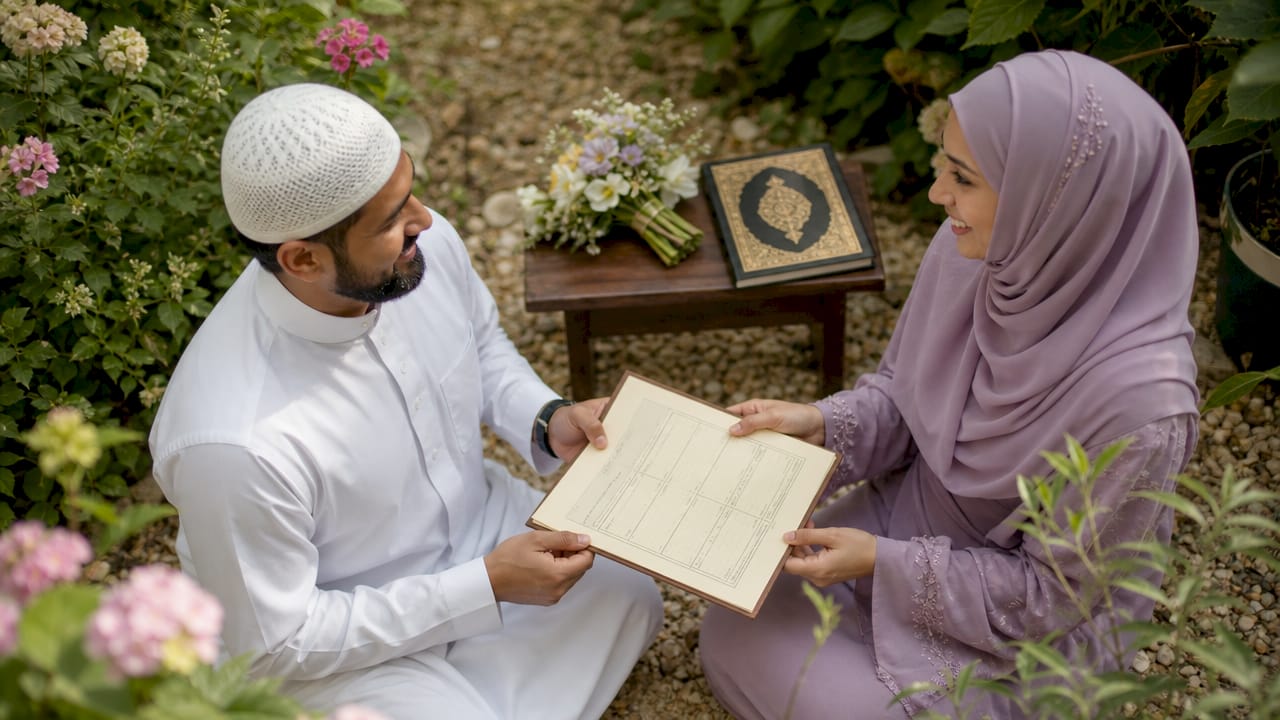
Islamic marriage, known as nikah, is defined as a sacred contract between a consenting man and woman that carries both spiritual and legal weight, requiring consent, a bridal gift, witnesses, and in most schools a guardian. Understanding what Islam says about marriage goes far beyond reciting a few verses. The Quran identifies three core purposes for marriage: sakinah (tranquility), mawadda (tender love), and rahma (mercy). These are not poetic extras. They are the goals Islam sets for every couple entering a nikah. Harrisandcharms works with couples navigating both Islamic and civil marriage requirements, and the questions we hear most often come back to the same gap: people know marriage is important in Islam, but they are unclear on exactly what makes it valid, ethical, and legally protected.
What are the essential pillars of a valid Islamic marriage?
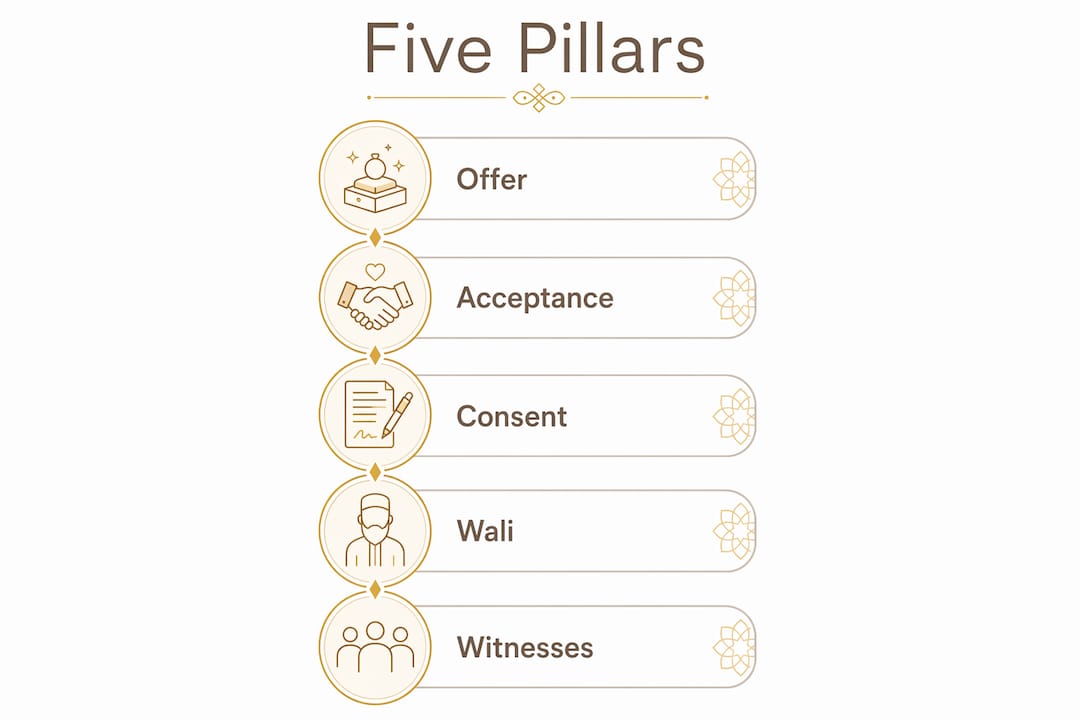
A valid nikah rests on five accepted pillars: offer and acceptance (ijab and qabul), genuine consent from both parties, a wali (guardian) for the bride in most schools, a mandatory bridal gift (mahr), and at least two upright Muslim witnesses. Miss any one of these, and the contract is either invalid or disputed depending on the school of Islamic law you follow.
Offer and acceptance
The ijab is the offer, typically made by the bride’s side, and the qabul is the groom’s acceptance. Both must happen in the same sitting, clearly and without ambiguity. This verbal exchange is the moment the nikah becomes binding.
Genuine consent
Forced marriage is strictly prohibited in Islam. The bride’s consent must be free and unambiguous. Silence alone is generally not sufficient. A clear verbal expression or a direct signal of agreement is required. Any contract performed under coercion is invalid.
The wali’s role
The wali is the bride’s guardian, typically her father or a close male relative. His role is protective, not controlling. He evaluates the groom’s character and religious commitment, not his wealth or social status. This distinction matters. A wali who blocks a suitable match without valid reason acts outside his sanctioned role.
The mahr
The mahr is a mandatory gift from the groom to the bride. It belongs exclusively to her. Islamic law sets no upper or lower limit on its value. It can be paid immediately (prompt mahr) or deferred to a later date. The mahr is not a transaction between families. It is a direct financial right belonging to the wife alone.
Witnesses
At least two adult, upright Muslim witnesses must be present at the nikah. Their presence makes the contract public and verifiable. A secret marriage, even if both parties consent, lacks this pillar and is therefore invalid under the majority view.
Offer and acceptance: Must occur in the same sitting, clearly stated
Genuine consent: Free, unambiguous agreement from both parties
Wali: Guardian evaluating character and faith, not wealth
Mahr: Mandatory gift belonging solely to the bride
Two witnesses: Adult, upright Muslims present at the ceremony
Pro Tip: Write the mahr amount, payment terms, and any agreed conditions into the nikah contract in writing. Verbal agreements are valid Islamically but harder to enforce if a dispute arises later.
How does Islam view the emotional and ethical side of marriage?
Islam frames marriage as an act of worship, not just a social arrangement. The Prophet Muhammad taught that marriage completes half of one’s faith. That framing sets a high bar. It means the way you treat your spouse is itself a religious act.
“And of His signs is that He created for you from yourselves mates that you may find tranquility in them; and He placed between you affection and mercy.” (Quran 30:21)
This verse is the foundation of the Islamic perspective on relationships. Sakinah is the peace a spouse brings. Mawadda is the active, tender love that a couple builds. Rahma is the mercy that sustains the relationship when love alone feels insufficient. All three are presented as divine gifts, not personal achievements.
The concept of bil-ma’ruf runs through Islamic marriage ethics. It means treating your spouse with kindness and cultural wisdom, going beyond the legal minimum. The legal requirements of a nikah are the floor, not the ceiling. A husband who pays the mahr but treats his wife with contempt has met the contract but failed the marriage. Islam asks for more.

Compatibility, called kufu, is also emphasized. Scholars historically applied it to faith, character, and social background. Most contemporary Islamic scholars prioritize faith and character above all else. Marrying someone who shares your values and level of religious commitment gives the marriage its strongest foundation.
Shared rights and responsibilities define the day-to-day structure. The husband carries financial responsibility (nafaqa). The wife holds the right to be treated with dignity and respect. Both spouses hold the right to physical intimacy, emotional support, and honest communication. These are not suggestions. They are recognized obligations within Islamic jurisprudence.
What are the most misunderstood aspects of Islamic marriage?
Several aspects of Islamic marriage get misread, both inside and outside Muslim communities. Clarifying them protects couples from making decisions based on incomplete information.
The wali debate across schools
Different Sunni schools take different positions on the wali’s necessity. The Hanafi school permits an adult woman of sound mind to contract her own marriage without a wali. The Maliki, Shafi’i, and Hanbali schools consider the wali mandatory, making the marriage invalid without one. This is not a minor footnote. If you follow a specific school, know its ruling and apply it correctly.
Mahr is not a bride price
The mahr belongs solely to the wife and has no set minimum or maximum in Islamic law. It is not a payment to her family. It is not a dowry. Treating it as a negotiation between families misrepresents its purpose entirely. The wife can waive it voluntarily, but no one else can waive it on her behalf.
Polygamy: conditional, not default
Polygamy is permitted under strict conditions. A Muslim man may marry up to four wives, but only if he treats each one with complete justice. Classical scholars acknowledged that achieving full emotional equity is extraordinarily difficult. The Quran itself notes this. Polygamy is a conditional allowance, not an encouraged practice.
Lawful stipulations in the nikah contract
Couples can include lawful conditions (shurut) in their nikah contract. A wife can stipulate her right to work, to continue her education, or to live in a specific city. The Prophet Muhammad called these conditions the most worthy of fulfillment. These stipulations are valid Islamically, though their enforceability in civil courts depends on whether a separate legal agreement backs them up.
Aspect | Common Misconception | What Islam actually says |
Mahr | Payment to the bride’s family | Exclusive gift belonging to the wife alone |
Wali | Absolute authority over the bride | Protective role focused on character evaluation |
Polygamy | Freely permitted without conditions | Conditional on complete justice among wives |
Nikah stipulations | Not allowed or unusual | Encouraged by the Prophet; lawful conditions are valid |
Consent | Implied or assumed | Must be clear, free, and unambiguous |
Pro Tip: If you plan to include stipulations in your nikah contract, consult both an Islamic scholar and a civil lawyer. Religious validity and legal enforceability are two separate questions.
How can Muslim couples protect their marriage legally?
A nikah is rarely treated as a legally enforceable contract in secular courts. This gap creates real problems. A wife who relies solely on a religious ceremony may find herself without legal recourse in a divorce, inheritance dispute, or custody case.
Here is how couples can protect themselves:
Register civilly. In most countries, including the UAE, civil marriage registration gives the nikah legal standing. Without it, the state does not recognize the marriage.
Draft an Islamic prenuptial agreement. This document records the mahr, any nikah stipulations, and financial arrangements. It can be submitted as evidence in civil proceedings.
Understand your jurisdiction. The UAE has specific requirements for Islamic marriage in the UAE that differ from Western secular systems. Know the rules where you live.
Keep documentation. Store copies of the nikah contract, mahr agreement, and any stipulations. Verbal agreements are valid Islamically but difficult to prove legally.
Seek professional guidance. A service like Harrisandcharms handles both the Islamic documentation and the civil registration process, reducing the risk of gaps between religious and legal validity.
Couples holding UAE Golden visas face an additional layer of requirements. Marriage registration for Golden visa holders involves specific documentation steps that affect residency status and family sponsorship. Getting this right from the start saves significant time and legal cost later.
If you are working through the full nikah contract process, having a clear step-by-step guide alongside professional support makes the difference between a smooth registration and months of back-and-forth with government offices.
For couples who want additional support in building a strong relational foundation alongside the legal process, marriage counseling offers practical tools for navigating the emotional and communication challenges that every couple faces.
Key Takeaways
A valid Islamic marriage requires five pillars, ethical commitment beyond the legal minimum, and civil registration to ensure full legal protection.
Point | Details |
Five pillars are non-negotiable | Consent, mahr, wali (in most schools), witnesses, and offer and acceptance all must be present. |
Mahr belongs to the wife alone | It is not a bride price or family payment; the wife controls it entirely. |
Ethics exceed the legal minimum | Bil-ma’ruf (kindness) and the Quranic goals of sakinah, mawadda, and rahma define a successful marriage. |
School differences matter | Hanafi permits marriage without a wali; Maliki, Shafi’i, and Hanbali require one. Know your school. |
Civil registration protects you | A nikah alone rarely holds up in secular courts; civil registration is the legal safety net. |
What I have learned from working with couples on Islamic marriage
The couples who come to us at Harrisandcharms often arrive with one of two problems. Either they have focused entirely on the ceremony and overlooked the legal paperwork, or they have handled the civil side and treated the nikah as a formality. Both approaches miss the point.
Islamic marriage is not a ceremony with paperwork attached. It is a contract with a spiritual core. The five pillars exist because Islam takes the rights of both spouses seriously. The mahr protects the wife financially. The witnesses make the contract public and accountable. The wali, when functioning correctly, acts as a safeguard, not a gatekeeper.
What I find most couples underestimate is the power of the nikah stipulations. You can negotiate conditions that protect your career, your living situation, and your autonomy, all within an Islamic framework. Most couples never use this tool because no one tells them it exists.
The civil registration piece is equally underestimated. I have seen couples who had a beautiful nikah ceremony, a generous mahr, and genuine love for each other, but no civil registration. When circumstances changed, they had no legal standing. That is a preventable outcome.
My honest advice: treat the religious and legal dimensions as equally important, not competing priorities. A marriage that is spiritually sound and legally protected gives both partners the security they deserve.
— Harris
Planning your Islamic marriage in the UAE? Harrisandcharms can help
Getting both the Islamic and civil sides of your marriage right requires more than good intentions. Harrisandcharms offers civil marriage packages in Dubai that cover documentation, registration, and legal attestation, designed specifically for couples who want a smooth, compliant process without the administrative stress.

Whether you are a UAE resident, a Golden visa holder, or an international couple planning your union in Dubai, Harrisandcharms handles the details that matter most. From nikah documentation to full marriage service packages covering both Islamic and civil requirements, the team brings personal experience and professional expertise to every couple’s situation. Reach out to start the conversation.
FAQ
What are the five pillars of a valid Islamic marriage?
The five pillars are offer and acceptance, genuine consent from both parties, a wali (guardian) for the bride in most schools, a mahr (bridal gift), and at least two upright Muslim witnesses. All five must be present for the nikah to be valid under the majority view.
Is the mahr the same as a dowry?
No. The mahr is a mandatory gift from the groom that belongs exclusively to the wife. It is not paid to her family, has no set minimum or maximum in Islamic law, and cannot be waived by anyone other than the wife herself.
Does a nikah count as a legal marriage in the UAE?
A nikah carries religious validity but requires civil registration to be legally recognized by UAE authorities. Couples should complete both the religious ceremony and the civil registration to protect their legal rights.
Can a Muslim woman include conditions in her nikah contract?
Yes. Lawful stipulations (shurut) such as the right to work, continue education, or live in a specific location are valid in Islamic law and encouraged by the Prophet Muhammad. These conditions should also be documented in a civil agreement to be legally enforceable.
Do all Islamic schools require a wali for the bride?
No. The Hanafi school permits an adult woman of sound mind to contract her own marriage without a wali. The Maliki, Shafi’i, and Hanbali schools require a wali and consider the marriage invalid without one. The school you follow determines which rule applies to you.
Recommended
Comments