
Abu Dhabi Muslim Marriage: Culture, Law, and Customs

TL;DR:
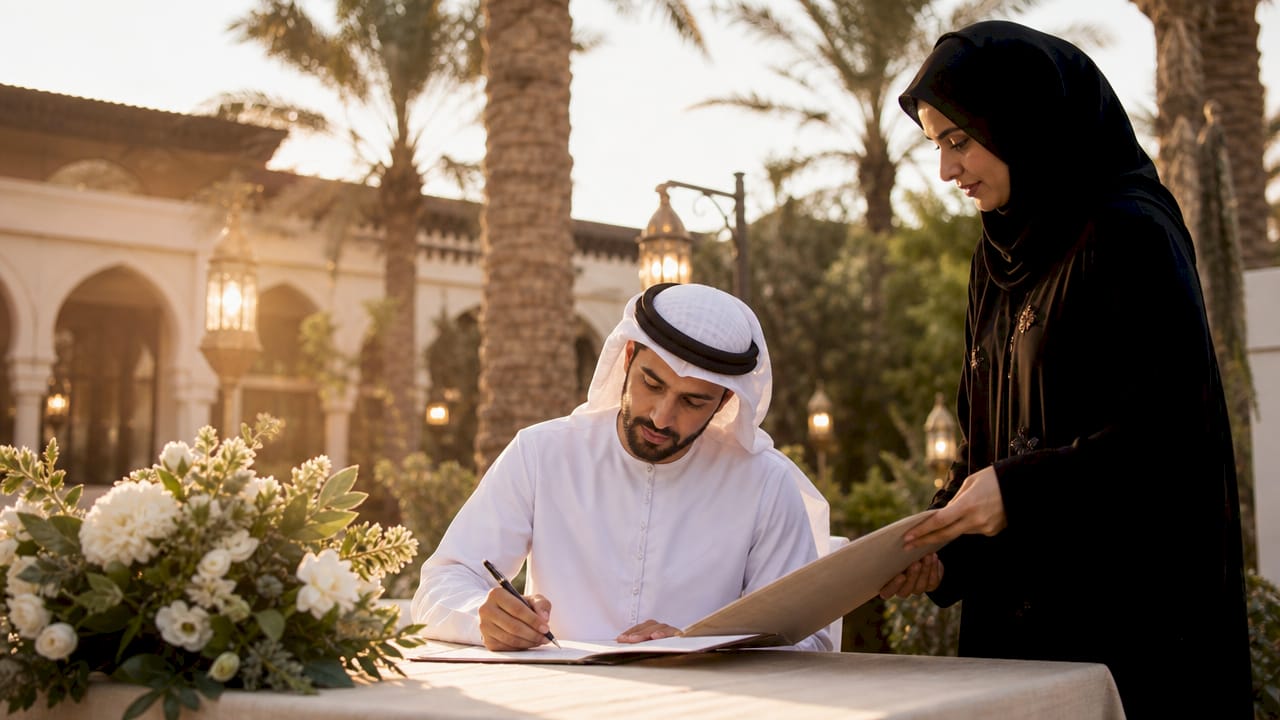
Muslim marriage in Abu Dhabi follows Sharia law, requiring a wali, witnesses, and official registration. Cultural customs like Khitbah and walima enrich the legal process and community bonds. Mosques serve as centers for religious life, education, and cultural programs fostering inclusivity.
Abu Dhabi’s Muslim identity is defined by Sunni Islam, Sharia law, and centuries of Emirati tradition that shape everything from daily greetings to wedding ceremonies. Over 90% of Emiratis are Sunni Muslims, primarily following the Maliki school of Islamic jurisprudence. For any abu dhabi muslim couple planning a marriage, this religious framework is not background context. It is the legal and cultural foundation of the entire process. Sharia governs marriage, divorce, and inheritance for Muslims in the emirate, making it the starting point for every couple’s planning.
What are the legal requirements for Islamic marriage in Abu Dhabi?
Sharia governs personal status matters, including marriage and divorce, for all Muslims in Abu Dhabi. Non-Muslims follow their home country laws. This distinction matters because it means Muslim couples, regardless of nationality, must complete their marriage through the Sharia court system rather than a civil registry.
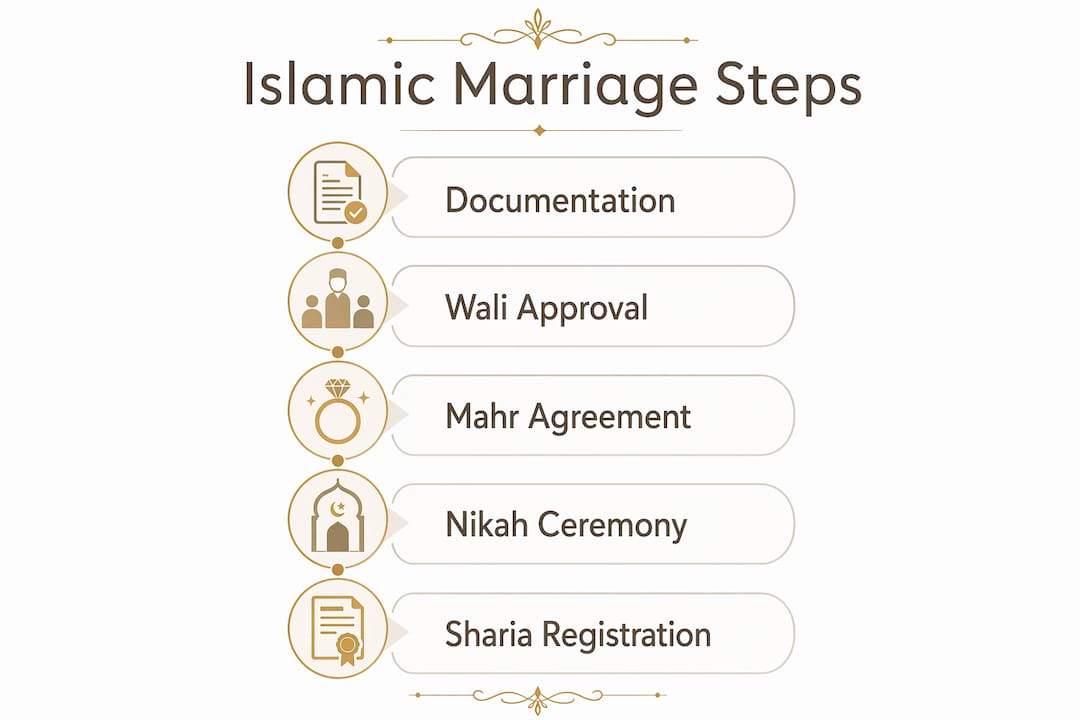
The process follows a clear sequence:
Obtain a marriage eligibility certificate. Both parties must confirm they are legally free to marry. This means providing valid identification, proof of single status, and, for expatriate Muslims, documents attested by their home country embassy.
Appoint a wali. Islamic law requires the bride to have a male guardian, known as a wali, who formally consents to the marriage. For expatriate women whose father or brother is not present in the UAE, the Sharia court can appoint a wali on her behalf.
Arrange two Muslim male witnesses. The Nikah contract requires at least two adult Muslim male witnesses to be present at the signing. Both must be of sound mind and practicing Muslims.
Agree on the mahr. The mahr is a mandatory gift from the groom to the bride, specified in the marriage contract. It can be money, property, or another agreed asset. The amount is negotiated between families and recorded in the contract.
Register with the Abu Dhabi Department of Sharia and Legal Affairs. The signed Nikah contract must be officially registered to be legally recognized. Without registration, the marriage has no standing in UAE law for residency, inheritance, or other civil matters.
Collect the official marriage certificate. Once approved, the court issues a certified marriage certificate. Couples needing this document for visa purposes or Golden visa applications should request certified translations at this stage.
UAE nationals typically complete this process faster because their documents are already within the national system. Expatriate Muslim couples face additional steps, including embassy attestation and sometimes a waiting period for document verification.
Pro Tip: If you are an expatriate Muslim marrying in Abu Dhabi, start the embassy attestation process at least six weeks before your planned Nikah date. Delays in document authentication are the most common reason couples miss their scheduled court appointment.
For a detailed walkthrough of each step, the Islamic marriage registration guide from Harrisandcharms covers the full Abu Dhabi process with current requirements.
What traditional customs shape Muslim weddings in Abu Dhabi?
Islamic law sets the legal minimum for a valid marriage. Emirati culture adds layers of tradition that make the wedding a community event rather than a private ceremony.
The most common pre-wedding customs include:
Khitbah (engagement). The formal engagement involves the groom’s family visiting the bride’s family to request her hand. This gathering includes prayers, the exchange of gifts, and often a shared meal. The Khitbah is a social contract between families, not just individuals.
Henna night. The night before the wedding, female family members and friends gather to apply henna to the bride’s hands and feet. This celebration includes traditional music, singing, and food.
Shabka. This is the jewelry gift from the groom to the bride, separate from the mahr. It typically includes gold pieces and is presented during the engagement period.
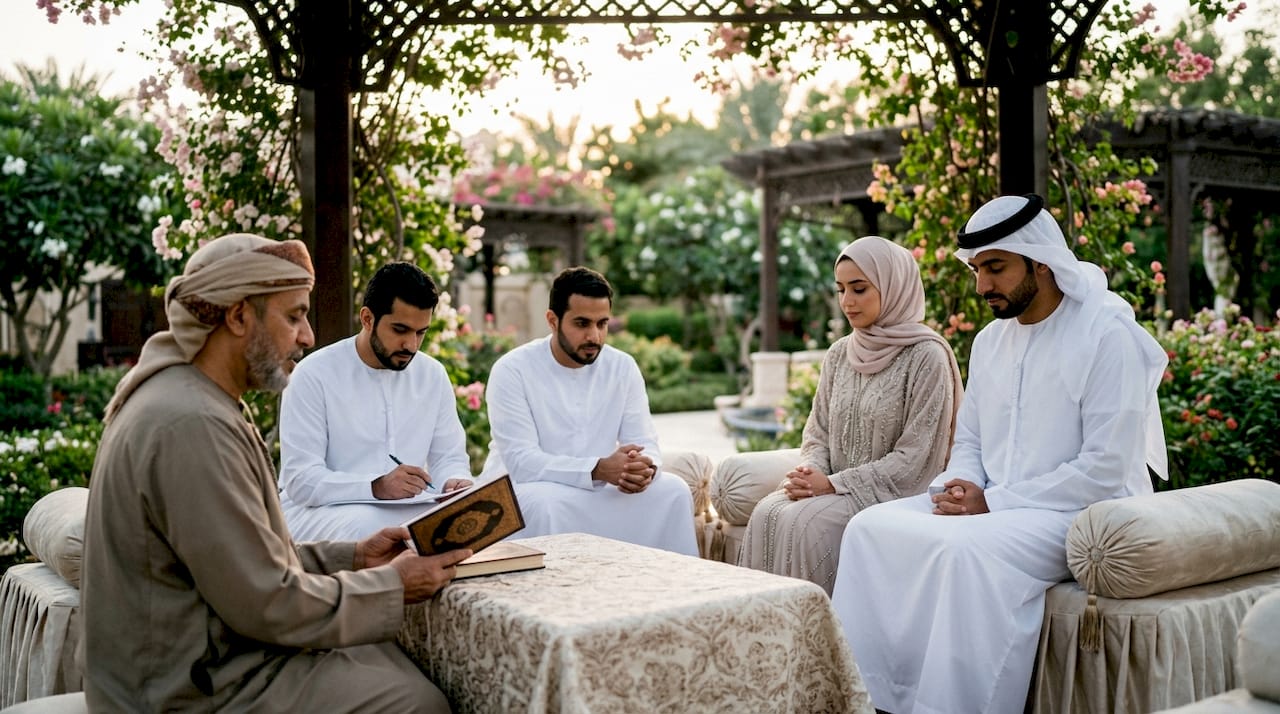
On the wedding day itself, the Nikah ceremony is the religious and legal centerpiece. The groom, his wali, and the witnesses gather with the officiant, who reads from the Quran and formally pronounces the marriage. The bride may be in a separate room, with her wali representing her. After the Nikah, the wedding celebration, known as the walima, follows. The walima is a feast hosted by the groom’s family to announce the marriage publicly. Attending the walima is considered a religious duty for invited guests.
Authentic Islamic culture in Abu Dhabi is most visible in everyday social rituals rather than formal events. The serving of Arabic coffee, known as gahwa, in a majlis setting is one of the most recognizable expressions of Emirati hospitality. At weddings and family gatherings, gahwa is offered to every guest as a sign of welcome and respect.
Pro Tip: Wearing modest, traditional attire to any wedding-related gathering, even if you are a non-Muslim guest, signals respect and is always appreciated by Emirati families. Women should cover their shoulders and knees at minimum.
Which Abu Dhabi mosques are central to Muslim community life?
Abu Dhabi’s mosques function as spiritual, social, and educational centers. They are not only places of prayer. They host community programs, marriage ceremonies, and cultural events that bind the Muslim community together.
Mosque | Key Feature | Community Role |
Sheikh Zayed Grand Mosque | One of the world’s largest mosques | Cultural programs, Eid events, guided tours |
Masdar City Mosque | First net-zero energy mosque, 1,300 worshippers | Sustainable worship, community prayer |
Local neighborhood mosques | Distributed across all districts | Friday prayers, Nikah ceremonies, education |
The Sheikh Zayed Grand Mosque Centre runs cultural programs on Islamic rituals, especially during Eid Al Adha. These programs cover Hajj rituals, the tradition of Eidiyah gift-giving, and the values of unity and fraternity in Islam. They are open to visitors of all backgrounds, making the mosque a genuine point of interfaith connection.
The Sheikh Zayed Grand Mosque Centre also runs the Contributions of Muslim Scholars initiative, which presents Islamic achievements in astronomy, mathematics, and science through exhibitions and educational programs. This moves the mosque’s role well beyond prayer into intellectual and cultural preservation.
Abu Dhabi’s religious tolerance is visible in its urban fabric. Mosques, churches, temples, and gurdwaras coexist across the city. This environment shapes how the Muslim community engages with neighbors of other faiths, creating a social culture that is both grounded in Islamic practice and genuinely open to others.
How does Islamic culture shape daily life for Muslims in Abu Dhabi?
Islamic practice in Abu Dhabi is woven into the rhythm of daily life, not confined to formal occasions. Friday prayers mark the week’s most important communal gathering. During Ramadan, the entire city shifts its schedule around fasting, with businesses adjusting hours and public eating restricted during daylight.
Daily and seasonal practices that define Muslim community life include:
Five daily prayers. Mosques broadcast the call to prayer across the city five times a day. Many workplaces provide prayer rooms, and prayer times are factored into meeting schedules.
Ramadan fasting and iftar. The month of Ramadan brings the community together each evening for iftar, the meal that breaks the fast. The Abu Dhabi Department of Community Development hosts multi-faith Ramadan iftars at major venues, inviting residents of all backgrounds to share the experience. This practice actively builds social cohesion across the emirate’s diverse population.
Halal food standards. All food served in Abu Dhabi’s restaurants and public venues must meet halal standards. This is not a niche accommodation. It is the default. Couples planning wedding catering do not need to seek out specialized halal caterers because the standard applies universally.
Majlis culture. The majlis is a traditional sitting room where families receive guests. It is the social heart of Emirati home life. Gahwa and dates are always served. Conversations in the majlis cover everything from family news to community decisions. For couples planning a wedding, the majlis is where families first meet and where the Khitbah is often hosted.
Islamic education programs. Mosques and community centers run regular classes on Quranic recitation, Islamic jurisprudence, and Arabic language. These programs serve both Emirati families and expatriate Muslims who want to deepen their practice while living in Abu Dhabi.
The combination of legal structure, daily ritual, and community gathering creates a Muslim community life that is both formally organized and personally meaningful.
Key Takeaways
Islamic marriage in Abu Dhabi requires Sharia court registration, a wali, two Muslim witnesses, and a documented mahr, with cultural customs like the Khitbah and walima adding community depth to the legal process.
Point | Details |
Sharia is the legal framework | All Muslim marriages in Abu Dhabi must be registered through the Sharia court system. |
Wali and witnesses are required | A male guardian and two Muslim male witnesses must be present for a valid Nikah contract. |
Expatriates need extra steps | Embassy attestation of documents is required and should begin at least six weeks in advance. |
Cultural customs extend the ceremony | Khitbah, henna night, and walima are community traditions that surround the legal Nikah. |
Mosques serve multiple roles | Major mosques like Sheikh Zayed Grand Mosque host cultural programs, education, and community events beyond prayer. |
What I’ve learned from watching couples navigate Islamic marriage in Abu Dhabi
Most couples I work with arrive knowing the broad strokes: Sharia court, Nikah, marriage certificate. What surprises them is how much the cultural layer matters, not just to their families, but to the legal process itself. The wali requirement, for example, is not a formality. Courts take it seriously, and expatriate women who have not arranged a wali in advance can face real delays.
The other thing I’ve noticed is that the couples who have the smoothest experience are the ones who treat the cultural customs as part of the process, not as optional extras. When the groom’s family visits for the Khitbah with genuine respect for the tradition, it sets a tone that carries through every subsequent step. Families who feel honored are families who cooperate. That cooperation makes the legal paperwork move faster too.
Abu Dhabi’s Muslim community is also more welcoming to newcomers than many people expect. The multi-faith iftars and open mosque programs are genuine invitations, not tourist attractions. If you are new to the emirate and want to understand Islamic culture from the inside, attending a community iftar or a guided program at Sheikh Zayed Grand Mosque will teach you more in an afternoon than weeks of reading.
My honest advice to any couple planning an Islamic marriage in Abu Dhabi: get your documents in order early, respect the cultural customs fully, and do not underestimate how much a knowledgeable guide can save you in time and stress.
— Harris
Harrisandcharms: expert support for Islamic marriage in Abu Dhabi
Planning an Islamic marriage in Abu Dhabi involves Sharia court procedures, document attestation, wali arrangements, and cultural coordination, all at the same time. Harrisandcharms handles each of these steps for Muslim couples, from the first document checklist to the final registered certificate.

The team at Harrisandcharms has direct experience with both UAE national and expatriate Muslim marriage procedures. Whether you need support with full Islamic marriage services or guidance on a specific step in the process, the team works with your timeline and your family’s expectations. For couples holding a Golden visa or planning to use the marriage certificate for residency purposes, Harrisandcharms coordinates the additional attestation steps that standard services often overlook. Reach out to start your planning with a team that knows Abu Dhabi’s system from the inside.
FAQ
What is required for a valid Islamic marriage in Abu Dhabi?
A valid Islamic marriage in Abu Dhabi requires a wali, two Muslim male witnesses, an agreed mahr, and registration of the Nikah contract with the Abu Dhabi Department of Sharia and Legal Affairs. Without court registration, the marriage has no legal standing in the UAE.
Can expatriate Muslims marry under Sharia law in Abu Dhabi?
Yes. Expatriate Muslims follow the same Sharia court process as UAE nationals, but must provide embassy-attested documents proving single status and identity. The court can also appoint a wali for expatriate women whose guardian is not present in the UAE.
What is the mahr in an Islamic marriage contract?
The mahr is a mandatory gift from the groom to the bride, specified and recorded in the Nikah contract. It can be money, gold, property, or another agreed asset, and it becomes the bride’s sole property upon marriage.
What role does the Sheikh Zayed Grand Mosque play in Abu Dhabi’s Muslim community?
The Sheikh Zayed Grand Mosque serves as a spiritual, cultural, and educational center. Its programs cover Islamic rituals, scholarly heritage, and Eid traditions, and are open to visitors of all backgrounds as part of Abu Dhabi’s commitment to interfaith understanding.
Are halal food and Islamic customs easy to observe in Abu Dhabi?
Halal food is the standard across all restaurants and public venues in Abu Dhabi, not a special request. Daily prayer times, Ramadan observances, and majlis hospitality customs are embedded in city life, making it straightforward for Muslims to maintain their practice fully.
Recommended
Comments