
Marriage of Muslims in the UAE: Requirements and Traditions

TL;DR:
The Islamic marriage, or Nikah, involves mutual consent, a wali for the bride, and a dowry known as mahr. In the UAE, couples must also complete civil registration to ensure legal recognition and protect their rights. Proper planning of both religious and civil procedures is essential for a valid and recognized marriage.
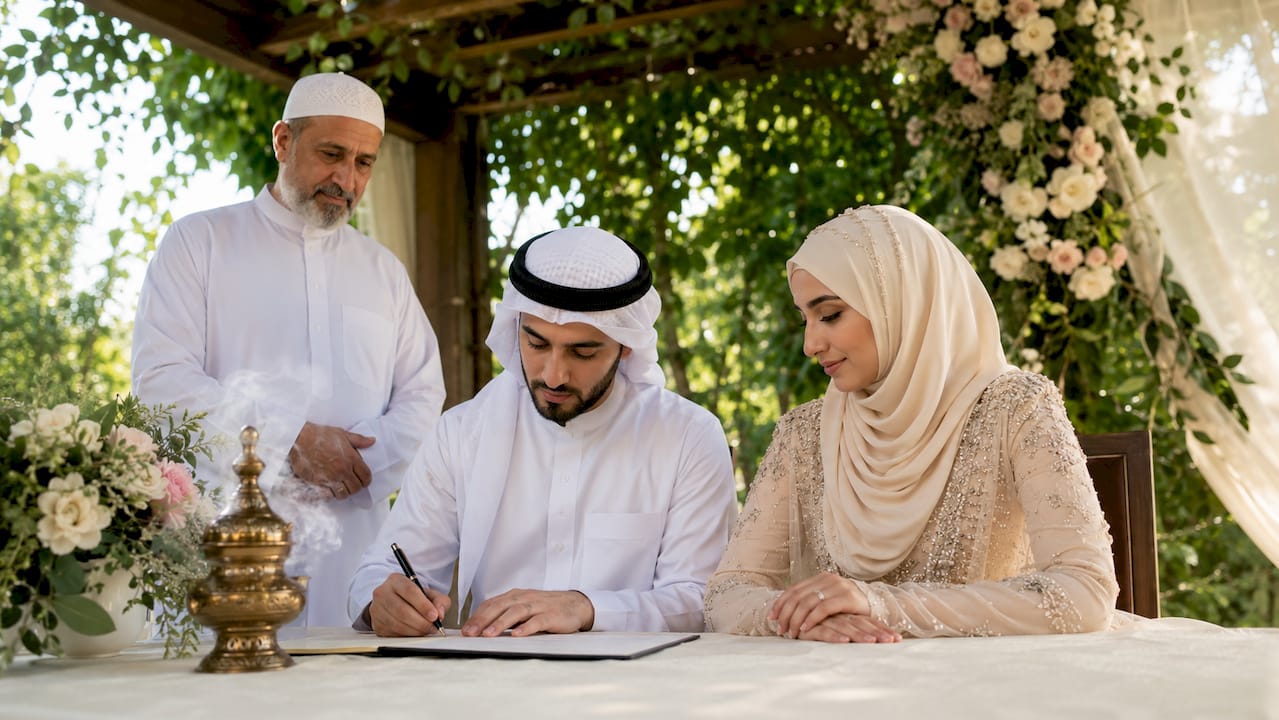
The marriage of Muslims is defined by the Nikah, a formal Islamic legal contract that establishes mutual rights, responsibilities, and a lifelong spiritual covenant between two individuals. The Nikah requires mutual consent, a specified dowry known as mahr, a guardian called a wali for the bride in most Sunni schools, and at least two adult Muslim witnesses to validate the union. In the UAE, this religious contract must also be paired with civil registration to carry full legal weight. Whether you are a local Emirati or an expat planning your wedding in Dubai or Abu Dhabi, understanding both the religious and legal dimensions of Islamic marriage is non-negotiable.
What are the essential religious requirements for Muslim marriage?
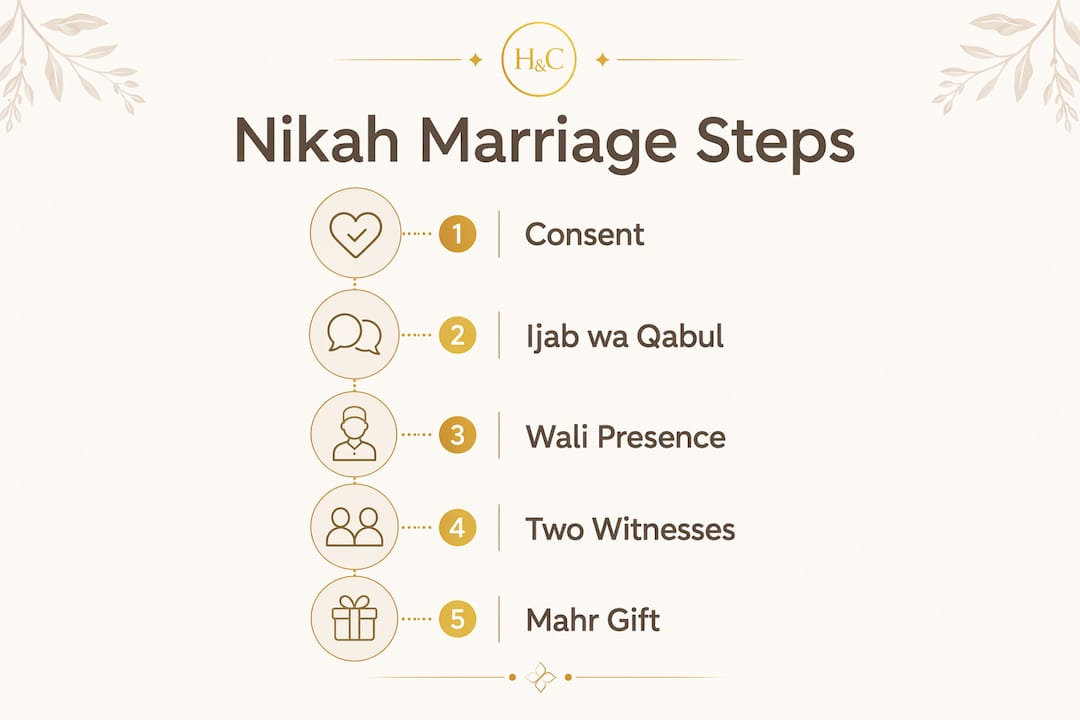
A valid Islamic marriage requires five core pillars: offer and acceptance (Ijab wa Qabul), two adult Muslim witnesses, a wali for the bride in most Sunni schools, a specified mahr, and mutual consent of both parties. Each pillar carries equal weight. Missing even one can render the Nikah invalid under Islamic jurisprudence.
Ijab wa Qabul: the verbal contract
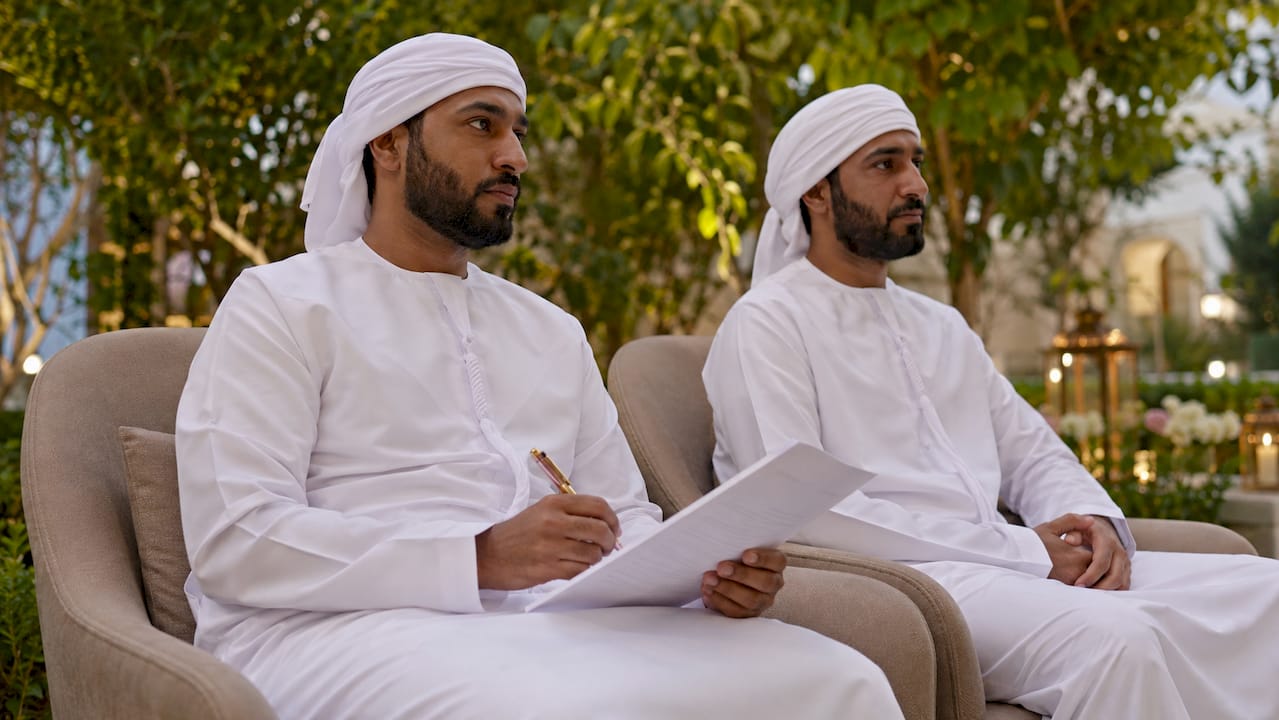
The Ijab wa Qabul is the spoken offer and acceptance that forms the legal core of the Nikah. Both parties must clearly state their agreement in the presence of witnesses. The Nikah ceremony typically lasts 10–15 minutes, focused entirely on this verbal contract. That brevity surprises many couples, but it reflects the precision Islam places on the spoken word as a binding commitment.
The wali’s role in protecting the bride
The wali is the bride’s guardian, most commonly her father or a close male relative. His presence is required in the Maliki, Shafi’i, and Hanbali schools. The Hanafi school permits a woman to contract her own marriage under certain conditions. The wali’s role is a protective mechanism for the bride’s interests, not a restriction on her agency. This distinction matters enormously for couples who misread the requirement as a form of control.
Mahr: the bride’s financial right
Mahr is a mandatory gift from the groom to the bride, agreed upon before the Nikah. It can be monetary, property, or other valuables. It may be paid immediately, deferred, or split between both. Mahr is not a bride price paid to the family. It belongs exclusively to the bride and protects her financial independence within the marriage.
The Ja’fari school, followed by Shia Muslims, shares most of these pillars but has distinct procedural differences, particularly around the wali’s necessity and the exact phrasing of the verbal contract. Couples should confirm which school of thought their officiating imam follows before the ceremony.
Pro Tip: Confirm your imam’s school of thought at least four weeks before your ceremony. Procedural mismatches between the imam’s practice and your family’s tradition are one of the most common sources of last-minute complications.
How do Muslim wedding customs and cultural traditions integrate with the Nikah?
Marriage in Islam is not merely a social contract. It is a religious covenant built on three Quranic principles: sakinah (tranquility), mawadda (love), and rahma (mercy). Cultural traditions across Muslim communities worldwide build on this spiritual foundation, but they vary significantly by region and ethnicity.
Common Islamic wedding customs include:
Nikah ceremony: The religious contract, conducted by a qualified imam, forms the legal and spiritual core of the wedding.
Mahr delivery: The groom presents the agreed mahr to the bride, either at the ceremony or as deferred payment. This act is both a legal obligation and a public declaration of commitment.
Walima reception: The Walima is a Sunnah practice, a wedding banquet held after the Nikah to publicly announce and celebrate the marriage. It varies widely by culture but is recognized across all major Islamic traditions.
Henna night (Mehndi): Common in South Asian, Arab, and North African Muslim communities, this pre-wedding celebration is cultural rather than religious in origin.
Arranged marriage in Islam: Arranged marriages remain common across many Muslim communities. Islamic law requires the bride’s full consent regardless of how the match was made. An arranged marriage without the bride’s genuine agreement is not valid under Islamic jurisprudence.
A common misconception is that elaborate cultural ceremonies are religious requirements. They are not. The Nikah itself is the only religiously binding event. Everything else, from the Mehndi to the multi-day reception, is cultural expression layered on top of the religious contract.
What legal requirements govern Muslim marriage registration in the UAE?
In the UAE, Muslim marriages require both a valid religious Nikah and civil registration to achieve full legal recognition. The religious ceremony alone does not automatically protect spousal rights under UAE civil law. This dual system is one of the most important things couples in the UAE need to understand before their wedding day.
The civil registration process involves several key steps:
Gather required documents: Both parties need valid passports, Emirates ID cards (for residents), proof of single status, and a no-objection letter if applicable.
Verify documents with authorized officials: Documents are submitted to the relevant UAE authority, typically the Islamic Affairs and Charitable Activities Department (IACAD) in Dubai or the equivalent authority in other emirates.
Appoint a qualified imam: The officiating imam must be licensed and recognized by UAE authorities. Unlicensed officiants can create legal complications.
Conduct the Nikah ceremony: The imam oversees the verbal contract, witnesses are present, and the mahr is confirmed.
Complete civil registration: After the Nikah, the marriage is formally registered with the relevant civil authority to receive a legal marriage certificate.
The full process, from document preparation to receiving the certificate, can take several weeks. Couples who underestimate this timeline often face delays that push back their wedding date.
Step | Action Required | Typical Timeline |
Document preparation | Gather passports, IDs, proof of single status | 1–2 weeks |
Authority verification | Submit documents to IACAD or equivalent | 3–7 business days |
Imam appointment | Confirm licensed officiant | 1–3 weeks |
Nikah ceremony | Conduct religious contract | 1 day |
Civil registration | Register marriage and receive certificate | 1–2 weeks |
Failing to register an Islamic marriage in the UAE creates serious legal complications in inheritance, child custody, and spousal rights. Civil registration is not a bureaucratic formality. It is the mechanism that gives your marriage legal standing in UAE courts.
Pro Tip: Expats should use the 7-step registration checklist to track every document and deadline. Missing a single attestation can delay the entire process by weeks.
Which common questions do Muslim couples have about marriage validity?
Muslim couples researching their wedding often encounter questions that go beyond the standard checklist. Here are the most frequently raised concerns, answered directly.
Can a Muslim man marry a non-Muslim woman? A Muslim man may marry a woman from the People of the Book (Christian or Jewish) under certain scholarly conditions. A Muslim woman cannot marry a non-Muslim man. Scholarly consensus classifies such a marriage as void. Interfaith marriage in Islam is a topic couples should discuss with a qualified scholar before proceeding.
Is a remote or online Nikah valid? The International Islamic Fiqh Academy ruled remote Nikah invalid, though some contemporary scholars accept it under specific conditions. In the UAE, civil registration requires physical presence, so a remote Nikah creates immediate legal complications regardless of its religious validity.
What happens if the wali refuses? In schools where the wali is required, a refusal without valid reason can be referred to a judge (qadi) who may act as the bride’s wali. This is a recognized mechanism in Islamic jurisprudence, not a loophole.
Does a missing element invalidate the marriage? Yes. A Nikah missing a required pillar, such as witnesses or mahr, is considered void or voidable depending on the school of thought. Couples should consult a qualified Islamic scholar if they have doubts about their ceremony’s validity.
How does divorce work in Islamic law? The husband may pronounce talaq (divorce), but Islamic law also grants the wife the right to seek khul (divorce by mutual agreement with return of mahr) or faskh (judicial dissolution). UAE family courts handle divorce proceedings under Islamic personal status law for Muslim couples.
Key Takeaways
A valid marriage of Muslims in the UAE requires both a religiously complete Nikah and formal civil registration to protect all legal rights under UAE law.
Point | Details |
Five pillars of Nikah | Consent, mahr, wali, two witnesses, and Ijab wa Qabul are all required for a valid Islamic marriage. |
Mahr is the bride’s right | Mahr belongs exclusively to the bride and can be paid immediately, deferred, or split. |
UAE dual registration | Religious Nikah alone does not provide legal protection; civil registration with IACAD is mandatory. |
Unregistered marriages carry risk | Skipping civil registration creates legal gaps in inheritance, custody, and spousal rights under UAE law. |
Plan 2–4 weeks ahead | Coordinating a licensed imam and completing document verification takes longer than most couples expect. |
What I’ve learned from helping couples navigate the Nikah in the UAE
Most couples come to us focused on the celebration. The venue, the dress, the photography. That is completely natural. But the couples who have the smoothest experience are the ones who treat the legal and religious requirements with the same seriousness they give to the guest list.
The single biggest mistake I see is underestimating how long it takes to find a licensed imam who matches the couple’s school of thought and is available on their chosen date. Nikah logistics often take 2–4 weeks to coordinate. That window catches people off guard, especially expats who are managing everything from abroad.
I also want to address something that rarely gets said directly: the wali requirement creates tension in some families, particularly in multicultural UAE communities where the bride may not have a male relative nearby. This is not an obstacle. Islamic jurisprudence has clear, established solutions for this situation. A qadi can fulfill the wali role. Knowing this removes a lot of unnecessary anxiety.
The Nikah itself is a profound moment. Ten to fifteen minutes of spoken words that carry the weight of a lifetime. The spiritual dimensions of sakinah, mawadda, and rahma are not abstract concepts. They are the actual architecture of a Muslim marriage. When couples understand that, they stop treating the ceremony as a formality to get through before the party starts.
My honest advice: get the paperwork moving early, confirm your imam’s credentials, and then give the ceremony the attention it deserves.
— Harris
How Harrisandcharms supports Muslim couples in the UAE
Planning an Islamic wedding in the UAE involves more moving parts than most couples realize. Harrisandcharms handles both the religious and civil sides of the process, so nothing falls through the gaps.

From complete Islamic and civil marriage packages to document attestation, licensed imam coordination, and venue management, Harrisandcharms covers every step. The team works with expats and UAE nationals alike, managing timelines, authority submissions, and ceremony logistics under one roof. Whether you are planning a yacht wedding on Dubai Creek, a private ceremony, or a full reception, Harrisandcharms brings the same attention to detail to every couple. Reach out today to start your consultation and get a clear plan in place before your wedding date.
FAQ
What is the Nikah in Islamic marriage?
The Nikah is the formal Islamic marriage contract that legally and spiritually unites a couple. It requires mutual consent, mahr, a wali for the bride in most schools, and two adult Muslim witnesses.
How long does Muslim marriage registration take in the UAE?
The full process, from document preparation to receiving a civil marriage certificate, typically takes several weeks. Couples should begin at least four to six weeks before their intended wedding date.
Can a Muslim woman marry a non-Muslim man?
No. Scholarly consensus classifies a marriage between a Muslim woman and a non-Muslim man as void under Islamic law. A Muslim man may marry a Christian or Jewish woman under specific scholarly conditions.
Is arranged marriage valid in Islam?
Arranged marriage is valid in Islam provided the bride gives her genuine, free consent. A marriage conducted without the bride’s real agreement is not valid under Islamic jurisprudence regardless of family arrangements.
What happens if a Muslim marriage is not registered in the UAE?
An unregistered Islamic marriage in the UAE creates legal complications in inheritance, child custody, and spousal rights. Civil registration with the relevant UAE authority is required for full legal recognition.
Recommended
Comments