
Muslim Religion and Marriage: What Every Couple Must Know

TL;DR:
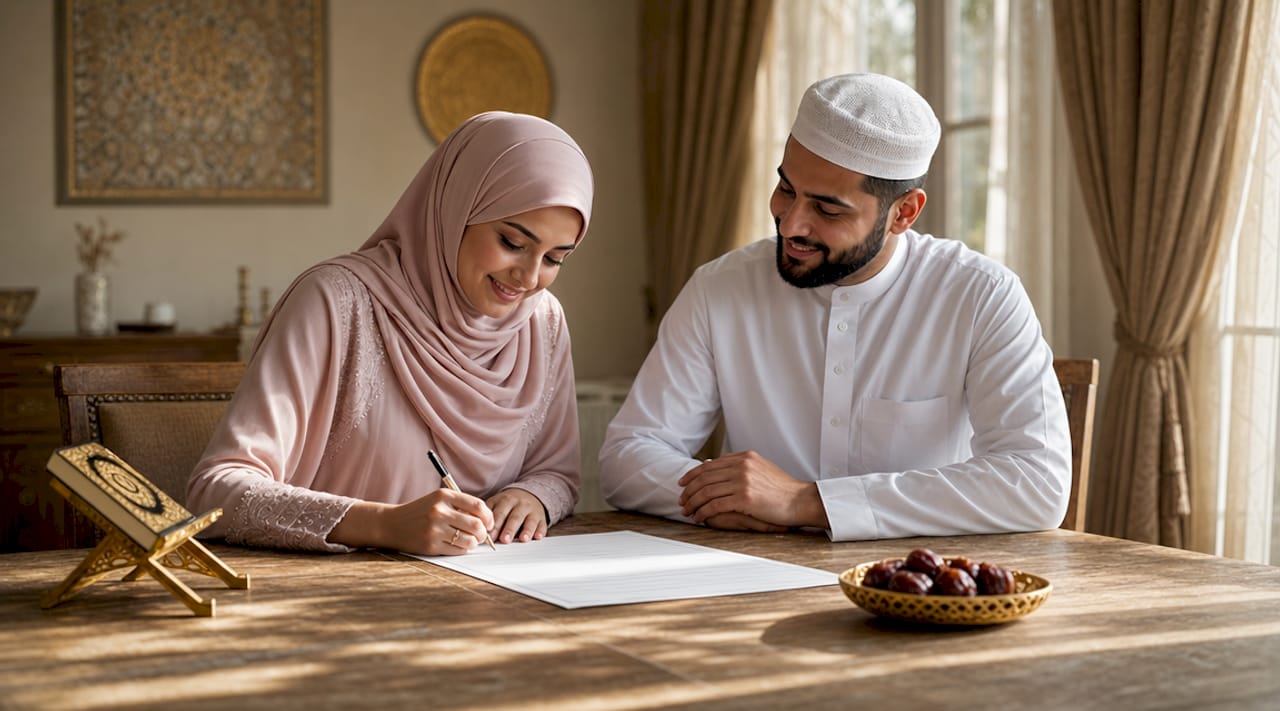
A valid Islamic marriage is rooted in the contract of nikah, which requires clear offer, acceptance, and specified mahr.
It involves necessary witnesses or wali depending on the Islamic school, and can be valid without an imam’s presence.
Civil registration is essential for legal protections, and couples should align religious and civil requirements before marriage.
Muslim religion and marriage are united through the nikah, a sacred contract that establishes a lawful marital bond under Islamic law, blending religious duty with legal obligation. The Quran frames this union around three divine purposes: sakinah, mawadda, and rahma — tranquility, love, and mercy between spouses. Marriage in Islam is not simply a social event. It is a religious covenant with specific legal requirements, spiritual goals, and cultural expressions that vary widely across communities and schools of Islamic jurisprudence. Understanding what actually makes a marriage valid under Islamic law, and how that intersects with civil legal systems, is the foundation every couple needs before planning anything else.
What are the essential components of a valid Islamic marriage?
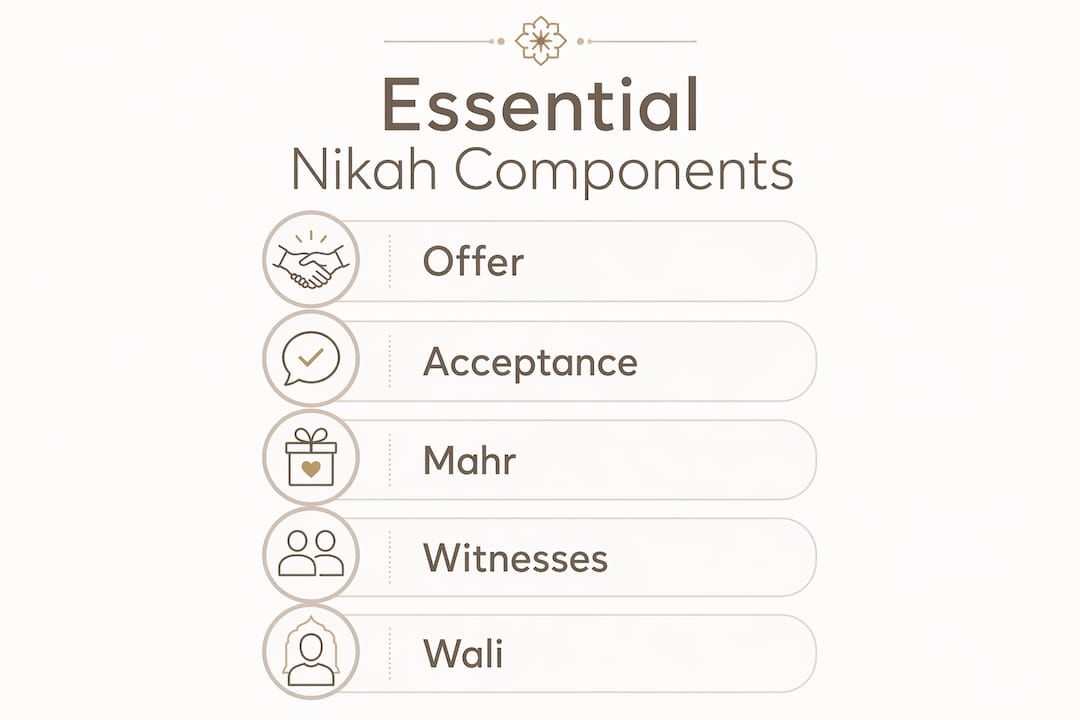
A valid Islamic marriage rests on contract law, not ceremony. The nikah requires offer and acceptance — known as ijab and qabul — spoken clearly between the parties in a single session, with both individuals of sound mind and free consent. Without these elements, no marriage exists under Islamic law regardless of how elaborate the celebration.
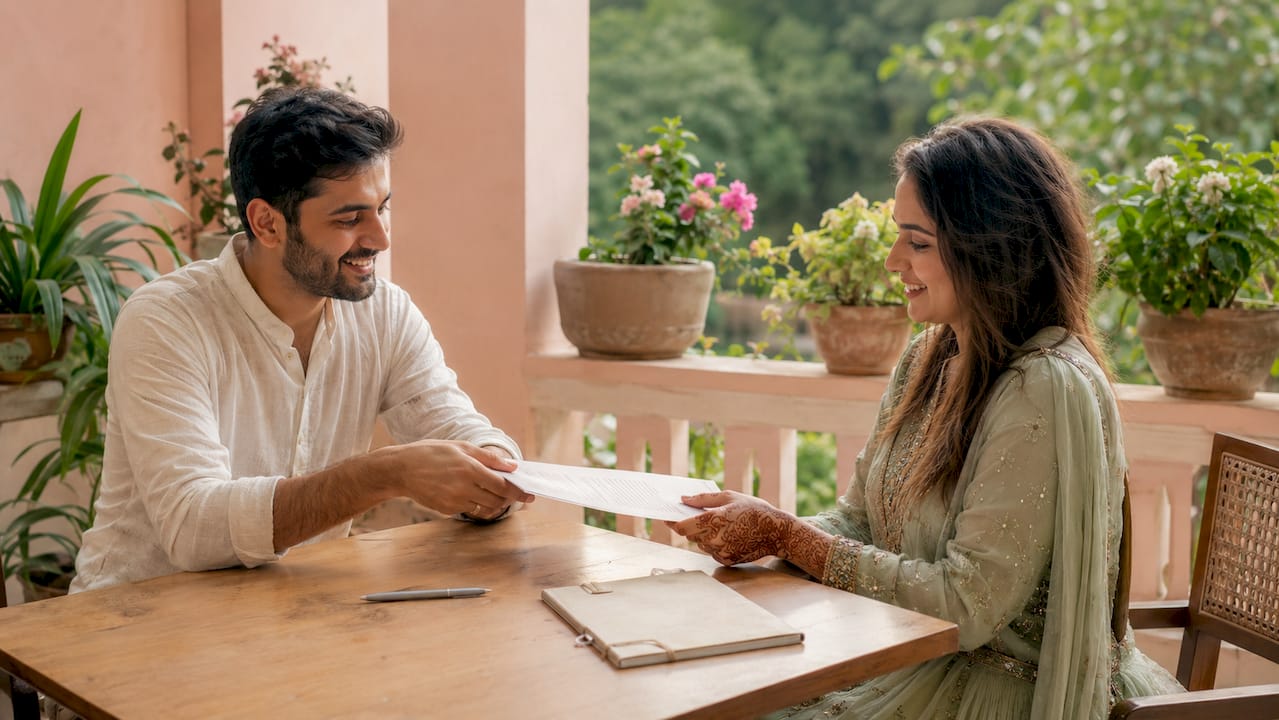
The mahr (dowry) is the second non-negotiable pillar. Marriage without mahr is invalid across all classical Sunni schools of fiqh. The mahr is the bride’s exclusive right, a financial gift from the groom that signals respect and commitment. It must be specified during the contract, not left vague or promised informally.
The role of the wali (marriage guardian) and witnesses adds another layer of requirement that many couples overlook:
Maliki, Shafi’i, and Hanbali schools require a wali and two male Muslim witnesses for the contract to be valid.
Hanafi school requires witnesses but does not mandate a wali for an adult woman of sound mind, allowing her to contract the marriage herself.
Ja’fari (Shia) school generally recommends but does not legally require a wali or witnesses for adult women.
Prohibited relationships (such as marriage to close blood relatives) are universally excluded across all schools.
Consent is non-negotiable. A marriage contracted under coercion is void.
One fact surprises many people: the nikah does not require an imam or a mosque. The contract is valid wherever its conditions are met. An imam’s presence is customary and spiritually meaningful, but it is not a religious requirement. For a deeper breakdown of each step, the Islamic marriage contract process guide from Harrisandcharms walks through every element in sequence.
Pro Tip: Write the mahr amount, form (cash, gold, property), and payment timeline into the contract explicitly. Vague mahr agreements are one of the most common sources of post-marriage disputes.
How do Muslim wedding traditions differ from the nikah itself?
The nikah contract and the wedding celebration are two separate things. Many couples conflate them, assuming that a grand ceremony is what makes the marriage real. It is not. The nikah can be completed within minutes, consisting of a brief khutbah (sermon), the exchange of ijab and qabul, mahr confirmation, and a closing du’a. The legal and religious marriage is complete at that point.
What follows is cultural, not contractual. Muslim wedding traditions across the world reflect enormous regional diversity:
Walima — The wedding feast is a recommended Sunnah, ideally held within seven days of the marriage. The walima publicly announces the union to the community and is considered an act of worship when done sincerely. It is separate from contract validity but carries strong religious encouragement.
Mehndi (henna) ceremonies — Common in South Asian, North African, and Middle Eastern communities, these pre-wedding gatherings celebrate the bride and are entirely cultural in origin.
Zaffa — A traditional Arab wedding procession featuring drums and music, practiced widely in Egypt, Jordan, and the Gulf states.
Nikkah receptions — In many Western Muslim communities, the nikah itself is incorporated into a larger reception event, combining the contract signing with dinner and family gatherings.
The key distinction is that none of these traditions affect the validity of the marriage contract. A nikah conducted quietly in a living room with two witnesses and a specified mahr is just as legally binding under Islamic law as one held in a grand hall with hundreds of guests.
Pro Tip: If you are planning a walima, prioritize inviting those who genuinely need the meal and community connection. The Prophet Muhammad emphasized simplicity and sincerity over extravagance in the wedding feast.
How do fiqh schools and civil jurisdictions affect marriage validity?
The differences between Islamic schools of jurisprudence (madhhabs) are not minor technicalities. They directly determine whether your marriage is considered valid within your community and, in some cases, by civil law.
School | Wali required? | Witnesses required? | Notes |
Maliki | Yes | Two male Muslims | Wali is a pillar; contract invalid without it |
Shafi’i | Yes | Two male Muslims | Wali must be present and consenting |
Hanbali | Yes | Two male Muslims | Consistent with Maliki and Shafi’i positions |
Hanafi | No (for adult women) | Two witnesses | Adult woman may contract her own marriage |
Ja’fari (Shia) | Recommended | Recommended | Neither strictly required for adult women |
This table matters practically. A Hanafi woman marrying a Shafi’i man in a community that follows Shafi’i practice may find her marriage questioned if no wali was present. Cross-community couples should verify wali and witness requirements with a knowledgeable scholar before the contract is signed.
Civil legal recognition adds a second layer of complexity. In Australia, for example, an imam-led nikah is valid under Islamic law but carries no civil legal status unless the imam is also a registered civil marriage celebrant. This means the couple may be married in the eyes of their faith community but have no legal protections regarding inheritance, property, or medical decision-making under national law. The UAE operates differently, with Islamic marriage registration integrated into the civil system through the courts. Couples planning marriage in the UAE should review the Islamic marriage requirements for UAE to understand exactly what both systems demand.
The practical solution in most jurisdictions is to conduct both the nikah and a civil registration, either simultaneously or in sequence. This approach satisfies religious requirements and secures the legal protections that civil marriage provides.
How should couples approach mahr and Muslim spouse selection?
Mahr is not a bride price and it is not a negotiation tool. It is the bride’s right, established by Allah, and its form and amount are agreed between the couple. The mahr must be explicitly declared during the contract to avoid ambiguity. It can be paid immediately (mahr mu’ajjal) or deferred (mahr mu’akhkhar), but both the amount and timing must be stated clearly.
On spouse selection, Islamic teaching is direct. The Prophet Muhammad prioritized faith and character in choosing a spouse, placing religious commitment above wealth, lineage, or social status. The concept of kufu’ (compatibility) in classical fiqh addresses whether two people are well-matched in deen, character, and circumstance. This is not about social class. It is about shared values and the capacity to build a household grounded in Islamic ethics.
The spiritual goals of marriage reinforce this approach:
Sakinah (tranquility): The home should be a place of rest and peace, not constant conflict.
Mawadda (love and affection): Active, chosen love that grows through daily acts of care.
Rahma (mercy): Compassion that sustains the relationship through difficulty.
Marriage is considered half the deen because the household is the primary environment for practicing Islamic virtues like patience, justice, and generosity. Choosing a spouse based on superficial criteria undermines the entire spiritual architecture of the institution.
What practical steps should Muslim religion and marriage follow for registration today?
Completing a valid nikah and securing civil recognition requires deliberate sequencing. Here is the process most couples should follow:
Confirm your madhhab requirements. Identify which school of fiqh applies to your community and confirm whether a wali and specific witnesses are required.
Agree on the mahr. Decide the amount, form, and payment schedule before the contract session. Document it in writing.
Arrange the wali and witnesses. If required by your school, confirm their availability and eligibility (Muslim, adult, sound mind) in advance.
Conduct the nikah. The ijab and qabul are exchanged, mahr is confirmed, and the contract is witnessed. An imam may lead the session but is not required.
Register with civil authorities. Submit the required documentation to the relevant government body. In the UAE, this involves the courts and specific documentation. The step-by-step registration guide from Harrisandcharms covers the UAE process in detail.
Obtain certified copies. Secure certified copies of both the nikah certificate and civil marriage certificate for future legal use.
Pro Tip: Expatriate couples in the UAE face additional documentation requirements including passport copies, residency visas, and sometimes home-country attestations. Start the paperwork at least four to six weeks before your intended date.
For expats specifically, the Islamic marriage registration checklist from Harrisandcharms is one of the most practical resources available for navigating both religious and civil requirements in one place.
Key takeaways
A valid Islamic marriage requires the nikah contract with mahr, offer and acceptance, and witnesses or wali as required by the relevant madhhab, combined with civil registration to secure full legal recognition.
Point | Details |
Nikah is the legal core | The contract, not the ceremony, determines Islamic marriage validity. |
Mahr is non-negotiable | Specify the amount, form, and timing in writing during the contract session. |
Madhhab differences matter | Wali and witness requirements vary by school; confirm before the contract date. |
Civil registration is separate | Religious nikah alone may not grant legal protections under civil law. |
Spouse selection follows faith | The Prophet Muhammad prioritized deen and character over wealth or lineage. |
Why I think most couples underestimate the nikah contract
Most couples I work with arrive focused on the celebration and treat the contract as a formality. That instinct gets the priorities exactly backward. The nikah is the marriage. Everything else is commentary.
What strikes me most is how the fiqh diversity within Islam actually protects couples, when they understand it. A Hanafi woman has rights under her school that a Shafi’i framework would not automatically grant. Knowing which school governs your community is not a bureaucratic detail. It is the difference between a marriage that is recognized and one that is disputed.
The spiritual framework of sakinah, mawadda, and rahma is not poetic language. It is a functional description of what a successful marriage produces. Couples who enter the nikah understanding these purposes tend to approach conflict differently. They treat difficulty as part of the design, not a sign that something has gone wrong.
The civil registration piece is where I see the most avoidable problems. Couples who rely solely on an imam-led nikah without civil registration can find themselves legally unprotected in ways that matter enormously: inheritance, medical decisions, property rights. In the UAE, the system is designed to integrate both, which is one reason I believe it offers one of the cleaner frameworks for Muslim couples globally.
Marriage in Islam is described as half the deen for a reason. It is the institution through which most people practice their faith in daily life. Getting the foundation right is not optional.
— Harris
Plan your Islamic marriage in the UAE with Harrisandcharms

Harrisandcharms offers integrated Islamic and civil marriage packages designed specifically for couples in the UAE, including expatriates navigating dual religious and legal requirements. From nikah contract guidance and wali coordination to civil court documentation and ceremony facilitation, the team handles every step from a single point of contact. Whether you are planning a simple registration or a full wedding celebration, Harrisandcharms brings firsthand knowledge of both Islamic marriage guidelines and UAE legal requirements to every couple they serve. Explore the full range of marriage services in the UAE and reach out to start your consultation today.
FAQ
What is the difference between nikah and a Muslim wedding?
The nikah is the Islamic marriage contract and the legally binding religious act. A Muslim wedding refers to the surrounding celebrations, including the walima feast and cultural ceremonies, which are separate from and do not affect the contract’s validity.
Is a wali required for all Muslim women to marry?
No. The Hanafi school does not require a wali for an adult woman of sound mind, while Maliki, Shafi’i, and Hanbali schools consider the wali a required pillar of the contract. The requirement depends on which madhhab governs the couple’s community.
Does an imam have to perform the nikah?
An imam’s presence is customary but not religiously required. The nikah is valid wherever the contract conditions are met. However, civil law in some countries requires a registered celebrant, which may mean an imam must hold civil registration credentials for the marriage to have legal standing.
What happens if mahr is not specified in the nikah?
A contract with an absent or unclear mahr creates legal ambiguity and may be considered deficient under classical fiqh. The mahr must be agreed and stated during the contract session to protect the bride’s rights and avoid future disputes.
Can a Muslim marry a non-Muslim?
Under classical Islamic law, a Muslim man may marry a Jewish or Christian woman (People of the Book). A Muslim woman marrying a non-Muslim man is not permitted under traditional fiqh. Interfaith marriage in Islam carries additional legal and religious considerations that couples should discuss with a qualified scholar before proceeding.
Recommended
Comments