
Nikah Requirements in the UAE: What Couples Must Know

TL;DR:
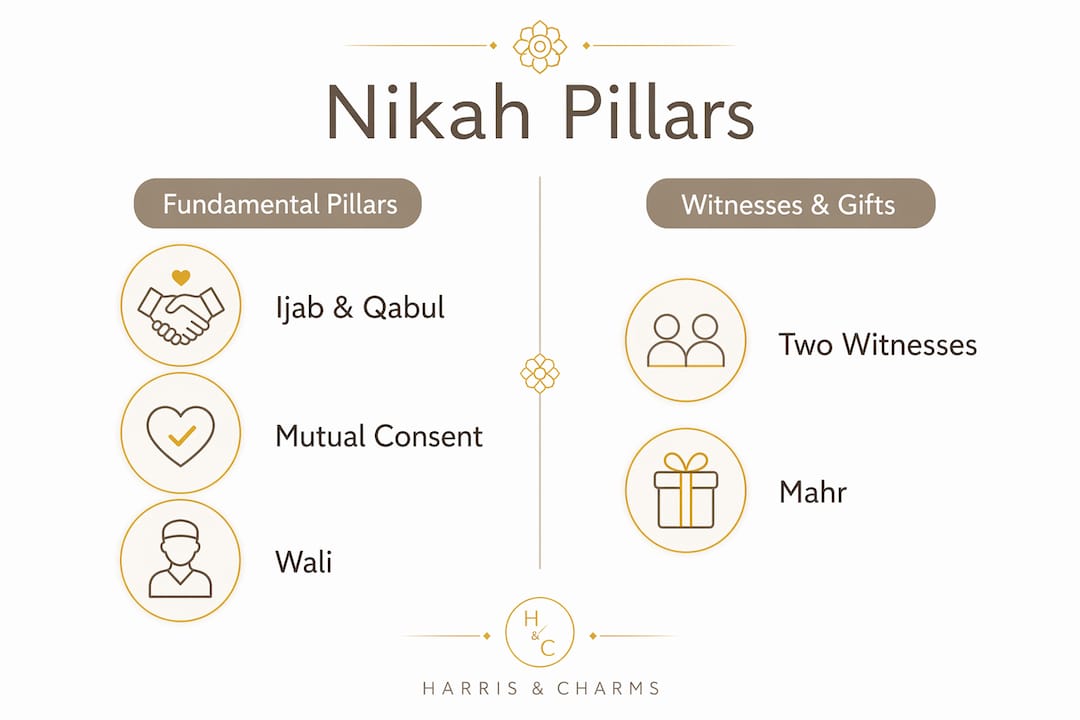
Nikah requirements include mutual consent, a wali, two witnesses, and a specified mahr.
Completing both religious and civil registration is necessary for full legal recognition in the UAE.
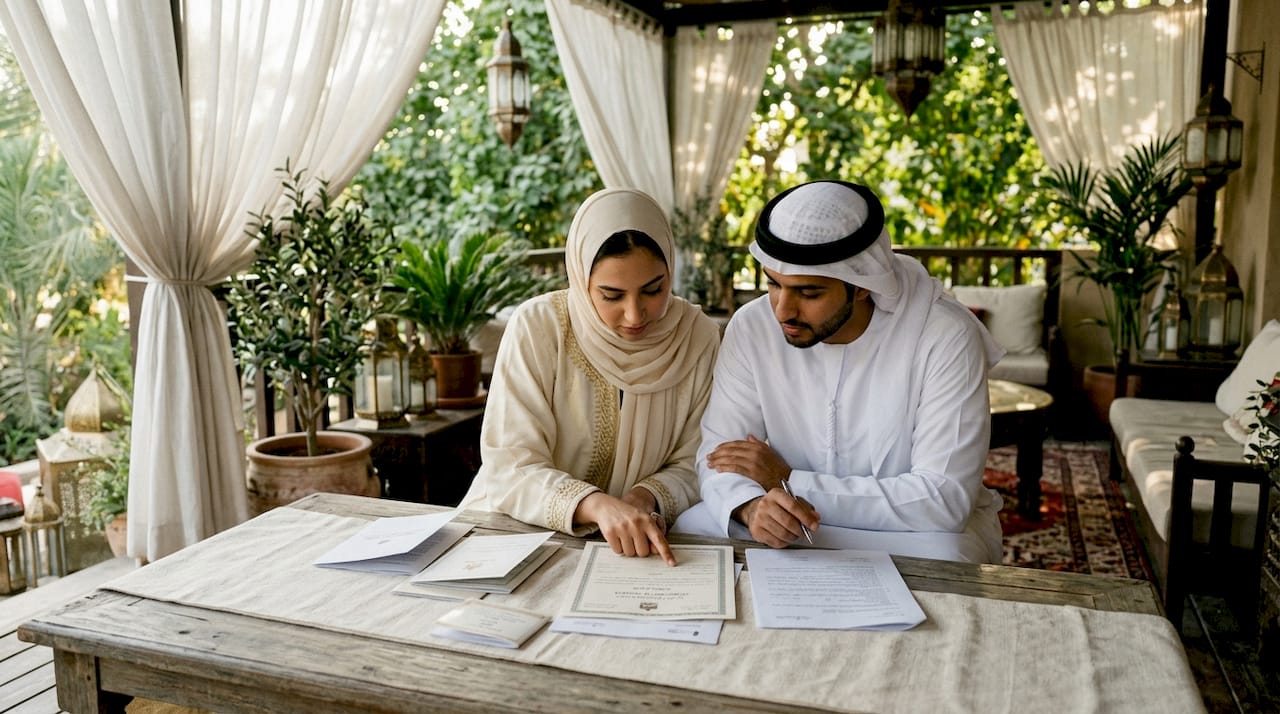
Nikah requirements are defined as the legal and religious conditions that must be fulfilled for an Islamic marriage contract to be valid. In the UAE, these conditions span religious obligations rooted in Islamic jurisprudence and civil registration rules enforced by the state. The core pillars are mutual consent (Ijab and Qabul), the presence of a wali (marriage guardian), at least two adult Muslim witnesses, and the specification of mahr (bridal gift). Couples who understand these requirements before their ceremony avoid delays, disputes, and the risk of an invalid marriage contract.
What are the fundamental pillars required for a valid nikah?
A valid Islamic nikah requires a clear offer and acceptance in one sitting, mutual consent, a wali, two adult Muslim witnesses, and a specified mahr. Each pillar carries equal weight. Missing even one can render the contract void under traditional Islamic jurisprudence.
Ijab and Qabul: offer and acceptance
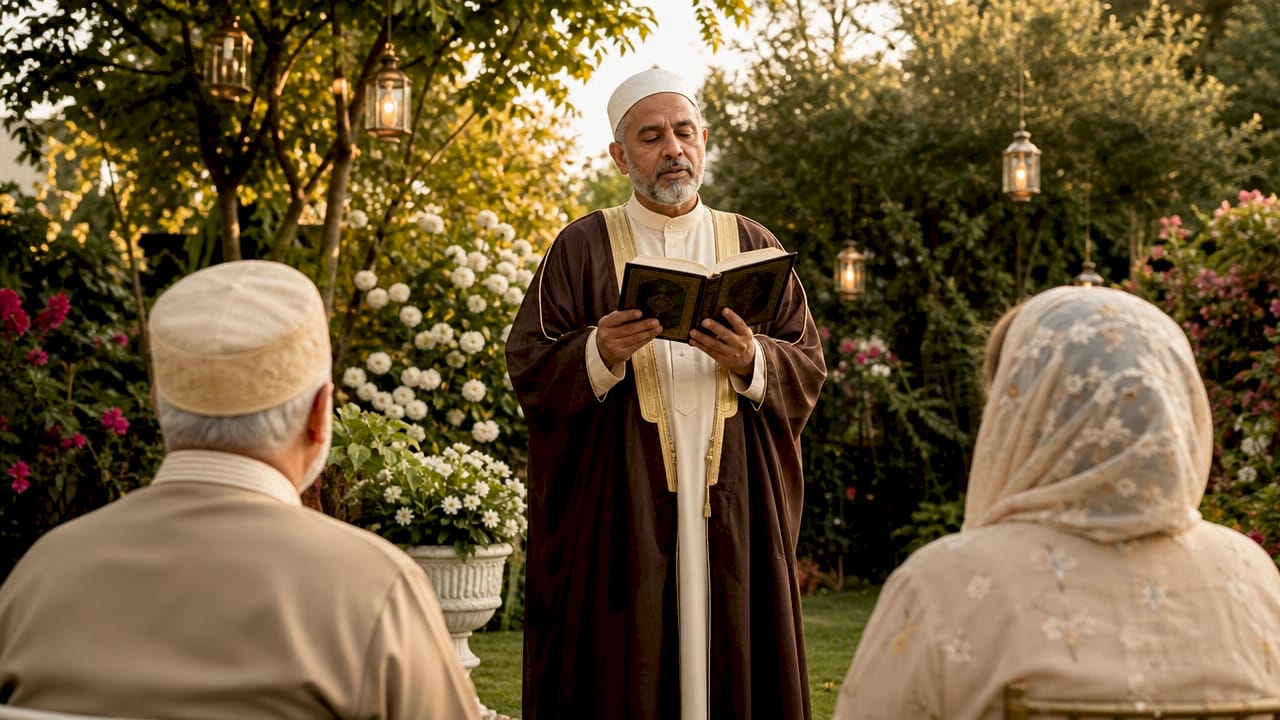
Ijab and Qabul is the verbal exchange that forms the core of the nikah contract. The offer (Ijab) is made by the bride’s wali or the bride herself, and the groom accepts (Qabul) in the same sitting. Both statements must occur without interruption and in the presence of witnesses. This exchange is not symbolic. It is the legal act that creates the marriage.
Mutual consent and the bride’s right to say yes
Bride’s consent is a strict legal requirement in Islamic law. A nikah performed without her free and clear agreement is invalid, regardless of family pressure or cultural custom. Verbal consent is strongly preferred. Silence is only accepted in very specific circumstances for previously married women, and even then, verbal confirmation removes all doubt.
Pro Tip: Ask the officiating imam to confirm the bride’s consent verbally and clearly before witnesses. This single step protects the validity of the entire contract.
The role of witnesses in a nikah ceremony
Two adult Muslim witnesses transform the nikah from a private agreement into a recognized public commitment. Their presence protects both spouses by ensuring the contract cannot be denied later. Witnesses must be sane, adult, Muslim, and present at the moment of Ijab and Qabul. You can learn more about witness rules in the UAE and how they apply to both religious and civil contexts.
Wali: the marriage guardian
The wali is the bride’s male guardian, typically her father or closest male relative. His role is to represent the bride’s interests and formally present her in the contract. The requirement for a wali varies by school of thought, which is covered in detail below. In the UAE, most mosque ceremonies follow Shafi’i or Hanafi practice, so the wali’s role is taken seriously in most local settings.
Mahr: the bridal gift
Mahr is a legally enforceable bridal gift owed by the groom to the bride. It is her inalienable property. The groom cannot reclaim it, and the bride is not obligated to spend it on the household. Mahr can be paid immediately (prompt mahr) or deferred to a later date. Omitting mahr or leaving its terms unclear can invalidate the nikah contract under traditional jurisprudence. In the UAE, mahr arrangements range from a fixed sum of money to property, gold, or even services, reflecting the flexibility recognized across Islamic schools.
How do nikah requirements vary across Islamic schools of thought?
Different Islamic schools have distinct requirements for the wali and witnesses. This matters practically because the school you follow determines what your nikah ceremony must include to be valid. Understanding your school of thought can prevent an invalid ceremony and avoid disputes, especially in the UAE’s multicultural Muslim community.
School of thought | Wali required? | Witnesses required? |
Hanafi | Recommended, not mandatory for adult woman | Yes, two adult Muslim witnesses |
Maliki | Mandatory | Yes, two adult Muslim witnesses |
Shafi’i | Mandatory | Yes, two adult Muslim witnesses |
Hanbali | Mandatory | Yes, two adult Muslim witnesses |
Ja’fari (Shia) | Not mandatory, but parental involvement emphasized | Recommended, not strictly required |
The Hanafi school is the most permissive on the wali question. An adult, sane woman can contract her own nikah without a wali under Hanafi jurisprudence, though most scholars still recommend his presence. The Maliki, Shafi’i, and Hanbali schools all require a wali for the nikah to be valid. The Ja’fari school, followed by Shia Muslims, does not require witnesses for a permanent marriage to be valid, though their presence is strongly recommended.
In the UAE, many mosques and Islamic centers align with Hanafi or Shafi’i practices. Couples should confirm the procedural requirements with their local mosque or imam before the ceremony to avoid surprises on the day.
Pro Tip: Contact the mosque or Islamic center where you plan to hold the nikah at least two weeks in advance. Ask specifically which school of thought they follow and what documents they require from both parties.
What documents and legal steps are needed for a recognized marriage in the UAE?
Islamic marriage law in the UAE requires civil registration beyond the religious nikah for full legal recognition. The religious ceremony alone does not grant you legal spousal rights under UAE civil law. Couples must complete both steps to be fully protected.
The typical nikah documents needed for the ceremony and civil registration in the UAE include:
Valid passports and Emirates IDs for both parties
Birth certificates (attested and translated into Arabic if not already in Arabic)
Proof of religion such as a certificate of Islam for converts
No-objection letter from the bride’s embassy if she is a foreign national
Divorce or death certificate if either party was previously married
Wali’s identification documents if a guardian is required under your school of thought
Completed marriage application forms from the relevant UAE authority
The civil registration process in the UAE is handled through the relevant emirate’s court or marriage registration authority. In Dubai, this falls under the Dubai Courts. In Abu Dhabi, the Abu Dhabi Judicial Department oversees registrations. The religious nikah and civil registration can sometimes be conducted together, but couples should confirm this with their chosen officiant and the relevant authority.
The witnesses required for civil registration are distinct from the religious witnesses at the nikah ceremony. Civil registration may require witnesses who can be legally identified and whose details are recorded in official documents. Religious witnesses simply need to meet the Islamic criteria of being adult, sane, and Muslim.
Couples navigating both the religious and civil processes benefit from working with a service that understands both systems. The full nikah guide for the UAE covers the step-by-step process in detail for couples who want a clear roadmap.
What cultural and ethical considerations shape nikah practice in the UAE?
The nikah ceremony is not only a legal contract. It is a social and spiritual commitment that Islamic teaching surrounds with ethical expectations. Couples who treat it as a checklist miss the deeper purpose the ceremony is designed to serve.
Compatibility (kufu) in faith and character. Islamic teaching prioritizes compatibility in faith and character over wealth, status, or appearance. Kufu refers to the matching of spouses in religious commitment, values, and conduct. Couples who assess genuine compatibility before the nikah build a stronger foundation than those who focus only on social standing.
Sincere consent beyond formality. Consent must be genuine, not performed. A bride who says yes under family pressure has not given valid Islamic consent. Imams and marriage counselors in the UAE increasingly ask to speak with the bride privately before the ceremony to confirm her willingness.
Family involvement and the wali’s role. The wali’s presence is not just a legal formality in most schools. It reflects the Islamic view that marriage is a social contract with protections for all parties, not a private decision between two individuals. Family blessing, even where not legally required, strengthens the marriage’s social standing in the community.
Transparency about mahr terms. Couples should discuss and agree on mahr openly before the ceremony. Vague or unspoken mahr arrangements create disputes later. A written mahr agreement, even a simple one, protects both parties.
Mutual rights and responsibilities. The nikah contract establishes mutual rights derived from Quranic principles, including the husband’s financial maintenance obligation and the expectation of mutual kindness. Understanding these responsibilities before the ceremony sets realistic expectations for both spouses.
Key takeaways
A valid nikah in the UAE requires mutual consent, two adult Muslim witnesses, a specified mahr, and civil registration alongside the religious ceremony for full legal recognition.
Point | Details |
Core pillars of nikah | Ijab and Qabul, mutual consent, wali, two witnesses, and mahr must all be present. |
Bride’s consent is non-negotiable | A nikah without free and clear consent from the bride is invalid under Islamic law. |
School of thought affects validity | Wali and witness requirements differ across Hanafi, Maliki, Shafi’i, Hanbali, and Ja’fari schools. |
Civil registration is separate | Religious nikah alone does not grant legal spousal rights in the UAE. |
Mahr must be specified clearly | Vague or omitted mahr terms can invalidate the contract and create future disputes. |
What I’ve learned helping couples prepare for nikah in the UAE
The most common mistake I see couples make is treating the nikah as a single event rather than a two-part process. They focus entirely on the religious ceremony and then scramble to handle civil registration afterward. In the UAE, that gap creates real problems, from visa complications to inheritance disputes.
The second most common issue is not knowing which school of thought applies to them. A Hanafi bride and a Shafi’i groom planning a ceremony at a Shafi’i mosque will face a wali requirement the bride’s family may not have prepared for. Knowing this three weeks before the ceremony gives you time to resolve it. Finding out on the day does not.
I also see couples underestimate the mahr conversation. It is not just a formality. It is a legally binding financial obligation, and leaving it vague is a mistake that surfaces later in ways nobody wants. Agree on the terms clearly, write them down, and make sure both families understand what was agreed.
My practical advice: speak with your imam early, confirm your school’s requirements, prepare every document at least a month in advance, and treat the civil registration as equally important as the religious ceremony. A nikah that is spiritually valid but legally unrecognized leaves you exposed in ways that matter.
— Harris
Harrisandcharms: marriage services for nikah and civil registration in the UAE
Harrisandcharms specializes in helping couples complete both their Islamic nikah and civil marriage registration in the UAE without the paperwork stress.

The team at Harrisandcharms handles document preparation, compliance with UAE legal requirements, and coordination with religious officiants. Whether you need a standalone nikah ceremony or a combined civil and Islamic marriage package in Dubai, the service is built to cover every step. Couples can also access the full range of UAE marriage services, including venue coordination, photoshoots, and legal attestation. Reach out to Harrisandcharms to start your marriage process with clarity and confidence.
FAQ
What are the basic nikah requirements in Islam?
A valid nikah requires mutual consent (Ijab and Qabul), a specified mahr, the presence of a wali (in most schools), and at least two adult Muslim witnesses. All conditions must be met in one sitting for the contract to be valid.
Is a wali mandatory for a nikah in the UAE?
The wali requirement depends on your school of thought. Maliki, Shafi’i, and Hanbali schools require a wali, while the Hanafi school considers it recommended but not mandatory for an adult woman. Most UAE mosques follow Hanafi or Shafi’i practice, so confirm with your officiant in advance.
Does a religious nikah count as a legal marriage in the UAE?
A religious nikah alone does not grant full legal recognition under UAE civil law. Couples must complete civil registration through the relevant emirate’s authority, such as Dubai Courts, to have their marriage legally recognized.
What documents are needed for a nikah in the UAE?
Couples typically need valid passports, Emirates IDs, birth certificates, proof of religion, a no-objection letter from the bride’s embassy if applicable, and divorce or death certificates if either party was previously married.
Can mahr be something other than money?
Yes. Mahr can take the form of property, gold, services, or symbolic gifts. The key requirement is that the terms are clearly specified and agreed upon before or during the nikah ceremony, as vague mahr arrangements can create legal disputes later.
Recommended
Comments