
What Is a Muslim Wedding? Traditions, Rituals, and Meaning

TL;DR:
A Muslim wedding is centered around the Nikah, a contract that unites a couple legally and spiritually under Islamic law. The Nikah requires witnesses, the bride’s genuine consent, a guardian, verbal offer and acceptance, and a mandatory gift called Mahr. Cultural traditions enrich the wedding but do not affect its religious validity, while the Walima feast follows as a recommended celebration.
A Muslim wedding is defined by the Nikah, an Islamic marriage contract that legally and spiritually unites a couple under Islamic law. The Nikah is not simply a ceremony. It is a binding covenant requiring specific religious conditions, including two adult Muslim witnesses, the bride’s genuine consent, and a mandatory gift known as the Mahr. Cultural celebrations like Mehndi nights and the Walima feast surround this contract, but the religious validity rests entirely on the Nikah itself. Understanding this distinction is the clearest way to understand what a Muslim wedding actually is.
What is the Nikah ceremony and its core religious requirements?
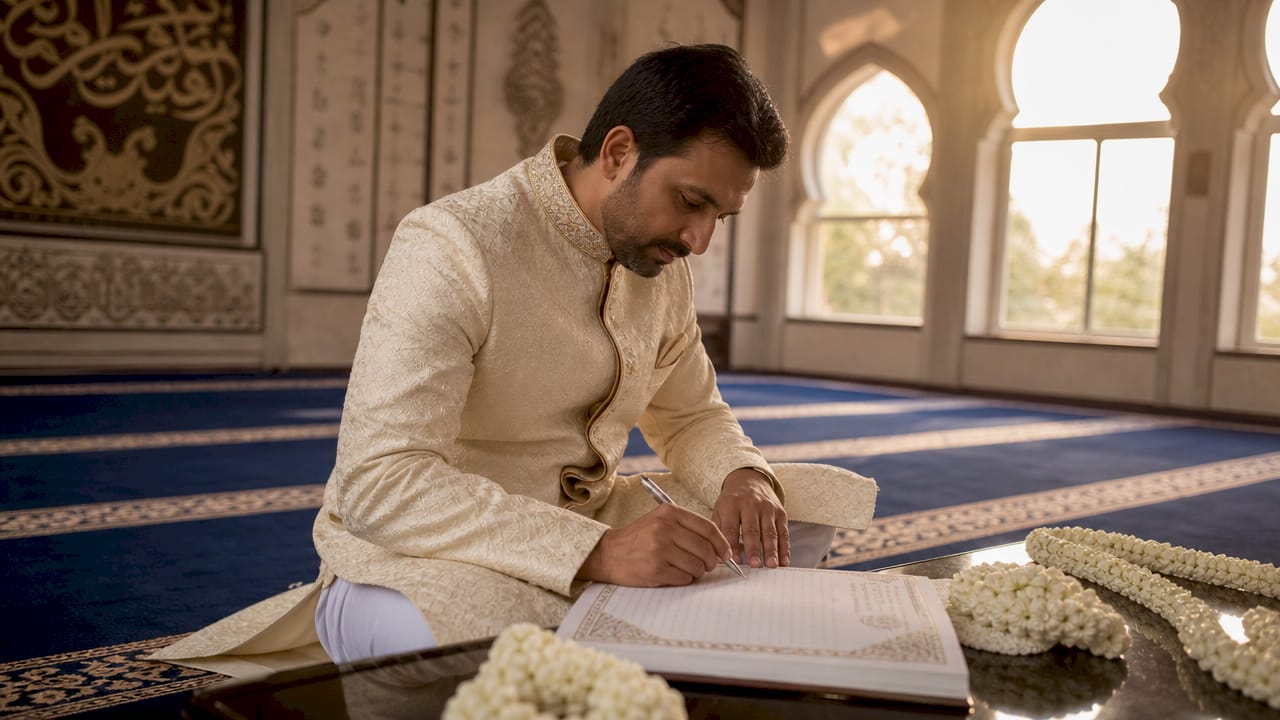
The Nikah is the legal and spiritual heart of every Muslim wedding. The ceremony can be completed in as little as 10 minutes, though family discussions about the Mahr often extend the overall process. That brevity surprises most people. It reflects the Islamic principle that marriage is a contract, not a performance.
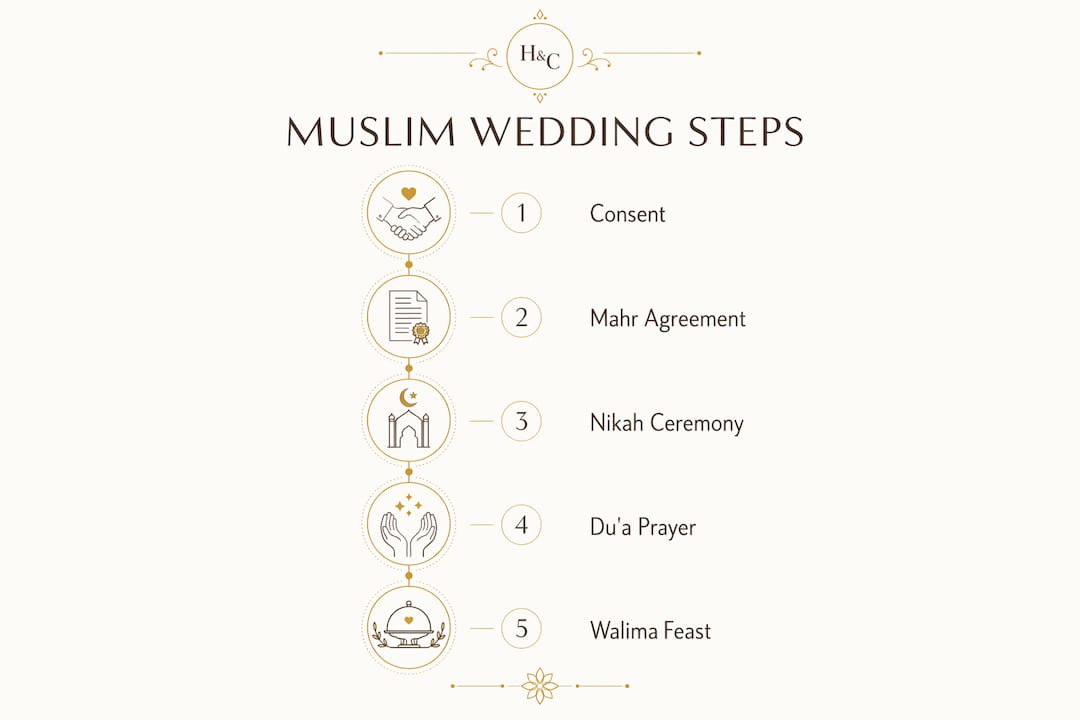
Four elements make a Nikah valid:
Two adult Muslim witnesses. Both must be present and mentally competent. Their role is to confirm the contract was entered freely. Learn more about the witness requirements under Islamic and UAE law.
The bride’s wali (guardian). In the Hanafi, Maliki, Shafi’i, and Hanbali schools of Islamic jurisprudence, the bride’s father or closest male relative formally represents her in the contract. Some schools require his presence; others allow the bride to represent herself.
Ijab and Qabul. These are the verbal offer and acceptance. The groom or his representative makes the offer; the bride or her wali accepts. Both must occur in the same sitting.
The Mahr. This is a mandatory gift from the groom to the bride. It can be money, jewelry, property, or any agreed item of value. Mahr must be fully agreed upon before the contract is signed. It belongs solely to the bride and cannot be reclaimed.
The Nikah ceremony typically opens with a short sermon (khutbah) and closes with a communal prayer (du’a). The entire religious act is complete once the contract is signed and witnessed.
Pro Tip: Agree on the Mahr amount and type well before the ceremony date. Disagreements at the last minute are the most common reason Nikah signings are delayed.
Bride’s consent is not a formality. Islamic law explicitly forbids forced marriage, and a Nikah conducted without the bride’s genuine agreement is invalid. This is a firm legal and religious position, not a cultural preference.
How do cultural traditions complement the Muslim wedding?
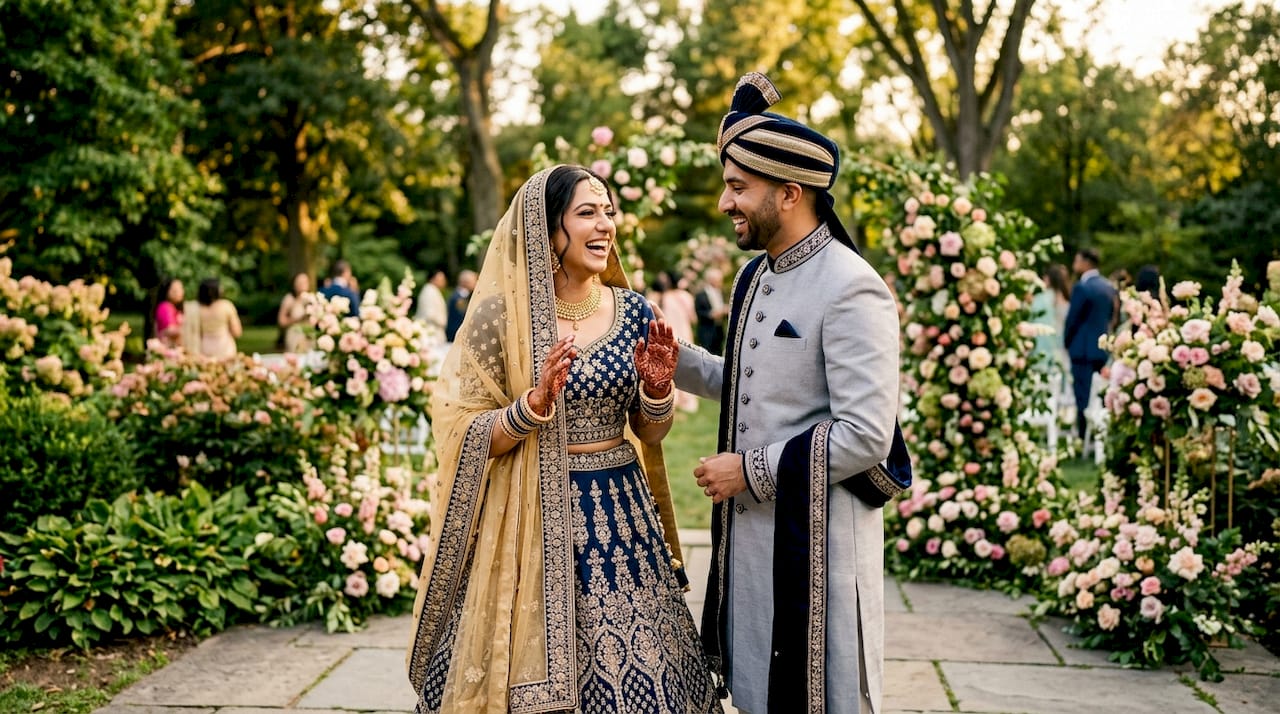
Cultural traditions add color, community, and celebration to a Muslim wedding, but they do not affect its religious validity. Mehndi, Rukhsati, and Zaffe are among the most recognized customs, and each comes from a specific cultural background rather than Islamic scripture.
Here is how traditions vary across major Muslim communities:
South Asian (Pakistani, Indian, Bangladeshi). The Mehndi night involves applying henna to the bride’s hands and feet, accompanied by music and dancing. The Rukhsati is the emotional farewell when the bride leaves her family home. The Baraat is the groom’s procession to the wedding venue.
Arab. The Zaffe is a festive procession with live music and dabke dancing. Separate celebrations for men and women are common in more conservative families. Gold jewelry holds particular cultural significance in the gift exchange.
West African. Vibrant fabrics, communal feasting, and drumming define many West African Muslim weddings. The Fatiha (opening chapter of the Quran) is recited publicly to bless the union.
Southeast Asian (Indonesian, Malaysian). The Akad Nikah ceremony is often held in a mosque, followed by a large reception called the Resepsi. Traditional attire like the Baju Kurung for women is standard.
Cultural traditions make a Muslim wedding memorable, but the Nikah contract makes it real. Couples who understand this distinction plan with far greater clarity and far less stress.
Muslim weddings prioritize spiritual grounding over lavish display. That does not mean celebrations must be plain. It means the festivities should not include elements that contradict Islamic principles, such as intoxicants or mixed-gender settings where the couple’s religious community would consider them inappropriate.
Traditional Muslim wedding attire reflects both religious modesty and cultural identity. Brides commonly wear red or green in South Asian traditions, white or gold in Arab settings, and richly patterned fabrics in African communities. The groom typically wears a sherwani, thobe, or formal suit depending on his background. Modesty is the consistent standard across all of these.
What is the significance and role of the Walima feast?
The Walima is a wedding feast held after the Nikah, and it carries the status of a strongly recommended Prophetic tradition (Sunnah). Its purpose is to publicly announce the marriage and share the couple’s joy with family, friends, and community. The Walima is ideally held within seven days of the Nikah.
A common misconception is that the Walima must happen on the same day as the Nikah. It does not. This flexibility allows couples to plan the religious contract and the celebration as separate events, which is especially practical for large families or destination weddings.
The Prophet Muhammad recommended scaling the Walima to the family’s means, even if only a modest meal is served. That principle matters. The Walima is about community and gratitude, not display.
Feature | Walima | Western-style wedding reception |
Religious status | Strongly recommended Sunnah | No religious requirement |
Timing | Within 7 days of Nikah | Same day as ceremony |
Scale | Proportional to family’s means | Often tied to social expectations |
Purpose | Public announcement of marriage | Celebration and entertainment |
Alcohol | Not permitted | Commonly served |
Pro Tip: If budget is a concern, a simple home-cooked Walima shared with close family fully satisfies the Sunnah. The religious merit comes from the intention and the gathering, not the venue.
The goal of Muslim wedding festivities is shared joy, not extravagance. Couples who keep this in mind avoid the financial and social pressure that derails many wedding plans.
What key practices should couples know for Muslim weddings today?
Planning a Muslim wedding today means balancing religious requirements with legal and logistical realities. The religious marriage is complete at the Nikah, but civil registration is a separate legal step in most countries, including the UAE.
Here are the key steps most couples follow:
Agree on the Mahr. Both families discuss and confirm the Mahr before any ceremony date is set. This protects the bride’s rights and prevents last-minute disputes.
Confirm the wali. The bride’s guardian must be identified and willing to participate. In cases where the wali is unavailable or absent, an Islamic judge (qadi) can fulfill this role.
Arrange two witnesses. Both witnesses must be adult Muslim men in most schools of thought. Confirm their availability well in advance.
Register the marriage civilly. In the UAE, Muslim marriages are registered through the relevant emirate’s court or religious authority. Harrisandcharms guides couples through Islamic marriage registration to meet both religious and legal requirements.
Plan the Walima separately. Book the Walima venue independently from the Nikah location. This reduces day-of pressure and allows each event to receive proper attention.
Expatriate couples in the UAE face an additional layer of documentation. Passports, residency visas, and sometimes home-country certificates of no impediment are required. The full Nikah guide for the UAE covers these requirements in detail.
A common misconception is that a Muslim wedding takes days to complete. The Nikah itself is brief. The extended timeline comes from family coordination, Mahr negotiations, and cultural celebrations, none of which affect the legal validity of the marriage.
Key Takeaways
A Muslim wedding is legally and spiritually complete at the Nikah contract, regardless of any cultural celebrations that follow.
Point | Details |
Nikah is the legal core | The marriage is valid once the Nikah contract is signed with witnesses and Mahr agreed. |
Consent is non-negotiable | A Nikah without the bride’s genuine consent is invalid under Islamic law. |
Cultural traditions are separate | Mehndi, Rukhsati, and Zaffe are cultural additions, not religious requirements. |
Walima has flexible timing | The wedding feast can be held any time within seven days of the Nikah. |
Civil registration is required | In the UAE, couples must register the Nikah through official channels for legal recognition. |
What most people miss about Muslim weddings
People focus on the spectacle and miss the substance. I have seen this pattern repeatedly. Guests arrive expecting a long religious ceremony and leave surprised that the actual Nikah took under 15 minutes. Couples spend months planning the reception and sometimes only days preparing for the contract itself.
The Nikah is not a backdrop to the party. It is the marriage. Everything else, the henna, the processions, the feast, the dancing, surrounds and honors that moment. When couples treat the contract as the centerpiece and the celebrations as the expression of joy around it, the entire event carries more meaning.
What I find genuinely moving about Muslim weddings is the directness of the covenant. The groom makes an offer. The bride accepts. Witnesses confirm it. A gift is given. That is it. No elaborate vows written over months. No theatrical staging. Just two people, their families, and a clear agreement made before God.
The cultural richness that surrounds this simplicity is not a distraction. It is a gift. South Asian Mehndi nights, Arab Zaffe processions, and West African drumming ceremonies each carry generations of meaning. The mistake is treating them as the wedding rather than the celebration of the wedding.
My honest advice to any couple planning a Muslim wedding: get the Nikah right first. Understand the Mahr, confirm the witnesses, and make sure consent is freely given on both sides. Once that foundation is solid, celebrate as richly and joyfully as your culture and your means allow.
— Harris
Planning your Muslim wedding in the UAE
Harrisandcharms specializes in civil and Islamic marriage packages for couples in the UAE, covering everything from Nikah documentation to full event coordination.

Whether you need help with Islamic wedding packages or a fully managed civil marriage in Dubai, Harrisandcharms handles the legal paperwork, witness coordination, and venue arrangements so you can focus on the day itself. The team has guided couples from across the world through UAE marriage registration, combining religious compliance with practical, personalized support. Reach out to Harrisandcharms to start planning a wedding that honors both your faith and your story.
FAQ
What is a Muslim wedding called?
A Muslim wedding is called a Nikah. It is the Islamic marriage contract that legally and spiritually unites the couple under Islamic law.
How long does a Nikah ceremony take?
The Nikah ceremony can be completed in as little as 10 minutes. The total event may be longer due to the sermon, prayers, and family gatherings surrounding it.
Is the bride’s consent required in a Muslim wedding?
Yes. Bride’s consent is a strict legal requirement in Islamic law. A Nikah performed without genuine consent from the bride is invalid.
What is the Mahr in a Muslim wedding?
The Mahr is a mandatory gift from the groom to the bride, agreed upon before the Nikah contract is signed. It belongs solely to the bride and can be money, jewelry, or any item of agreed value.
Does a Muslim wedding need to be registered legally in the UAE?
Yes. The Nikah must be registered through the appropriate UAE court or religious authority to receive legal recognition. Harrisandcharms assists couples with the full marriage registration process in the UAE.
Recommended
Comments