
UAE Marriages: Legal Requirements and Traditions in 2026

TL;DR:
UAE marriages are governed by either civil law for non-Muslims or Islamic law for Muslim residents, with specific documentation and eligibility requirements. Both processes require thorough document attestation and genuine consent, with civil marriages often completed within 24 hours using online services. Understanding and respecting local traditions, combined with proper legal compliance, ensures a smooth and legally valid union in the UAE.
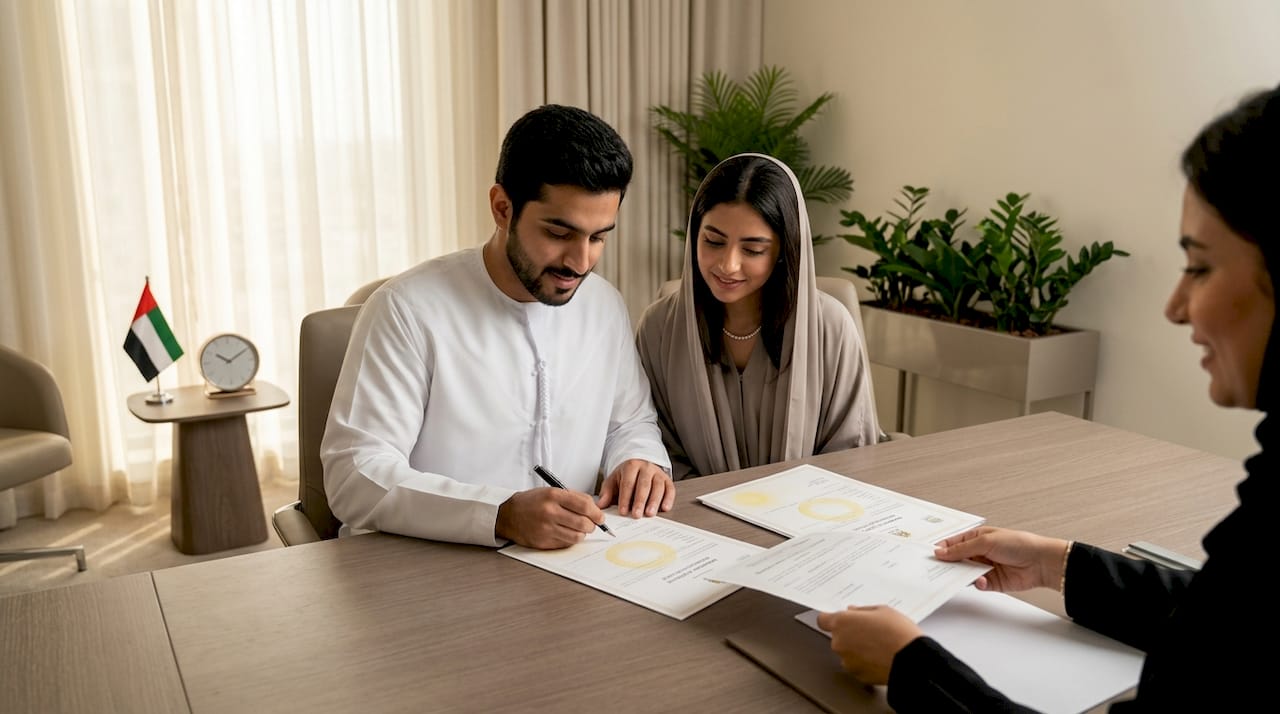
UAE marriages are defined under two distinct legal frameworks: Islamic marriage governed by Sharia law for Muslim residents, and civil marriage available to non-Muslims under Federal Decree Law No. 41 of 2022. Both frameworks carry specific documentation requirements, eligibility criteria, and procedural steps that every couple, whether local or expatriate, must follow to achieve a legally recognized union. The UAE is home to over 200 nationalities, making it one of the most diverse marriage jurisdictions in the world. Understanding which legal path applies to you before you book a venue or plan a ceremony saves time, money, and significant stress.
What types of UAE marriages are available and who can marry?
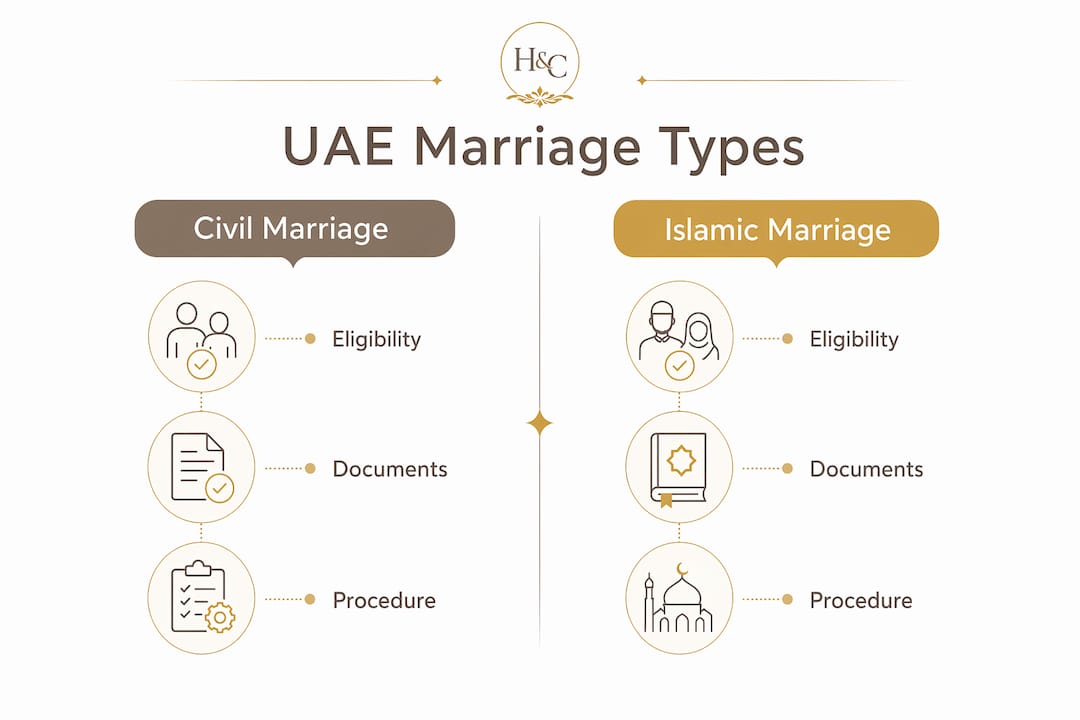
UAE marriages fall into two legally recognized categories, and the distinction matters from day one of your planning process.
Civil marriage is available to non-Muslim residents and expatriates under Federal Decree Law No. 41 of 2022, which allows non-Muslims to marry, divorce, and manage inheritance under civil rather than Sharia principles. This was a landmark shift in UAE personal status law, opening a formal legal pathway for the millions of non-Muslim expats living in Dubai, Abu Dhabi, and other emirates. Before this law, non-Muslim couples often had to rely on their home country’s embassy for marriage registration.
Islamic marriage is governed by Sharia law and applies to all Muslim residents. The UAE’s Sharia-based marriage laws require the groom to be at least 21 years old and the bride at least 18. The formal Nikah ceremony is the legal and religious cornerstone of this process, and it must be conducted by a licensed marriage officiant registered with the relevant emirate authority.
Civil vs. Islamic marriage at a glance
Feature | Civil marriage | Islamic marriage |
Eligibility | Non-Muslim residents and expats | Muslim residents |
Minimum age | 18 for both parties | 21 (groom), 18 (bride) |
Legal framework | Federal Decree Law No. 41 of 2022 | Sharia law |
Ceremony type | Legal signing before a judge or registrar | Nikah ceremony with licensed officiant |
Processing time | As fast as 24 hours in Dubai | Varies by emirate and documentation |
Both civil and Islamic marriages require free and genuine consent from both parties, and neither type permits marriage between first or second degree relatives. Exceptions to the minimum age require special judicial approval and are rarely granted.
What are the legal requirements and documentation needed for marriage in the UAE?
Getting the paperwork right is where most couples lose time. UAE marriage requirements are specific, and missing a single document can delay your registration by weeks.
For a civil marriage, you will typically need:
Valid passports and Emirates ID for both parties
Proof of residency (visa page or residence permit)
Birth certificates, attested by your home country’s relevant authority
A certificate of no impediment or single status certificate from your home country
Divorce decree or death certificate if either party was previously married
Two witnesses with valid identification
For an Islamic marriage, the documentation list includes the above plus a guardian’s (Wali’s) consent for the bride in most cases, and proof of Islamic faith for both parties.
The attestation process is non-negotiable for foreign documents. Certificate attestation follows a three-stage process: authentication in your home country, verification at the UAE embassy in that country, and a final stamp from the UAE Ministry of Foreign Affairs (MOFA). This confirms authenticity, prevents fraud, and enables processing for immigration, employment, and family status purposes. Skipping any stage means UAE authorities will not accept the document.
Pro Tip: Always verify the current attestation requirements directly with the UAE Ministry of Foreign Affairs or through a licensed service provider like Harrisandcharms before submitting documents. Requirements can change, and an outdated checklist is one of the most common reasons for application rejections.
The document legalization process can take anywhere from a few days to several weeks depending on your home country, so build this into your timeline well before your intended wedding date. Couples who treat attestation as an afterthought routinely push back their registration dates by a month or more.
How do civil and Islamic marriage procedures differ in the UAE?
The procedural experience of a civil wedding versus an Islamic wedding in the UAE is genuinely different, not just in ceremony but in the steps leading up to it.
Civil marriage procedure
Check eligibility. Confirm both parties are non-Muslim and meet the minimum age of 18.
Gather and attest documents. Complete the full attestation process for all foreign documents through MOFA.
Book your appointment. In Dubai, the civil marriage service can be booked online for AED 300 (approximately $81), with processing often completed within 24 hours. Abu Dhabi offers a comparable digital service.
Attend the legal signing. Both parties appear before a judge or court registrar with their two witnesses.
Receive your marriage certificate. The certificate is issued on the same day in most cases and can then be attested for international use.
Islamic marriage procedure
The Islamic Nikah ceremony requires a licensed marriage officiant, the presence of the bride’s Wali (guardian), and at least two male witnesses. The marriage contract specifies the Mahr (a mandatory gift from the groom to the bride) and is signed by both parties. Emirates like Dubai and Abu Dhabi have dedicated marriage courts under their respective judicial departments, and appointments must be booked through official emirate channels.
The UAE government also provides premarital counseling programs and marriage grants as part of its family affairs support system. These are voluntary but widely used, particularly among Emirati nationals. For expats marrying under Islamic law, the process is similar but requires additional documentation proving religious status.
A key difference worth noting: civil marriages in Dubai and Abu Dhabi have moved significantly toward digital services in 2026, making them faster and more accessible than ever. Islamic marriage procedures remain more formal and court-centered, reflecting their religious and legal weight.
What cultural practices and wedding traditions are common in UAE marriages?
UAE wedding traditions are rich, layered, and deeply tied to family and community. Even if you are marrying under civil law, understanding these customs helps you navigate social expectations with confidence.
Key traditions in Islamic UAE weddings include:
Nikah ceremony: The formal religious contract signing, often held at a mosque or marriage court, attended by close family and male witnesses.
Walima: The wedding feast hosted by the groom’s family, typically held within three days of the Nikah. It is considered a religious obligation and a public announcement of the marriage.
Henna night (Laylat al-Henna): A pre-wedding celebration for the bride, where intricate henna designs are applied to her hands and feet. This is a major social event for women in the family.
Separate celebrations: Traditional Emirati weddings often feature separate celebrations for men and women, with music, dancing, and elaborate feasts.
Wedding attire: Emirati brides typically wear white or gold dresses for the Nikah and change into traditional Emirati dress for later celebrations. Grooms wear the Kandura.
For expat couples marrying in the UAE, blending your own cultural traditions with local customs is both accepted and common. Civil weddings in particular offer flexibility in ceremony style, venue, and dress code. That said, public displays of affection remain culturally sensitive in the UAE, and wedding celebrations should respect local norms around modesty and mixed-gender gatherings.
The UAE government’s support for marriage through counseling and financial grants reflects how central family formation is to national social policy. This context matters for expats: marriage in the UAE is not just a personal milestone but a socially and legally significant event with community dimensions.
What are the legal risks and compliance considerations for UAE marriages?
UAE marriage laws are enforced with real consequences, and the courts have made their position on violations unmistakably clear.
Child marriage is prohibited. Both parties must be at least 18 years old, with the groom required to be 21 for Islamic marriages. Judicial exceptions exist but are tightly controlled. In 2026, an Abu Dhabi court sentenced an Emirati to 3 years imprisonment and a Dh5 million fine for encouraging child marriage via social media. This ruling signals that the UAE prosecutes not just direct violations but also promotion of illegal practices online.
“The defendant’s social media accounts were ordered closed and the video deleted as part of the court ruling.” This level of enforcement reflects the UAE’s zero-tolerance stance on any attempt to bypass marriage laws, whether in person or through digital channels.
Unregistered or informal marriages carry serious risks. A marriage not registered with UAE authorities has no legal standing, meaning neither party has enforceable rights regarding property, inheritance, or child custody. For expats, an unregistered marriage can also create complications with residency and visa status. The social media incitement ruling also established that expedited trials apply to cases involving public promotion of illegal marriage practices.
Couples should also be aware that marriage certificate attestation is required for the marriage to be recognized internationally and for use in UAE immigration or employment processes. Skipping this step after registration is a common and costly oversight.
Key takeaways
UAE marriages are legally valid only when conducted under the correct framework, with fully attested documents and genuine consent from both parties aged 18 or older.
Point | Details |
Two legal frameworks | Civil marriage under Federal Decree Law No. 41 of 2022 applies to non-Muslims; Islamic marriage follows Sharia law for Muslims. |
Attestation is mandatory | Foreign documents must go through home country authentication, UAE embassy verification, and MOFA stamping. |
Age requirements are strict | Both parties must be at least 18; Islamic marriages require the groom to be 21. Violations carry criminal penalties. |
Civil marriages are fast | Dubai’s online civil marriage service costs AED 300 and can be completed within 24 hours. |
Cultural traditions matter | Walima, Nikah, and Henna Night are central to Islamic UAE weddings; expats should understand these customs even for civil ceremonies. |
What I’ve learned from helping couples marry in the UAE
Most couples who come to us at Harrisandcharms arrive with one of two problems. Either they have done too little research and are shocked by the documentation requirements, or they have done too much research from unreliable sources and are convinced the process is far more complicated than it actually is.
The truth sits in the middle. UAE marriage laws are clear and well-structured. The civil marriage pathway introduced by Federal Decree Law No. 41 of 2022 genuinely simplified things for non-Muslim expats. The Islamic marriage process, while more formal, is equally well-organized when you work with the right people.
What I tell every couple is this: the legal process is manageable. The part that trips people up is the attestation timeline. I have seen couples plan a beautiful ceremony and then discover their documents need six weeks of attestation processing they had not accounted for. That is not a legal problem. It is a planning problem.
The cultural side is something I encourage every expat couple to engage with genuinely, not just as a formality. The Walima, the Henna Night, the role of family in the Nikah. These traditions carry real meaning for your UAE-based guests and colleagues. Respecting them builds relationships that go far beyond your wedding day.
My honest advice: start your documentation process at least three months before your intended date, verify every requirement with an official or licensed source, and do not underestimate how much smoother the whole experience becomes when you have expert support from the beginning.
— Harris
Plan your UAE marriage with Harrisandcharms

Harrisandcharms specializes in civil and Islamic marriage services for residents and expats across the UAE. Whether you need a fully managed civil marriage package in Dubai or support with document attestation, venue coordination, and legal registration, the team handles every detail so you can focus on the moment itself. Harrisandcharms also offers premium marriage registration services tailored for Golden Visa holders, yacht weddings, and couples seeking a stress-free path through UAE marriage requirements. Explore the full range of civil and Islamic marriage packages or reach out directly to start planning your UAE wedding with confidence.
FAQ
What is the minimum age to get married in the UAE?
Both parties must be at least 18 years old for civil marriages; Islamic marriages require the groom to be at least 21 and the bride at least 18. Exceptions require special judicial approval.
Can non-Muslims get legally married in the UAE?
Yes. Federal Decree Law No. 41 of 2022 provides a civil marriage framework for non-Muslim residents and expats, allowing them to marry under civil law rather than Sharia.
How long does civil marriage registration take in Dubai?
Dubai’s civil marriage service can be booked online for AED 300 and is often processed within 24 hours, making it one of the fastest marriage registration options in the region.
Do foreign marriage documents need to be attested for UAE marriages?
Yes. Foreign documents must be authenticated in your home country, verified at the UAE embassy, and stamped by the UAE Ministry of Foreign Affairs before they are accepted by UAE marriage authorities.
What are the legal risks of an unregistered marriage in the UAE?
An unregistered marriage has no legal standing in the UAE, meaning neither party has enforceable rights over property, inheritance, or child custody, and it can create complications with residency and visa status.
Recommended
Comments